UK-Ukraine Solidify Ties
British-Ukrainian cooperation is the result of Ukraine’s defence policy and the United Kingdom’s perception of Russia as the most serious direct threat to its own security and that of Europe. For the UK, Ukraine’s repulsion of aggression has become a key condition for deterring Russia, and British support is an important element of international aid for Ukraine’s war effort. The One Hundred Year Partnership Agreement, a treaty signed in January, is a milestone in bilateral cooperation.
 AA/ABACA / Abaca Press / Forum
The United Kingdom considers Russia’s aggressive actions since 2014 to be a turning point for the security of the continent. This assessment has translated into a policy of support for Ukraine, including the training of Ukrainian soldiers between 2015 and 2022 (Operation Orbital) and a strong response to the chemical attack in Salisbury in 2018. In its foreign and security policy strategies (2021-2023) and in this year’s Strategic Defence Review, the Russian occupation of Crimea and military actions were considered “attacks on European security”. This approach stems from the UK’s realistic assessment of Vladimir Putin’s policy objectives, which seek to change the international security architecture and pose a threat to British security through NATO’s Northern Flank. Therefore, aid to Ukraine has become an important component of the British deterrence strategy, alongside the UK’s presence on NATO’s Eastern Flank. Ukraine has also become a partner whose combat experience influences the development of British forces, including in the areas of drone and digital warfare, and the Black Sea has been recognised as an important area of British competition with Russia.
Framework for Ukrainian-British Cooperation
In October 2020, the two countries signed the Political, Free Trade and Strategic Partnership Agreement to replace the EU-Ukraine Association Agreement after Brexit. At the same time, a memorandum on cooperation in the defence sector and agreements on the reconstruction of the Ukrainian navy were signed. The 2023 Bilateral Digital Trade Agreement improved, among other things, cross-border data flows and cooperation on cybersecurity. In January 2024, the bilateral Security Cooperation Agreement was concluded, providing for long-term military support, intelligence and arms cooperation. In it, the UK committed to spending at least £3 billion a year on Ukraine’s defence until 2031 and to continuing its support “for as long as necessary”. This preceded the signing of similar documents by other countries (including Poland this year).
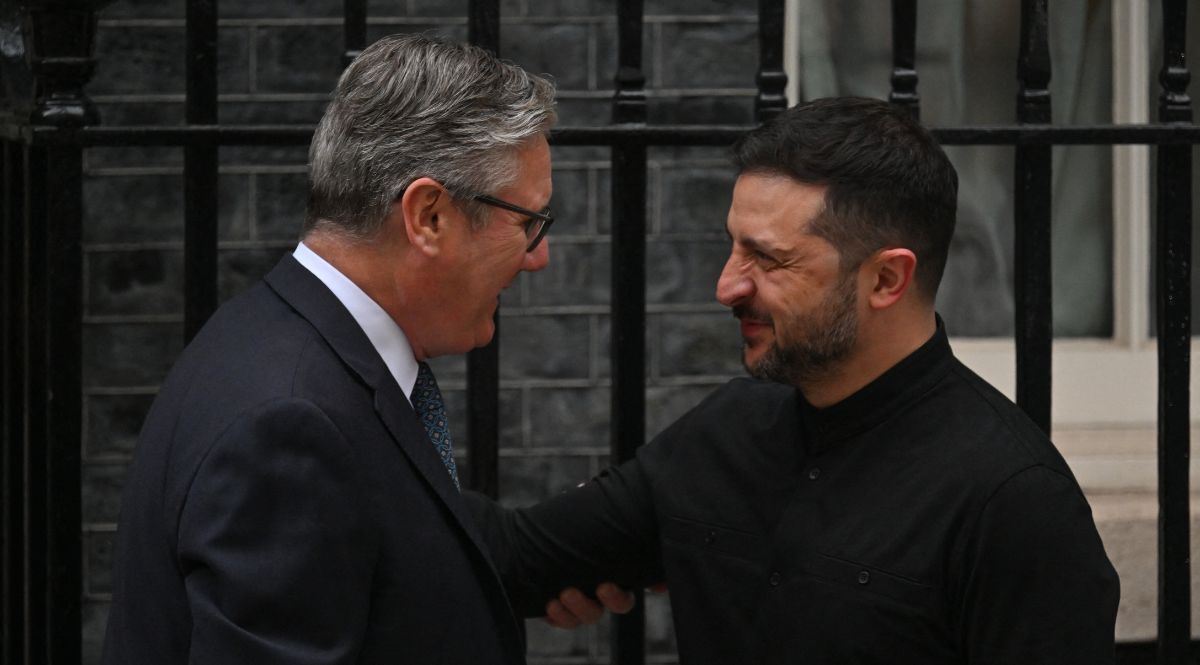
The culmination of British-Ukrainian cooperation to date is the One Hundred Year Partnership Agreement between Ukraine and the United Kingdom, signed in January this year and ratified by the Ukrainian Verkhovna Rada on 17 September (ratification is still ongoing in Britain). It is a framework international treaty and comprises 14 articles on cooperation in the field of security and defence, the development of military infrastructure in Ukraine, interoperability with NATO and cooperation on security in the Black Sea, as well as energy, justice, the building of socio-cultural ties, and migration.
Ukraine’s Place in British Strategy
From the British point of view, aid to Ukraine is a response to Russia’s hostile actions and part of building its own position on the European and global stage after Brexit. Since 2021, the United Kingdom has been one of the leading donors of aid to Ukraine (worth a total of around £22 billion). It was also one of the first countries to supply Ukraine with Western-made weapons (e.g., Challenger tanks and Storm Shadow missiles), conducted military training (British and allied instructors trained over 56,000 Ukrainian soldiers on its territory as part of Operation Interflex), and supported land and sea demining. In addition, the UK coordinates international task forces, including those supporting Ukraine’s air defence, maritime security (with Norway) and drone production (with Latvia), and has organised trade and reconstruction missions. British humanitarian aid since 2022 has totalled about £1 billion. The United Kingdom supports Ukraine diplomatically, seeks to block international recognition of Russian annexations, and calls for Russia to be held accountable. The UK unequivocally supports Ukraine’s membership of NATO as the ultimate guarantee of that country’s security and peace in Europe. During the first post-Brexit UK-EU summit in May 2025, an agreement was reached on an EU-UK strategic partnership, in which the parties confirmed their coordination of support for Ukraine, armaments under the EU’s SAFE instrument, and sanctions policy towards Russia.
The Role of the United Kingdom in Ukrainian Politics
Since 2022, the United Kingdom has become one of Ukraine’s most consistent partners in the political and military spheres, in contrast to the unstable and conditional support provided by the United States. Ukraine has already highlighted the special role of the United Kingdom in its national security (2020) and foreign policy (2021) strategies, where it is listed among its strategic partners alongside the U.S., Canada, France, and Germany. However, it was only after the Russian invasion in 2022 that it became one of Ukraine’s most important partners in real terms. The UK plays the role of initiator and coordinator of Western partners’ actions to support Ukraine. Currently, from Ukraine’s point of view, one of the most important British projects is the launch of a “coalition of the willing” together with France in March this year in response to the U.S.-Russia talks in February this year on ending the war. It was, among other things, a signal of opposition to forcing Ukraine to accept peace on Russian terms. British involvement initiated talks on security guarantees for Ukraine, including the possibility of establishing a military peacekeeping mission after the fighting ends. The support of the “coalition of the willing” strengthens Ukraine’s negotiating position vis-à-vis Russia and the US. British mediation was crucial in defusing the crisis in relations between Presidents Volodymyr Zelensky and Donald Trump, who threatened to withdraw U.S. military support. Finally, the UK’s extension of its long-term bilateral commitments to Ukraine from 2024 onwards put pressure on the U.S. to maintain its involvement.
Prospects
The British-Ukrainian 100-year partnership treaty is a signal from the United Kingdom that it perceives Ukraine as part of the West politically, economically, and militarily. However, the treaty lacks a roadmap for achieving the goals set out in the agreement. Developing a clear action plan for the coming years will therefore be crucial to the actual success of this project.
For Ukraine, cooperation with the UK will remain crucial in terms of defence and the economy. Joint projects on the production of drones, missile systems, and ships are entering the implementation phase. The United Kingdom will also remain one of the most important political partners which (unlike, for example, the U.S.) shares the perception of the threat from Russia and does not pose a risk of abandoning its current political strategy in exchange for economic benefits in trade with Russia. It also plays an important role for Ukraine as a mediator and liaison with the Trump administration.
In the international context, the future of British policy towards Ukraine will depend on the actions of the U.S., with which the UK deepened its technological (military-civilian) partnership on 18 September this year. Regardless of Trump’s policy towards Russia, cooperation with Ukraine will remain a high priority for the UK. However, in the event of greater U.S.-Russian rapprochement, it will focus on strengthening bilateral cooperation with Ukraine and with the EU through the E3 group. In the domestic context, however, the challenge will be the declining importance of cooperation with Ukraine in the eyes of the British public and, as a consequence, difficulties in financing it. However, ratification of the treaty does not appear to be at risk thanks to the continued consensus among the political elite, including Nigel Farage’s Reform Party, on the need to support Ukraine.
For Poland, British-Ukrainian cooperation is of key importance due to their shared understanding of the threat posed by Russia and the stabilisation of international aid for Ukraine’s defence efforts. The United Kingdom’s status as a nuclear power increases the significance of its military presence on NATO’s Eastern Flank and its potential participation in a stabilisation mission in Ukraine. Nevertheless, from Poland’s point of view, British assistance should be seen as an integral part of the European effort, necessary in the short and medium term to complement the EU’s capabilities. The treaty also complements the security system that is emerging from a series of agreements concluded by Poland, Ukraine, and the UK with other countries. In the case of Poland, these are, in particular, the Nancy Treaty with France and the defence treaty currently being negotiated with the United Kingdom.



.png)