Russia's potential for escalation
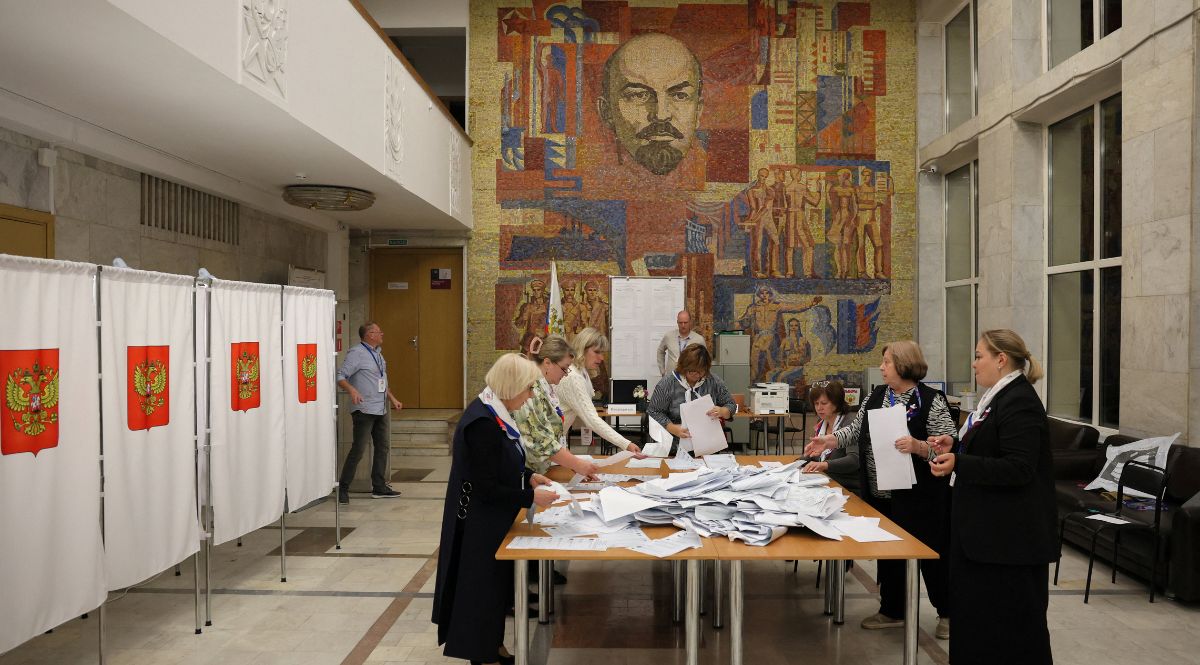
The officially announced results of the Duma “elections,” which have given United Russia—regarded as the party of war—a constitutional majority, show that Russia is not interested in de-escalation. We should therefore expect an intensification of air strikes on Ukraine and hybrid operations against the NATO countries supporting it. For Alliance members, this means not only the need to maintain military and humanitarian aid to Ukraine, but also to step up joint operations aimed at preventing hybrid activities and enhancing the protection of critical infrastructure.
 Alexander Zemlianichenko / Reuters / Forum
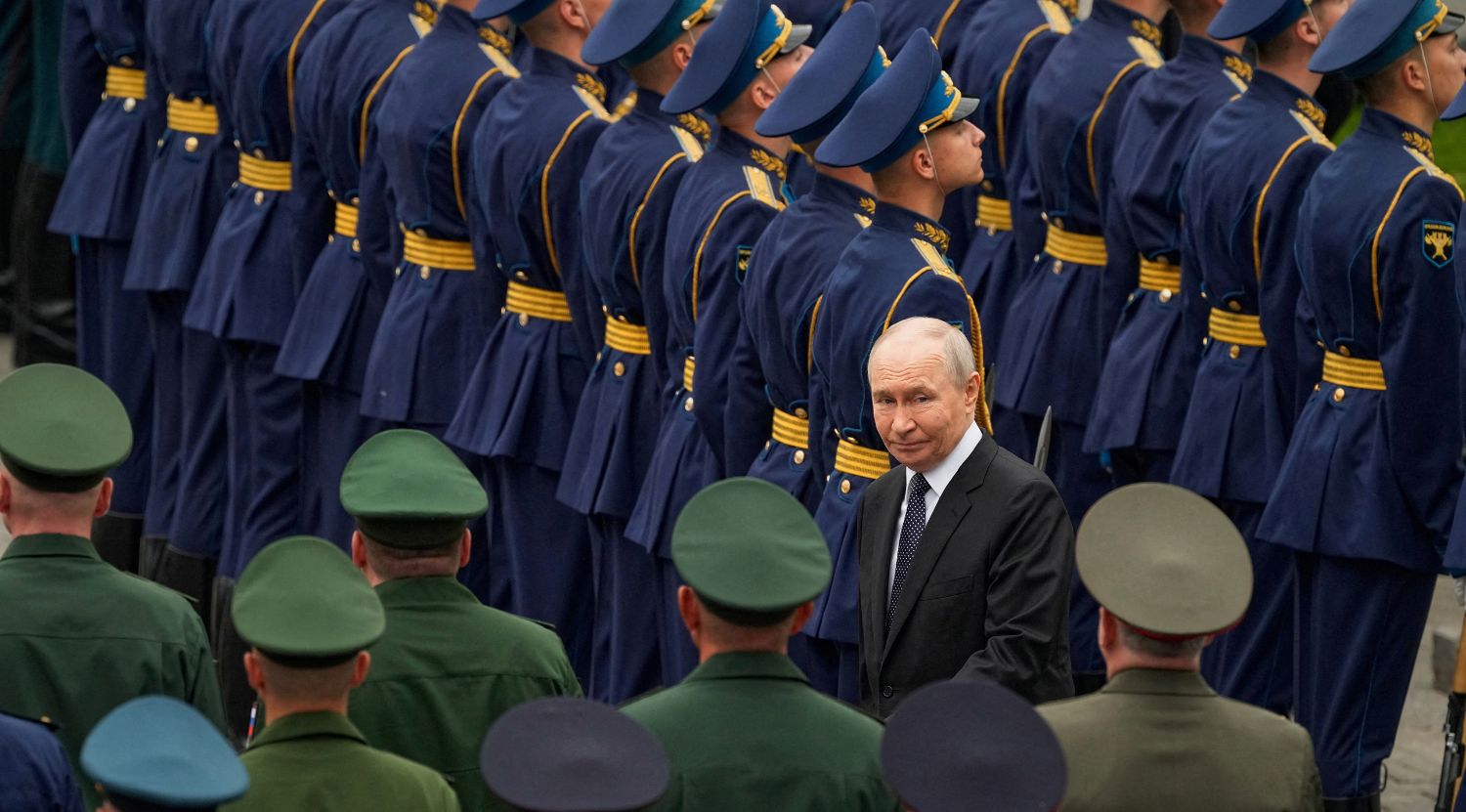
One of the most important issues during the campaign ahead of the “elections” to the Duma was the need to continue the special military operation and to counter the “hostile” actions of Ukraine and NATO. These issues were raised by key figures including President Vladimir Putin, Foreign Minister Sergey Lavrov, Deputy Chairman of the Security Council of the Russian Federation Dmitry Medvedev, and one of the President’s most important advisers, Nikolai Patrushev. These announcements coincided with a wave of Russian hybrid operations in NATO countries, including Poland. The decision to adopt a tougher stance towards Ukraine and the Alliance is evidenced by the official results of the “elections,” which showed record-high support for United Russia, allegedly intended to give the appearance of consolidated power and public backing for the current policy. Warnings about the intensification of Russia’s hybrid campaign were issued by Polish Prime Minister Donald Tusk and French President Emmanuel Macron, as well as the intelligence services of some NATO member states.
Russia’s actions towards Ukraine
The primary objective of Russian policy is to achieve the aims of the special military operation. Although the Russian authorities emphasise that they are ready for talks on ending the war in Ukraine, since the start of the aggression, they have not altered their conditions, which are unacceptable to the Ukrainian side. Among the most important of these is the complete handover of the Donetsk and Luhansk regions to Russia. Only after gaining control of the entire Donbas would the Russian authorities be able to declare the key objective of the special military operation achieved and engage in serious ceasefire talks.
Until then, Russia—with sufficient missile stocks and production capacity—will focus on further undermining the Ukrainian state. It will likely intensify air strikes against energy and transport infrastructure, focusing particularly on railways (where Russian actions have already destroyed around 500 locomotives), roads leading to Poland and facilitating military supplies, as well as key enterprises (not only in the defence sector), and food warehouses. The aim is to significantly undermine the Ukrainian people’s morale and to degrade Ukraine’s economic capabilities.
We should also expect an intensification of military operations aimed primarily at capturing Sloviansk and Kramatorsk, to enable the occupation of the entire Donbas region. Therefore, a further round of Russian mobilisation is possible in the coming weeks. Given that the decree of 21 September 2022 on partial mobilisation remains in force, it will not need to be formally announced and may involve increasing the number of soldiers to be recruited in individual constituent entities of the Federation. Unlike in 2022, Russian state institutions now have clear guidelines on recruitment methods (including financial incentives) and verified lists of potential conscripts. Recruiting a significant number of soldiers (Ukrainian military intelligence estimates this as potentially as many as 600,000 people, noting that Russia can train up to 100,000 people per month) by the end of this year will enable them to be properly equipped and given basic training during the winter, and to intensify operations on the front line in the Donbas by spring 2027 at the latest. In the longer term, this will enable an increase in the forces deployed to occupy territories in eastern Ukraine.
Actions against NATO
Further key goals for Russia are to undermine the willingness of Western countries to support Ukraine and to test the readiness of the Alliance’s defence systems. Therefore, in the coming months—crucial for any future ceasefire talks—we should expect an intensification of hybrid activities directed at NATO countries, in the form of an intensive campaign rather than isolated incidents. Energy infrastructure—including gas pipelines such as the Baltic Pipe—as well as telecommunications and port infrastructure, particularly gas and oil terminals, will be particularly vulnerable. Any damage to these facilities would exacerbate the fuel crisis triggered by the situation in the Middle East. Transport infrastructure will also be at risk, particularly the rail network, which enables the delivery of military and humanitarian aid to Ukraine. Defence companies may once again become targets of attacks, particularly those manufacturing equipment for Ukraine. Frequent attempts to violate the airspace of NATO countries, for example by unmanned aerial vehicles or missiles, are also to be expected. From Russia’s perspective, this is likely to be seen as a response to Ukrainian attacks deep within the Federation’s borders, which are only possible with Western support.
The countries most at risk from Russian hybrid activities will be Ukraine’s key partners: Poland and the other seven Baltic states of the Alliance, the United Kingdom and France. Russia will seek to exploit the major electoral campaigns in 2027 in France (presidential elections), Estonia, Finland and Poland (parliamentary elections), as well as a series of important regional elections in Germany. These hybrid operations will be designed to exert psychological influence on Western societies and to force changes to the policies of NATO member states.
Furthermore, Russia will seek to exploit the ambiguity of US policy towards its European allies, treating this as an incentive to test NATO’s ability to respond collectively to its increasingly aggressive actions. Physical operations will be accompanied by disinformation campaigns emphasising the inability of the targeted states to defend themselves effectively.
Conclusions and recommendations
The internal dynamics of the Russian leadership, as reflected in the official result of the Duma “elections,” clearly indicate that in the coming months we should expect that Russia will intensify activities directed against Ukraine and NATO countries, viewing them as the sources of the most significant threats. It should also be assumed that these actions will take the form of a long-term, multi-domain hybrid campaign. From the Russian perspective, this type of activity is relatively inexpensive and easy to carry out (partly thanks to the possibility of using “disposable agents”), whilst targeted states incur significant costs to strengthen their defence systems.
One element of NATO countries’ response to growing Russian pressure should be the continuation of military support for Ukraine, through the supply of air defence equipment and unmanned systems, as well as the capability to carry out long-range strikes against targets located in Russia. It will also be necessary to replenish stocks of ammunition and other essential equipment. Assistance with the reconstruction of the country’s energy and rail infrastructure, as well as the provision of humanitarian aid during the coming winter, will also be of vital importance.
The growing threat of Russian hybrid activities also demands closer cooperation between the intelligence and counter-intelligence services of Alliance member states, to neutralise emerging threats more effectively. NATO member states should also increase the scale and frequency of exercises, particularly those conducted in regions bordering Russia. Allies must also strengthen air defence systems and provide allied support to countries on the eastern flank—most notably Poland, whose air force is in operation almost daily in response to Russian air strikes on Ukraine.
Furthermore, it would be advisable for Poland, both independently and in cooperation with its allies, to draw up a plan for possible retaliatory measures, covering not only support for Ukraine in its operations against Russia or the imposition of further sanctions, but also actions by its own intelligence and uniformed services, including in cyberspace.
It will also be necessary to continue efforts to build social resilience. Further media and social outreach campaigns will therefore be essential to mitigate the risks associated with disinformation and attempts at cognitive influence, including those targeting Polish society. In Poland, it will also be important to speed up the development of a civil defence system and to provide education on how to respond to events such as air raid alerts.