Russian State Duma elections: the militarisation of politics continues
On September 18-20 of this year, elections to the State Duma were held in Russia. The presidential administration predetermined the course and outcome of the elections, while the state apparatus was tasked with achieving the designated targets. While the Ukrainian side disrupted the electoral process through drone, missile, and cyberattacks, the authorities managed to conduct the elections relatively safely, achieving the expected turnout and a constitutional majority for United Russia. In line with the presidential administration's expectations, veterans from the Ukrainian front will also enter the Duma.
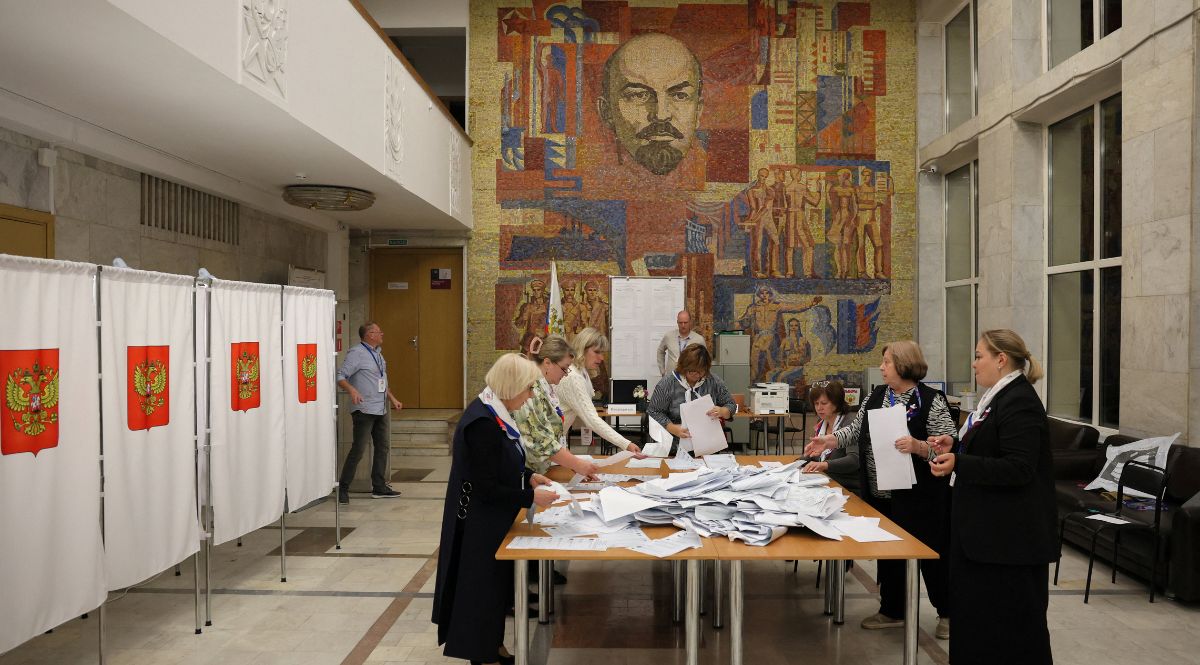 Ramil Sitdikov / Reuters / Forum
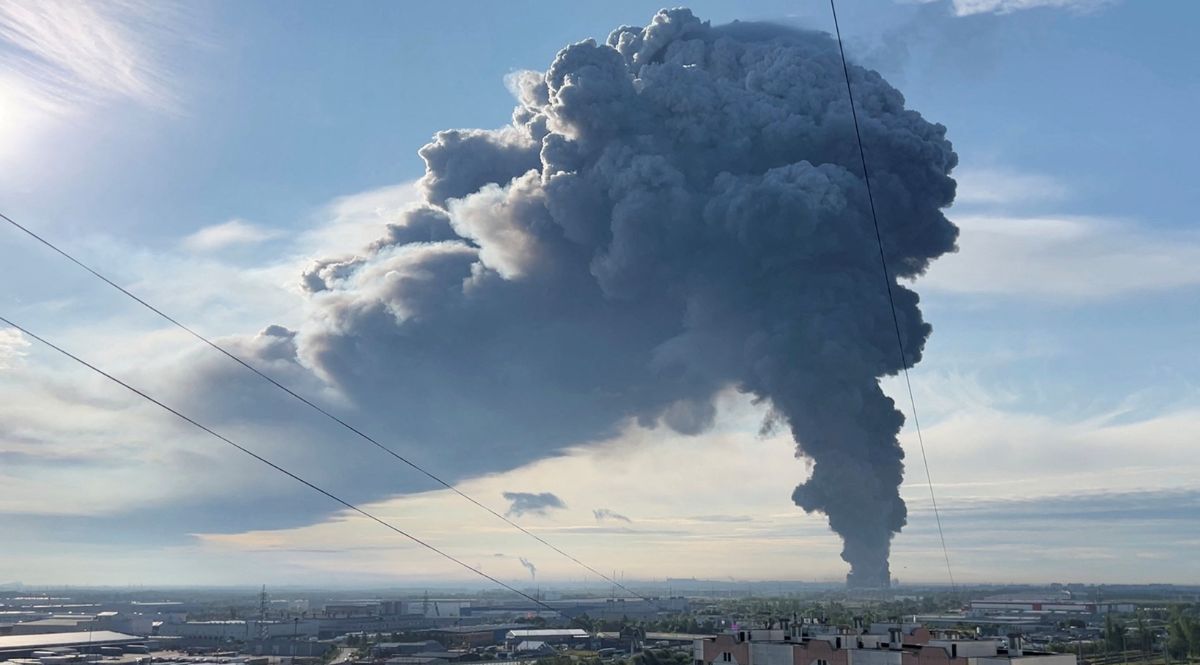
The situation in the final months of the election campaign was unfavourable for the Russian authorities. Ukrainian attacks deep within the territory of the Russian Federation changed the perception of the conflict among Russians in major cities. It was no longer being fought outside the country's borders and “outsourced” to poorer social classes and mercenaries. Attacks on refineries also caused fuel shortages at gas stations, affecting up to 35% of Russians. Furthermore, in the summer, the authorities shut down the internet, causing disruptions in the daily functioning of cities and losses for small and medium-sized enterprises. As a result, by the end of August, these issues had led to a drop of several percentage points in the approval ratings of the president, the government, and the Duma.
What themes dominated the campaign?
Due to the unfavourable situation for the authorities, the “political bloc” (politblok) within the presidential administration, headed by its deputy chiefs Sergey Kiriyenko (coordination of party and regional policy) and Alexander Gromov (control of media and propaganda), aimed to minimise the election campaign’s presence in the mass media. All parties admitted to the elections (the anti-war Yabloko party was barred from running, as were others) focused on patriotic slogans and criticism of Ukrainian “state terrorism,” while unconditionally supporting the “special military operation.” Despite this, they also criticised the government, the FSB, and Roskomnadzor for internet blackouts and the blocking of the Telegram messenger app. Somewhat less prominent were the slogans of socio-economic nationalism and the anti-immigrant agenda targeting guest workers from Central Asia, which the political bloc delegated to the Liberal Democratic Party of Russia (LDPR) and New People. Demands to solve the demographic crisis and opposition to increasing social burdens while shrinking the welfare sphere appeared only at the margins.
How did the voting process go?
The authorities created 10 new electoral districts, 7 of them in the annexed territories, where early voting had been underway since late August under a special regime, effectively meaning that residents were coerced into voting. The authorities also increased the representation of Moscow and the Moscow region at the expense of seats in places like the Volgograd region and the Altai Krai. This was aimed at limiting the number of seats for the largely independent Communist Party of the Russian Federation (CPRF), where some regional activists oppose the war. During the three days of voting, Ukrainian drone and missile strikes continued, along with massive cyberattacks on the electronic voting system. On the final day, Ukraine launched 1,100 drones, striking a Moscow refinery and paralysing Moscow airports, which cancelled or suspended over 400 flights. Despite the attacks, the authorities managed to successfully conclude voting, only relocating or temporarily closing polling stations in Sochi and Moscow. Data regarding the high turnout and United Russia’s result were partly falsified and partly based on the addition of districts in the occupied territories.
How will the personal and party composition of the State Duma change?
With 98% of the votes counted, four of the ten parties contesting the election are set to enter the Duma—just as they did four years ago: United Russia (57.8%), the KPRF (13.8%), the LDPR (9%), and New People (8%). If this result holds, the biggest surprise will be A Just Russia’s failure to clear the 5% electoral threshold (it currently stands at exactly 4,96%); this could be viewed as punishment from Vladimir Putin for the party’s support of Prigozhin’s 2023 march on Moscow. As ordered by the presidential administration, United Russia secured a constitutional majority. All parties will execute the legislative directives of the presidential administration (over 90% of votes were “for” in the previous term), especially since each party has experienced increased arrests of activists in the regions. The CPRF and LDPR were the most affected by these repressive actions. Vyacheslav Volodin is likely to once again become the speaker of the Duma. Following the president’s orders, between 40 and 100 veterans (9-22%) will sit in the Duma. This is another manifestation of the saturation of the civil service with veterans, as well as federal and local authorities, and of the militarisation of politics. This development is emphasised as, in addition to veterans, representatives of the security ministries, the defence sector, and retired uniformed personnel will hold seats in the Duma.
How will the election results affect Russia's foreign policy?
The State Duma elections will not change the Russian Federation’s current foreign policy. A narrative highlighting the difference between the elected Russian Duma and the “undemocratic” Ukrainian Verkhovna Rada will be directed at the countries of the Global South and the USA. This will allow Russian diplomacy to continue portraying the “Kyiv regime” as lacking the electoral mandate of its people, particularly during negotiations with the United States on ceasefire conditions. It is highly likely that the veterans elected to the Duma will join committees related to defence and foreign policy, which will translate into even more aggressive rhetoric from deputies toward Western countries, especially Poland, Germany, and the United Kingdom. We can expect an increase in deputies calling for the use of nuclear weapons and attacks on EU countries using long-range missile systems and hypersonic missiles. If the president decides to launch a general mobilisation or utilise indirect enlistment (e.g. partial mobilisation of selected age cohorts, or regional, factory, and university quotas), this process is likely to appear first in a “debate” on the floor of the Duma.