
Russia's Shadow Fleet under Pressure. Boosting the Impact of Western Sanctions
Over 700 tankers without reliable insurance, special forces operations on the high seas, and opaque financial mechanisms that allow Western sanctions to be circumvented – this is what the global network looks like that allows the Kremlin to finance its war machine.
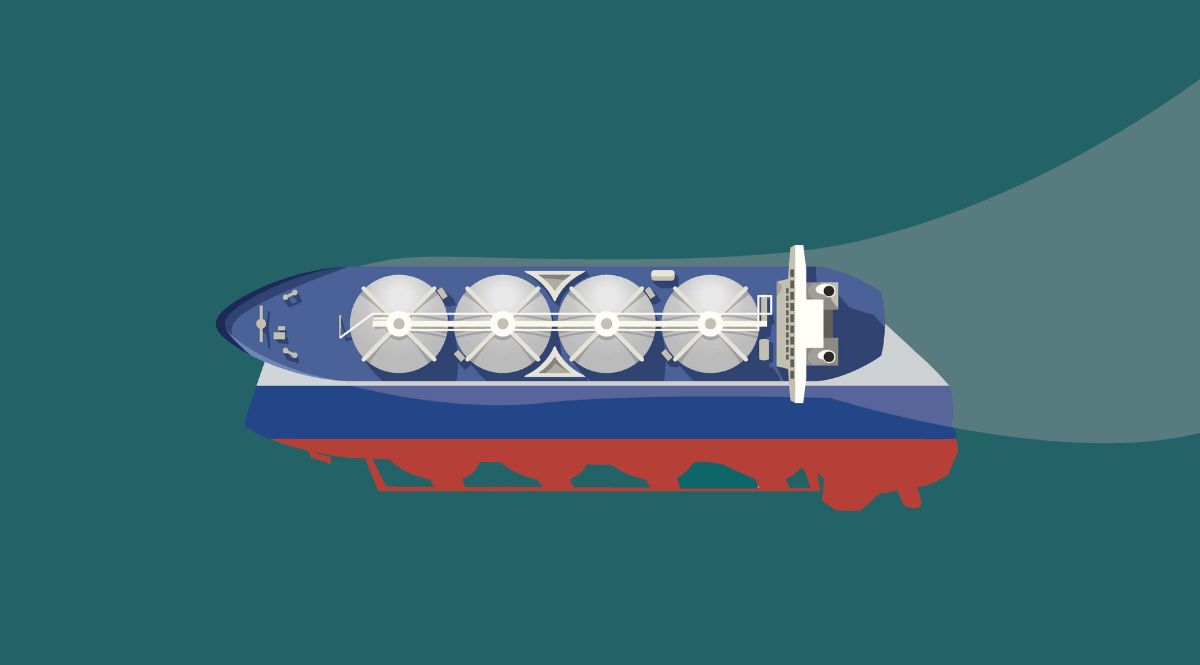
How effective are the sanctions imposed by the G7+ nations on the Russian oil sector? Where are the loopholes in the global shipping system, and why has the Baltic Sea become a high-risk zone? What environmental threats are associated with the operation of the Russian shadow fleet? These are just a few of the questions answered in the report Russia's Shadow Fleet under Pressure. Boosting the Impact of Western Sanctions.
[Download the full version of the PDF report]
Are sanctions working? Key takeaways
The PISM report precisely assesses the impact of international restrictions on the Russian oil sector. Although the Kremlin is searching for new ways to finance its war machine, figures show that Western pressure has a real impact:
- A blow to the Kremlin's budget: In the years 2021-2025 the share of hydrocarbon revenues in Russia's state budget has decreased from 40% to 25%, and Moscow's actual income from this source has dropped by as much as 33%.
- Only a temporary breather for Moscow: Although tensions in the Middle East and rising oil prices since March of this year have temporarily improved Russia's financial situation, sanctions continue to effectively limit its long-term budgetary capabilities.
Anatomy of the "Shadow Fleet": A global threat controlled by intelligence services
The Russian shadow fleet is not just an economic problem – it is a coordinated tool of hybrid warfare. The report sheds light on the mechanisms of its operation:
- Legal and technical masking: Over 700 tankers with opaque ownership structures, lacking reliable insurance, and with manipulated Automatic Identification Systems (AIS) allow Russia to sell crude oil above price cap. An increasing number of companies from third countries are getting involved in this practice.
- A strategic asset for the Kremlin: These are not private entrepreneurs. The fleet is supervised by Russian special services and state-owned corporations (Rosneft, Lukoil, Sovcomflot), and selected vessels move under the escort of the Russian Navy.
- Sabotage and ecology in the Baltic: Since 2022, at least 25 serious maritime incidents (i.e. collisions, engine failures, groundings) have been recorded. Worse still, these vessels are used for sabotage activities targeting critical European infrastructure, notably in the Baltic Sea.
- Fleeing to other flags: Sanctions are forcing Russia into continuous flag hopping – as many as 61% of the sanctioned tankers have changed their flag at least twice, opting for registries including Cameroon, Sierra Leone, Panama, and Oman.
PISM Recommendations: How to tighten the system?
The current price cap formula is exhausting its potential. The authors of the report point to the necessity of implementing decisive steps and adapting them to the dynamic situation in the global oil market:
- A radical change of strategy: A shift away from the current price cap toward a full ban on providing maritime services for Russian oil.
- Restricting the movement of shadow tankers in European seas: Increasing the number of detentions of stateless ships and those under false flags – with a particular focus on strategic waters: the North Sea and the Baltic Sea.
- Pressure on third countries: Expanding sanctions to entities facilitating the practice – foreign ports, refineries, and financial institutions.
- Technical control: Tightening environmental standards for aging tankers and rigorous verification of flag changes.
About the report: The report Russia's Shadow Fleet under Pressure. Boosting the Impact of Western Sanctions is essential reading for diplomats, energy sector analysts, journalists, and anyone interested in the security architecture of Europe.
Authors: Elżbieta Kaca and Tymon Pastucha
Editor: Elżbieta Kaca

.png)