Opportunities and challenges in implementing Poland's strategic partnership with India
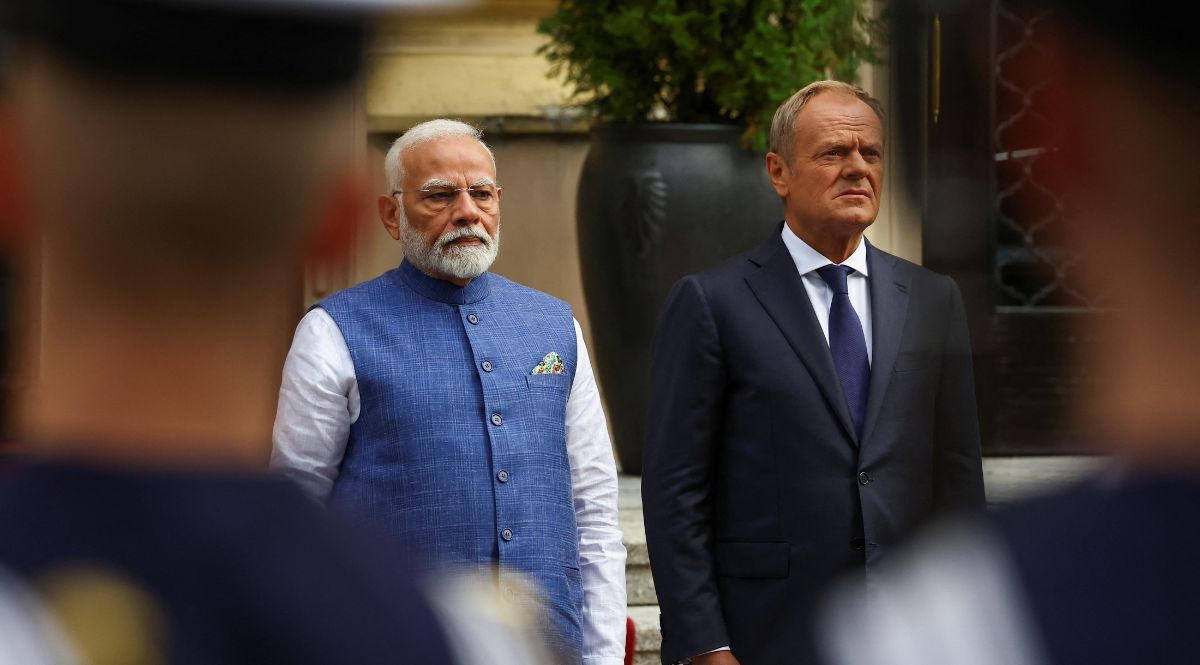
The visit by the Indian Minister of External Affairs to Warsaw on 2–4 September and the planned visit by Polish Prime Minister Donald Tusk to India in October this year demonstrate the growing importance of bilateral political and economic relations. This represents an attempt to fill the ‘strategic partnership’ signed in 2024 with true substance. An opportunity to do so will be the entry into force of the EU–India Free Trade Agreement, scheduled for early 2027, which will enable an increase in exports from Poland, the diversification of supply chains away from China, and the expansion of cooperation into new areas, such as the defence and space industries. The challenge will be to rebuild mutual trust in the context of India’s close relations with Russia, as well as to increase the involvement of the Polish government and business sector in the development of bilateral cooperation.
 Kacper Pempel / Reuters / Forum
India as a strategic partner
India is Poland’s most important partner in South Asia and its fourth ‘strategic partner’ in Asia as a whole (after China, Japan and South Korea). As the world’s most populous country, the sixth-largest and rapidly developing economy (GDP growth stood at 7.6% in 2025), and an emerging power, India is also an attractive global partner for Poland. Relations between the two countries have traditionally been friendly, though both sides neglected ties in the post-Cold War era. The last visit by a Polish president to India took place 28 years ago (Aleksander Kwaśniewski in 1998), and the last visit by a prime minister was 16 years ago (Donald Tusk in 2010). Prime Minister Narendra Modi’s visit to Poland in August 2024 was the first in 45 years (Prime Minister Morarji Desai visited in 1979). The “Declaration on Strategic Partnership” and the Action Plan up to 2028, adopted at that time, created a foundation to start a new phase of cooperation.
Prime Minister Tusk’s trip to India could be of great significance in maintaining the momentum of dialogue and deepening political and economic relations. Several agreements are expected to be signed (including on the protection of classified information and on educational, scientific and cultural cooperation). Although the main focus will be on economic issues, other matters will also play a significant role, including cooperation in the defence and space sectors, digital security, and the expansion of connections between India and Central Europe, linking the Three Seas Initiative with the India-Middle East-Europe Corridor (IMEC).
Closer cooperation is facilitated by the growing EU-India partnership and the convergence of their positions on many issues—from counter-terrorism and support for multilateralism, to concerns regarding China. The main challenge for political relations is India’s neutral stance on the war in Ukraine and its continued close ties with Russia, including purchases of Russian oil. Although India’s policy on this matter is unlikely to change, this issue can be decoupled from other areas where both countries have converging economic and strategic interests. India can also play a more active and constructive role in reaching a political settlement to the war in Ukraine and act as a partner in the country’s future reconstruction. In the long term, the way to reduce India’s dependence on Russia is to offer better alternatives in the fields of arms production or energy transition.
Untapped economic potential
According to the Central Statistical Office (GUS), in 2025, trade between Poland and India reached a value of $6.44 billion, with imports into Poland three times higher ($4.75 billion) than exports ($1.7 billion). Yet, India accounted for only 0.77% of Poland’s trade and was only its 24th largest trading partner. The structure of trade is also unfavourable, with India exporting more manufactured goods (textiles, electronics, pharmaceuticals) while largely importing unprocessed goods (coke, scrap metal, apples). The country’s free trade agreement with the EU, which may be signed by the end of this year and enter into force in 2027, offers an opportunity to redress these imbalances. As well as reducing customs duties on the vast majority (96%) of products, it will bring down non-tariff barriers and facilitate regulatory convergence, thereby lowering operating costs for Polish firms in this challenging market. This will facilitate exports directly to India, as well as indirectly through increased sales from other EU countries, primarily Germany, with which Polish subcontractors have links.
This new trade landscape will offer new opportunities for companies from every sector, but this is particularly true of the defence, aerospace, digital and green technology sectors. India has the fifth-largest defence budget in the world (US$85 billion in 2026). It is the second-largest importer of arms, whilst its armed forces are undergoing a historic modernisation and diversification of suppliers. This creates opportunities for European arms manufacturers, as well as for joint production and research into new technologies. Poland was a major supplier of arms to India during the Cold War, and more recently, Polish private companies (e.g. WB Electronics) have been successful there, offering modern weaponry (e.g. drones) and planning production in India. The huge expenditure on Polish defence (around 5% of GDP) and the limited production capacity of Polish defence firms create scope for joint production in India. Strengthening cooperation in this sensitive sector requires political support, regular dialogue on security matters and closer military cooperation.
Other high-tech sectors will also find significant opportunities for growth, including the fields of conventional and renewable energy, digital services and space exploration. The signing of an agreement between the Polish Space Agency (POLSA) and the Indian Space Research Organisation (ISRO), or joining the Indian-led International Solar Alliance (ISA) initiative, could provide a boost to technological cooperation. Expanding the scope of cooperation to include modern technologies could be a way to balance trade and revitalise mutual investment.
Social and academic ties
Poland and India are also linked by systemic parallels (democracies, economic transformation after 1991) and shared historical experiences. One example is the story of over 5,000 Polish refugee children who found refuge in India during the Second World War, a story which is to be commemorated in a museum being established in Kolhapur, Maharashtra, by Maharaja Sambhaji Chhatrapati. Highlighting these shared chapters of history creates a favourable atmosphere for the development of bilateral relations.
The growing Indian diaspora in Poland serves as a new natural bridge between the two countries. According to data for 2025, Indians already constitute the third-largest group of foreign nationals legally residing in Poland (over 26,000). Alongside a growing number of workers, this group also includes businesspeople, professionals, and students. The Indian side is keen to facilitate labour mobility, but any streamlining of the visa issuance process will need to take account of changes in European migration policy.
Scientific and academic cooperation is a sector with great potential. Education, vocational training and the creation of jobs for millions of young Indians represent a growing challenge for the Indian authorities, as highlighted by the recent protests by young people. Polish universities can develop a comprehensive package covering not only recruitment for study programmes in Poland, but also—following the example of other European partners—opening their own branches in India or offering dual degrees in partnership with Indian universities.
Importantly, public opinion in Poland generally favours cooperation with India. According to a Pew Research Centre survey, more Poles (37%) have a positive attitude towards India than a negative one (25%), although the majority have not yet formed an opinion (38%). This points to the need to inform the public more effectively about India. Nevertheless, it is significant that the country already enjoys a better reputation than China (which has 41% negative views compared with 39% positive).
Conclusions and recommendations
The intensification of political dialogue at the highest level demonstrates India’s growing importance in Poland’s foreign policy. The Polish Prime Minister’s visit to India will provide the necessary impetus to give substance to the strategic partnership, marking an important step towards improving mutual trust and understanding, and diversifying cooperation into new areas. It will take place at a crucial time—shortly before the EU–India trade agreement comes into force, which will open up new opportunities for economic cooperation. It is therefore important to ensure broad participation by companies in the organised economic mission and the Business Summit, which will provide an opportunity to promote the potential of the Polish economy and establish business contacts. To support Polish entities in this challenging market, the government may consider increasing its diplomatic presence (e.g. by staffing missions with more personnel or opening new consulates) and support for businesses (e.g. by resuming operation of the Trade and Investment Promotion Agency Office in Mumbai). This could contribute to increased trade, investment and cooperation in modern technologies, and strengthen Poland’s position as an important partner for India within the European Union. To fully exploit the potential for cooperation, broader involvement of various ministries (Defence, Science and Higher Education, Energy, Agriculture) is required. To make better use of the shared history, it is worth considering projects aimed at a mass audience, such as co-production of a film on the history of Polish children in India.


.png)