Ukraine and Moldova open the first EU negotiations cluster
On 15 June 2026, following a unanimous decision from all EU member states during the intergovernmental conference in Luxembourg, Moldova and Ukraine opened their first cluster of accession negotiations. Further progress towards integration will depend on their determination to implement the required reforms, but the war in Ukraine and the country’s difficult economic situation may limit its capacity to do so. This could result in Ukraine achieving accession readiness later than Moldova, which may give rise to tensions between these countries and the EU.
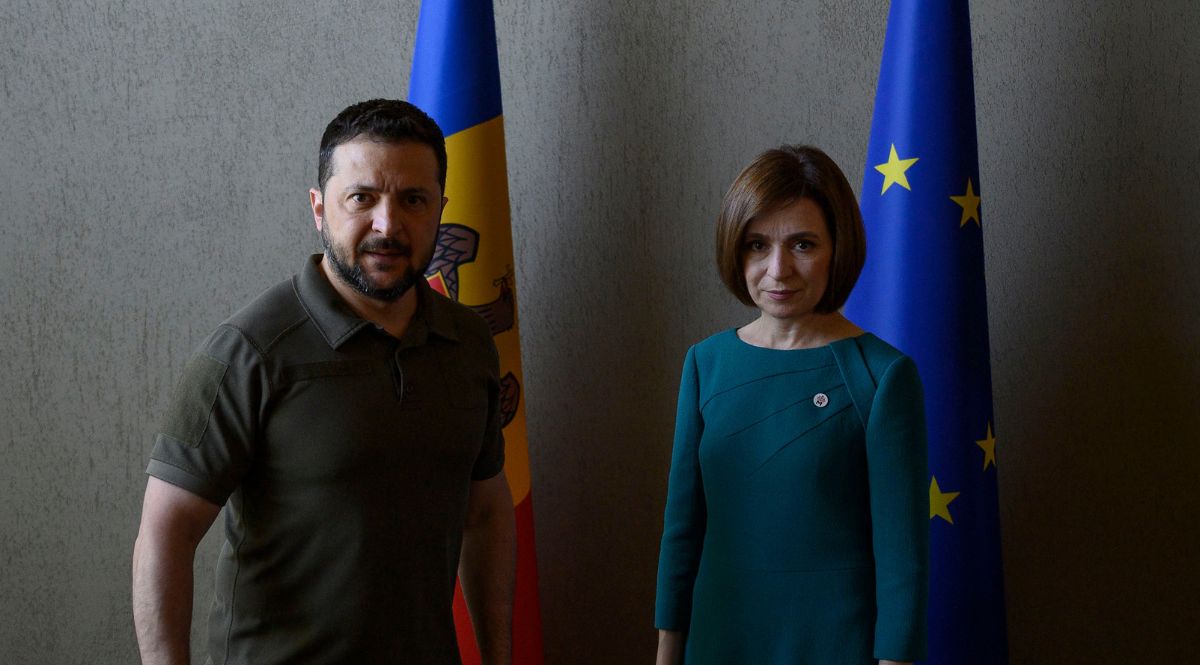 Pool /Ukrainian Presidentia / Zuma Press / Forum
Ukraine submitted its application for EU membership in February 2022—only a few days after the full-scale Russian invasion—capitalising on a strategic shift from Member States that had previously ruled out enlargement to the East. Shortly after, in early March, Moldova followed suit, and the EU granted both countries candidate status in June 2022. The opening of the first negotiation cluster for Ukraine, initially planned for the first half of 2025, was blocked by Hungary on the pretext of alleged violations of the rights of the Hungarian minority in Transcarpathia. Although no Member States opposed Moldova’s integration, the opening of its negotiation clusters was also put on hold, given that the accession processes of both countries were linked.
What is the accession negotiations process?
The opening of the “fundamentals” cluster marks the start of the actual accession negotiations. These comprise a total of 6 clusters, divided into 33 chapters (and 2 additional chapters concerning the country’s functioning within EU institutions). Under each chapter, the candidate country implements EU law (the acquis) and introduces the required reforms. The process Ukraine and Moldova have begun starts with the “fundamentals” cluster, which is opened first and closed last. It comprises five chapters focusing on the foundations of internal policy, such as the rule of law, the fight against corruption, and institutional and administrative reforms. The subsequent clusters cover the internal market, competitiveness and economic growth, the green agenda, agriculture and external relations. The opening and closing of each chapter (and, ultimately, the cluster) requires the unanimous consent of all member states. Once all negotiations have been successfully concluded, the EU draws up an accession treaty for the candidate country. The document must be approved by the Council, the Commission and the European Parliament, and ratified by each Member State (which may require a parliamentary vote or a referendum).
What does this signify for Ukraine?
The start of negotiations sends a political signal of support for Ukraine as it fights, marking a practical step towards its European integration. It is also a symbolically significant step for the Ukrainian people, representing a conscious choice to align with the West in defence against Russia—a decision of existential and identity-defining importance. Opening of the first negotiations cluster bolsters the domestic credibility of President Volodymyr Zelenskyy and his political camp, which has been strained by corruption scandals. Maintaining the pace of negotiations will require implementing unpopular legislative changes and reforms demanded by the EU, such as tightening up the customs and tax systems, which will raise the cost of living. This task may be hampered by the ongoing legislative crisis in Ukraine’s Verkhovna Rada due to poor voting discipline. Completing the reform of the judiciary and continuing the fight against corruption are also key issues that Ukraine will need to address as part of the “fundamentals” cluster.
What does this signify for Moldova?
As with Ukraine, the completion of judicial reform is also a key issue for Moldova within the first cluster. This is required to enable the effective prosecution of corruption, dismantling of oligarchic networks, and strengthening resilience against Russian destabilisation attempts. A key milestone of this reform is the finalisation of the protracted vetting process to assess the integrity of judges and prosecutors, alongside a delayed administrative reform of the state. Currently divided, according to the post-Soviet model, into 32 districts and around 850 small municipalities (excluding Transnistria), the vast majority are significantly under-resourced in terms of both staffing and funding. This reform is intended to enable more effective governance of the country and implementation of investments, as well as an improvement of access to public services. The process of bringing the country into line with accession requirements is being accelerated by the EU instrument Reform and Growth Facility for Moldova for 2025–2027, worth €1.9 billion. By way of comparison, Moldova’s budget for 2025 stood at €4.4 billion, whilst total EU aid over the last 10 years amounted to €3.5 billion. The EU does not regard the reintegration of Transnistria as a prerequisite for Moldova’s accession—consequently, the Moldovan authorities are putting this issue on hold, hoping that the country’s accession to the EU will force the separatists to agree to reintegration.
What are the prospects of EU accession for both countries?
Despite the coupling of Ukraine’s and Moldova’s accession processes, progress in the negotiations will depend on their individual pace of reforms and adoption of the EU acquis. Both countries declared their readiness to open all negotiation chapters immediately, and their aim to conclude accession talks by 2028 and join the EU by 2030 (although the Western Balkans experience shows that this timeframe is doubtful). For both countries, the challenge will be to meet the interim benchmarks for Chapters 23 and 24, which focus on judicial and security reforms. These include the fight against corruption and the preparation of security services (including customs and border control) for EU integration. Consequently, progress in both countries will depend mainly on their political will to implement reforms and strengthen independent state institutions. The Moldovan Parliament is prioritising legislative initiatives aimed at harmonising national law with EU law. Meanwhile, in Ukraine, the challenge will be the persistent issue of voting discipline in the Verkhovna Rada. Another obstacle to negotiations may be the conviction that EU accession should be a purely political decision, to which Ukraine is inherently entitled by virtue of its role in defending Europe against Russia. This mindset may result in reforms being neglected in favour of exerting political pressure on the EU and its member states. Looking ahead to the opening of the next negotiation chapters, Ukraine’s economic situation poses another problem. Currently, the country is entirely dependent on external financing due to the war and does not meet the macroeconomic stability criteria for accession. Because the two countries have been tightly linked in the enlargement process so far, Moldova making faster progress towards the formal requirements would risk causing tensions with Ukraine.