The question of long-term EU support to Ukraine
In 2025 alone, the total value of European Union support to Ukraine surpassed the total amount of US aid provided since the start of the war. Given the lack of prospects for a swift end to the war, the EU is considering various strategies to secure long-term funding for Ukraine. Safeguarding such support could weaken Russia’s negotiating position vis-à-vis Ukraine, whilst ensuring that Ukraine implements essential reforms.
 Valentyn Ogirenko / Reuters / Forum
European Commission (EC) data from February 2026 estimates Ukraine’s economic losses since the start of the full-scale invasion at €560 billion. Due to a decline in budget revenues caused by the war and increased spending on defence and reconstruction, Ukraine is dependent on foreign aid. To ensure the state's functioning during the war, its debt has grown—in 2025, it reached nearly the equivalent of the annual GDP (98.4%). According to the EC, to fully cover its expenditure in 2026, Ukraine must secure €71.7 billion from external partners.
EU financial support to date
The European Commission views financial and military aid to Ukraine as an investment in European security. Following a shift in US policy towards Ukraine after President Donald Trump returned to power in 2025, the EU has become the main aid provider to Ukraine. In total, since February 2022, the EU and its Member States have mobilised €195 billion in financial, military and humanitarian aid, exceeding the total value of all aid provided by the US to date (€115.33 billion, according to data from the Kiel Institute).
The majority of the macroeconomic assistance to Ukraine is currently coordinated through a dedicated EU instrument called the Ukraine Facility, adopted for the period 2024–2027. The assistance totals €50 billion (€17 billion in grants and €33 billion in loans) and consists of three main pillars: budgetary support (conditional on ongoing reforms), assistance with the accession process, and support for private investment in Ukraine. Ukraine’s military expenditure is supported through an off-budget instrument European Peace Facility (EPF). Initially, this was used to refinance the supply of arms and military equipment provided to Ukraine by Member States, as well as to purchase 155 mm ammunition and train Ukrainian soldiers as part of the EU Military Assistance Mission for Ukraine (EUMAM). However, following Hungary’s veto in 2023, disbursements from the EPF budget related to Ukraine were halted. To circumvent the blockade, in 2024, the EU decided that aid to Ukraine from the EFP would be financed using the €3.1 billion proceeds from frozen Russian state assets. Separately, the EU, together with its G7 partners, granted Ukraine a loan of €45 billion, which will be repaid from future proceeds generated by these assets.
Each tranche has been subject to lengthy political debate within the EU – the amount and conditions are often negotiated for months or blocked by Hungary (and more recently by Slovakia). In late 2023, Hungary vetoed an EU support package proposed at a crucial time when the US Congress was withholding payments to Ukraine from the aid package established by the Biden administration. The EU aid package was eventually introduced, albeit with a delay, as the Ukraine Facility. The EU is seeking to increase and extend the timeframe of aid programmes, seeking to provide Ukraine with a pool of funds that will cover several years, and to limit the political and legislative processes that create delays. At the same time, making payments from the Ukraine Facility conditional on the reforms set out in the dedicated Ukraine Plan helps Ukraine move closer to the EU, despite Hungary’s veto preventing the opening of formal accession negotiations.
Outlook on future funding
In order to cover Ukraine’s budgetary deficit for the coming years, the EC proposed making use of the approximately €210 billion of frozen Russian assets, which would be more than sufficient to cover the shortfall. However, at the summit in December 2025, the European Council failed to reach an agreement on this matter. This solution was opposed primarily by Belgium, as the jurisdiction under which most of the frozen assets fall, and which most fears repercussions from their use. As an alternative, the Member States (excluding the Czech Republic, Slovakia and Hungary) agreed to grant Ukraine a loan of €90 billion, guaranteed by the EU budget headroom. The EC estimates that this loan would cover two-thirds of Ukraine’s financial needs in 2026–2027, with €30 billion earmarked for budgetary support and €60 billion for defence expenditure. As with Ukraine Facility funds, disbursement of the full €90 billion is conditional on progress of implementation of the reforms required by the accession process, including those relating to the rule of law and the fight against corruption.
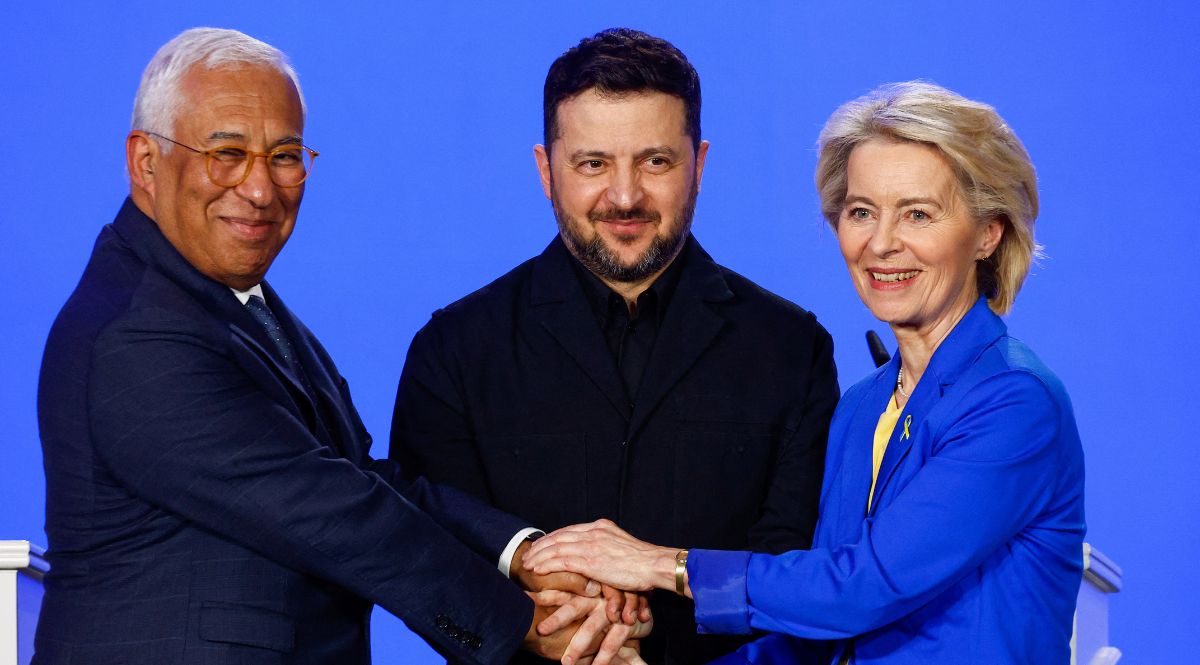
Hungary is currently blocking an amendment to the EU’s 2021-2027 Multiannual Financial Framework that is required to guarantee the loan. This veto is meant to pressure Ukraine into restoring the transit of Russian oil to Slovakia and Hungary. Although European Commission President Ursula von der Leyen and European Council President Antonio Costa have given assurances that the funds will reach Ukraine, any delays will have serious consequences. If the funds do not arrive by April 2026, this will undermine Ukraine’s ability to continue the war and maintain all state functions.
The loan would ensure funding continuity until the new EU multiannual budget comes into force. According to the EC’s proposal, Ukraine could receive up to €100 billion from the next budget in loans and grants. The proposal for a Council Regulation of July 2025 laying down the multiannual financial framework for the years 2028–2034 emphasises the importance of predictability in support for Ukraine. EU aid is intended to ensure the functioning of its government and the provision of public services, as well as support reconstruction, recovery and reforms.
Outlook
Russia and Ukraine are waging a war of attrition, designed to exhaust the other side’s resources and the support of its international partners. The approval of long-term EU financial aid could lead to a reassessment of Russia’s military objectives and a weakening of its negotiating position vis-à-vis Ukraine.
For this reason, the EU should explore avenues for multi-year support for Ukraine extending beyond 2027. This will allow for greater flexibility in responding to unforeseen events and prevent repeated, lengthy political debates when introducing any new forms of funding. Linking financial assistance to progress on the required reforms is a good policy. However, in 2025, Ukraine failed to meet 15 of the 57 reform indicators set out in the Ukraine Plan for that year. The slowdown in the pace of reform implementation is partly due to a stalemate in voting on the required legislation in the Verkhovna Rada of Ukraine. To support Ukraine’s path towards the EU, it is necessary to formally open accession negotiations. The situation may change if the parliamentary elections in Hungary this April result in the end of Viktor Orbán’s prime ministership. Hungary’s position will be of particular significance in the context of the extending blockade of the €90 billion loan and the ongoing negotiations on the 2028–2034 budget. Given the much lower cost of a loan guaranteed by the EU budget, there is currently no viable alternative for financing Ukraine that would allow circumventing the Hungarian or Slovak vetoes.
If there is no cessation in hostilities in the years ahead, the Commission is likely to reconsider the possibility of using frozen Russian assets to support Ukraine. The EU should also continue to support its domestic military base and pursue close cooperation between the European and Ukrainian defence industries. Including Ukraine in EU defence programmes supports its innovation and self-sufficiency, but in the context of war, the lengthy timeframes and complex application processes constitute a serious constraint. The EU should therefore aim to reduce bureaucracy and shorten the timeframes of defence programmes, reflecting Ukraine’s urgent needs.