Moldova's integration with the EU in light of the growing crisis of eastern enlargement
In its November report, the European Commission pointed out that Moldova has made significant progress towards EU membership over the past year. It therefore recommended opening three of the six negotiation clusters. However, this is not possible due to Hungary blocking the European integration of Ukraine, which the EU treats as a tandem with Moldova in the accession negotiations. As a result, since 2025, the eastern dimension of the enlargement policy has also been in crisis.
 VLADISLAV CULIOMZA / Reuters / Forum
Positive assessment by the EC
For the first time in its report on Moldova's progress, the Commission (EC) confirmed that the country had met the conditions for opening actual talks in three of the six negotiation areas, known as clusters (33 chapters in total). The first cluster concerns fundamental issues (those most important from the point of view of the rule of law), including the judiciary and human rights, freedom, justice and security, as well as a functioning market economy. In membership talks, the EU opens negotiations on these topics first and closes the chapters on them last. The EC also recommends opening talks within the second cluster (internal market) and the sixth cluster (external relations).
At the same time, the Commission encouraged Moldova to take further action. It expects Moldova to meet the conditions necessary for recommending that the Council of the EU opens the remaining three clusters by the end of the year: cluster three (competitiveness and growth), cluster four (green agenda and connectivity) and cluster five (resources, agriculture and cohesion). Furthermore, the EC asserted that 2028, indicated by the Moldovan authorities as the deadline for concluding accession negotiations, is realistic, provided that they accelerate the pace of reforms.
For Moldova, this is the fourth year on the formal path to the EU. In September this year, the EC completed the screening process for this country, which involved examining the compatibility of its legislation with EU law. Moldova, together with Ukraine, formally began accession negotiations in June 2024. Both countries obtained candidate status in June 2022. Moldova submitted its application for EU membership together with Georgia in March 2022, a few days after Ukraine did so in the wake of Russian aggression.
Blockade of EU enlargement to the east
The EC had already signalled the possibility of Moldova opening the first cluster. In January 2025, when it sent the Council its first screening report on fundamental issues, it expressed its hope that the first Accession Conference would be convened in April, thus opening the cluster. The Commission was supported in these intentions by, among others, Poland, which held the Presidency of the Council at the time.
However, the opening of negotiations with Moldova did not take place due to the stance taken by Hungary. Although it supports Moldova's efforts, it is vetoing Ukraine's accession progress. For years Hungarian authorities justified their hostility towards this country by citing alleged violations of the rights of the Hungarian minority there, and then also by claiming that Ukraine's accession would drag the Union and Hungary into a war with Russia, but in recent months they have been arguing outright that it would have a detrimental effect on the Hungarian and EU economies. Viktor Orbán's government refers also to their "national consultation" – in the form of a non-binding referendum – in June 2025, in which 95% of participants opposed Ukraine's accession.
Meanwhile, although according to the rules of enlargement policy, each country applying for membership should be assessed on the basis of its individual achievements, the EU, following the practice in the Balkans (coupling North Macedonia and Albania), informally treats Ukraine's and Moldova's candidacy as a tandem. After the publication in early 2025 of the EC's opinion on opening clusters with them, followed by Hungary's blockade in February, discussions have been ongoing among Member States on decoupling these candidacies. Following the September elections in Moldova, along with the risk of defeat for forces oriented towards EU integration, this argument for decoupling disappeared. The argument against splitting the tandem, in turn, remains valid: some Member States (especially the Baltic states, the Czech Republic, but also Germany, France and Poland) point out that isolating Ukraine as a blocked country within the enlargement process would be a success for Hungary's pro-Russian policy. At the same time, Moldova itself has not formally sought decoupling, likely due to fear of the reaction from the Ukrainian authorities, who point out that the EU accepted Moldova's membership application only because it accompanied Ukraine's.
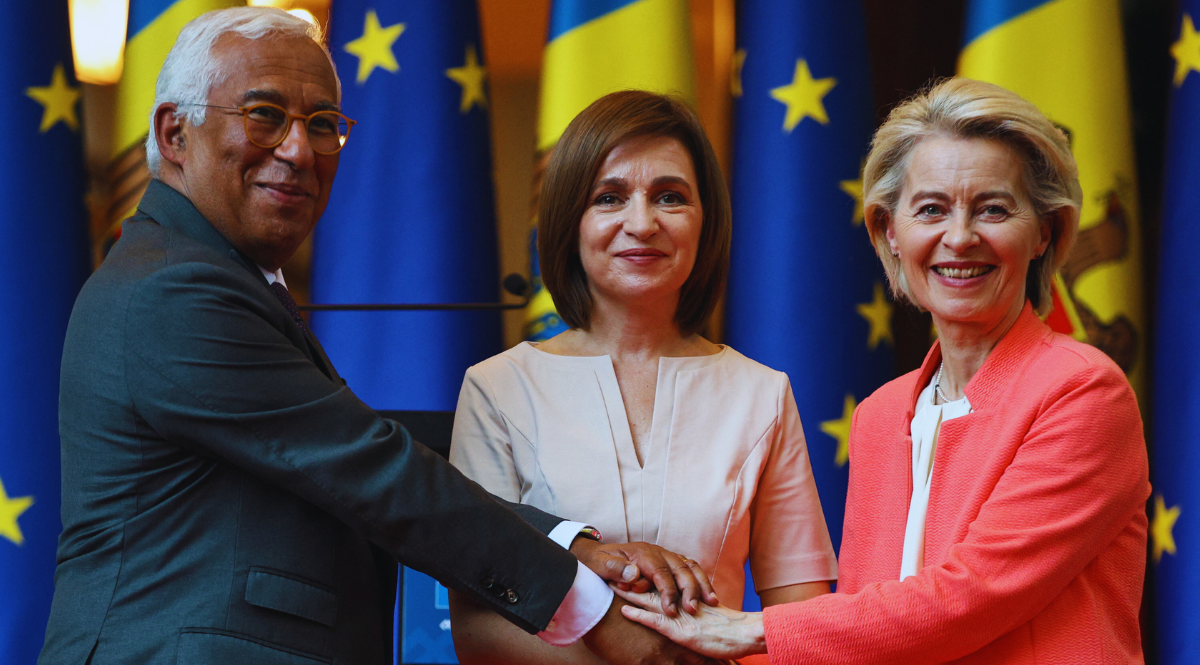
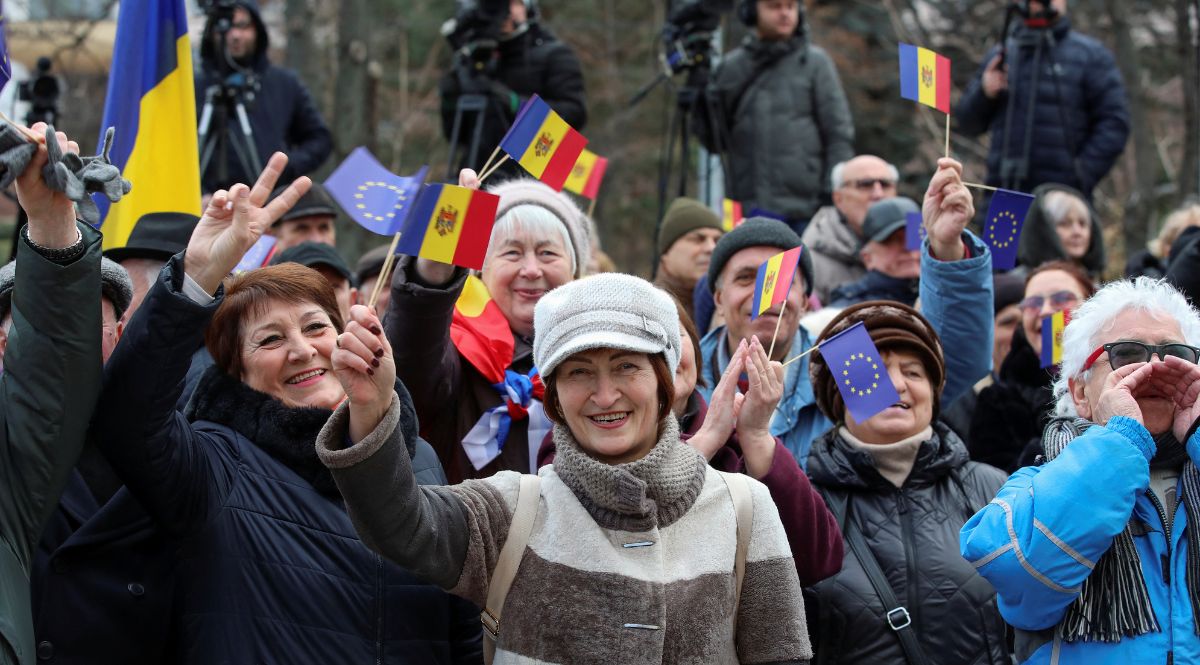
The stalemate of EU enlargement to the east in the face of ambiguous public sentiment ahead of the elections in Moldova was the reason for the EU to convene its first summit with Moldova in July 2025. The meeting in Chișinău served to demonstrate support for Moldova's European integration, including expressing hope for the real start of negotiations and thereby to maintain pro-EU sentiment among the Moldovan population. The visible effect of strengthening EU relations for the inhabitants of Moldova was to be the confirmation of plans to include the country in the Single Euro Payments Area (SEPA), which took place in October 2025, as well as to end roaming charges in the Union for Moldovan subscribers from 2026. Previously, the EU had only convened such summits with major partners, such as Ukraine or Turkey, or with a group of Western Balkan countries.
Challenges for the new pro-European government
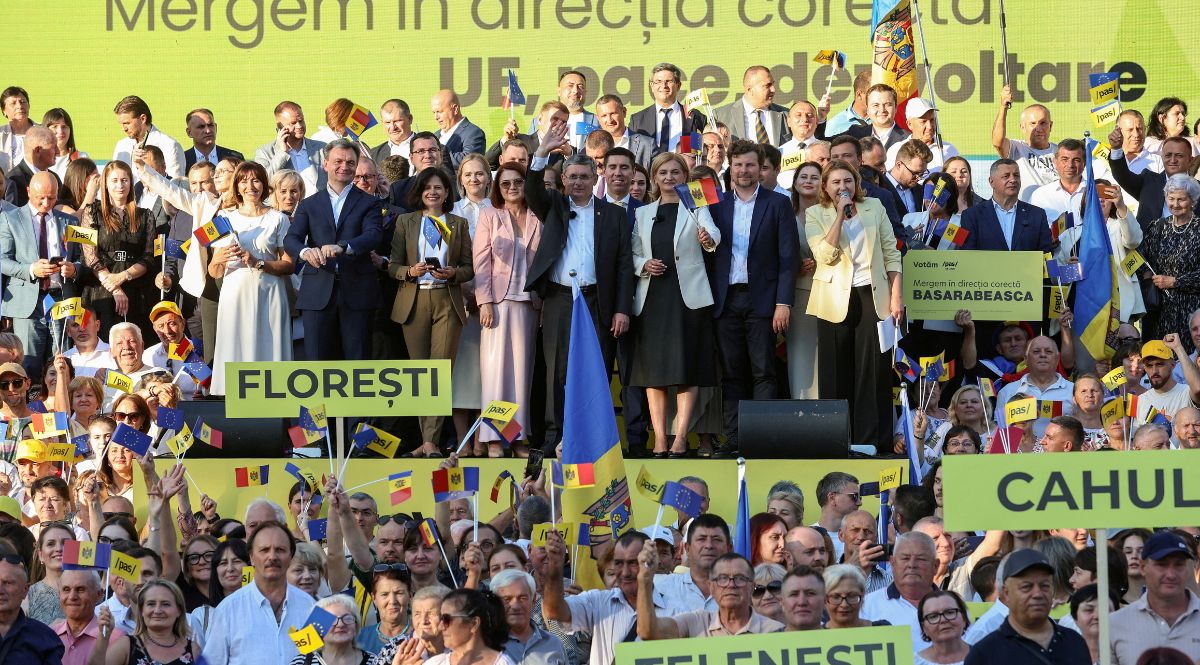
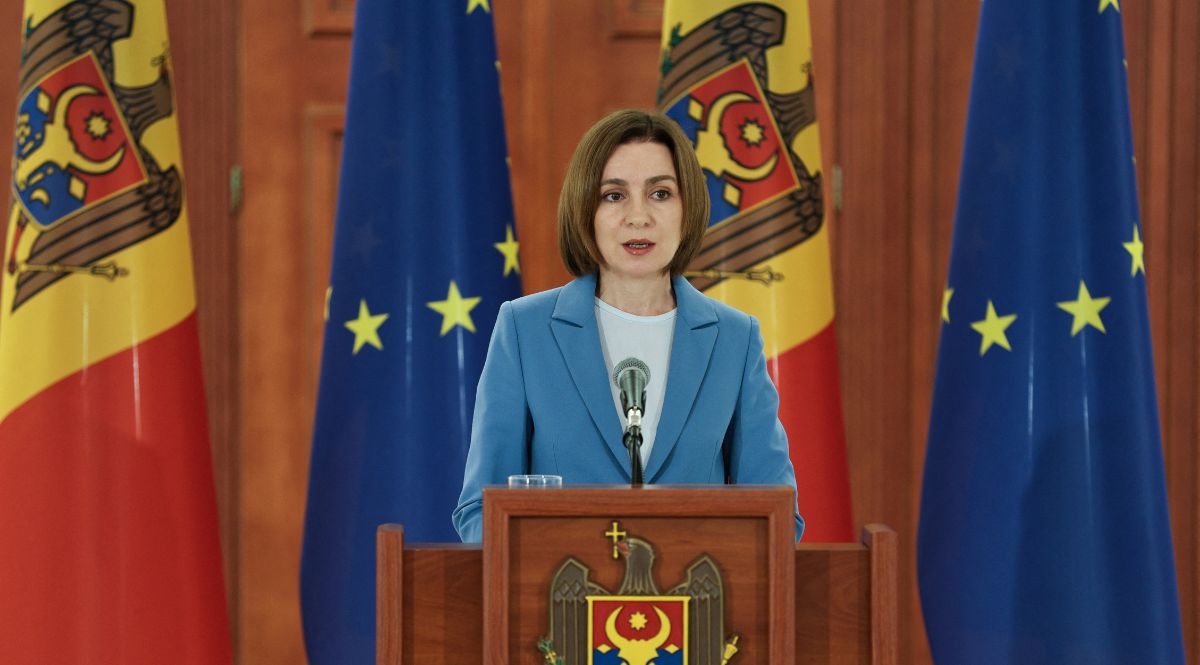
The government of Alexandru Munteanu, of the pro-European Party of Action and Solidarity (PAS), appointed after the elections, presents itself as the one that “will lead Moldova to Europe”. To lend credibility to this message, the prime minister has announced that he will resign if he fails to prepare the country for accession by 2028. The politicians responsible for the accession process in the previous cabinet have retained their offices in his government: Mihai Popşoi, Deputy Prime Minister and Minister of Foreign Affairs, and Cristina Gherasimov, Deputy Prime Minister for European Integration and Chief Negotiator with the EU. To strengthen the effectiveness of their efforts, President Maia Sandu, who effectively heads PAS, has established the office of special envoy for European affairs and strategic partnerships, to which she has appointed Nicu Popescu, former Minister of Foreign Affairs, who is well-connected with EU institutions and member states.
The most important task for the new government is to revitalise the economy, which has been in crisis for years. This is to be facilitated by the effective use of €1.9 billion in grants and preferential loans from the EU's Reform and Growth Facility for Moldova, established in February (for comparison, the country's budget for 2025 is €4.4 billion, while total EU aid over the last 10 years has been €3.5 billion) for transport, energy and social infrastructure, as well as aid for businesses. Although the government has revised this year's GDP growth forecast from 2% to 1.3%, it has announced that, thanks to the new initiative, growth will reach 5% per year by 2028, which should help to bridge the development gap between Moldova and the EU.
Munteanu intends to complete the ongoing protracted reform of the judiciary, a necessary step to combat corruption and oligarchic arrangements left over from Vlad Plahotniuc's rule, which lasted until 2019. A key element of this, as the EC report also points out, is the completion of vetting of judges and prosecutors. Munteanu also announced a socially unpopular structural reform of the state administration and local governments (Moldova – excluding Transnistria – is divided into 32 raions and about 850 small, largely inefficient communes), which is necessary for the effective management of the country.
Conclusions
The EC report confirmed Moldova's readiness for the actual start of talks on EU membership, and the only obstacle to opening the chapters is Hungary's blockade of Ukraine's accession negotiations. The EU's inability to overcome this problem, despite the candidate countries meeting the conditions, further undermines the credibility of the EU and its enlargement policy in the eyes of the Moldovan and other candidate countries' societies. This is because only a clear prospect of accession can ensure that they remain determined to continue with reforms – often painful in the short term – to bring their countries into line with European standards. The effectiveness of the Hungarian veto to date means that, following the blocking of enlargement in the Balkans by France in 2019 and then Bulgaria in 2020, the policy has also hit a crisis in its eastern dimension since 2025.
In the absence of agreement on the decoupling of the Ukrainian-Moldovan tandem in the accession negotiations, EU institutions and most Member States see potential for unblocking enlargement to the east in a possible change of government in Hungary after the parliamentary elections scheduled for April 2026. If this does not happen, the EU countries in favour of enlargement will once again face a choice: to continue accepting the blockade, at the risk of a decline in public support in Moldova for European integration or even a change of government to one less favourable to the idea, or to decouple the Moldovan and Ukrainian paths to the EU (in a case involving North Macedonia and Albania, this is what ultimately happened after almost four years of their tandem).