The B9 and Nordic Countries Summit in Bucharest
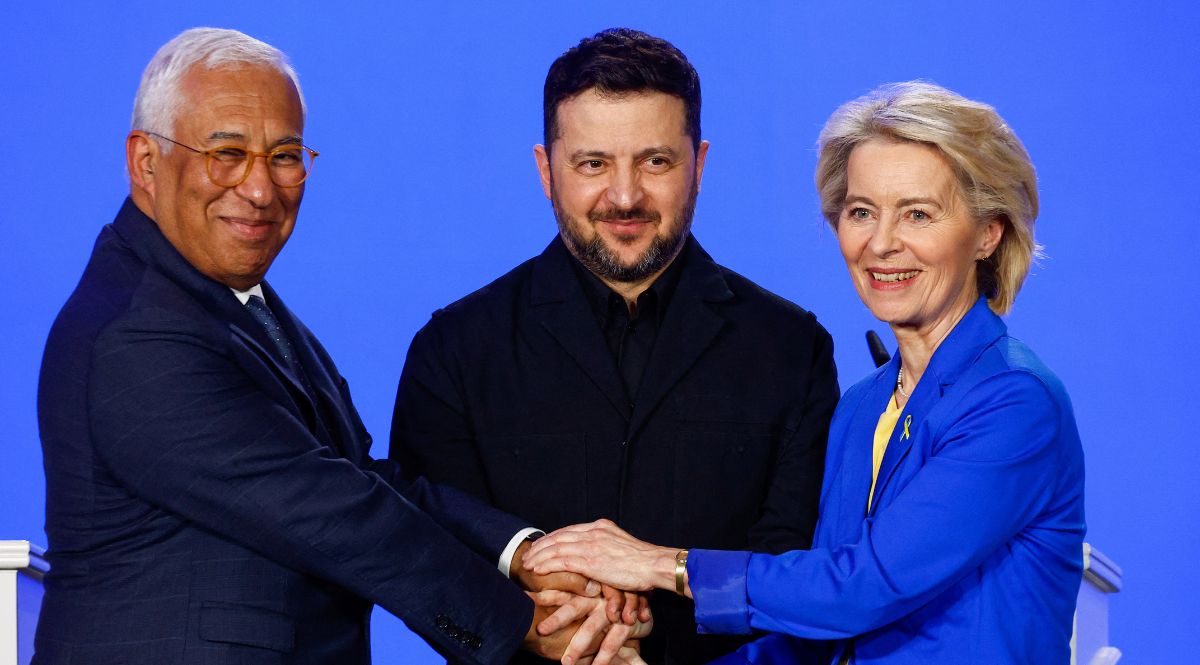
On 13 May 2026, the Bucharest Nine (B9) and Nordic Countries Summit took place in Bucharest. The NATO Secretary General, the President of Ukraine and representatives of the United States attended as guests. The summit reaffirmed the commitment of the countries on the eastern and northern flanks to strengthen security cooperation and maintain transatlantic unity in the face of tensions between the US and other allies.
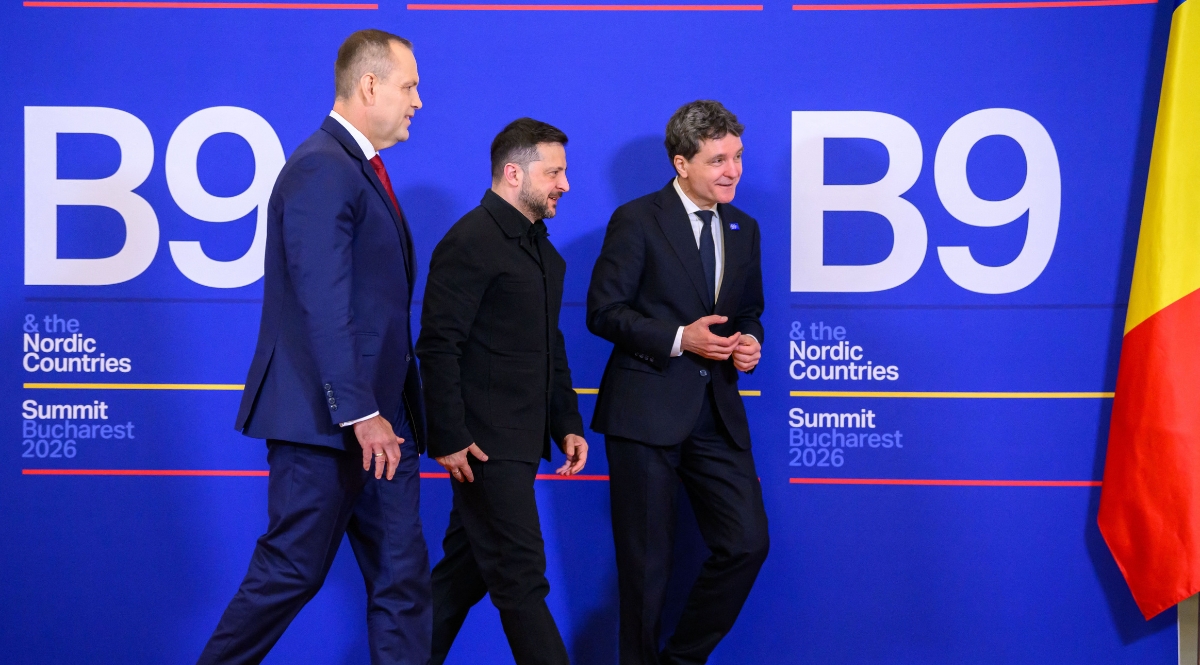 AA/ABACA / Abaca Press / Forum
What was the purpose and context of the meeting?
For the second time, the Nordic countries (N5) – Denmark, Finland, Iceland, Norway and Sweden – were full participants in the B9 summit. The meeting demonstrated allied unity ahead of the NATO summit in Ankara scheduled for early July, where decisions will be taken on the Alliance’s transformation to the ‘3.0’ model, involving increased defence spending and European partners taking greater responsibility for their own security in the face of a reduction of the US military presence in Europe. The Ankara summit is intended as an attempt to overcome the rifts caused by President Donald Trump’s recent policies. He has strongly criticised allies for their reluctance to join the US-Israeli war against Iran, alongside threatening nations like Germany, Spain, and Italy with a reduction in US forces stationed on their territory, or even a complete US withdrawal from NATO.
What were the outcomes of the Bucharest summit?
In the summit’s final declaration, the B9 and N5 countries confirmed the existence of a security continuum stretching from the Black Sea to the Arctic and their commitment to cooperate to preserve it. They also reaffirmed the fundamental importance of the alliance with the US and identified Russia as the “most significant, long-term, and immediate” threat. Once again, they expressed their readiness to support Ukraine’s defence and its Euro-Atlantic aspirations. They also reaffirmed their commitment to spending 5% of GDP on defence, in line with the NATO declaration from the 2025 Hague Summit. They recognised the need to integrate air defence, taking into account drone threats. They also emphasised the importance of joint NATO missions in the region or on its periphery as part of Baltic Sentry, Eastern Sentry, and Arctic Sentry. Summit participants consider the European Union’s involvement in the Eastern Flank Watch initiative to be significant, as it enhances the security capabilities of the B9 countries in areas such as critical infrastructure security and countering hybrid threats. On the sidelines of the summit, Ukraine signed an agreement with Lithuania, including the involvement of Ukrainian specialists in strengthening Lithuanian air defence. Latvia—which is grappling with a political crisis following the crash of two Ukrainian drones on its territory a few days before the summit— also held similar talks with Ukraine, but no agreement was signed.
What are the similarities and differences in perceived security for countries on the eastern and Arctic flanks?
The B9 countries significantly differ in their security perspectives, hindering the format’s ability to exert effective influence on the US and Western allies. Poland, Romania and the Baltic states unequivocally regard Russia as the main threat, whilst Bulgaria, the Czechia, and Slovakia hold a much more ambivalent stance. Hungary, under Viktor Orbán’s rule, remained favourable towards Russia and hostile towards Ukraine. The ambassador representing Hungary declined to sign the final declaration, citing a ‘constructive abstention.’ This was officially attributed to the ongoing transition of power to Péter Magyar’s government, as his ministers took up their posts on the same day as the B9 summit. The N5 countries retain a clear perception of Russia as the main threat, and their countermeasures are divided across two distinct fronts. The first extends the eastern flank from the Baltic Sea basin up to Karelia; the second covers the Arctic areas, an environment which demands requires highly specialised capabilities. The formerly unified consensus among Nordic countries and other allies regarding threats in the Arctic has been thrown into disarray by President Trump’s demands that Denmark cede Greenland to the US.
What are the results of and prospects for B9 cooperation with the Nordic countries?
The latest joint summit between the B9 and N5 countries lays the groundwork for even closer cooperation. This momentum is reinforced by the Nordic countries’ increased military presence on the eastern flank in recent years. Soldiers from Denmark and Norway, as well as civilian specialists from Iceland, stationed in Estonia and Lithuania as part of NATO battle groups, have been joined by a Swedish mechanised battalion deployed in Latvia as part of a multinational brigade. In the coming years, B9 and N5 cooperation will be further strengthened by joint operations in the Baltic Sea, and the development of NATO’s multinational battlegroup in northern Finland, which so far only Sweden has applied to join. These ties are further strengthened by the continued development of the Baltic-Nordic cooperation format (NB8), which brings together the Nordic countries and the Baltic states belonging to B9. However, joint activities face obstacles due to internal B9 divisions. A strategic divide remains between the Baltic section of the eastern flank and Romania, which is demanding equal attention for its southern, Black Sea region.