Dubrovnik Summit - 10 years of the Three Seas Initiative
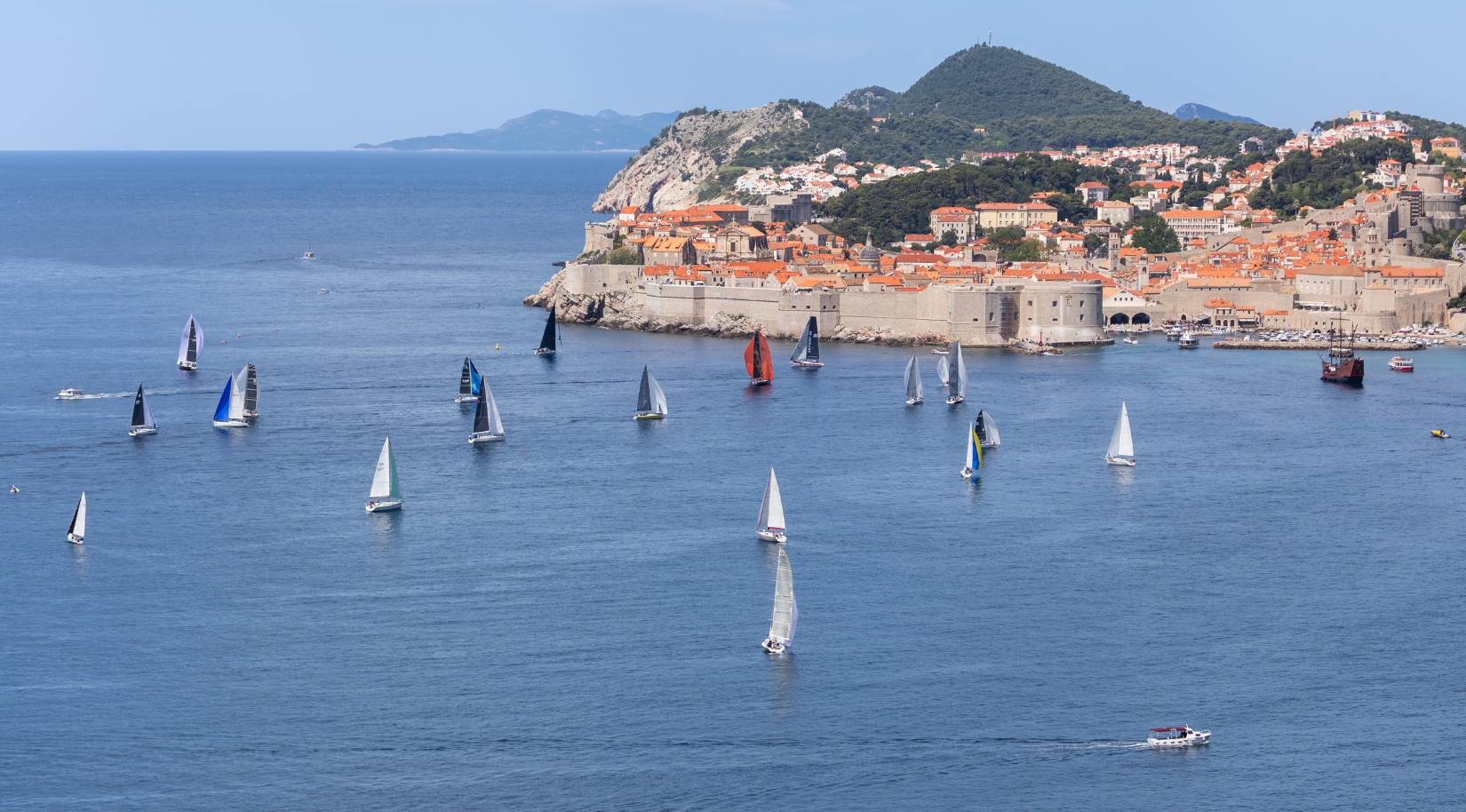
The Three Seas Initiative (TSI) summit returned to Dubrovnik, Croatia, on 28–29 April 2026, a decade after the inaugural meeting. It focused on finding new areas for dialogue—alongside the original goal of joint infrastructure development in the eastern part of the EU—and to establishing cooperation to strengthen regional security. Slovakia expressed its willingness to host the TSI summit next year for the first time.
 Grgo Jelavic / PIXSELL / Forum
What were the circumstances surrounding the summit?
The 11th summit of the Initiative was the fourth held since the start of Russia’s full-scale invasion of Ukraine, which participated in the Dubrovnik proceedings as an associate partner of the Initiative. In their final declaration, the TSI countries expressed support for Ukraine and once again condemned the Russian aggression as “unprovoked, unjustified and illegal.” As with last year’s summit in Warsaw, Hungary did not sign the declaration, due to the declaration’s content being at odds with the policy of Viktor Orbán’s still-incumbent government. Notably, Hungary refrained from issuing a separate statement on this occasion. The summit coincided with the commencement of EU negotiations on the 2028–2034 financial framework, upon which many TSI countries have pinned their hopes for accelerating the regional infrastructure development promoted by the Initiative. Despite tensions in transatlantic relations, the meeting in Dubrovnik sought to consolidate the US’s business and energy presence in Central Europe, with Energy Secretary Chris Wright once again leading the US delegation.
What decisions were taken at this year’s summit?
The summit sought to identify new areas for dialogue and establish cooperation to address the deteriorating security situation in the region, thereby attracting greater interest from the US and EU institutions in funding TSI infrastructure projects. The leaders of the Initiative agreed to incorporate military mobility and emphasised the dual civil-military nature of major rail corridors—Rail2Sea, Rail Adriatic and Rail Baltica—as well as the Via Carpatia and Via Baltica highways, which operate under its auspices. They also accepted Poland’s proposal to represent the interests of the entire TSI at this year’s G20 summit in Miami. Poland’s National Development Bank (BGK), alongside counterpart institutions from Croatia, Lithuania, Romania, and Slovenia, signed a letter of intent to establish an Infrastructure Fund of Funds in the second half of this year. The vehicle, designed to invest through subordinate funds, has an anticipated initial contribution of €250 million. Additionally, Italy has officially joined the Initiative’s group of strategic partners—a role formerly known as observers. However, despite earlier announcements by Croatia, the summit in Dubrovnik failed to generate meaningful interest from India.
What sets Croatia’s approach to the TSI apart?
Croatia is the third country, following Poland and Romania, to host the TSI Summit for a second time. Although the TSI is fundamentally a presidential initiative, the summit was hosted by Andrej Plenković’s centre-right government, which maintains political ties to former President and TSI co-initiator Kolinda Grabar-Kitarović. This unusual arrangement results from a boycott by current Social Democratic President Zoran Milanović, who views the Initiative as unnecessary and harmful to Croatia. Plenković presented his country as investment-friendly, suggesting that, unlike the Baltic and Black Sea, the Adriatic is a safe location for commerce and industry. The government aimed to use the summit to promote the use of the gas terminal on the island of Krk as an energy hub for Southern Europe, explaining that over time, it will increase connections to non-TSI member states. The agreement concluded on the sidelines of the summit between Croatia and Bosnia and Herzegovina on the construction of a gas interconnector served as evidence of this intent. The meeting in Dubrovnik also served to strengthen US-Croatian relations, with the parties signing several bilateral agreements and declarations covering double taxation avoidance, civil nuclear energy, and the establishment of the Pantheon data centre (an AI and digital infrastructure hub).
What challenges lie ahead for the Three Seas Initiative?
Lack of agency remains a persistent challenge for the TSI, as an annual discussion forum for presidents who hold limited executive power in their home countries. The implementation of any declarations accompanying the Three Seas Initiative relies on national governments, which have largely remained passive. This ultimately undermines the credibility of the TSI, which endorses successive infrastructure projects but lacks the capacity to coordinate them. A resolution for this problem could be the establishment of a parallel governmental modelled on the Bucharest Nine. This would facilitate direct contact between relevant ministers, independent of the presidential meetings. Another persistent challenge to TSI project implementation is the lack of joint financing mechanisms. Existing investment funds of the Initiative remain symbolic. Nominally regional projects are effectively fragmented into independent national sections, reliant on state and EU funds. Although establishing a full-scale TSI Development Bank—as proposed by some member state leaders—could address this shortfall, it would only be a partial remedy, as the Initiative's infrastructure projects are worth around €200 billion.