
The EU and Mercosur Sign Partnership Agreement
On 17 January, in Asunción (Paraguay), representatives of the EU and the founding members of Mercosur—Argentina, Brazil, Paraguay, and Uruguay—signed the agreement, which had been negotiated intermittently since 1999. The trade part will come into force at the earliest in the second half of the year. The entire agreement, which also includes political and cooperation sections, will only come into force if all EU countries ratify it, which is now uncertain.
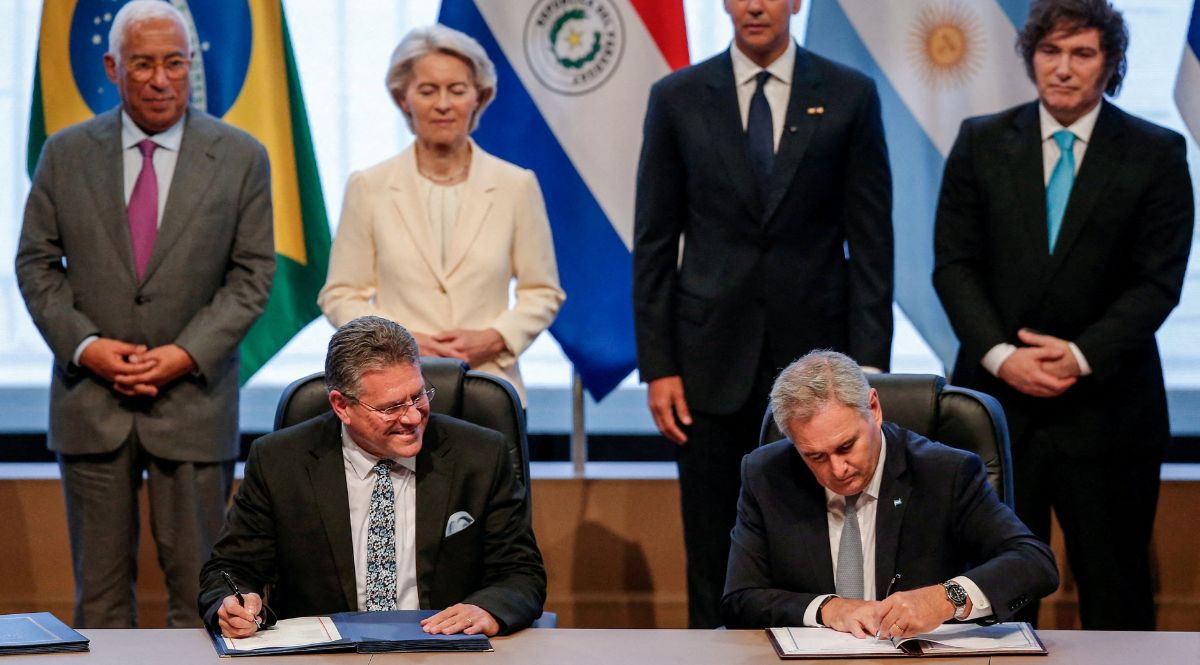 Cesar Olmedo / Reuters / Forumzako
What are the main provisions of the document?
The agreement, whose text was agreed in December 2024, provides for the gradual elimination or reduction of mutual customs duties on over 90% of goods. Some service sectors, including finance, telecommunications, postal and courier services, and maritime transport, will also be liberalised. It includes facilitations for investment and business founding, such as the creation and acquisition of companies, as well as the launch of foreign branches of enterprises. It also contains measures to facilitate engagement of small and medium-sized enterprises from the EU, including by increasing the transparency of regulations and simplifying customs procedures in Mercosur countries. It also provides for equal access to public procurement markets (with some exceptions, for example, in the health sector in Brazil). The accord, however, goes beyond economic issues. Together with the political and cooperation chapters, it aims to create a comprehensive framework for developing closer relations between the EU and its South American partners.
When will the agreement enter into force?
The European Commission (EC) created two instruments: the full EU-Mercosur Partnership Agreement (EMPA) and the Interim Trade Agreement (ITA). The latter document is a copy of EMPA trade provisions that fall within the EU's exclusive competence. The EC decided to take this legal measure to reduce the risk of rejection and expedite the implementation of free trade provisions. For the ITA to enter into force, it needs to be approved by the Council (which took place on 9 January), by a majority in the European Parliament (EP), and by at least one Mercosur country. This stage is expected to be completed in the second half of the year. Once the ITA has been ratified, it will apply provisionally until the EMPA enters into force. At that point, the ITA will expire, and trade relations will be based on the full agreement, with transitional periods remaining in place. In the case of the EMPA, however, ratification by individual EU Member States, in accordance with their national legal systems, remains a condition for its entry into force. Given the likelihood that the full agreement will be rejected, the validity period of the ITA may be significantly extended.
How will the EU’s agriculture be protected?
EU and Mercosur emphasise the combined potential of the mutual opening of markets – primarily the creation of the world's largest free trade area by consumer numbers (over 700 million) and the expansion of economic cooperation opportunities. The agreement distinguishes tariff preference levels. Goods with the greatest competition concerns, like beef and poultry, will have reduced-rate quotas gradually phased in during the transition. Certain products, such as white sugar, durum wheat, and some dairy products, are not covered by the preferences. EU phytosanitary requirements are confirmed in the agreement, and the EC has cited this in response to farmers’ concerns that lower-standard food from Mercosur would be allowed. The parties can suspend preferences if markets are seriously disturbed, e.g., by an excessive influx of products. Additional regulations allow for the blocking of imports from areas of illegal deforestation. The Commission has committed to increased support for the agricultural sector, including possible compensation.
How may the agreement affect the Polish economy?
Mercosur is a marginal destination for Polish foreign trade. According to available analyses, including those commissioned by the European Parliament, the direct macroeconomic impact of the agreement’s entry into force on Poland will be limited. Poland will foremostly benefit indirectly, as a country strongly linked to European supply chains, including as a supplier of components and parts for the machinery, automotive, chemical, and transport sectors. Opportunities also exist for companies in sectors such as environmental technologies, renewable energy sources, IT services, and new technologies. The agreement with Mercosur also creates a framework for intensifying investment and cooperation, for example, in research and development, digital innovation, and energy transition. In the agricultural sector, the greatest concern is the loss of competitiveness on EU markets due to cheaper products from Mercosur. Limiting the potential negative impact of the agreement on Polish agricultural producers will depend on the effectiveness of the safeguards in the agreement and within the EU. In the event of potential losses, it will depend on the affected domestic agricultural sectors’ ability to obtain adequate compensation from EU funds.


.png)