Germany's new military strategy
The “General Concept of Military Defence,” published by Germany on 22 April, outlines the main security challenges facing Germany—and NATO—and sets out plans to modernise and expand the armed forces through 2039. It responds to security threats in Europe and the US-led redefinition of NATO’s role, which calls for greater European participation in ensuring security on the continent. It is the most important strategic document defining the tasks and intended structure of the Bundeswehr.
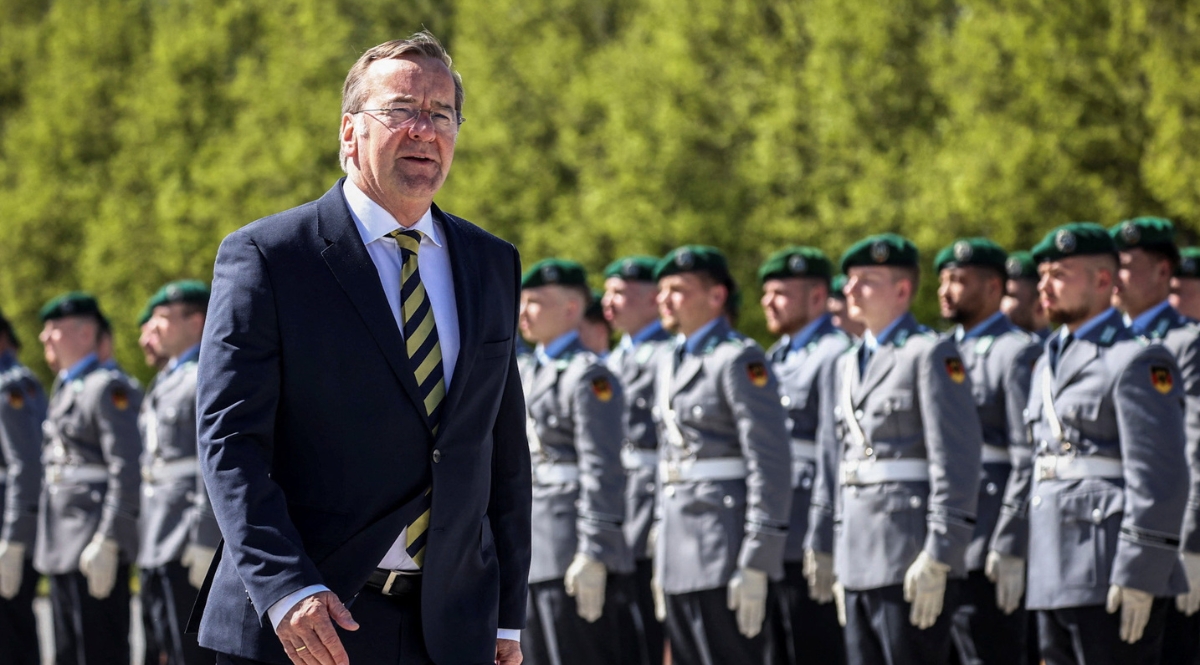 Nadja Wohlleben / Reuters / Forum
What are the origins of the strategy?
The development of a document outlining a strategy for the Bundeswehr by the Federal Ministry of Defence and the Inspector General of the Armed Forces results from changes since 2022 in Germany’s perception of the threat from Russia, as well as the role of the German armed forces and alliances. Following the outbreak of full-scale war in Ukraine, Chancellor Olaf Scholz announced, among other things, the establishment of a special fund for rearming the military. His government also developed a “National Security Strategy,” which outlined the main directions of Germany’s foreign and security policy. An additional factor accelerating changes in this area was Donald Trump’s return to power in the US and consequent uncertainty regarding the future of transatlantic relations, as a result of which, in March of last year, Germany adopted a financial package, enabling, among other things, a further increase in military funding. Another element was the announcement by Friedrich Merz’s government in November of a new model for military service.
What are the key elements of the military strategy?
The “General Concept of Military Defence” includes an analysis of the security environment and Germany’s future role, and defines the target profile of the Bundeswehr regarding troop levels and core military capabilities. Germany regards Russia as the greatest and most long-term threat to security in Europe. At the same time, it highlights that the growing US focus on the Western Hemisphere and its competition with China in the Indo-Pacific present challenges for Germany and NATO. Based on the experience of Ukraine, the document highlights the need to strengthen not only the armed forces but also the resilience of state and societal structures, including the ability to fight against disinformation. To ensure effective deterrence and defence within the Alliance, Germany will continue modernising and expanding its military to assume a larger share of the US role in European security. However, this will be a multi-stage process. The priority through 2029 is to improve the existing capabilities of all branches of the armed forces. Then, by 2035, the target is to significantly increase troop numbers and operational capabilities across all domains. Ultimately, by 2039, the goal is for the Bundeswehr to be the largest and most technologically advanced—in terms of conventional capabilities—army in Europe, responsible for deterring aggression and defending Germany and its allies against Russia. The public strategy outlines the key areas of focus, but the details of its implementation remain classified.
What are the potential shortcomings of Germany’s plans?
The ambitious announcements in the strategy regarding the development of the Bundeswehr and the increase of Germany’s role within NATO confirm a shift in its approach to security issues. However, the planned pace of change may be inadequate given the scale of the Russian threat. In the initial phase, the plan calls mainly for continuation of the army’s current operations (including fully deploying all elements of its brigade in Lithuania), while a significant increase in troop strength and the development of new capabilities are not expected until the next decade. This stems both from the long period of time required to fulfil complex contracts for new equipment and from the need to develop certain technologies, such as those related to the use of artificial intelligence. The strategy does not address the structural problems currently facing the Bundeswehr, such as the extensive military bureaucracy, which hinders the efficient execution of tenders, or difficulties in recruiting volunteers. Reaching the planned total of 460,000 soldiers and reservists by 2035 (compared to the current 184,000 professional soldiers) will be difficult to achieve. The low level of public readiness for defence also remains a problem. According to an August Forsa poll, only 16% of respondents expressed a firm willingness to defend Germany in the event of an attack, while 59% expressed varying degrees of refusal.
What is the significance of this strategy for Poland and NATO?
The continuation of Germany’s modernisation and enlargement of the Bundeswehr will, in the long term, have a positive impact on the security of Poland and NATO’s eastern flank. It is also significant in the context of the modernisation of the Polish armed forces, offering the potential for synergy in the effective conventional deterrence of Russia within the framework of the Alliance’s broader operational plans. Another area of cooperation could be joint action within NATO to increase the presence of Polish and German military personnel in Alliance structures. Poland may also establish closer cooperation with Germany in selected areas of critical capabilities, such as military mobility. This could be based on the bilateral defence agreement announced following last year’s Polish-German intergovernmental consultations. However, given the vague nature of Germany’s plans to rearm the Bundeswehr and the slow pace of the announced changes, a US military presence in Europe will remain an indispensable element for Poland’s security and NATO’s eastern flank, at least until the end of this decade.