The APEC summit in Shenzhen: Regional and bilateral dimensions
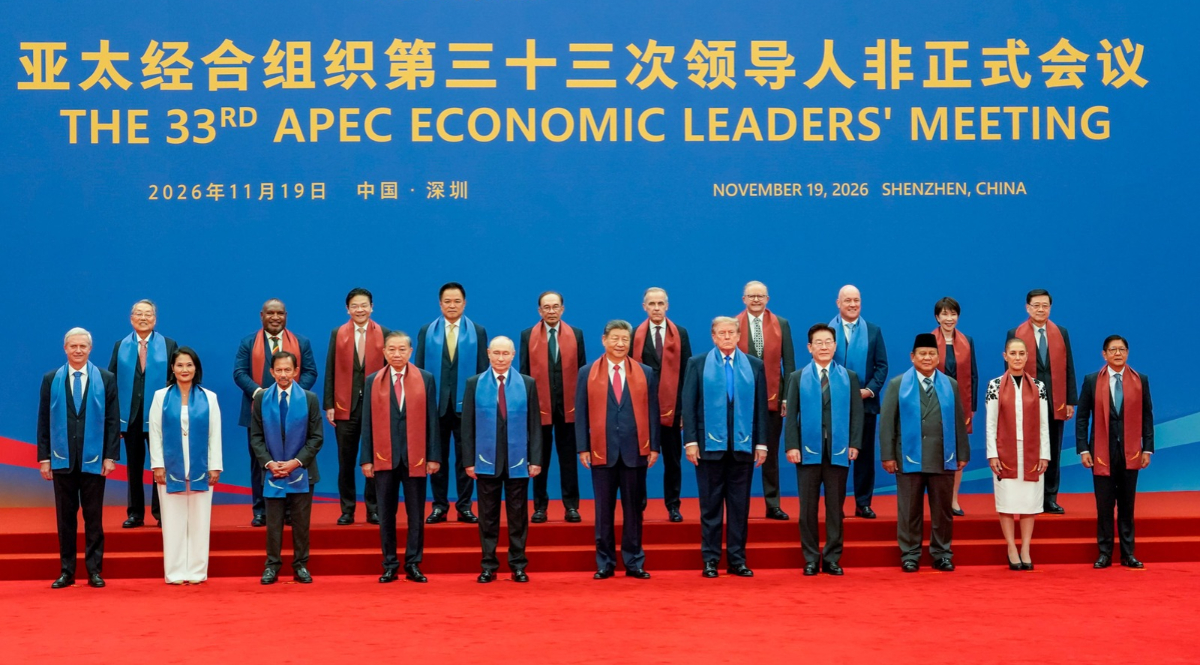
The Asia-Pacific Economic Cooperation (APEC) summit in Shenzhen on 18–19 November did not lead to any breakthroughs on the region’s most pressing economic challenges. However, it provided China with an opportunity to promote its vision of a regional order under Chinese leadership. For the EU, the most significant developments were the bilateral meetings held on the sidelines of the summit, including those between the presidents of the United States and Russia.
 The Prime Minister's Office of Japan
What were the main topics and outcomes of the summit?
Discussions focused on deepening trade integration—including the proposed Free Trade Area of the Asia-Pacific (FTAAP)—strengthening supply chain resilience, advancing the digital economy and artificial intelligence, and improving energy and food security. The summit adopted the ‘Shenzhen Outlook,’ a non-binding 23-point general political declaration, as well as two more specific documents: a regional connectivity plan and a 2027–2030 framework for cooperation on trade digitalisation. While references to the WTO appeared indirectly in the 2025 Gyeongju APEC declaration and explicitly in the 2024 Lima declaration, the main declaration omitted any mention of a rules-based multilateral trading system grounded in World Trade Organisation (WTO) principles. The Shenzhen document did, however, contain a reference to ‘global imbalances,’ which can be linked to ongoing debates over China’s trade surplus and the structural sources of imbalances in the Chinese economy. On supply chains, the leaders pledged to maintain open trade corridors and address logistical bottlenecks. They also emphasised cooperation on the security of energy infrastructure and the use of emerging technologies, including AI. The agreements reached are largely directional in nature. APEC remains a forum for voluntary coordination, and its declarations do not create legally binding obligations under international law. Consequently, the summit did not produce a breakthrough in addressing trade tensions or the broader fragmentation of the global economy.
How did China utilise the APEC summit?
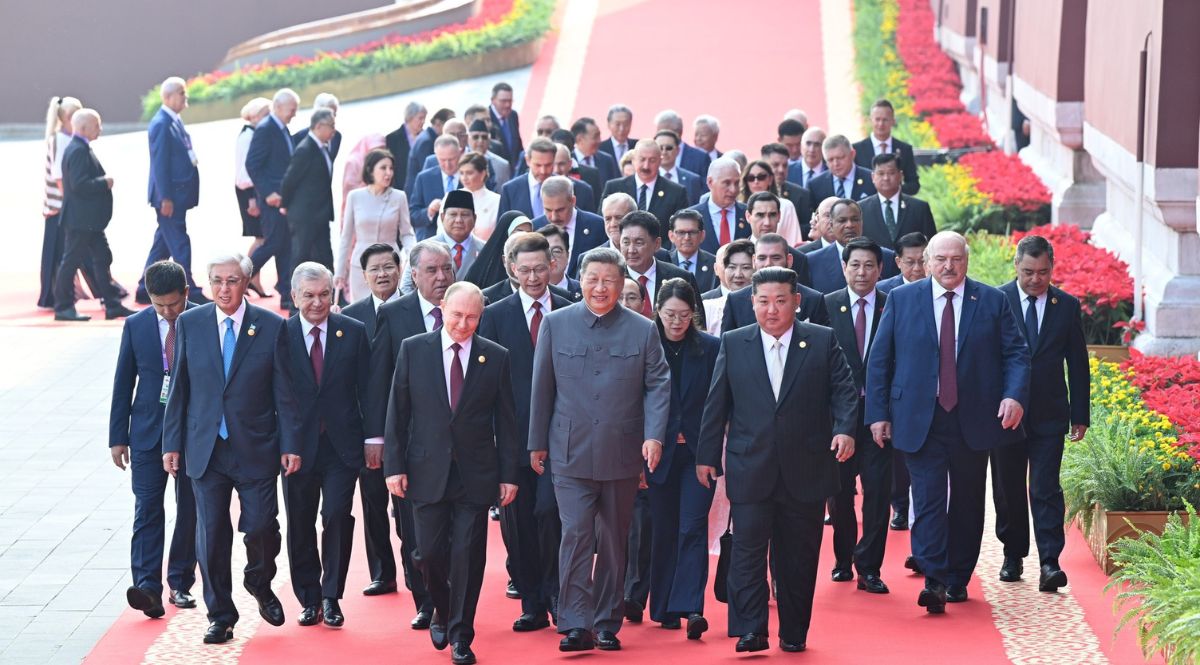
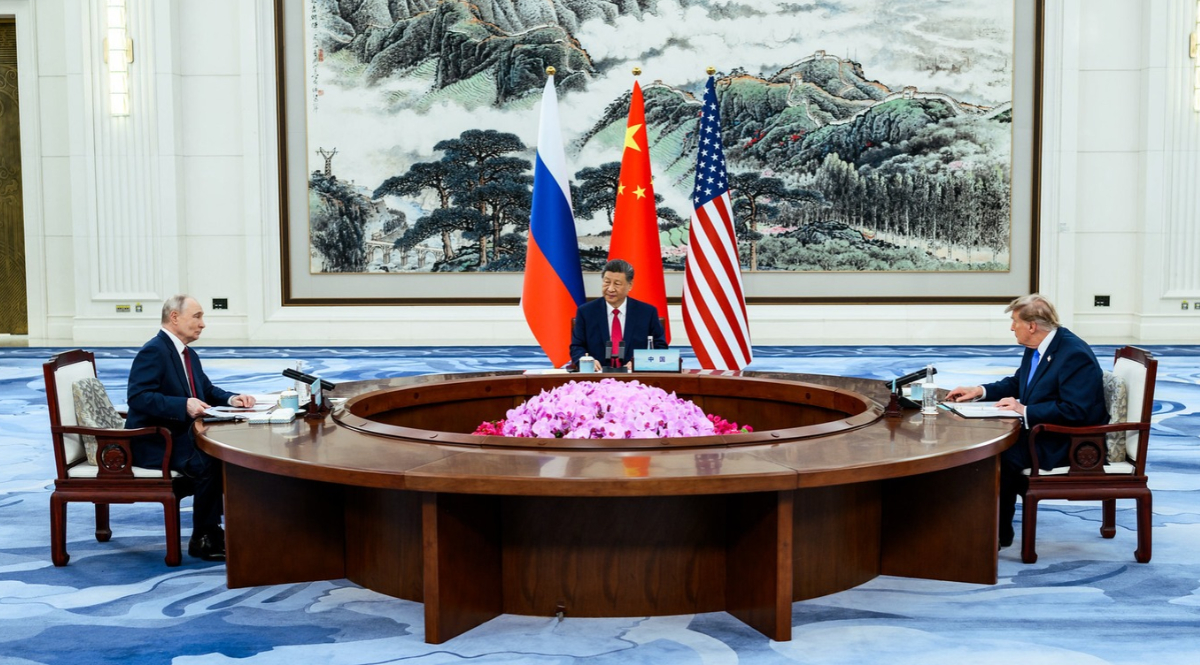
China used the summit primarily for image-building purposes, highlighting both its status as a great power and its role as an advocate of peace. Shenzhen was chosen as the host city to symbolise China’s economic and technological success. Since its designation as a Special Economic Zone in 1980, Shenzhen has transformed from a small fishing village bordering Hong Kong into what has often been described as China’s Silicon Valley. It is now home to some of the country’s leading technology companies, including Huawei, Tencent, ZTE, and BYD. Chinese state media portrayed Xi Jinping as the central figure of the summit, evoking historical associations with China’s tributary system, an image reinforced by Xi’s many bilateral meetings. Meanwhile, the organisation of a trilateral meeting between Xi Jinping, Donald Trump, and Vladimir Putin, which was opened by the Chinese leader with remarks on peace, was intended to strengthen China’s image as a peace-oriented great power. At the same time, Xi’s veiled reference to the wars involving Russia and the United States, warning that ‘when great powers fight, the world falls into chaos,’ served as an indirect call for an end to these conflicts.
What was the significance of the bilateral meetings held on the sidelines of the summit?
The meeting between Xi Jinping and Vladimir Putin confirmed the deepening of China-Russia cooperation directed against the West. Meanwhile, Xi’s talks with Donald Trump were consistent with the US policy of ‘strategic stabilisation’ toward China and produced no significant progress beyond what had already been achieved during the leaders’ previous meeting in September. The meeting between Trump and Putin, their first since the Alaska summit in August of the previous year, demonstrated the United States’ willingness to continue negotiations on the war in Ukraine despite a lack of tangible results so far and Russia’s continued unwillingness to cease military operations. Another notable development was Xi’s meeting with South Korean president Lee Jae-myung, during which the two sides announced the conclusion of negotiations to extend their free trade agreement to include services and investment. The summit also provided an opportunity for the first talks between Putin and both the South Korean president and the Japanese prime minister, Takaichi Sanae, underscoring the two countries’ differing approaches toward Russia. Lee expressed an interest in improving relations with Russia as a means of easing tensions on the Korean Peninsula. By contrast, Takaichi demanded the release of a Japanese journalist arrested by Russian authorities on espionage charges in October, as well as the return of Japan Tobacco assets seized by Russia in November.
What does the APEC summit mean for the EU?
Although EU member states are not part of APEC, the group’s decisions indirectly affect European economic and security interests. The omission of global trade issues from the summit’s agenda confirms the continued erosion of the multilateral trading system based on international law, and the growing shift toward regulating trade relations through bilateral arrangements and regional frameworks. While the summit did not result in a comprehensive agreement governing US-China economic relations, the partial suspension of reciprocal tariffs and retaliatory measures remains in force and continues to be extended. The persistence of US tariff barriers remains one of the factors contributing to the diversion of Chinese industrial overcapacity toward the EU market, a trend reflected in the EU’s policy toward China. From the EU’s perspective, however, the most important developments were not the multilateral discussions but the bilateral meetings held on the sidelines of the summit, particularly the talks between presidents Trump and Putin. The continuation of US-Russia negotiations on the war in Ukraine reinforces the need for European states to maintain their support for Ukraine while taking on a greater role in shaping and defending a new European security architecture.