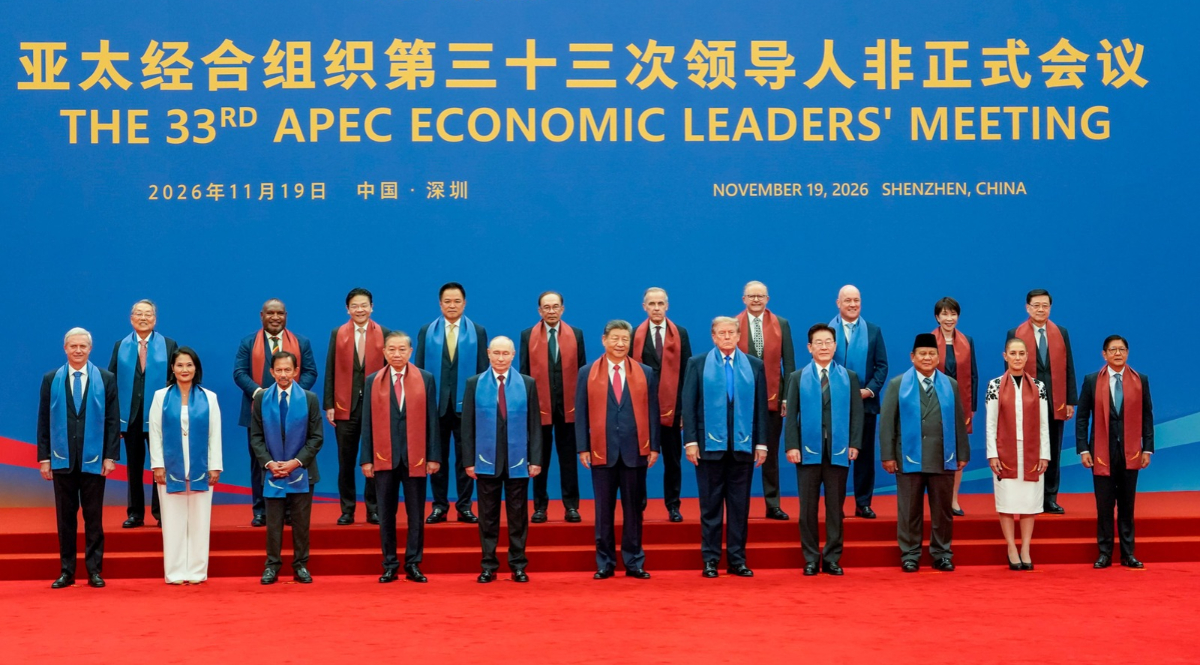
Chinese, Russian and US leaders meet in Shenzhen
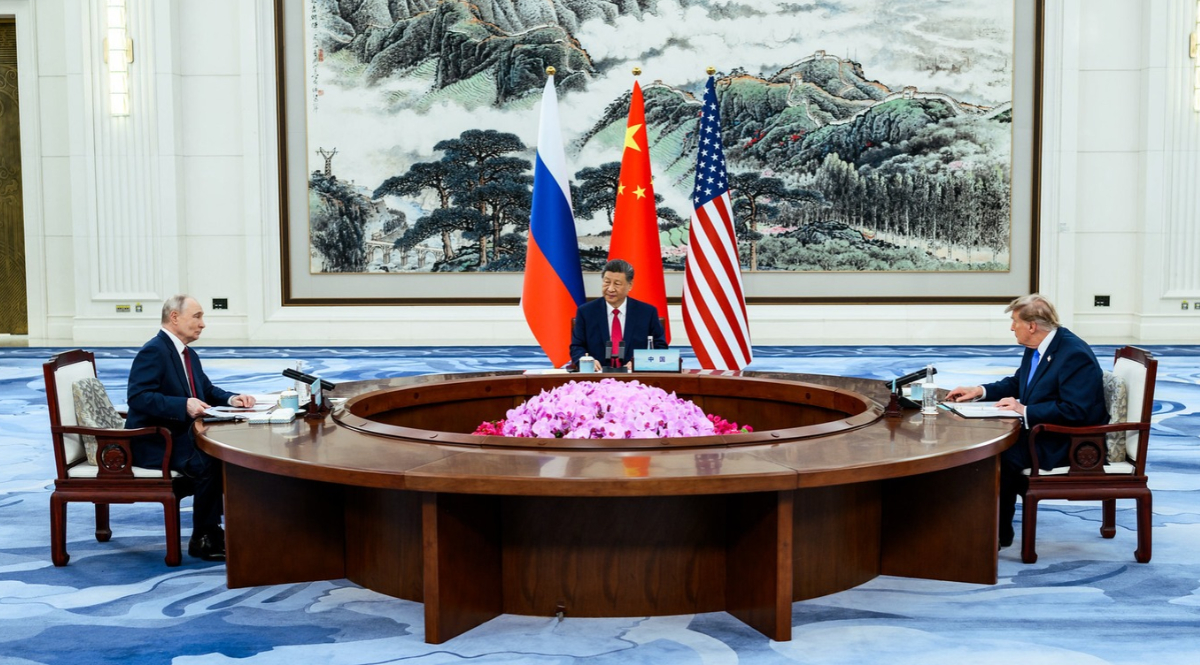
On 19 November, Chinese President Xi Jinping, US President Donald Trump and Russian President Vladimir Putin met on the sidelines of the APEC summit in Shenzhen, China. They announced a “Joint Declaration for Peace.” Although the declaration is general in nature, two points are particularly noteworthy. First, it states that the International Criminal Court (ICC) is abusing its jurisdiction, suggesting a coordinated hostile stance towards the Court and the international judicial system more broadly. Second, the leaders announced plans to increase the production and supply of petroleum products, potentially signalling a rise in imports of Russian energy resources.
 White House
What was discussed at the meeting?
The joint declaration covers four issues. The first is UN reform aimed at improving the organisation’s effectiveness, though, given the years of fruitless discussions on the subject, this can hardly be considered a breakthrough. The second concerns petroleum products, with the leaders announcing plans to increase their production and supply. This could be interpreted in two ways: either as a sign that the US may ease sanctions on Russia, potentially allowing for increased purchases of Russian energy resources, or as an indication of plans to restore unimpeded passage through the Strait of Hormuz and return to the situation that existed before the war between the US and Iran. The third and most concrete point of the declaration is its explicit opposition to the ICC’s alleged abuse of its jurisdiction. This may suggest that the three countries have agreed on a coordinated effort to dismantle the Court, potentially through pressuring states parties to the Rome Statute to withdraw from the treaty. The fourth issue is nuclear weapons, with the leaders announcing plans to enter into a dialogue on non-proliferation and nuclear risk reduction. It remains unclear whether these talks will take place within the P5 framework or in a trilateral format.
What were Xi Jinping’s objectives?
For the Chinese president, the meeting was primarily about projecting an image of China as a great power and himself as a champion of peace. The Chinese side’s suggestion that Xi was initially reluctant to attend the meeting indicates that he did not expect the talks to produce tangible results. He opened the meeting by stating that when great powers fight, the world descends into chaos. This can be interpreted as drawing a contrast between China, which is not involved in any armed conflict, and Russia and the US, which are waging wars against Ukraine and Iran, respectively. Xi’s remarks may also be seen as a call for both countries to end their respective wars. China will seek to capitalise on this image both domestically and internationally: to demonstrate Xi’s effectiveness and commitment to world peace to the Chinese public and to present China to countries of the Global South as a credible alternative to Western states. Beijing may also seek to use the meeting’s message of peace to persuade Europe to ease pressure on China over its support for Russia.
What did Vladimir Putin achieve?
Russia sought to demonstrate its return to the ranks of the great powers with a say in global affairs. For domestic propaganda purposes, it needed to reinforce the justification for its ongoing war, with Putin being treated as an equal by the leaders of more powerful countries. Russia also reinforced the perception of the US as a country willing to negotiate with Moscow over the heads of its European allies and Ukraine. This could deepen divisions within the Euro-Atlantic community while also demonstrating to China that, rather than isolating Russia, the US is courting Moscow as part of its broader rivalry with Beijing. The declaration includes provisions on increasing crude oil production and the need for the ICC to respect sovereign state immunity. Symbolically, these provisions challenge the arrest warrant for Putin and the Western sanctions regime against Russia. However, contrary to Moscow’s wishes, Beijing blocked any mention of the war in Ukraine from the declaration. Moreover, throughout the welcoming ceremony, banquet and discussions, China treated Putin as merely one participant among many. In doing so, Beijing signalled that it regards only the US as its equal, undermining Russia’s hopes of restoring its great-power status and participating in a division of “spheres of influence” among three supposedly equal powers.
What were Trump’s objectives?
Trump sought to demonstrate that, despite the Republicans’ defeat in the midterm elections, he still retains the initiative in foreign policy and is capable of negotiating personally with the leaders of US rivals. The announcement of an increase in the supply of petroleum products allows him to portray the summit as an effort to lower fuel prices in the US. At the same time, it may signal a willingness to normalise economic cooperation with Russia, as with the October diesel agreement. Trump may have hoped that this would reduce Russia’s dependence on China, having previously blamed Barack Obama for bringing the two countries closer together. He also sought to bring China into nuclear arms control talks, secure cooperation to prevent Iran from acquiring nuclear weapons and make progress in negotiations over Ukraine. The most concrete outcome for Trump was reaching a common position with Xi and Putin challenging the ICC’s authority, reinforcing his administration’s campaign against the Court. However, he secured no concrete agreements on Ukraine, Iran, or strategic arms control. Nor did he manage to drive a wedge between Russia and China, even in terms of public perceptions.
What does the meeting mean for Europe?
Although the absence of any reference to Russia’s aggression against Ukraine is good news for Europe, it also means that Putin will seek to exploit his special channel of communication with the US administration in other forums, including the December G20 summit in Miami, to further undermine transatlantic cohesion and force Kyiv into territorial concessions. The Shenzhen meeting therefore represents another warning to Europe that its influence over any potential reshaping of the international order is diminishing. China and Russia may also use the meeting to convince countries of the Global South that Western unity is illusory and that aligning their interests with the West is not worthwhile. The agreement among the three powers to coordinate their hostile stance towards the ICC and the international judicial system also directly undermines European interests, as the Court remains a key pillar of the rules-based international order, with the EU consistently supporting its work.