Xi Jinping in Pyongyang: China navigates an emboldened and independent North Korea
Chinese President Xi Jinping’s visit to North Korea on 8–9 June, his first in seven years, aimed to reinforce China’s influence on the Korean Peninsula. The decision to deepen bilateral cooperation suggests China’s acceptance of North Korea’s growing autonomy and independence, de facto recognising it as a nuclear-armed state. In light of the recent DPRK-Russia alliance, China’s renewed engagement with North Korea further illustrates the consolidation of cooperation among authoritarian states in opposition to the United States and its allies and partners. European countries should take action to address the adverse security implications resulting from DPRK-China cooperation.
 Tingshu Wang / Reuters / Forum
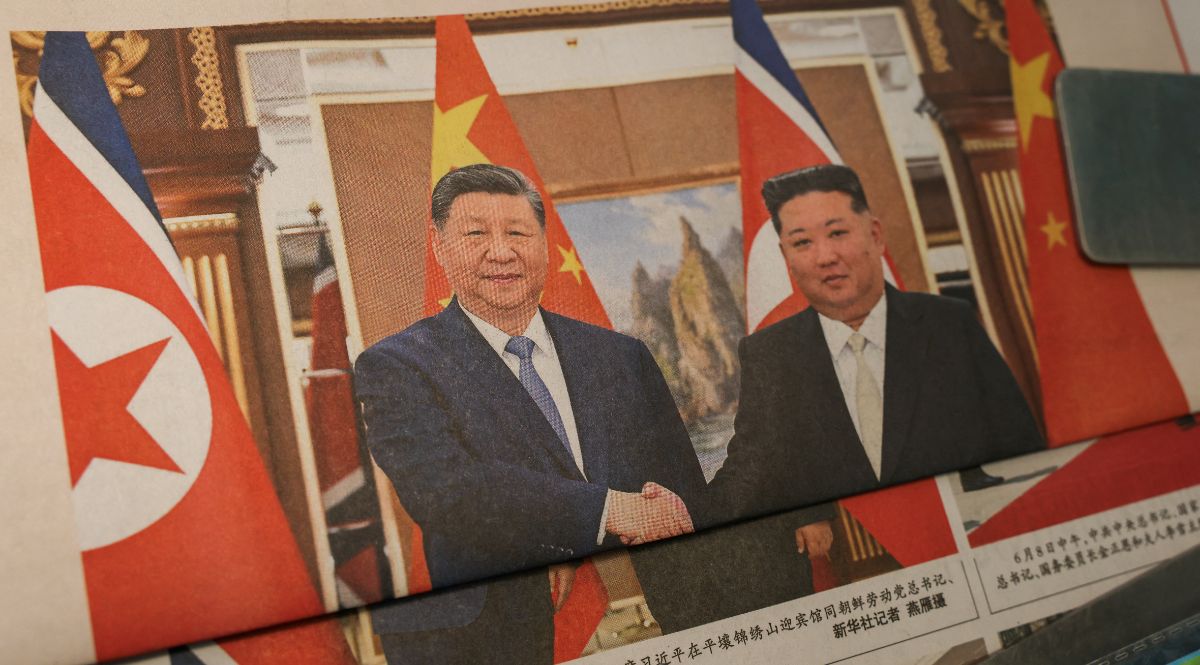
Xi Jinping’s visit to Pyongyang was officially attributed to the 65th anniversary of the signing of the Treaty of Friendship, Cooperation and Mutual Assistance. This visit reflected the intensification of political engagement that began in September of the previous year, marked by DPRK leader Kim Jong Un’s attendance at a military parade in Beijing. Subsequent developments included reciprocal visits by Choe Son Hui, the Minister of Foreign Affairs for North Korea, in September last year and China's Foreign Minister, Wang Yi, in April this year, as well as Chinese Premier Li Qiang’s participation in the Pyongyang parade last October commemorating the 80th founding anniversary of the Workers’ Party of Korea. Economic relations, previously disrupted by the COVID-19 pandemic, also began to recover. In 2025, bilateral trade reached $2.74 billion, returning to 2019 levels, and in March of this year, China resumed rail and air connections with North Korea, which had been suspended since 2020.
No formal agreements were concluded during Xi’s visit. Instead, both parties issued unilateral and general statements expressing their willingness to enhance cooperation.
China’s Perspective
The significance of Xi Jinping’s visit, his first foreign trip of the year, along with accompanying political gestures and economic declarations, demonstrates China’s commitment to strengthening cooperation with North Korea. During Xi’s 2019 visit to the DPRK, China explicitly demanded the denuclearisation of the Korean Peninsula, but it has now abandoned that position and de facto recognises North Korea’s status as a nuclear state. This shift is also evident from the absence of any references to denuclearisation in joint Sino-Russian statements since 2024. Furthermore, China appears to accept North Korea’s support for Russia in the war with Ukraine. This acceptance is partly a consequence of China’s diminished influence in the DPRK, resulting from Kim Jong Un’s consolidation of power at the expense of Chinese-backed officials, such as Jang Song Thaek, who was executed in 2013. By emphasising the importance of inter-party relations between the Communist Party of China and the Workers’ Party of Korea, Xi Jinping aims to underscore the superiority of China’s relationship with North Korea compared to the DPRK-Russia alliance, which lacks this inter-party dimension.
During discussions with Kim, Xi Jinping emphasised the necessity of direct communication between leaders on international, domestic, and military issues. Compared to previous engagements, Xi’s visit demonstrated a stronger security focus, with the inclusion of the Minister of Defence in the Chinese delegation and economic topics being de-emphasised. Nevertheless, Xi reiterated promises of economic assistance for North Korea in areas such as agriculture, construction, science and technology, and healthcare, although specific details remain undisclosed. This support aims to bolster North Korea economically, as China continues to view the country as a strategic buffer separating it from South Korea, where approximately 28,000 United States troops are stationed. Furthermore, China’s selective enforcement of United Nations sanctions appears designed to diminish the effectiveness of these measures, which the United States and its allies rely on as critical leverage in their policy towards North Korea.
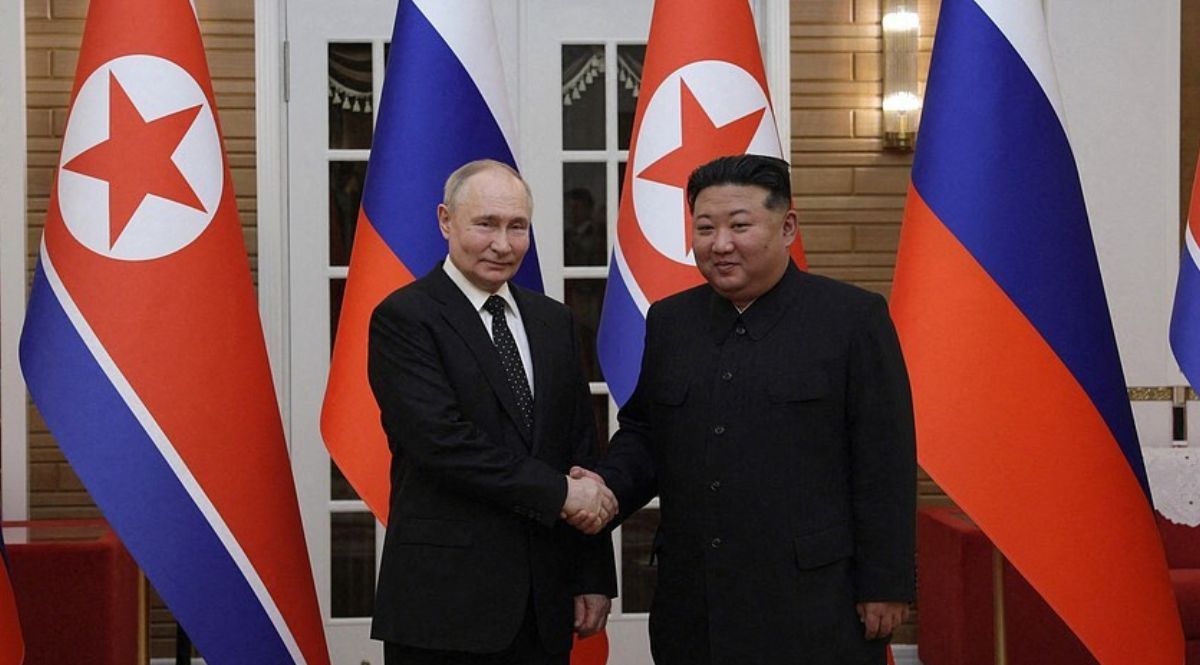
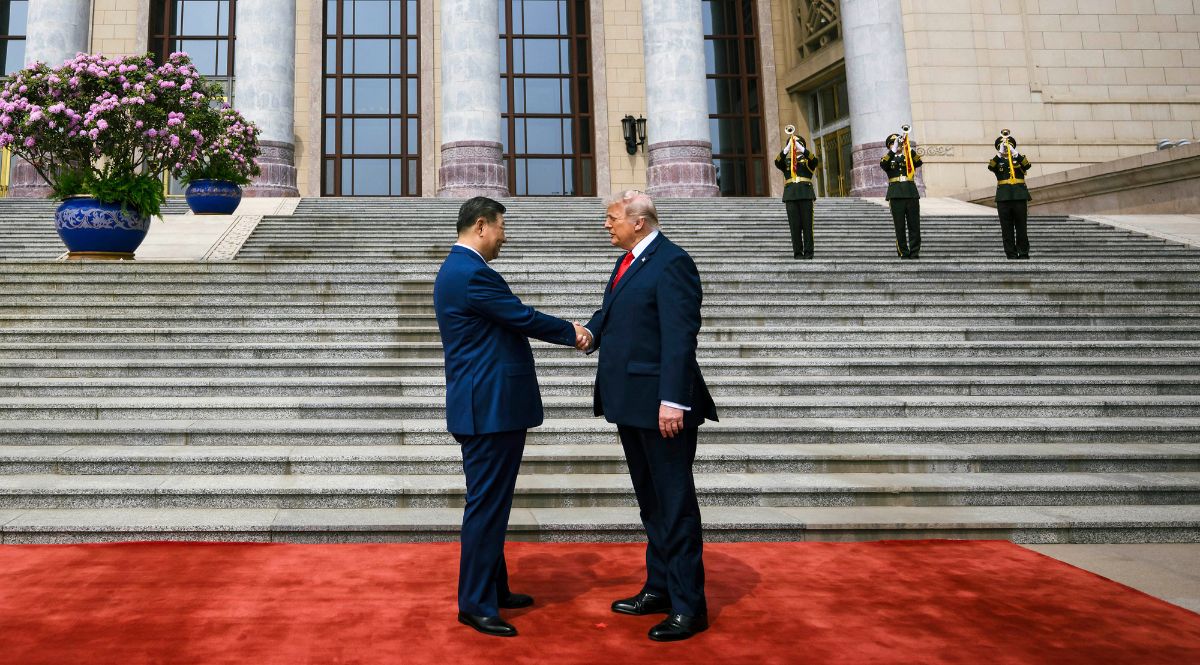
The development of cooperation with the DPRK strengthens China’s position in its strategic rivalry with the United States, providing an opportunity to undermine American interests in the Asia-Pacific region. This is reflected by China’s abandonment of its previous demand for the denuclearisation of North Korea—a sharp contrast to the United States, which still considers this a non-negotiable policy goal. During his visit to Pyongyang, Xi Jinping made no references to the nuclear issue, but reaffirmed the Chinese statements issued after Donald Trump visited Beijing and following Xi’s meeting with Vladimir Putin in May of this year. China’s silence regarding the nuclear issue reflects a belief that earlier efforts toward denuclearisation, including support for dialogue between North Korea and the United States during Trump’s first term, did not produce the desired outcomes. The intensification of cooperation with the DPRK also represents a response to the Russian-North Korean alliance established in 2024, which enabled the DPRK to partially counterbalance China’s influence. At the same time, China treats this alliance instrumentally, recognising that sustaining Russian aggression in Ukraine drains Western resources and ensures substantial US security commitments in the European theatre.
North Korea’s Perspective
The visit by Xi Jinping confirmed that the DPRK had successfully enhanced its autonomy and increased its independence in relations with China, objectives that Kim Jong Un has pursued since assuming power in 2011. Notably, North Korea has now pushed China into acknowledging its status as a nuclear state. According to SIPRI estimates, North Korea’s ongoing development of nuclear capabilities has yielded approximately 60 nuclear warheads, possessing enough fissile material to potentially produce at least 30 warheads. Kim’s visit to a new uranium enrichment facility shortly before the Chinese leader’s arrival further exemplified the use of political pressure on China to accept the improbability of denuclearisation. Additionally, the DPRK’s alliance with Russia strengthens North Korea’s position in its relations with China, enabling it to reduce its dependence on China and exert pressure on Russia to offer North Korea greater benefits.
Maintaining close relations with China is vital for North Korea, particularly for its economic stability and the regime’s survival. Trade with China constitutes approximately 95% of North Korea’s foreign trade. The DPRK seeks economic support from China, provided that such assistance does not result in a significant influx of external information, which the regime perceives as a threat to its totalitarian control. Additionally, political rapprochement with China aims to solidify North Korea’s position alongside China and Russia within the bloc of states directly competing with the United States and its allies. In an effort to demonstrate his value to China, Kim reaffirmed support for the ‘One China principle,’ accepting China’s aspirations to change the status quo in the Taiwan Strait.
International Implications
The visit represented the culmination of a prolonged process, driven forward by Kim Jong Un, through which China has accepted North Korea’s increased autonomy. China has de facto recognised the DPRK’s nuclear status, prioritising the stability of the North Korean regime over its previous strategic insistence on denuclearisation. Accepting the DPRK’s autonomy enables China to maintain significant influence over the Korean Peninsula, which is regarded as a strategic advantage in its rivalry with the United States. Furthermore, the rapprochement with North Korea is intended to demonstrate that China, rather than Russia, remains the Kim regime’s principal foreign partner.
China’s effective rejection of denuclearisation precludes the possibility of partnering with the US to apply pressure on North Korea. With both China and Russia willing to tolerate further development of the DPRK’s nuclear capabilities, this may prompt the United States to reconsider the pursuit of denuclearisation as a strategic objective. Instead, US policy may shift toward strengthening deterrence, reducing the risk of nuclear escalation, and exploring potential negotiations on arms control and limitation. Although the resumption of US-DPRK talks remains a possibility, it is currently highly unlikely given the strategic advantages North Korea gains from its cooperation with China and Russia.
China’s focus on security issues, including calls for military dialogue with the DPRK (a position not confirmed by North Korean statements), may complicate the defence strategies of the United States and its regional allies. They must now consider the increased potential of concurrent military operations in multiple East Asian theatres. In light of Kim’s endorsement of Xi’s Taiwan policy and the DPRK’s support for Russia’s war against Ukraine, a conflict in the Taiwan Strait could prompt North Korea to adopt a supportive posture toward China. For instance, North Korea might initiate military action against South Korea, thereby tying down and diverting United States forces stationed on the Korean Peninsula.
The absence of any references to denuclearisation and inter-Korean relations during the Kim-Xi summit poses a serious challenge for South Korea. Lee Jae-myung’s administration has sought China’s support for the restoration of inter-Korean dialogue and denuclearisation, efforts which have now been fundamentally undermined. For Japan, the rapprochement between China and North Korea provides yet another justification for developing its own defence capabilities and strengthening security cooperation with the US and South Korea.
The evolving dynamics of China-DPRK relations have heightened their relevance for European states. In diplomatic engagements with China, European countries should emphasise that China’s cooperation with North Korea—a state actively involved in Russia’s aggression against Ukraine—directly threatens European security. Considered alongside China’s support for the Russian Federation, this constitutes an additional barrier to the advancement of economic and political relations with the European Union. It is in the interest of European countries to enhance collaboration with the United States, Japan, and South Korea to monitor China’s compliance with United Nations sanctions against the DPRK. This coordination should extend to backing secondary sanctions against Chinese entities, especially in verified instances involving transfers of dual-use goods to North Korea.