Donald Trump's Visit to China: De-escalation of Bilateral Relations
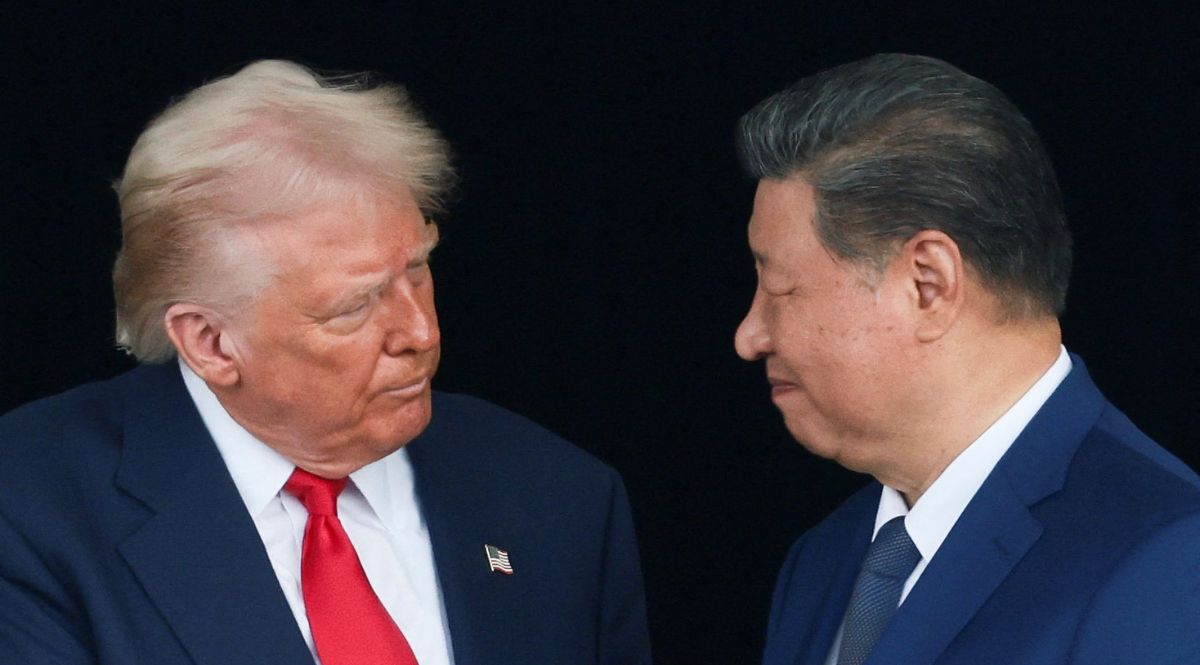
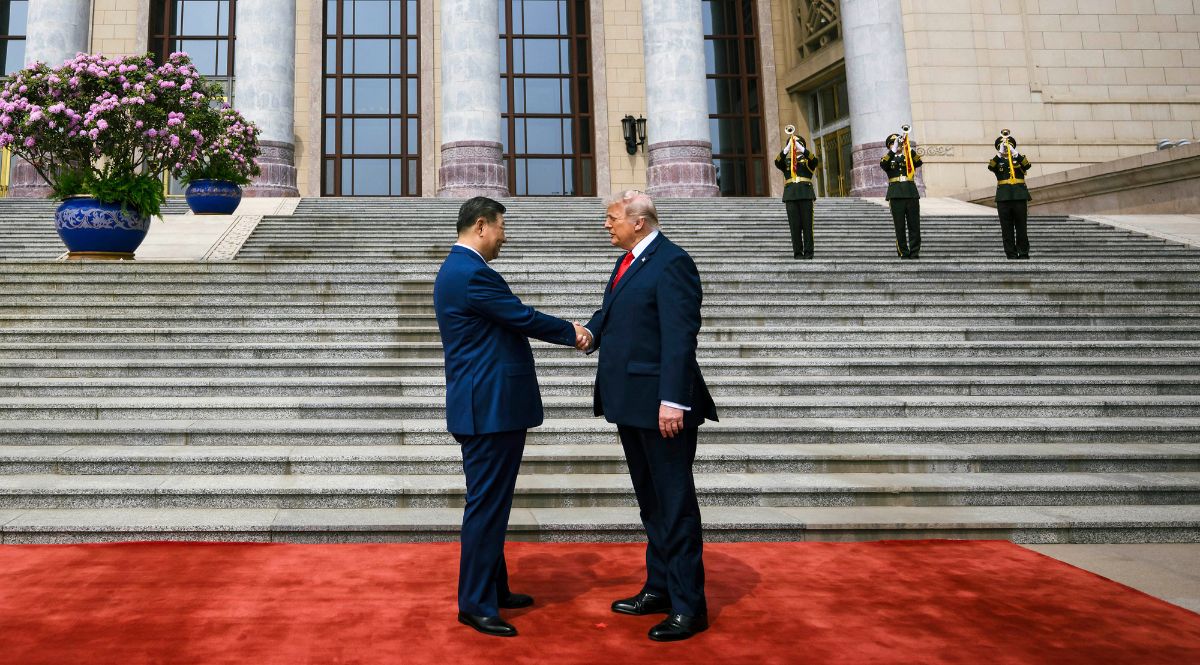
US President Donald Trump’s visit to China on 13–15 May served as proof to both leaders of the effectiveness of their policies and their commitment to stabilising bilateral relations. This was underscored by assurances from both sides regarding further talks on trade issues critical to the US, as well as a matter of significant importance to China: US policy toward Taiwan. Both sides will expand their technological and economic capabilities and reduce mutual dependencies to secure a stronger negotiating position ahead of further meetings between the leaders this year.
 Daniel Torok/White House / Zuma Press / Forum
Circumstances of the visit
The visit was agreed upon last October as part of negotiations after the suspension of high tariffs imposed by both countries, and a one-year pause on Chinese restrictions on rare earth metal exports to the US. The trip was scheduled for March of this year, but was postponed at the request of the US side. The official reason given was the conflict in the Middle East. Since the “truce” in October of last year, both countries, aware of their political differences and the extent of their interdependence regarding critical raw materials, chips, and tools for the development of artificial intelligence (AI), have signalled a willingness to maintain a balance. China has continued to cooperate with the US in the fight against manufacturers of components used to produce fentanyl, while the Trump administration suspended the delivery of approximately $14 billion worth of arms to Taiwan.
Despite the “truce,” both sides continued directing hostile actions toward each other. In April of this year, China introduced new regulations allowing it to impose restrictions if it determined that the United States had violated international law. In May of this year, the Trump administration imposed further sanctions on Chinese refineries purchasing Iranian oil.
The nature of the visit and (unclear) key outcomes
The visit was primarily economic in nature, underscored by the composition of the US delegation. In addition to politicians, including the Secretary of State and the Secretary of Defense—who, for the first time in history, accompanied the US president on a visit to China—the delegation also included the heads of major American companies such as Tesla, Visa, Apple, and Nvidia.
The results of the visit remain unclear due to conflicting statements from both sides. What is clear is that the leaders of the US and China did not sign any economic agreements. They did, however, agree to continue their talks, aiming to finalise them later this year. President Trump’s invitation for Xi Jinping to visit the US in September, which China has signalled it accepts, is viewed as an opportunity to conclude these negotiations. Additionally, both countries have confirmed the establishment of trade and investment councils to establish rules for the supply of non-sensitive goods and identify lists of products for which tariffs would be reduced.
According to a statement from the Chinese Ministry of Commerce, Chinese authorities have confirmed that tariff reductions were discussed during these talks, though this was not included in the White House statement. The US also withheld confirmation of Chinese reports that Chinese food products had been granted easier access to the US market.
Unofficial reports also indicate that the US was to approve the sale of a limited number of Nvidia H200 chips to China, a move previously lobbied for by the company’s CEO, Jensen Huang. However, further comments suggested that the Chinese authorities had little interest in them, preferring to develop their own solutions rather than rely on American technologies. The US side also indicated (without providing details) that China had pledged to resolve issues regarding exports of rare earth metals to the US (a detail which was not included in the Chinese statement), as well as purchases of oil, agricultural products, and passenger aircraft (200 Boeings) from the US.
The inclusion of the US Secretary of Defence in the delegation likely stemmed from unconfirmed discussions regarding the military hotlines between both countries. Unlike the US, which views this channel as a critical instrument of crisis communication, China has previously left messages unanswered—such as in 2023—to signal political dissatisfaction.
Taiwan, Iran, and the DPRK
Issues beyond strictly bilateral US-China relations also remain unclear, regarding both the topics of discussion and any agreements made.
A statement from the Chinese Ministry of Foreign Affairs specifically emphasised that Taiwan was discussed as the most important issue in US-China relations, with Xi noting that if the Taiwan issue was mishandled, it could lead to conflict between the US and China. Furthermore, Xi emphasised that Taiwan’s independence and peace in the Taiwan Strait are mutually exclusive issues. Trump confirmed that he spoke with Xi about Taiwan-US relations, military supplies to the island, and the United States’ readiness to defend Taiwan. While the White House statement makes no mention of it, such behaviour, if it indeed took place, would constitute the first breach of one of the so-called “six assurances” made to Taiwan by the Reagan administration in 1982, confirming US commitments regarding the island in the context of relations with China. However, the American president claims that he did not make any declaration to the Chinese leader regarding Taiwan that could be exploited politically. In interviews after the visit, Donald Trump appeared to cast doubt on the US's willingness to defend Taiwan in any potential pursuit of independence, though upon returning from China, the US Secretary of State denied any change in US policy toward Taiwan resulting from the talks.
The Chinese statement indicates that the leaders also discussed the war in Ukraine and the situation on the Korean Peninsula. In an official statement, US officials asserted that China supports the goal of denuclearising North Korea, a claim which was indirectly denied by a spokesperson for the Chinese Ministry of Foreign Affairs, who declared on 18 May that China would continue its existing policy emphasising a nuclear-free Korean Peninsula.
Regarding the conflict in the Middle East, the White House confirmed Xi Jinping’s agreement to support free passage through the Strait of Hormuz (without fees), its demilitarisation, alongside his opposition to a nuclear-armed Iran. Although this information was absent from the Chinese statement, it aligns with existing Chinese policy—Iran’s foreign minister was reportedly informed of this approach during his 6 May visit to China.
Conclusions and Outlook
The meeting confirmed the mutual desire of the US and China to de-escalate their tense bilateral relations. Both countries are aware of their comprehensive rivalry, but also of the need for time to reduce their mutual dependencies. The lack of agreement on trade issues, with declarations mainly regarding the economy and political matters, creates room for continued talks. Xi emphasised (in response to similar remarks by Trump) that relations with the US are now entering a period of “constructive strategic stability,” but at the same time noted (referring to the concept of the Thucydides Trap) that China is the rising power, while the US’s role in the world is diminishing.
For China, this visit marks the next stage in managing its relationship with the US president. Conciliatory gestures, friendly rhetoric, and implied commitments regarding imports from the United States and resolving the situation surrounding Iran are all aimed at appeasing Trump. The correctness of this approach was confirmed by Trump’s description of China as a “superpower” to the media and his ambiguous statements regarding support for Taiwan. China will likely present this aspect of the talks as evidence of the unreliability of US support for its partners and allies. To counter this, immediately after concluding his visit to China, President Trump spoke with the Japanese Prime Minister, the German Chancellor, and the South Korean President. The litmus test of US policy in this context will be its decision on arms sales to Taiwan, and its willingness to proceed regardless of whether China uses the issue as a bargaining chip in trade negotiations. The Russian president’s visit to China on 19–20 May also serves to amplify China’s narrative of superiority over the United States. Stabilisation of relations with the US also feeds into domestic policy, aimed at strengthening Xi’s image as an effective leader in preparation for the 21st Party Congress in 2027 and influencing the composition of future party bodies.
There is no indication that the Trump-Xi summit will alter China-EU relations, including ongoing issues surrounding tariffs and critical raw materials. Driven by its strategy of redirecting trade away from the US, China will continue to increase its exports to the EU market. The economic competitiveness of products from China and their consequent impact on European industry necessitate the continued use of mechanisms to protect the EU single market, including trade policy instruments. China’s hardline policy toward the EU will only foster increased support among member states for such a solution. An example of China’s firm stance is the restriction recently imposed by Chinese authorities on cooperation with EU authorities during their investigation into unfair foreign subsidies provided to the Chinese company Nuctech. The US believes that easing tensions with China will buy time to reduce dependence, build military capabilities, and expand its industrial base. This belief may facilitate cooperation with the EU, with the recently signed agreement on cooperation regarding critical raw materials serving as a model example.