US Secretary of State visits South America
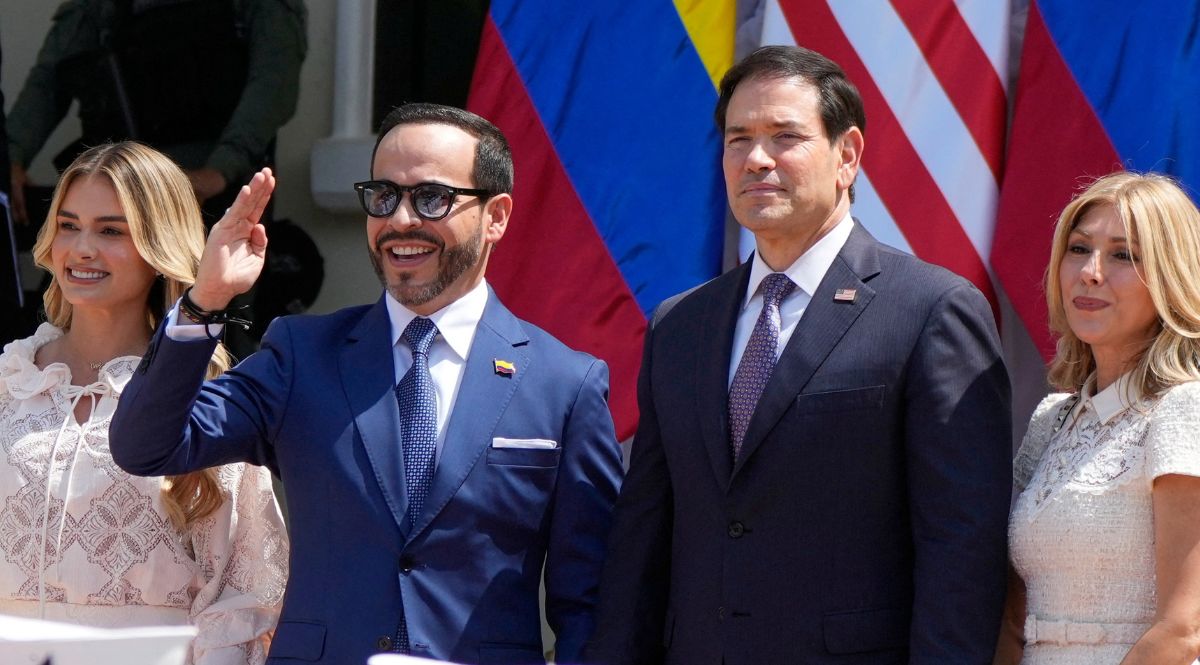
Fighting against organised crime and boosting economic cooperation were the main topics of Marco Rubio’s meetings in Colombia, Ecuador and Peru during 8-10 September. The visits also served to demonstrate—primarily to Republican voters—the successes of Donald Trump’s administration in restoring US influence in Latin America.
 Fernando Vergara / Reuters / Forum
What were the objectives of the Secretary of State’s visits?
According to official statements, Rubio’s primary goal was strengthening the US’s “key partnerships” in Latin America. The three countries concerned are currently led by conservative presidents who are seeking close relations with the United States and have prioritised the fight against organised crime. Rubio's visits were likely intended as a relatively easy way to demonstrate to domestic voters that the Trump administration is successfully rebuilding its influence in the Western Hemisphere and securing partners who cooperate to advance US interests. The choice of the Secretary of State’s route may also have been motivated by a desire to divert attention from the increasingly controversial consequences of January’s US military intervention in Venezuela. The Trump administration’s image has been eroded by a recent controversial oil deal and its legitimisation of the regime led by Delcy Rodríguez, at the expense of the redemocratisation process. In Ecuador and Peru, one of Rubio’s key objectives was to identify potential ways to persuade their governments there to curb China’s significant economic influence. He tried to paint such close ties as a threat to these countries, and presented the US as a far better partner.
Why is Colombia of particular importance to the US?
For several decades, Colombia has been one of the US’s closest South American partners, particularly in security, defence and economic relations. Unlike in most countries in the region, where China has become the top trading partner in recent decades, the US retains the dominant position in Colombia, with a 30% share of Colombia’s merchandise trade. Since 2022, during left-wing President Gustavo Petro’s term, bilateral relations have experienced some distancing. Divergent visions of how to combat drug-related crime in Colombia, as well as tensions arising from Petro’s open challenge to the Trump administration’s policies, were some of the reasons. The inauguration of President Abelardo de la Espriella on 7 August paved the way for the revival of close cooperation between the two countries. He announced Colombia’s accession to the Shield of the Americas, an anti-cartel coalition initiated by Trump in March. Rubio also confirmed that the Colombian government was interested in intelligence sharing and specialist military training by the US, but highlighted that they haven’t agreed to joint operations on their territory. The parties signed a memorandum on cooperation for civil nuclear energy and a framework agreement on critical minerals. The Secretary of State also offered US support in rebuilding the damage caused by the 10 August earthquake that struck Colombia. He did not, however, respond to the Colombian authorities’ appeal for the administration to lift the punitive tariffs (12.5%) it imposed in July.
What is known about the agreements in Ecuador and Peru?
Rubio’s visits to both countries primarily focused on US security support, as their governments have been struggling with a mounting crisis caused by escalating drug-crime-related violence. The US regards Ecuador as a model partner due to its extensive cooperation in this area. Daniel Noboa, who has ruled the country since 2023, has, for example, agreed to conduct joint operations with US forces within the country. It is also known that the US and Ecuador carry out joint maritime raids on vessels suspected of drug trafficking. Rubio, who had carried out another official visit to Ecuador in the past year, announced that the US would provide $45 million and equipment for security operations, and that the US had designated another Ecuadorian gang as a Foreign Terrorist Organisation.
The scope of the agreements in Peru was more limited. Rubio met with President Keiko Fujimori, who began her term on 28 July. As part of her security policy, she intends to step up the fight against gangs and is counting on US support in this area, and explains her declaration that Peru would join the Shield of the Americas. Likewise, two key decisions made in the first months of this year will be more conducive to closer bilateral security and defence cooperation. In January, the Trump administration granted Peru the status of a Major Non-NATO Ally, and in April, the Peruvian authorities announced plans to purchase 12 F-16 fighter jets from the US.
What are the prospects for expanding US influence in Latin America?
The Trump administration is taking advantage of the favourable political conditions to increase its engagement and expand US influence in the region. Ecuador, Colombia and Peru are just some of the Latin American countries where, in recent years, leaders who came to power have prioritised relations with the US or declared ideological affinity with Donald Trump. It is relatively easy for his administration to consolidate its status as a key partner in the fight against organised crime, as it is one of the main problems identified by Latin American societies. There is growing acceptance of draconian methods of combating gangs, and electoral support for politicians who promote such an approach. The challenge for the Trump administration remains attempts to restore its economic influence in Latin America. While it promises greater business engagement, it maintains punitive tariffs even on close partners. The effectiveness of its efforts to curb Chinese influence in the region is also questionable. For example, in August, Ecuador’s Noboa—regarded by the administration as a model ally—paid a week-long visit to China, where he concluded a series of agreements, including in the fields of trade and technology. Fujimori has openly announced that her government intends to continue developing relations with Asian partners, including China. It is unclear to what extent any potential Democratic Party control of Congress following the November mid-term elections might influence a shift in US policy towards Latin America. It would, however, allow for a review of the results achieved so far and offer greater oversight of the Trump administration’s decisions concerning the region.


.png)
.png)