
Brazil Faces Mounting Pressure from the United States
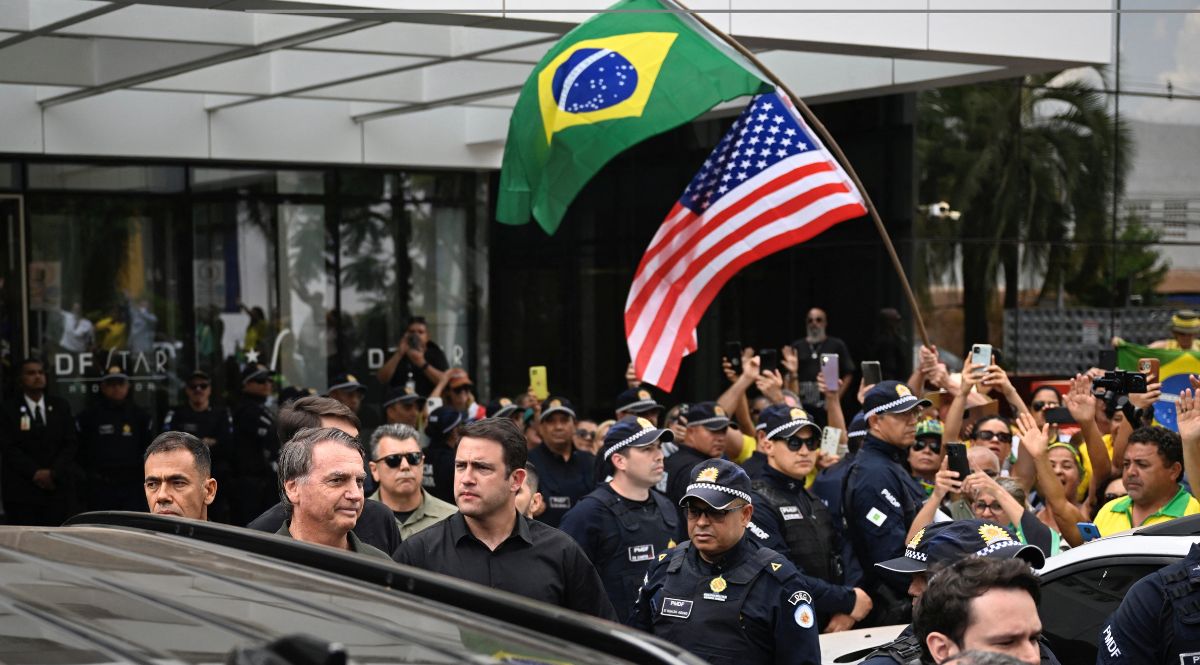
A political motivation was the main driver of the U.S. measures against Brazil and its authorities in July and August, as President Donald Trump tried to protect former Brazilian President Jair Bolsonaro from criminal charges of plotting a coup d’état. The Trump administration responded to Bolsonaro’s conviction on 11 September with new threats and additional sanctions. The Brazilian government will intensify its attempts at dialogue with the U.S. and seek support from other BRICS+ members, among other partners, and assistance for domestic industries affected by the punitive U.S. tariffs. The conflict with the United States will influence the course of the campaign ahead of next year’s general elections in Brazil.
Context
Trump’s return to power in the U.S. caused concerns in Brazil due to several potential hot spots in bilateral relations. President Luiz Inácio Lula da Silva’s left-wing government anticipated disputes with the new U.S. administration over expected protectionist policies and Brazil’s attempts to regulate the functioning of U.S.-based digital platforms. It also predicted friction over divergent goals in international politics, for example, Brazil’s involvement in BRICS+, including its presidency of the group this year.
The most significant source of concern, however, was related to MAGA Republicans’ support for the right-wing opposition centred on Bolsonaro. During his term in office (2019-2022), he developed good personal relations with Trump and his inner circle. In Brazil, however, he became the subject of several legal proceedings, the most serious being allegations that, after his defeat by Lula in the 2022 presidential election, Bolsonaro and more than 30 associates plotted a coup. The indictment also charged him with supporting and inspiring his supporters to storm the headquarters of the state’s top authorities on 8 January 2023 (a week after Lula’s inauguration). On 11 September, the Federal Supreme Court (STF) sentenced the former president to more than 27 years in prison and imposed a high fine.
Bolsonaro’s supporters present it political persecution. They blame in particular the STF judge, Alexandre de Moraes, who led a series of proceedings against the former president and his supporters. The judge also applied severe measures (e.g., heavy fines) in cases against large U.S. digital platforms. Bolsonaro’s backers had long sought support in the U.S. and had high hopes for Trump’s return to the presidency, arguing that the similarities between his and Bolsonaro’s legal troubles would convince the U.S. leader to help him. Among those who led these efforts was Eduardo Bolsonaro, the former president’s influential son and a federal deputy who moved to the U.S. in February to lobby for support for his father, including for sanctions on his opponents.
From Economic Pressure to Political Escalation
In the first months of this year, Brazil became the target of punitive tariffs imposed by the U.S. as part of its plan to put economic pressure on partners around the world. In March, Brazil was hit by a 25% tariff on steel and aluminium imports, which were raised to 50% in June, and then in April on vehicles and car parts. Before that, Brazil had been assigned one of the lowest rates (10%) among the economies that the Trump administration charged with so-called reciprocal tariffs on 2 April. The justification, as cited in most of the cases, mentioned that the country’s high tariffs and non-tariff barriers hurt U.S. interests.
The U.S. authorities, however, focused particular attention on Brazil in July. After the BRICS+ summit in Rio de Janeiro that month, Trump threatened the countries of the group with 100% tariffs if they decided to move away from settlement in the U.S. dollar. On 9 July, he sent a letter to President Lula threatening 50% tariffs on goods from Brazil. He justified this with what he described as “attacks” on U.S. digital platforms and on freedom of speech, as well as unequal competition (including non-tariff barriers). He also announced a review of trade relations with the country under U.S. law Section 301 on unfair trade practices, accusing Brazil, for example, of privileging the public digital payment system PIX (similar to the Polish Blik) at the expense of U.S. payment card operators. Trump introduced increased tariffs on 31 July, but with numerous exceptions, including imports of orange juice, aircraft parts, and fertilisers.
Trump’s defence of Bolsonaro and description of his trial as a “witch hunt” in the introduction of the 9 July letter indicated that the U.S. president’s main intention was to force the Brazilian authorities to refrain from prosecuting the former president. The visa sanctions imposed in July and August on Brazil’s attorney general, some STF judges, and justice minister, among other officials, aimed to achieve that political goal. The most severe measures were taken against Judge de Moraes, whom the U.S. accused of serious human rights abuse and applied financial sanctions under the American Magnitsky Act. Despite this pressure, the STF went ahead with Bolsonaro’s trial.
Brazil’s Reaction
Lula’s government tried to avoid confrontation and responded to the Trump administration’s chain of decisions on punitive tariffs with attempts at intergovernmental talks. In April, however, the Brazilian parliament accelerated work on the Economic Reciprocity Act (LdR), setting the rules for retaliation against unilateral trade restrictions by other countries.
In response to Trump’s July letter, Lula intensified attempts at dialogue with the U.S. at various levels, but complained about a lack of interest from the other side. Contrary to suggestions to initiate procedures under the LdR, he did not move forward with it until the end of August, noting that the possibility of retaliation against the U.S. is being studied. On the eve of the U.S. launching 50% tariffs, the Lula government invited representatives of U.S. digital platforms in Brazil to show—demonstrate actually—its willingness to engage in dialogue with them. Responding to the subsequent U.S. sanctions against Brazilian officials and criticism of Bolsonaro’s trial, the Brazilian government publicly emphasised the independence of the judiciary and solidarity with the judges targeted by the Trump administration.
In August, Brazil introduced protective measures for affected industries as part of the “Sovereign Brazil” programme, including deferring tax payments, a special credit line, and the possibility of intervention purchases of agricultural products. In mid-August, it filed a complaint against the U.S. with the WTO and sent a note to that country questioning the basis for the proceedings under Section 301. The government declared it would seek opportunities to redirect exports to other markets and political support from different partners. Between 7 and 11 August, Lula held talks with the leaders of India, Russia, and China. Finally, the government tried to convince the public that Bolsonaro supporters, including Eduardo Bolsonaro, are fully responsible for bringing repressive U.S. measures to Brazil.
Conclusions and Prospects
The political and personal motives behind the Trump administration’s decisions regarding Brazil complicate the possibility of resolving the dispute through dialogue. Although Lula’s government has tried to proceed cautiously and not to exacerbate the conflict, the U.S. clearly perceives the STF’s determination to adjudicate Bolsonaro and the harsh sentence imposed on him as confrontation.
The Brazilian delegation’s experience of delays and difficulties in obtaining visas for this year’s UN General Assembly session in New York are among the recent signs of the U.S. trying to put further pressure on the country. On 22 September, the Trump administration extended the financial sanctions imposed on Judge de Moraes to his wife and the Lex Institute, associated with the couple. Potentially, the next step will be for the U.S. to withdraw the exemptions from the 50% tariffs introduced at the end of July. In the longer term, the U.S. will likely increasingly interfere in the already ongoing campaigns ahead of next year’s general elections (presidential, parliamentary, and regional) to help the Bolsonaro-linked right return to power. That this is the Trump administration’s main motive behind their actions against Brazil is a common view in Lula’s government.
The two countries’ deteriorating relations exemplify a conflict fuelled by President Trump’s political and personal motivations and demonstrate how an internationally active country such as Brazil can respond to such interference. It is doubtful that the Brazilian authorities will bow to increased pressure from the Trump administration, so this case will test the extent to which a country in an asymmetrical relationship with the U.S. can compensate for losses caused by high tariffs through instruments to support domestic industries and redirect exports. It is also unclear how long the U.S. can maintain its stance, given the potential high costs of the restrictions on American consumers.
The conflict with the U.S. is conducive to further strengthening Brazil’s cooperation with China and the belief that its involvement in BRICS+ should be a priority. For the EU, this situation creates opportunities to strengthen relations with Latin America’s largest country, especially in the context of the ratification of the agreement with Mercosur initiated in September. However, it may be difficult for the EU to side with Brazil in its conflict with the U.S., as the EU has made concessions to the Trump administration on a trade agreement to avoid losing U.S. support for European security.



.png)
.png)