The Saudi-Turkish-Pakistani Mecca Agreement
Shortly after Saudi Arabia, Turkey and Pakistan signed a defence pact on 7 August 2026, new reports emerged of plans to scale back US involvement in the Middle East. This is yet another signal of the rapidly evolving changes in the Middle East’s security architecture, which is becoming increasingly fragmented.
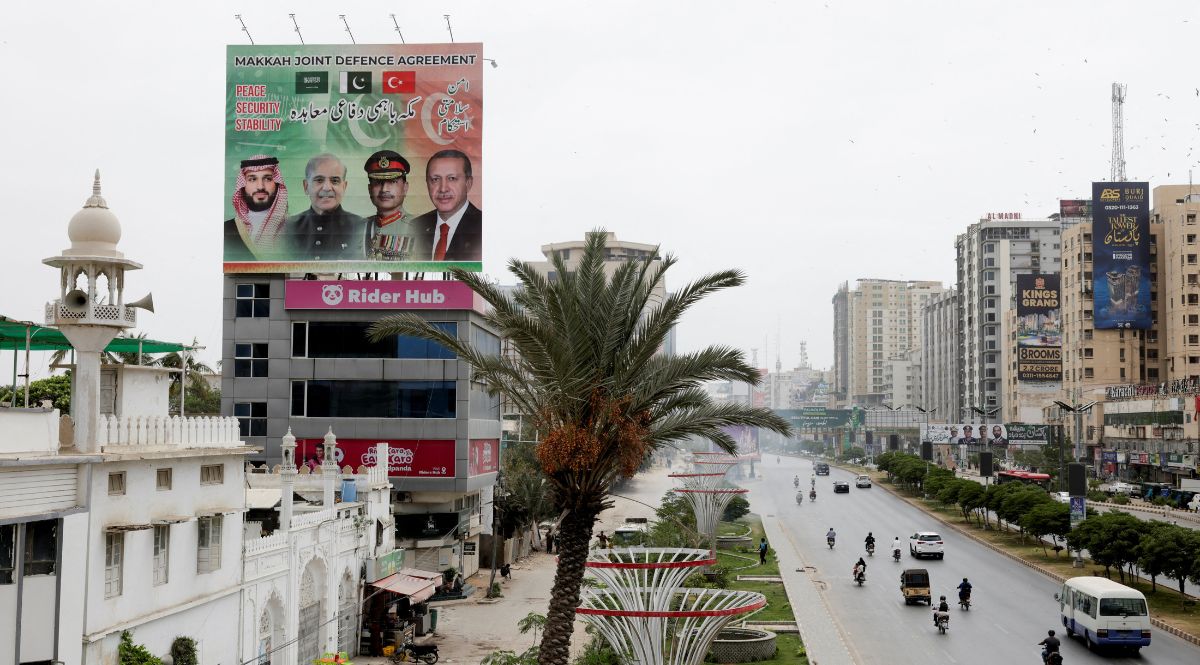 Akhtar Soomro / Reuters / Forum
What is the content and purpose of the Mecca Agreement?
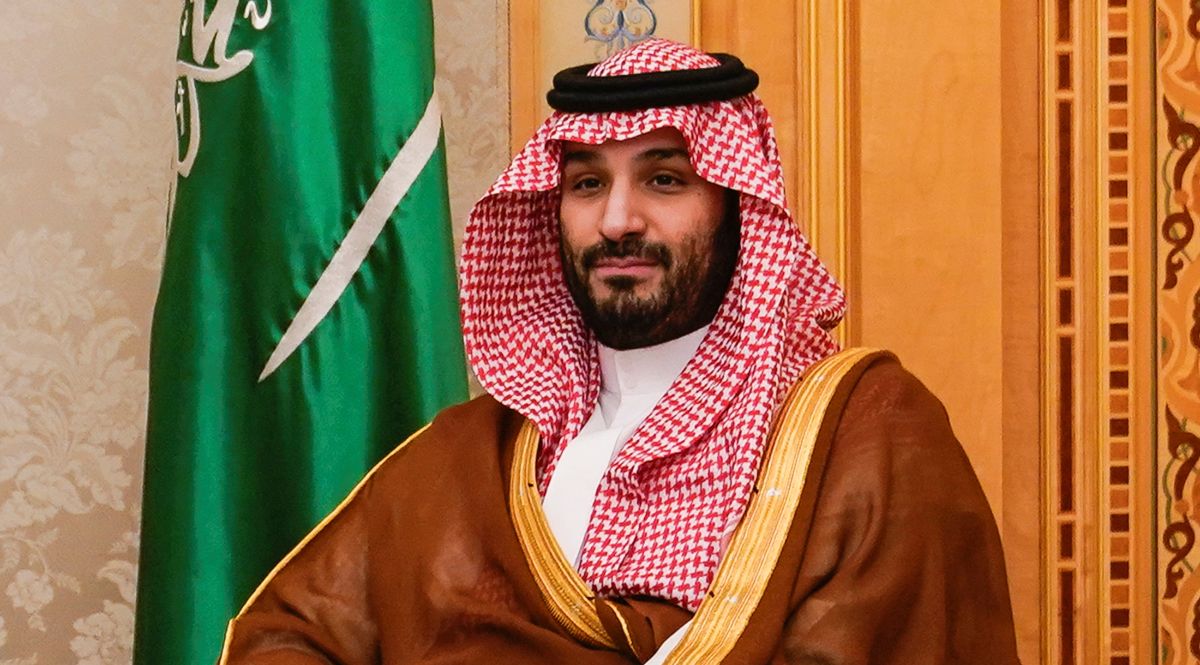
The exact text of the international agreement concluded between the parties is not known—only a joint statement has been published, expressing their desire to work towards common security and stability in the region. The treaty is intended to strengthen deterrence and defence cooperation, and to build the equivalent of Article 5 of the North Atlantic Treaty: an armed attack against one party will be treated as an attack on all. It is unclear whether NATO-style institutional structures will be established under the agreement. Saudi Arabia (KSA), Turkey and Pakistan have, in effect, formalised their existing military cooperation. Whilst this cooperation has an anti-Iranian dimension, the allies’ interests were aligned even before the US-Iran conflict. Pakistan and the KSA are linked by long-standing military coordination and a September 2025 bilateral defence pact; this is also a Saudi means of projecting influence in South Asia. The agreement may formalise an arrangement whereby Saudi Arabia pays Pakistan to fulfil orders for military equipment intended for Saudi allies in Africa (Sudan, Somalia). Turkey and Saudi Arabia share a common stance on the Horn of Africa, notably their support for Somalia’s territorial integrity. For its part, nuclear-armed Pakistan cooperates with Turkey in the defence industry and imports Turkish armaments. However, the military alliance is only one aspect of the deepening trilateral cooperation. This will be followed by mutual investment—with Saudi capital and the Turkish industrial base set to play a particular role.
Will the alliance be extended to other countries?
Egypt is a key candidate, with its prospective membership strongly advocated for by Turkey. Although the country has one of the largest armies in the region, its importance to the Middle Eastern security architecture is waning—its difficult economic situation prevents it from becoming involved in regional conflicts, and Abdel Fattah al-Sisi’s regime has so far confined itself to largely ineffective attempts at diplomatic intervention. At the same time, close ties with the United Arab Emirates (UAE)—a rival of the KSA—may deter Egypt from joining alliances that require acting against Emirati interests, despite Egypt’s policy towards Sudan being a notable exception. Qatar is another regional actor that may be interested in joining the pact. In a statement issued following the Mecca summit, Prime Minister Hamad bin Jassim Al Thani suggested that this agreement should evolve into an alliance encompassing all Gulf Cooperation Council states. Such a scenario is unlikely, but it highlights the need to develop a broader framework for regional defence. Bahrain has also expressed support for the initiative, although it is closely aligned with the rival Israeli-Emirati axis. The alliance’s sphere of influence also includes Syria, which is supported by Turkey, and the Yemeni government of the Presidential Leadership Council. It is unlikely that Jordan and Iraq, which have so far relied primarily on the US, will join the pact. Their regional situation necessitates greater caution when entering into defence commitments, as it is vital for Jordan to maintain its peace treaty with Israel, whilst significant Shia forces in Iraq remain under Iranian influence.
Against whom is the new agreement directed?
The states wielding the greatest regional influence are, above all, Iran, Israel and the United Arab Emirates. Given the ongoing conflict in the Persian Gulf, in the short term the Mecca alliance is naturally geared towards defence against Iranian attacks, although the likelihood of Turkey or Pakistan becoming openly involved in the US-Iranian war is very low. However, the defence and deterrence capabilities of the KSA will be strengthened. In the longer term, the Mecca alliance runs counter to Israel’s interests, with the KSA’s closer association with Turkey reducing the potential for normalisation of Saudi-Israeli relations. Saudi interest in Syria will also lead to closer cooperation aimed at stabilising the country, contrary to Israel’s objectives. Pakistan’s presence in the alliance, meanwhile, is a response to the Netanyahu government’s increasingly close cooperation with India. Israel’s most important Arab ally, the UAE, will also lose out as a result of the agreement, as any potential membership expansion would contribute to a reduction in the UAE’s sphere of influence.
How will this affect the US’s position in the Middle East?
The Mecca Alliance is intended to prevent a power vacuum should reports regarding a reduction of US military presence in the Persian Gulf prove accurate. There is no anti-American undertone—it is intended to complement the US’s role and responds not only to the region’s needs but also to those of Donald Trump’s administration. The latter is increasingly burdened by its entanglement in the war in Iran and its backing for Israeli actions which are reasonably suspected of constituting genocide. Both the US’s military and reputational costs are rising, as is the political risk from a domestic perspective.
The Mecca Agreement will lead to the consolidation of regional alliances around the KSA and cement its position as the most important power on the Arabian Peninsula. However, this will be just one of several Middle Eastern coalitions, competing with Israel’s partners and Iran’s still-functional “axis of resistance,” stretching from Hezbollah in Lebanon, through Shia militias in Iraq, to the Houthis in Yemen.