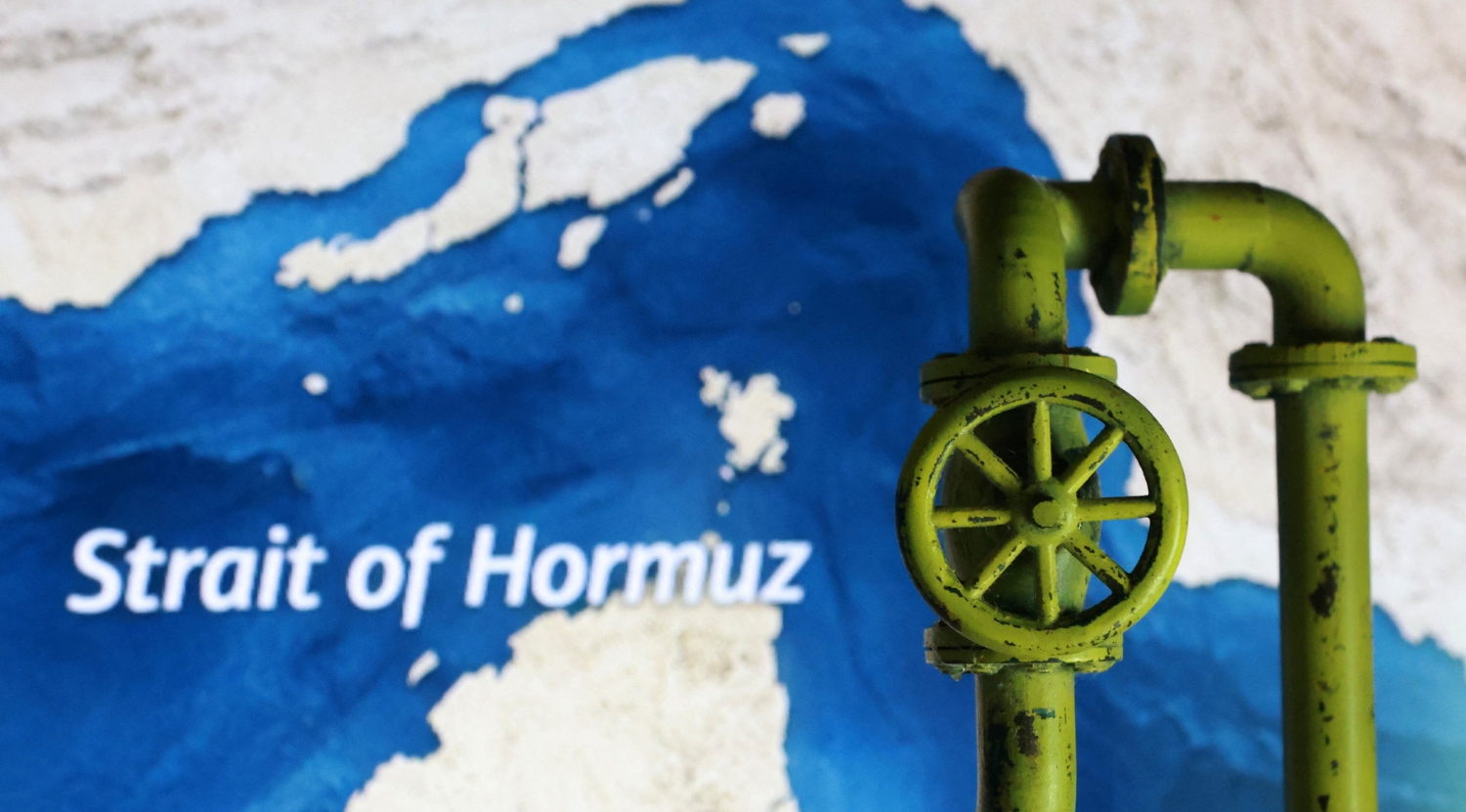
The UAE leaves the Organisation of the Petroleum Exporting Countries
The United Arab Emirates (UAE) justified its decision to leave OPEC on 28 April this year by citing a review of its energy policy. However, this move is also a symptom of a deepening divide between the UAE and the Kingdom of Saudi Arabia and signals that the Emirates intends to step back from regional cooperation in the Gulf. The European Union, when shaping its relations with the Gulf states, will have to take these tensions into account and adopt an approach focused on developing bilateral relations with its most strategically important partners: Saudi Arabia, the UAE, and Qatar.
 Elke Scholiers / Zuma Press / Forum
The significance of OPEC
Established in 1960, the Organisation of the Petroleum Exporting Countries (OPEC) aims to protect the broad interests of oil-exporting countries. This is achieved, among other things, by setting production limits to influence prices on the global market.
The Emirate of Abu Dhabi joined OPEC in 1967, four years before the unification of the Emirates in 1971. The decision of 28 April, which came into effect on 1 May, thus marks the end of the nation’s nearly 60-year membership. Consequently, the organisation now has 11 members: Algeria, Gabon, Equatorial Guinea, Iraq, Iran, KSA, Kuwait, Libya, Nigeria, the Republic of the Congo, and Venezuela. The expanded OPEC+ format extends cooperation to a further 11 countries, including Bahrain, Oman, and Russia. OPEC countries have to date controlled a total of 79.08% of global oil reserves and accounted for 44.57% of global oil exports (data for 2025). Saudi Arabia, Iraq, and the United Arab Emirates account for a significant share of the market (14.44%, 7.31%, and 6.46% of global exports in 2025, respectively).
OPEC members have the world’s largest spare oil production capacity at their disposal (Saudi Arabia is the lead producer, and the UAE was in second place). According to estimates by the International Energy Agency, before exports through the Strait of Hormuz were blocked, the Emirates was capable of increasing its short-term output by around 0.7 million barrels per day (data from February 2026). This means that 16% of UAE production capacity was unused due to OPEC limits.
The economic rationale behind the UAE’s decision
Before announcing its withdrawal from the organisation, the UAE had previously expressed its dissatisfaction with OPEC’s quota policy, including during negotiations on the shape of the market following the Covid-19 pandemic in 2021, when Saudi Arabia took advantage of its position as the strongest member to shape the policy. As the UAE’s economic strategy is geared towards maximising profits from oil sales before oil loses its significance for the global economy, it considers any production cuts to be detrimental. Anticipating that oil profits will decline as the world shifts towards renewable energy sources, the UAE sees increasing sales of crude oil as a way to generate capital that can be invested in the development of sectors unrelated to the hydrocarbon industry, whilst bringing the UAE closer to achieving net-zero emissions—a target set for 2050.
The UAE’s withdrawal from OPEC had no immediate impact on the global oil market , including oil prices. With exports from the Peninsula remain significantly challenged by the war in Iran, Arab oil volumes remain constrained by the capacity of pipelines bypassing the Strait of Hormuz. But these alternative routes are also under threat from Iranian attacks. The pipeline from Abu Dhabi to the port of Fujairah became a target for Iranian drones in early May, despite the ongoing ceasefire. Strikes on energy infrastructure can be interpreted as a reminder that Iran does not intend to surrender control over oil exports from the Gulf.
Political consequences
The weakening of OPEC will be problematic for Saudi Arabia, which is keen to maintain high oil prices to finance significant domestic expenditure. Should exports through the Strait of Hormuz be unblocked, Saudi Arabia’s profits from oil sales may decline, as the UAE’s pricing policy will not be coordinated with OPEC. The decision to leave the organisation should be seen as yet another symptom of the deepening rift between the UAE and Saudi Arabia. It also heralds competition on the energy market, as countries such as China, India, Japan and South Korea are major importers of both Saudi and Emirati oil. Emirati-Saudi relations, whilst not yet openly hostile, will be based on increasingly fierce rivalry. This competition will span political and military spheres—including in Yemen, Sudan, and the Horn of Africa—as well as economic development, from national branding to attracting foreign investment for megaprojects such as Saudi Arabia’s Neom and Dubai’s The Loop.
Withdrawal from OPEC also signals mounting discontent with the conduct of neighbouring countries within regional organisations. These international organisations appear indifferent to the growing frustration of the Gulf Cooperation Council (GCC) states regarding the stalled negotiations and the outcomes of US and Israeli attacks on Iran. Citing their alleged passivity in the face of Iranian attacks, the UAE has become increasingly critical of the GCC, the League of Arab States, and the Organisation of Islamic Cooperation. The Emirates prefers the collapse of the current Iranian regime over any agreement that would allow it to survive, and increasingly views neutral stances—such as Pakistan’s—as favouring a hostile Iran. Hence, the UAE’s early April demand that Pakistan immediately repay a loan was widely seen as an expression of dissatisfaction with its mediation efforts to end the war. Instead, a rapprochement between the UAE and India is gathering pace. During Prime Minister Modi’s mid-May visit to the UAE, the two countries announced a new defence partnership, alongside several investment initiatives.
The US, and Donald Trump’s administration in particular, will welcome the UAE’s pursuit of an independent energy policy, having previously exerted pressure on OPEC over inflated oil prices. As Emirati policy is increasingly prioritising strengthening bilateral relations—driven by defence cooperation and its reliance on the US as a security guarantor—the United States can count on the Emirates to manage its oil supply to keep prices at optimal levels for American interests. Furthermore, leaving OPEC could strengthen the UAE’s position in negotiations for a swap line agreement with the US. Securing access to this credit line would enable the UAE central bank to maintain dollar liquidity, strengthening the USD-pegged dirham and increasing investor confidence amid economic shocks.
Outlook
A fall in oil prices can be expected following any Iranian-US agreement which includes the reopening of the Strait of Hormuz. This will further accelerate the forecast increase in UAE oil production, and pricing policy differences could lead to a deterioration in Emirati-Saudi relations. Saudi Arabia will continue to seek to strengthen its position as a regional hegemon, whilst the UAE will intensify its security cooperation with Israel. This divergence threatens a decision-making deadlock within the GCC when it comes to further economic integration or the operation of a joint defence cooperation mechanism.
In the face of deepening divisions among Arab states, it will be important for the European Union to maintain good relations with all GCC members, regardless of any tensions that may arise between them. This will entail greater engagement through bilateral channels and may consequently lead to closer cooperation with Saudi Arabia, the UAE, or Qatar—countries of the greatest strategic importance to the EU, primarily due to energy security needs. At the same time, however, the EU should support GCC unity by offering common initiatives to all Gulf states, such as a return to negotiations on a free trade agreement between the EU and the Gulf Cooperation Council, as deeper regional integration will help maintain stability in the Middle East. The EU may suffer the consequences of this lack of integration through energy security-driven economic problems, surges in migration from crisis zones like Lebanon, or escalating armed conflicts. The latter would require continuous and costly US involvement, and would ultimately be detrimental to European security.