The impact of the Iran war on Oman
The war in Iran has diminished Oman’s role in regional diplomacy, but the country’s position outside the Persian Gulf has contributed to its growing economic importance. According to the latest agreement between Iran and the US, Oman will play an important role in developing a new model for managing the Strait of Hormuz. It is therefore in Europe’s interest to strengthen trade ties with Oman whilst working to ensure freedom of navigation between the Persian Gulf and the Gulf of Oman.
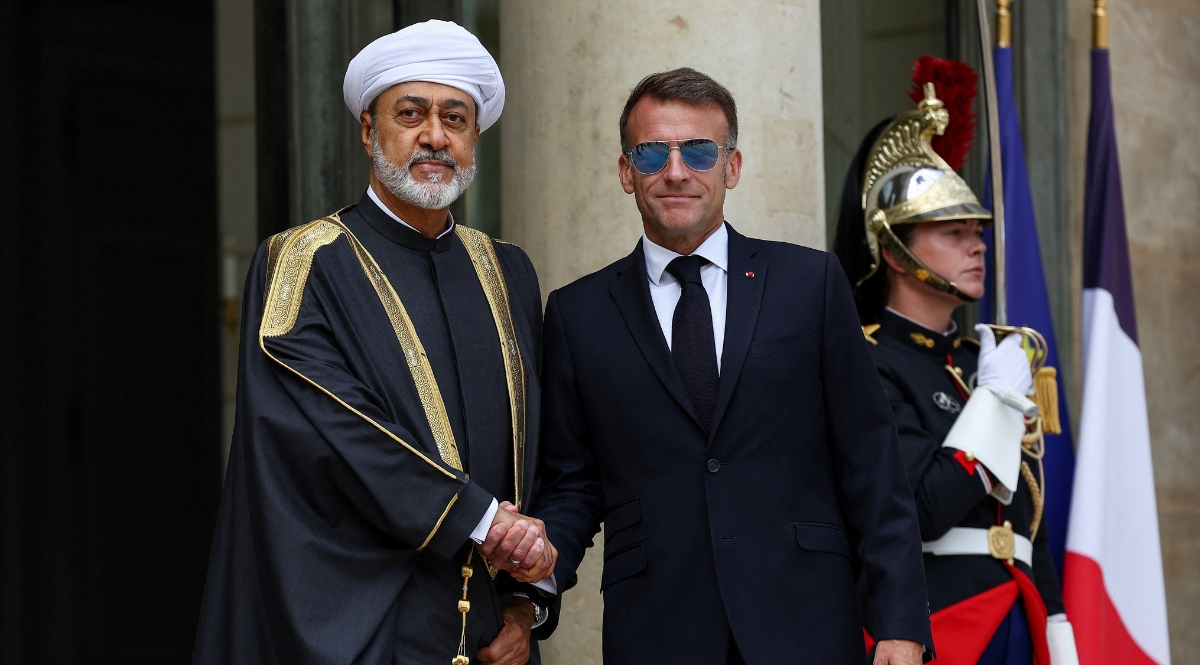 Alice Sacco / Reuters / Forum
The context of Oman’s neutrality
A rich history of balancing between local and global powers has enabled Oman to forge good relations with both its Gulf neighbours and countries outside the region. It has avoided becoming engaged in regional conflicts, such as the blockade of Qatar between 2017 and 2021, and has maintained friendly relations with Iran. It has developed defence cooperation with the US and the UK and strengthened its economic position by encouraging investment from China. This strategy has fostered diversification of Oman’s economy, which – as in the other Gulf states – was primarily based on hydrocarbon exports.
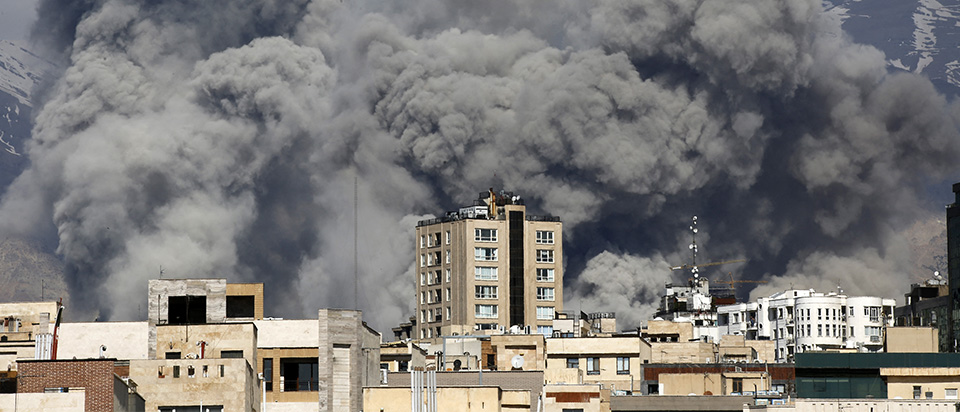
The war in Iran altered Oman’s position in regional politics and affected its relations with the American ally. Before the war broke out, Oman was actively mediating between Iran and the US, attempting to prevent an open conflict right up to the final moment. Later, however, Oman became the target of Iranian missile strikes, although these were less intense and severe than the attacks directed at the other Gulf Cooperation Council (GCC) states. Ultimately, despite Iranian strikes targeting Oman’s energy infrastructure and ports, relations between the two countries have not broken down, and Iran continues to view Oman as a key partner in discussions on the future governance model for the Strait of Hormuz.
An advocate of de-escalation
The GCC members have not reached a unanimous position regarding the US and Israeli war against Iran. Countries with closer ties to Israel—primarily the United Arab Emirates (UAE) and Bahrain—have adopted harsher rhetoric towards Iran, and their preferred outcome for the war would be regime change, as initially declared by the US. Oman, as with Qatar and, in the later stages of the war, Saudi Arabia, was not in favour of escalation. Their priority was not the neutralisation of the Islamic Republic, but rather the restoration of regional stability, even if it meant retaining the Iranian regime. Peace is essential for further economic development in the region, and the primary threat is the closure of the Strait of Hormuz. It is therefore in the interest of all regional powers to safeguard free and unimpeded shipping, in accordance with applicable international law. Oman can play a key role here, as the 17 June agreement between Iran and the US stipulates that the management model for the Strait is to be developed through direct dialogue between Iran and Oman, with the active participation of the other Gulf states. In the past, Iran has indicated that various types of ‘service charges’ relating to passage through the Strait could be introduced, levied by both coastal states. From Oman’s perspective, such a solution would be disadvantageous, given the opposition from the United States and the other GCC states, which are pressing for a return to the status quo ante in the Strait. Despite Oman’s reluctance, Iran might still unilaterally decide to introduce charges or technical barriers to shipping, using safety considerations over mines along the route as a justification.
A difficult partnership with the US
Oman’s neutral stance towards Iran has contributed to a cooling of relations with the United States. This has also led to the Trump administration losing confidence in Oman as a mediator, with it coming to be seen as too pro-Iranian. Pakistan ultimately became the main mediator, firstly succeeding in securing a ceasefire and then in the signing of a framework agreement intended to pave the way for an end to the war. One of the key factors that led to Pakistan being entrusted with this role was the US view that Oman’s response to the closure of the Strait of Hormuz was inadequate. The US administration’s dissatisfaction reached its peak at the end of May this year, when Donald Trump threatened to bomb Oman if it agreed to charge any fees for passage through the strait. This has pushed US-Omani relations to a crisis point. From the US perspective, rebuilding ties requires Oman to secure the unconditional and permanent opening of free navigation through the Strait of Hormuz. Without this, relations will continue to deteriorate, potentially driving Oman closer to Iran.
US-Omani relations are also being negatively affected by Oman’s increasingly harsh rhetoric towards Israel. Although Israel’s failure to respect the ceasefire in Lebanon is a source of tension between Benjamin Netanyahu’s government and Donald Trump’s administration, the country remains the US’s most important and influential ally in the region. Until the attack on the Gaza Strip in 2023, Oman maintained cordial, albeit unofficial, relations with Israel. Subsequently, these relations deteriorated significantly, and in 2025, the Omani foreign minister described Israel as ‘the greatest source of destabilisation in the region.’ The attack on Iran had a further negative influence, and at present any attempts at reconciliation are unlikely.
An alternative to ports in the Persian Gulf
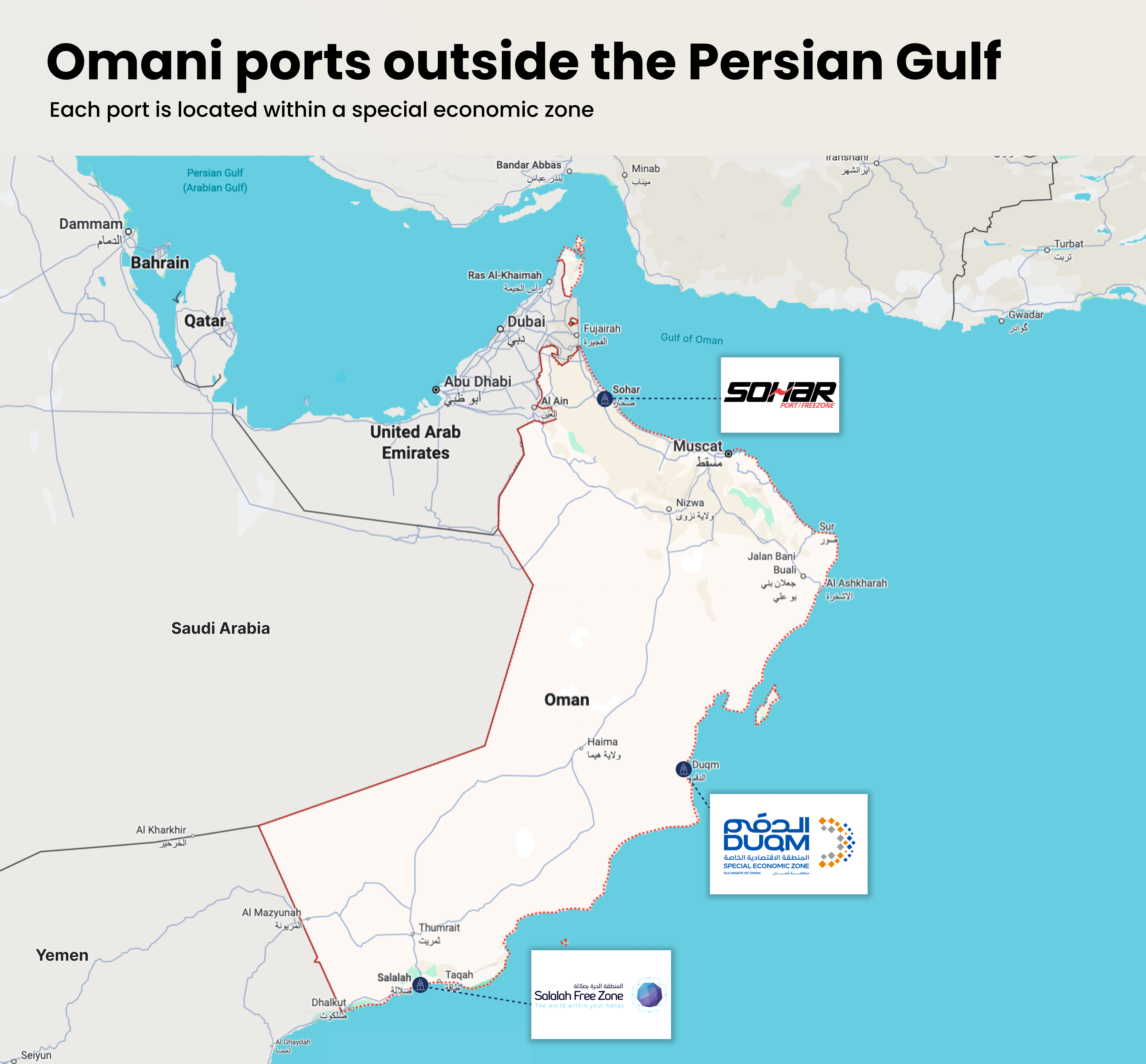
Although Oman has been marginalised in mainstream diplomacy, it has managed to avoid most of the negative economic consequences of the war in Iran. This resilience is primarily due to the strategic location of most of Oman’s major ports outside the Strait of Hormuz, which has shielded them from the economic shock experienced by countries that lack alternative trade routes. Furthermore, they have become key logistics hubs for trade that can no longer pass through the region’s previous main logistics centres, such as the Jebel Ali Port in Dubai or King Abdulaziz Port in Dammam, Saudi Arabia. Consequently, Oman, traditionally one of the slowest-growing GCC countries, is now second only to Saudi Arabia in 2026 GDP growth forecasts. The World Bank predicts growth of 3.1% for Saudi Arabia, with Oman and the UAE tied for second place at an estimated 2.4%.
The isolation of the other Gulf states has also provided an impetus for the expansion of road and rail networks leading to Oman, which should result in the completion of the rail link project between Oman and the UAE. Turkey has also announced an initiative to rebuild the Hejaz Railway, which operated in the early 20th century and stretched from Damascus to Medina. The modern-day version would run from Turkey all the way to Oman via Syria, Jordan and Saudi Arabia, offering a land-based alternative to the maritime route linking the wider region of Western Asia with the Arabian Sea. Furthermore, new investments with foreign partners are planned in Oman—in June alone, agreements worth $7.5 billion were announced in the Duqm Special Economic Zone. The planned projects will primarily target the energy and technology sectors, including green energy and electric vehicles. A further $1.5 billion is to be invested by the state-owned Future Fund Oman in these sectors, as well as in healthcare, tourism and food security.
Conclusions
Within the regional context, the most advantageous option for Oman is to work towards normalising neighbourly relations between the GCC states and Iran. The priority should be to stabilise the security situation and secure the trade route linking the Persian Gulf with the Arabian Sea. Future relations with the United States will depend on the outcome of talks with Iran regarding the Strait of Hormuz, and a return to the status quo ante bellum will facilitate the rebuilding of these relations. However, the country’s marginalisation in the ongoing peace process means that, despite maintaining its policy of strategic neutrality, Oman is unlikely to resume its role as a key mediator between the US and Iran in the coming months.
It will be beneficial for Europe to strengthen its economic ties with Oman, given the country’s resilience to economic shocks in the Persian Gulf and its expected rapid economic growth. Furthermore, by offering Oman a free trade agreement, the EU could use its economic bargaining power to influence the future model for managing the Strait, gaining a means of exerting pressure to ensure Oman works to safeguard freedom of navigation in the Strait.