The European Union faces "China Shock 2.0"
In June, the European Council decided to adopt a tougher stance towards China. This was in response to the sharp increase in the EU’s trade deficit, caused by a significant rise in subsidised Chinese imports. If this unbalanced trend continues, it could ultimately lead to the deindustrialisation of the EU. In the short term, this would result in falling revenue and job losses, while in the longer term, factory closures could lead to social problems.
 Christian Ohde / imageBROKER / Forum
“China Shock 2.0”
The term “China Shock 2.0” is increasingly being used by officials and experts in the European Union to refer to the massive influx of heavily subsidised, high-value Chinese industrial goods into the EU market. This process is similar to the sharp rise in Chinese exports seen in the early 2000s, when China joined the WTO. At that time, Chinese exports were mainly low-value goods. This period is now referred to as “China Shock 1.0.”
The current situation is the result of adjustments to China’s economic model in the wake of the pandemic and the 2023 property market crisis. At that time, China began subsidising the manufacturing sector, moving away from infrastructure investment. It was also during this period that the EU began restricting Chinese investment in critical infrastructure and high-tech sectors in Europe in response to China’s “Made in China 2025” strategy, adopted in 2015.
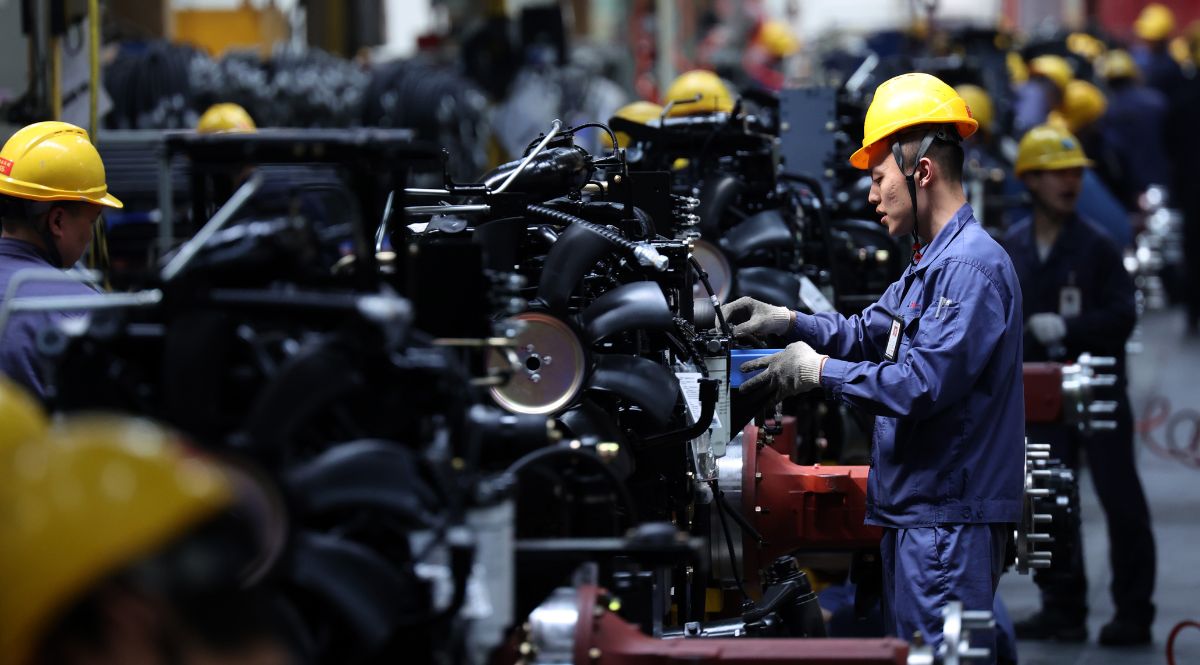
According to Eurostat data, the EU’s trade deficit with the PRC reached a record high of €360 billion in 2025. Compared to 2015, EU imports from China increased by 89%, while EU exports to China rose by only 37%. China exports high-quality, technologically advanced products to the EU, including cars, electric buses, and equipment for the green transition such as solar panels and wind turbines. According to the European Automobile Manufacturers’ Association, over 1.1 million new vehicles, worth €15.1 billion, were imported into the EU from China in 2025 alone (Western-branded vehicles are also manufactured in China), whilst only 161,500 vehicles, worth €8.5 billion, were exported from Europe to China. For green energy, 98% of photovoltaic panels and 61% of inverters used in the EU were imported from China. The EU is also facing an influx of Chinese steel, ferroalloys, and chemical products.
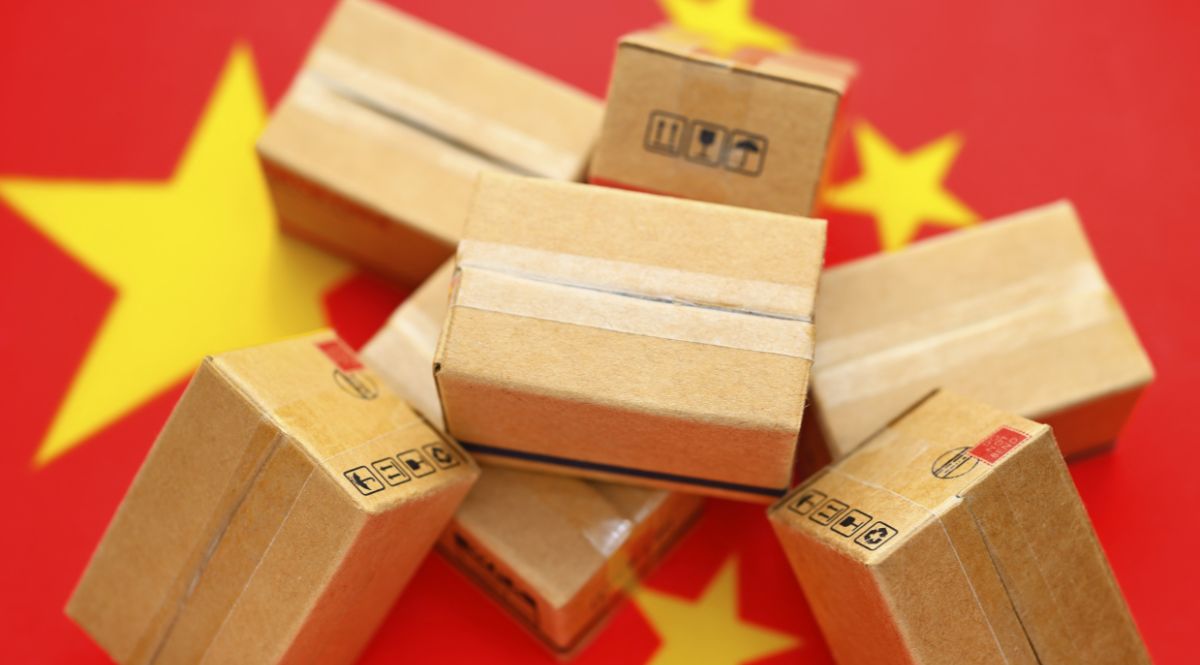
The EU market is also experiencing a significant flow of low-cost, often substandard goods from Chinese e-commerce platforms such as Shein, Temu and AliExpress. According to EU data, 4.6 billion parcels entered the EU in 2024, a 100% year-on-year increase from 2023. Of these, 91% contained low-value goods (under 150 euros) that were mostly purchased on Chinese platforms. From 1 July this year, the EU abolished the de minimis clause, which exempted low-value consignments from customs duties, and introduced a temporary customs duty to prevent further losses from unpaid duties. From July 2028, this duty will be replaced by a customs clearance system.
The increase in Chinese exports is putting pressure on the production capacity of European countries, triggering falls in revenue which could lead to job losses, and which ultimately may result in business closures. For example, it is estimated that the Polish retail sector loses approximately 6.5–8.8 billion zlotys a year to purchases on Chinese e-commerce platforms. In Germany, around 51,000 jobs were lost in the automotive sector in 2024–2025, partly due to competition from China. Meanwhile, the European Central Bank estimates that Europe lost around 240,000 industrial jobs due to Chinese competition between 2015 and 2022.
Towards a new EU approach
“China shock 2.0” has prompted plans for a further shift in the EU’s approach to China. In its conclusions on 19 June this year, the European Council (EC) emphasised that it had held a debate on global macroeconomic imbalances and taken measures to boost competitiveness. It also stated that it would return to this issue in October 2026. Although the word “China” was not mentioned, it is clear that the European Council expects the Commission to examine the issue.
Since 2017, when the EU first proposed an inbound investment screening mechanism in response to protect critical infrastructure from Chinese acquisition, this defensive approach has been consistently expanded. In 2019, the EU, while describing China as a ”partner, competitor and rival”, restricted access by Chinese companies to strategic sectors and infrastructure, whilst paying less attention to imports from the PRC. This was in response to China’s interest in acquiring European and US technology companies, as well as investing in transport infrastructure (e.g. ports, railways and airports) and the telecommunications sector (e.g. 4G and 5G standards).
Planned measures
The Commission’s work suggests that it is seeking to adopt a more proactive approach. As a first step, it intends to make wider use of safeguards. These protective measures impose temporary restrictions—including import quotas or heightened tariffs—on imports of goods from outside the European Economic Area when a sudden, sharp increase threatens European producers. To date, this instrument has mainly been used to limit the influx of steel and ferroalloys into the European market, which Europe imports primarily from the PRC (in June this year, the EU once again extended the restrictions on this group of goods). The Commission intends to expand the scope of the instrument, transforming it to serve as a fast-track mechanism to halt the flood of subsidised Chinese goods into the European market.
The second planned measure is to make more effective use of instruments introduced or amended after the 2015 announcement of ”Made in China 2025” (see Table 1). The Commission is currently reviewing these instruments for effectiveness. Current application problems include a lack of political will, resulting from differing approaches among Member States, a lengthy and complex activation procedure, and the limited range of products and sectors to which the mechanism can be applied. Therefore, there is potential to both broaden the scope of each instrument and amend the way in which it is triggered. Experience has shown that the most effective instruments are those whose activation lies solely within the Commission’s remit (ex officio), without the need for a request from Member States or companies. Examples of this class include the Foreign Subsidies Regulation, and the reform of the screening of inbound investments, which came into force in June this year. This introduced an obligation for all Member States to have a screening mechanism in place and specified the sectors subject to mandatory monitoring.
The third measure will be the launch of new instruments. Work is currently underway on solidarity and diversification mechanisms, and although details are scarce at this stage, it is known that these instruments are intended to help diversify supply chains and provide support in the event of Chinese retaliation against a Member State.
Conclusions
Despite becoming increasingly strict over the past 10 years, the EU’s policy towards China remains largely reactive. There are two reasons why curbing Chinese exports will be difficult. Firstly, there is significant interest among European consumers in goods from China. For many consumers in Central Europe, the emergence of the Chinese automotive sector offers private buyers their first opportunity to purchase a high-quality new vehicle at a competitive price. Historically, new car purchases were limited mainly to companies, with private customers only able to afford second-hand vehicles, and affordable imports are now changing this dynamic. A similar situation exists with low-cost products from Chinese e-commerce platforms, with ultra-fast fashion enabling frequent purchases of new clothing styles, while buying imported solar panels can reduce energy costs and help protect the environment.
Unlike measures to limit Chinese investment, imposing restrictions on Chinese consumer goods would directly affect European consumers. These restrictions are often difficult for the average consumer to understand. Driven mainly by price and quality, they do not consider the impact of their purchases on European industry. Furthermore, restricting imports from China would fuel inflation across the entire EU economy.
The second factor is the US–China trade war, which is impacting the EU economy as US tariffs mean that some Chinese production is being redirected to the European market. Meanwhile, the scope of China’s retaliatory measures in response to US restrictions is broad, and not restricted to the US, meaning they also affect the EU (e.g. China’s export controls). The Trump administration’s critical stance towards the EU makes it difficult to develop joint US–European measures towards China.
China’s responses to EU restrictions confirm that a shift towards an economy driven by greater domestic consumption—a key EU desire—is highly unlikely. Furthermore, there is a possibility that China’s hostile economic measures will intensify. For political reasons, China is threatening to halt exports of raw materials and components that are essential for manufacturing processes in Europe. It may also block European companies manufacturing in the PRC from accessing the Chinese market, or even remove them from it entirely.
The European Council’s June conclusions provide an impetus for developing a more effective policy towards China. Alongside the EU implementation of industrial policy to help Europe regain its competitiveness, reducing dependence on China requires consistent targeted action. This means establishing alternative supply chains and building the capacity to circumvent Chinese export controls, for example through cooperation with third countries. It is also important to be able to flexibly reroute logistics within the single market, making it more resilient to Chinese retaliatory measures directed against specific countries. Reforming existing instruments and developing new mechanisms presents an opportunity, but a potential problem with this approach may be securing the necessary funding to operate these new instruments.
Another major challenge will be raising European consumer awareness of the risks to jobs and security posed by purchasing goods from China, such as the collection and storage in China of data from electronic devices and smart vehicles. Finally, should effective restrictions on imports from China be introduced, mitigating the resulting rise in inflation will be a key challenge.
Table 1: The most important defence measures introduced by the EU in response to China’s actions, among other things.
| Instrument | Entry into force | Key focus |
|---|---|---|
| Foreign Investment Screening (inbound) | 2020 | Monitoring the impact of foreign direct investment on security and public order in the EU. |
| International Procurement Instrument | 2023 | Sets out the access of contractors, goods and services from third countries to EU public procurement and concession markets, as well as the procedures that support negotiations on access to the public procurement and concession markets of third countries for EU contractors, goods and services. |
| Anti-Coercion Instrument | 2023 | Protecting the Union and its member states from economic coercion by third countries. |
| Foreign Subsidies Regulation | 2023 | Regarding foreign subsidies that distort the internal market. |
| Anti-subsidy measures | 2016 | Protection of the EU against imports of subsidised goods from countries outside the EU. |
| Anti-dumping measures | 2016 | Protection against imports of products at dumped prices from countries outside the European Union. |


.png)
.png)