
EU-China Summit in Beijing - Sides are Talking, but No Concrete Results
The EU-China summit in Beijing on 24 July confirmed the lack of prospects for improved bilateral cooperation. The EU sees China’s support for Russia and unfair economic practices as major obstacles. The Chinese authorities continue to hope that the difficult situation in transatlantic relations will force the European Commission (EC) and the EU Member States to take a conciliatory approach towards China.
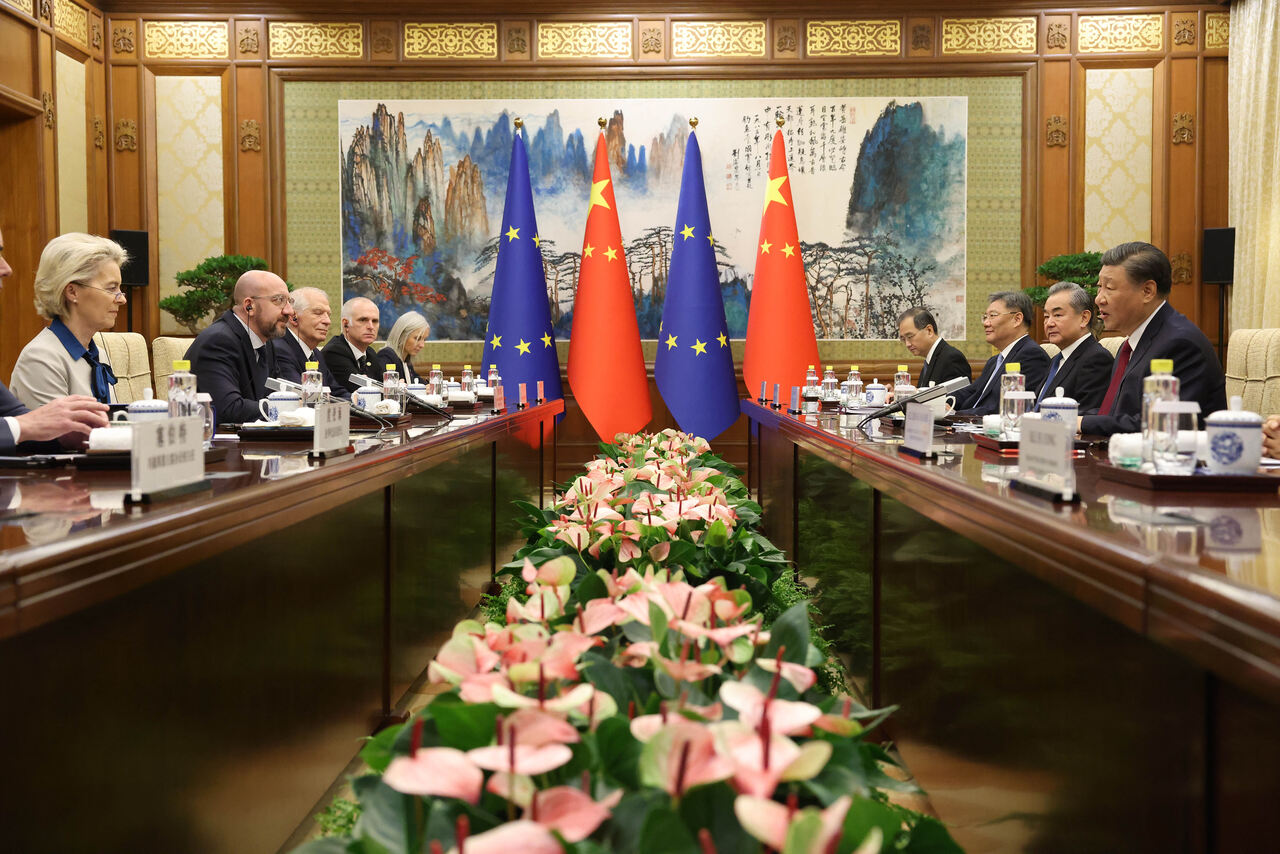
.png) credit: Michailidis/EUC / Zuma Press / Forum
credit: Michailidis/EUC / Zuma Press / Forum
What were the circumstances of the summit?
The summit took place against a backdrop of structural problems in EU-China relations. From the EU’s perspective, China’s support for Russia despite its aggression against Ukraine, as well as economic issues (including limited access to the Chinese market or the export of Chinese overproduction to the EU market) are the greatest obstacles. The EC has pursued an active policy towards China, including in June limiting the participation of Chinese entities in public tenders in the medical sector by using, for the first time since its introduction in 2022, an instrument on international public procurement. In July, it also included two Chinese banks in the 18th package of sanctions on Russia. EC President Ursula von der Leyen displayed the firm stance towards China at the G7 summit in June. In the face of the EU’s assertive position, Chinese Foreign Minister Wang Yi indicated during a visit to Brussels in July that China would rather that the summit last one day rather than two, which was the EC’s proposal.
What did the EU expect from the summit and what did it achieve?
Von der Leyen and Council President Antony Costa aimed to convey, in a direct conversation with China’s Chairman Xi Jinping, that without a change in China’s policy, there was no possibility for improved cooperation. The meeting with Xi, in turn, only happened with an agreement to shorten the summit and to hold it in Beijing. Chronologically, it should have been held in Brussels this year, but the Chinese authorities refused to allow—unlike in previous summits—the Chinese delegation to be led this time by Premier Li Qiang, rather by Xi Jinping. Despite the ongoing talks (and pressure from the German government on the EC), it was also difficult to count on the progress the Union desired on the issue of reducing tariffs on Chinese electric vehicles and on increasing Chinese investment in the EU in the electromobility sector. The EU also expected the summit to result in streamlined imports of critical raw materials from China, after it essentially halted exports of seven rare-earth elements and magnets used in the production of cars, among other things, in May this year. Following the Commission’s intervention in June, China withdrew from a wholesale block on trade in such materials, but introduced complicated bureaucratic procedures. According to von der Leyen, the EU managed to agree a slight improvement on this issue—a mechanism allowing the EC (in a critical situation) to mediate between a company and China. At the same time, there was no prospect for achieving the Union’s demands with regard to Sino-Russian cooperation, as Minister Wang signalled during his conversation with EU High Representative for Foreign and Security Policy Kaja Kallas in July. Given all this, apart from the issuing of communiqués, albeit separate, the most important outcome of the summit for the EU was a common statement on climate. In it, the parties stressed, among other things, their willingness to cooperate in preparation for the COP30 conference in Brazil in November.
What were China’s objectives?
For China, it was important to reinforce the EU’s interest in the need for cooperation and the weakening of barriers in the single market. It wanted to take advantage of the problems in transatlantic relations by reducing the likelihood of a possible agreement between the EU and the U.S. on limiting the impact of Chinese overproduction, for example. Recent progress in trade negotiations with the U.S. led the Chinese authorities to believe that a change in the EU’s attitude towards cooperation with China would be easier to achieve, especially after President Donald Trump’s announcement that the U.S. would impose further tariffs on the EU from August. In his conversation with EU leaders, President Xi emphasised the need for the EU to pursue an independent policy towards China, as well as the importance of the Union’s role on the international stage. From China’s perspective, therefore, the transatlantic disputes and the course of the talks with the U.S. on tariffs mean that there is, however, currently no need for major concessions to the EU, including on relations with Russia.
How will the summit results affect EU-China relations?
The EU-China relationship is hampered by the unwillingness of either side to modify its policies, and will remain at an impasse for some time. This implies the need for the EU to continue with a policy calculated to reduce its dependence on China (derisking) and to counter China’s negative impact on European security, as well as to settle trade disputes with the U.S. in a positive way. China is openly warning the EU against cooperating with the United States on tariffs and countering overproduction. It will continue to use import dependency on critical raw materials (suggested by the Chinese trade minister in June this year), as well as tariffs on selected products, to pressure the EU and the Member States. Positive gestures (such as the lifting of the sanctions imposed on MEPs in 2021) and selective market openings, such as for Spanish food, are intended to demonstrate the benefits of cooperation with China vis-à-vis relations with the U.S. Exclusive proposals during visits by European politicians, including the Spanish prime minister in April, the Croatian foreign minister in July, or the planned visit of the German Chancellor in the autumn, serve this purpose.


.png)