Prospects for North Korea's foreign policy
The decisions of the 9th Congress of the Workers’ Party of Korea in February of this year and the constitutional amendments made in March of this year indicate that North Korea intends to continue the foreign policy it has pursued in recent years. The cornerstones remain North Korea’s alliances with China and Russia and the development of its military capabilities, with the DPRK maintaining a confrontational stance towards the US, demanding de facto recognition of its status as a nuclear power. The removal of the goal of Korean reunification from the constitution confirms Kim Jong Un’s strategic decision in 2023 to end inter-Korean dialogue. The DPRK’s foreign policy contributes to the persistent threats arising from its cooperation with Russia, and European countries should respond to this more actively.
 Vadim Savitsky / Zuma Press / Forum
During the 9th Congress of the Workers’ Party of Korea in February of this year, the main directions of the DPRK’s domestic and foreign policies were announced. In March, the Supreme People’s Assembly (parliament) approved these policies and adopted amendments to the constitution. These amendments confirm Kim Jong Un’s hold on power. Since assuming power in late 2011, he has consolidated his control over the elites and brought the state apparatus under his authority. His prerogatives as Chairman of the State Affairs Commission — including responsibility for decisions regarding the use of nuclear weapons — have been expanded. As part of the effort to build a cult of personality, most references to his predecessors, Kim Il Sung and Kim Jong Il, have been removed from the constitution. The amendments also remove references to Korean reunification, recognising the Republic of Korea as a separate state, and define the DPRK’s territory as the land bordering China and Russia to the north, South Korea to the south, and the territorial waters and airspace established on this basis. This effectively recognises the military demarcation line at the 38th parallel—established in the 1953 armistice agreement following the Korean War—as the land border between the two Koreas.
The assumptions of North Korea’s foreign policy
North Korea views the international environment as hostile and regards the US as the greatest destabilising force. At the same time, however, it also recognises a shift in the international order towards multipolarity and views itself as a key player in this process. It believes the situation on the Korean Peninsula is tense due to the hostile policies of the United States and its allies, South Korea and Japan. The DPRK’s overriding interest remains the survival of the regime, and its foreign policy objectives are to ensure national security, secure international recognition of its nuclear status, and achieve economic development. To achieve these goals, it is expanding its nuclear deterrence capabilities, maintaining a confrontational stance towards the US and South Korea, and cooperating with Russia, China, and other non-democratic or partially-democratic states, including those in Southeast Asia.
The United States and South Korea
Following the failed February 2019 summit between Kim Jong Un and Donald Trump in Hanoi, the DPRK abandoned its 30-year-long priority of negotiating with the US and deemed a comprehensive agreement to be impossible. Since then, North Korea has defined its relations with the United States through the lens of confrontation, leading it to develop its military capabilities. While it does not rule out resuming negotiations with the US, it has made this contingent on the US meeting its preconditions. Above all, North Korea expects the United States to abandon its demand for the DPRK’s denuclearisation and to renounce its hostile policies (e.g. by limiting military cooperation with South Korea). While North Korea has not specified the subject of potential talks, they could concern the DPRK limiting its nuclear and missile arsenals in exchange for US concessions such as reducing its military presence on the Korean Peninsula and easing or lifting sanctions.
The revised constitution does not use the term ‘principal enemy,’ but North Korea treats South Korea as an enemy state. After the failed 2019 talks, the DPRK rejected inter-Korean dialogue as a useless channel with the US, seeing engagement with South Korea and the resulting information flow as threats to its totalitarian regime. The DPRK does not rule out using force, including nuclear weapons, against South Korea if it violates North Korea’s sovereignty. The constitutional amendments do not specify the course of the maritime borders with South Korea, which could lead to incidents and military escalation, particularly near the disputed Northern Limit Line in the Yellow Sea, where clashes have repeatedly occurred.
Russia, China and the rest of the world
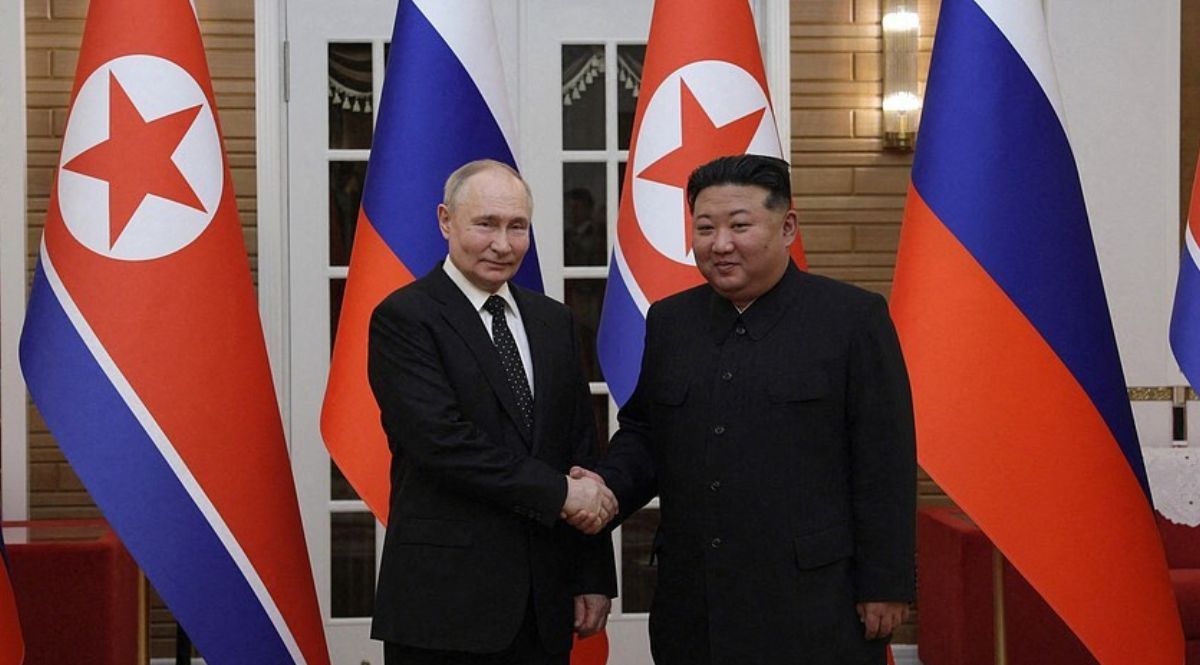
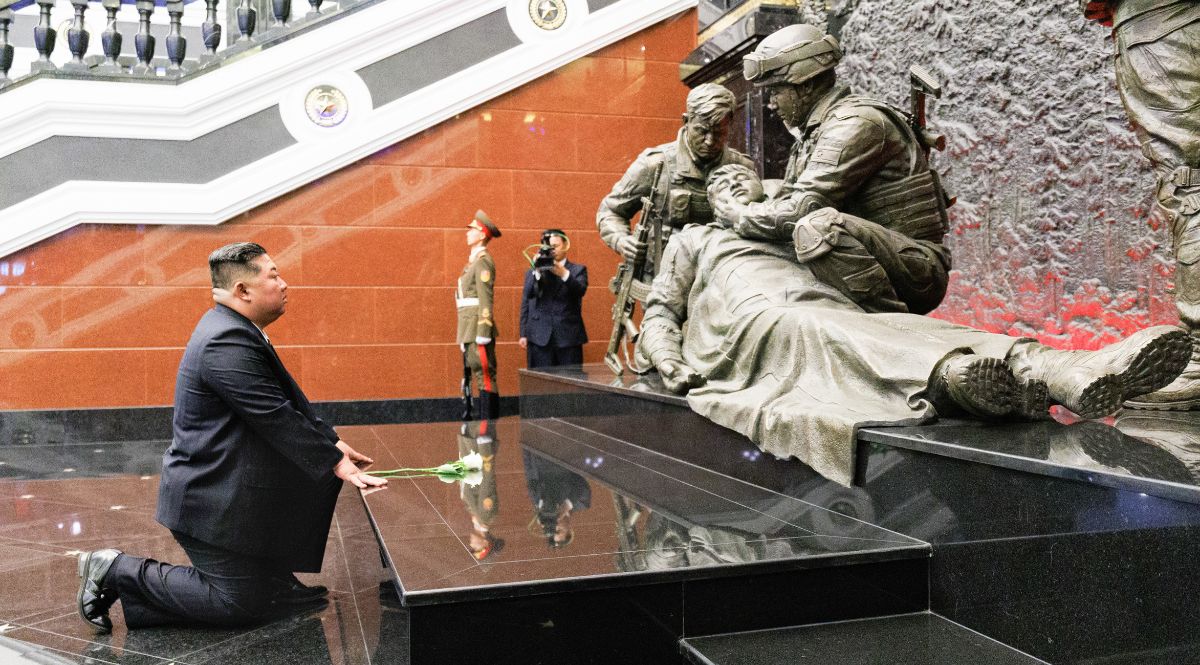
An alliance with Russia has brought North Korea political, military and economic benefits, as well as increasing its ability to influence the US and its allies. North Korea has continued to provide military support to Russia in its war against Ukraine since 2023. It continues to supply ammunition and weapons, and Ukrainian estimates suggest that approximately 14,000 North Korean soldiers remain stationed in the Kursk Oblast. The inclusion of special rights in the constitution (permitting the social advancement of veterans’ families) for participants in ‘foreign military operations’ highlights the significance of the DPRK’s alliance with Russia. The announcement of a military cooperation plan for 2027–2031, likely focusing on the transfer of technology and potentially including joint exercises, demonstrates a commitment to maintaining this alliance.
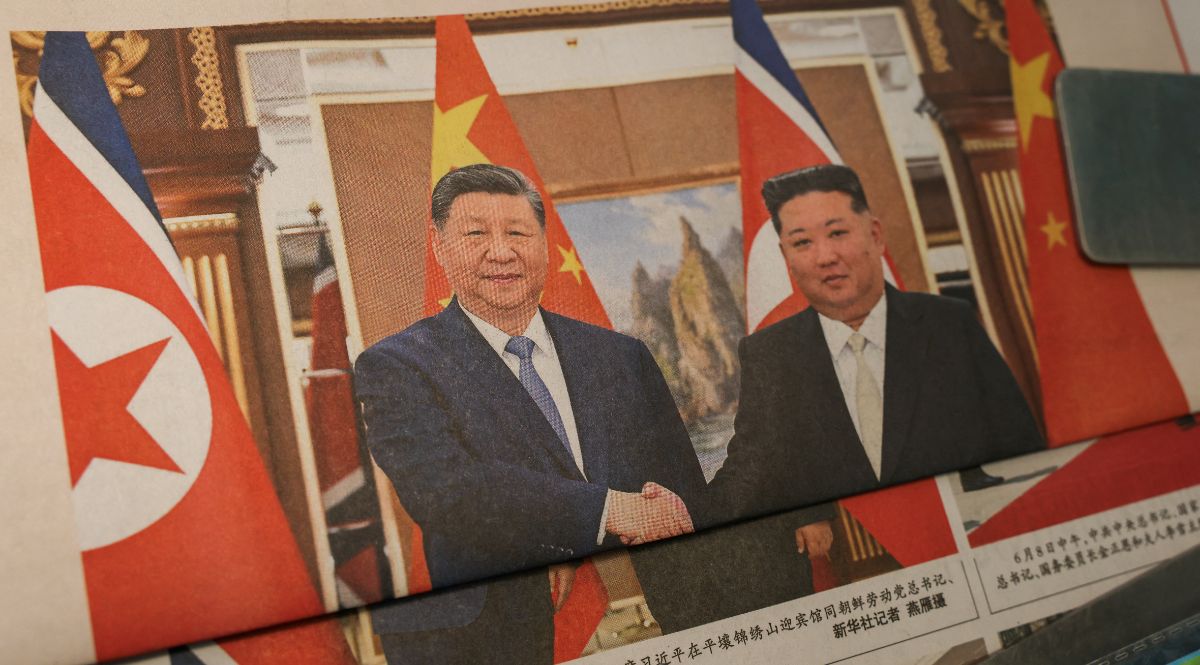
North Korea’s economic survival hinges on its relations with China. Restoring economic ties to pre-pandemic levels (in 2025, the trade value amounted to $2.74 billion) has allowed North Korea to stabilise its economy and lay the groundwork for further development. Through intensified political dialogue, which culminated in Chinese President Xi Jinping’s visit to Pyongyang in June this year, the DPRK has successfully persuaded China to accept its growing autonomy and independence, including de facto recognition of its nuclear status.
To diversify its foreign policy and project an image of a “normal state” that is not isolated on the international stage, North Korea is forging relationships with select partners. This diplomatic drive is reflected in recent visits to Pyongyang by representatives from Vietnam, Cambodia, Laos, Singapore and Belarus, among others. Intensifying these contacts may also serve to circumvent sanctions. However, the DPRK’s relations with European countries remain limited: North Korea has only 10 embassies in Europe, and only a few countries, including Poland, maintain embassies in Pyongyang.
Conclusions
North Korea is maintaining the foreign policy course set after the 2019 failure of talks with the US. Its development of nuclear and missile capabilities, along with alliances with Russia and China, allows the DPRK to exert greater international influence. This assertive stance directly serves its core goal: ensuring regime survival.
North Korea is strengthening its position in relation to the United States and is prepared to manage a prolonged confrontation with that country. It is not interested in returning to the terms of the talks from Trump’s first term, when the main topic was denuclearisation. This goal being put out of reach may prompt the US to redefine the parameters of its policy towards North Korea. Regardless of Trump’s intentions, the US has an interest in minimising the risk of nuclear escalation while maintaining a credible deterrent and encouraging South Korea and Japan to take greater responsibility for their own security.
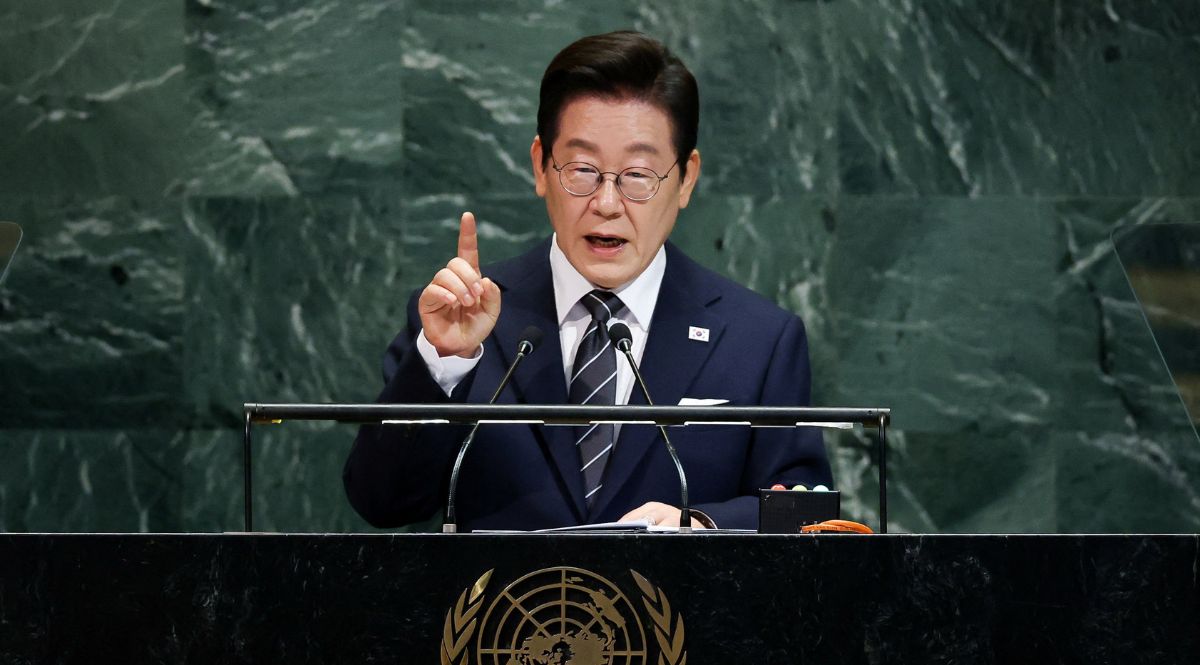
The DPRK’s policy shift towards South Korea is strategic. On the one hand, it aims to block information from the South flowing into the North; on the other, it seeks to marginalise its neighbour in any potential negotiations concerning the Korean Peninsula. This poses a serious challenge to the Lee Jae-myung administration’s policy of “peaceful coexistence,” and presents a problem for the Republic of Korea, which recognises the entire Korean Peninsula as its territory under Article 3 of its constitution.
Both the DPRK and Russia have signalled their readiness to continue cooperating even after the war in Ukraine ends. North Korea views Russia as its main partner in modernising its armed forces and developing its defence industry. The success of the “overseas military operation”—measured by combat experience gained from a modern armed conflict—may prompt North Korea to deploy troops to other conflicts in future. The DPRK will continue to cooperate with China out of necessity for economic survival, while at the same time striving to maintain as much autonomy as possible in relations with its neighbour.
North Korea’s growing cooperation with China, Russia and other non-democratic states diminishes its relations with European countries. European engagement with the DPRK is very limited, due to North Korea’s lack of interest in dialogue, its nuclear programme and human rights violations, as well as its cooperation with Russia. In response to threats from the DPRK–Russia alliance, European countries, including Poland, should strengthen their political and intelligence ties with Japan, South Korea, Ukraine and the United States. Enhanced information sharing on North Korean and Russian sanctions evasion could help the EU tighten its sanctions regime against both states, facilitating more robust enforcement.