Israel's Recognition of Somaliland Heightens Tensions in the Horn of Africa
Israel’s formal recognition of Somaliland as an independent state on 26 December last year triggered a series of dangerous processes in the Horn of Africa. These could lead to an escalation of armed conflicts within Somaliland’s declared borders and in its immediate vicinity. The EU should be guided in this matter by the criteria of legality and stability in the wider Horn of Africa.
 Isabel Infantes / Reuters / Forum
By announcing its decision to recognise Somaliland on 26 December, Israel became the first country to formally do so. This step was a result of Israel’s ad hoc policy of combating the Yemeni Houthis (Somaliland is a convenient base for military and intelligence operations against the group). In its calculations, the consequences it would have in the Horn of Africa, such as exacerbating several long-standing local conflicts, were secondary. So far, no other countries in the region or beyond have followed Israel’s example. This is due to, especially for Muslim countries, the political risk of supporting Israel’s current regional policy, as well as pressure from Saudi Arabia. This pressure, following the escalation of the dispute with the United Arab Emirates (UAE), a traditional partner of Somaliland, has taken a stronger position in favour of Somali unity and governments in the region have been pressured to refrain from taking steps to formalise the division.
Israel’s involvement in the Horn of Africa
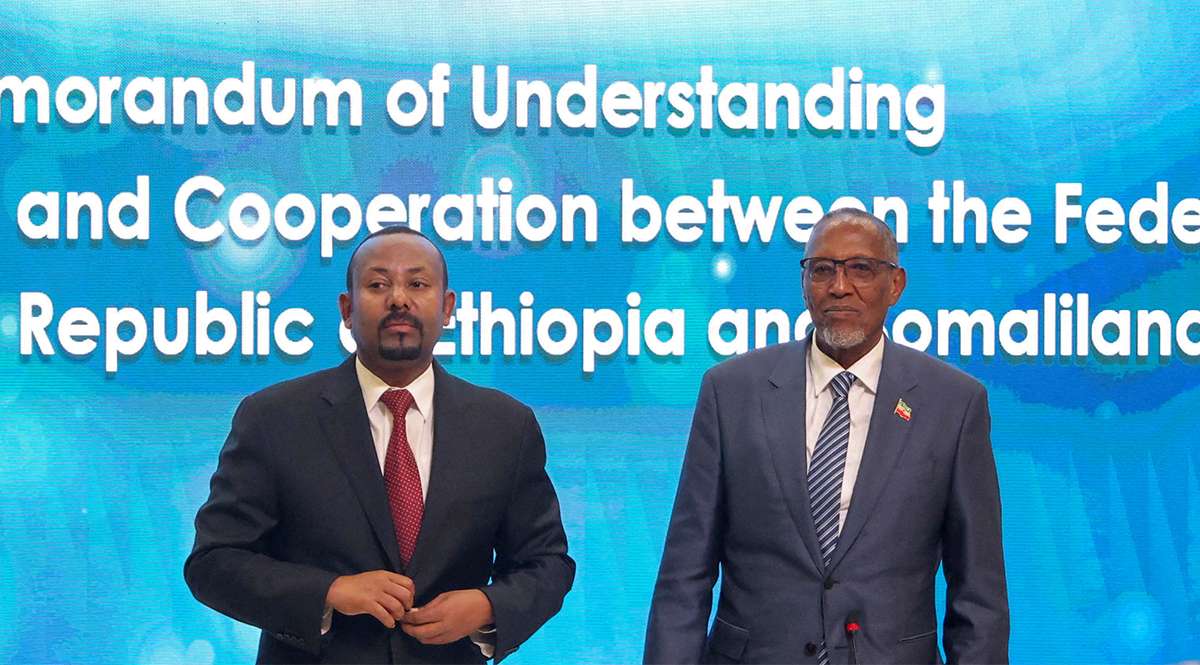
Israel’s interest in the Horn of Africa, apart from the evacuation of Ethiopian Jews in the 1980s, is mainly strategic. For example, in order to limit Iran’s influence in the region, Israel established a naval base on the Dahlak archipelago belonging to Eritrea (the base was attacked by the Houthis in 2023). Somaliland, being geographically located very close to the part of Yemen controlled by the Houthis, was an attractive partner from this perspective, potentially willing to host military installations in exchange for help in breaking its isolation. This was indicated by Somaliland’s agreement with Ethiopia in January 2024, in which it agreed to lease a section of its coastline to Ethiopia for naval purposes. In the same year, Israel began negotiating a similar agreement. At the same time, in the public sphere, Somaliland’s potential consent to accept displaced Palestinians was being tested.
Publicly, Israel presented arguments in favour of recognising Somaliland, pointing, among other things, to its fulfilment of the criteria for statehood. This corresponded to the aspirations of the Somaliland authorities, who, since 1991, after breaking ties with Somalia, had built their own administration with its capital in Hargeisa. It functioned as a de facto state seeking international recognition. The legal arguments were in its favour (Somaliland was independent before it joined the union with Somalia, and the terms of the union were not implemented in accordance with the agreement), as were the functional arguments – in the face of the collapse of Somali statehood, it presented itself as an oasis of peace and good organisation. However, in recent years, Somaliland’s political system has evolved, increasingly limiting itself to representing the interests of the Isaaq clan, which dominates the territory, without positive representation for other communities living there. The most striking example of this was the crisis in the city of Las Anood in 2023. After the bloody suppression by Somaliland forces of pro-Somalia protests by representatives of the Dhulbahante clan, an uprising broke out. This ended with the Somaliland administration being driven out of the provinces of Sool and Sanaag by clan forces, which organised their own authorities, recognising the sovereignty of Somalia. This led to the establishment of Somalia’s North- Eastern State (NES) in July 2025. In this context, the Somaliland authorities were desperate to regain credibility and ready to meet Israel’s expectations.
Regional reaction to recognition
The most serious consequences, and thus reactions, occurred in neighbouring Somalia and Djibouti. Somalia broke off relations with the UAE, pointing to their cooperation with Israel on Somaliland, and ordered UAE military forces to leave the country. Although they were withdrawn from Mogadishu, the expulsion order was rejected not only, as expected, by Somaliland, but also by two regional Somali administrations led by pro-Emirati leaders: Puntland, where the UAE makes use of the airport in Bossaso, e.g. to supply the RSF in Sudan; and Jubaland, close to Kenya. In mid-January, the Somali authorities organised a widely publicised visit, including President Hassan Sheikh Mohamud, to Las Anood on the occasion of the swearing-in of the state authorities. It was intended to show that Somalia is being reborn. It was accompanied by the presence of diplomats from countries opposed to the policies of Israel and the UAE – Türkiye, Saudi Arabia and Sudan. The flags of Egypt, Oman, China and Djibouti were also raised. The celebrations were accompanied by the transfer of Somali troops to the NES. This was linked to rumours of Israel’s plans to bring mercenaries to Somaliland to help recapture Las Anood.
Although the Djibouti authorities had cooperated with Somaliland until this point, they considered the current situation a threat to themselves and the region. They therefore stopped issuing Djibouti passports to representatives of the Somaliland administration (which had previously been the accepted practice) and froze their bank accounts. The Djibouti authorities signalled a possible military intervention in Awdal, a territory belonging to Somaliland that borders Djibouti. A rebellion against Somaliland was launched in this region by militias from the Issa clan, which also inhabits parts of Ethiopia and Djibouti (for example, Ismail Oumar Guelleh, the President of Djibouti, comes from this clan). In Djibouti itself, the largest armed rebel group, the Front for the Restoration of Democracy and Unity (FRUD), has intensified its activities. It represents the Afar, the country’s largest ethnic group. In January, there were numerous clashes between the FRUD and government forces, with incidents involving the FRUD even occurring in the suburbs of the capital. The FRUD declared its intention to overthrow Guelleh’s government and its support for the independence of Somaliland. Although there is no evidence of Israeli support for FRUD, this may be implied by the Israeli press coverage of the December conference of the Afar people in Ethiopia, attended by representatives from Eritrea and Djibouti. At that time, they were said to have appealed to Israel for protection.
Contrary to expectations, the authorities of Ethiopia and South Sudan did not support Somaliland’s independence, most likely as a result of Saudi pressure and the firm stance of the African Union and the regional IGAD bloc on this issue. Nevertheless, Ethiopia is strengthening its cooperation with Somaliland, jointly facilitating the UAE’s supply of weapons to the paramilitary Rapid Support Forces (RSF) in Sudan. The new supply route runs from the port of Berbera in Somaliland through Ethiopia to the Sudanese border. For the Sudanese authorities and their allies in the war (Eritrea and Egypt), Somaliland is thus becoming a regional enemy and another source of destabilisation.
Global reactions
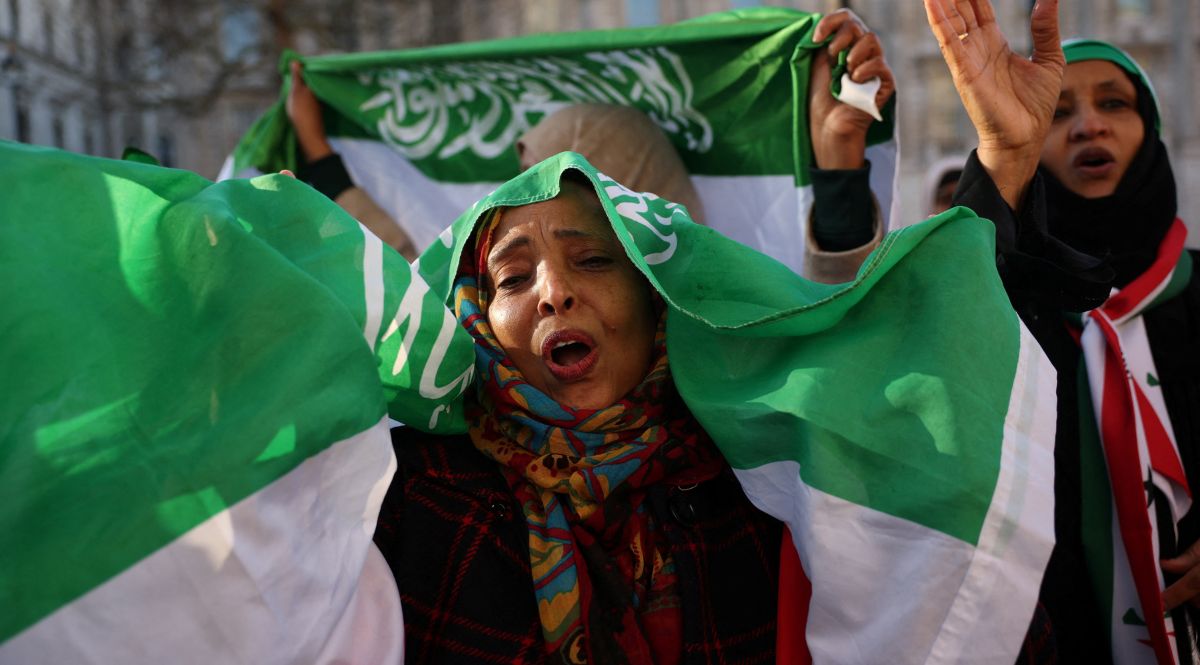
The EU has strongly advocated for the inviolability of Somalia’s borders. In a statement on 27 December, the EEAS spokesperson emphasised the importance of respecting its sovereignty and called for a return to constructive dialogue between Somaliland and Somalia. Although there are strong pro-Somaliland circles in both the US and the UK, they have so far failed to influence the decisions of the authorities. For example, although Republican Representative Scott Perry introduced a bill to recognise Somaliland in the US House of Representatives in June last year, President Trump did not support it, even after Israel’s recognition. Similarly, in the United Kingdom, although Reform UK leader Nigel Farage and former Defence Secretary Gavin Williamson, among others, called for the recognition of Somaliland at a rally in London on 14 January this year, the government maintains the position expressed in the UN Security Council on 29 December last year. The UK representative clearly supported Somalia’s sovereignty and made any changes to Somaliland’s status conditional on the consent of the Somali authorities.
Prospects
Israel’s formal recognition of Somaliland, which was the result of short-term calculations in regional politics, does not serve to stabilise the Horn of Africa. On the contrary, it has led to an intensification of existing tensions there. The departure from the benefits that Somaliland’s undefined status brought to the region, which fostered working cooperation, in favour of an ‘either with us or against us’ logic, threatens to trigger new open conflicts, both within Somaliland’s declared borders and in its surroundings. Reactions to Israel’s recognition of Somaliland are mostly secondary to the attitudes of individual actors towards the governments of Israel and the UAE and their local interests, both in a broader regional and local context. However, in Somalia, Djibouti and Ethiopia, the ethnic dimension of the latest turmoil is equally important: they need to take a position on the growing power of the Isaaq clan and changes in their relations with neighbouring communities.
It cannot be ruled out that, in the event of escalating local conflicts, the states competing over Somaliland (the UAE, Israel, Saudi Arabia and Türkiye) will use local proxy forces, as the example of FRUD may indicate. The EU should therefore put pressure on its partners to refrain from doing so. It is particularly important for Poland to maintain international consensus on the inviolability of borders. Therefore, it should oppose third countries’ support for separatism in the Global South (e.g. in Somalia, Sudan or the Democratic Republic of Congo) as firmly as it does in the case of Ukraine