Indonesia Elects a President: Prabowo Offers Continuation but with a New Style
In Indonesia, the General Elections Commission announced on 20 March that the presidential elections held on 14 February were won by Prabowo Subianto, the defence minister since 2019 in the government of President Joko Widodo, who is leaving after two terms in office. The new head of state announced the continuation of his predecessor’s domestic and foreign policy, including balancing relations with the U.S. and China, although security issues may be more important. The president-elect also criticises the EU, among others, for limiting access to its market. However, the EU can play an important role in Indonesia’s efforts to diversify its economic partners.
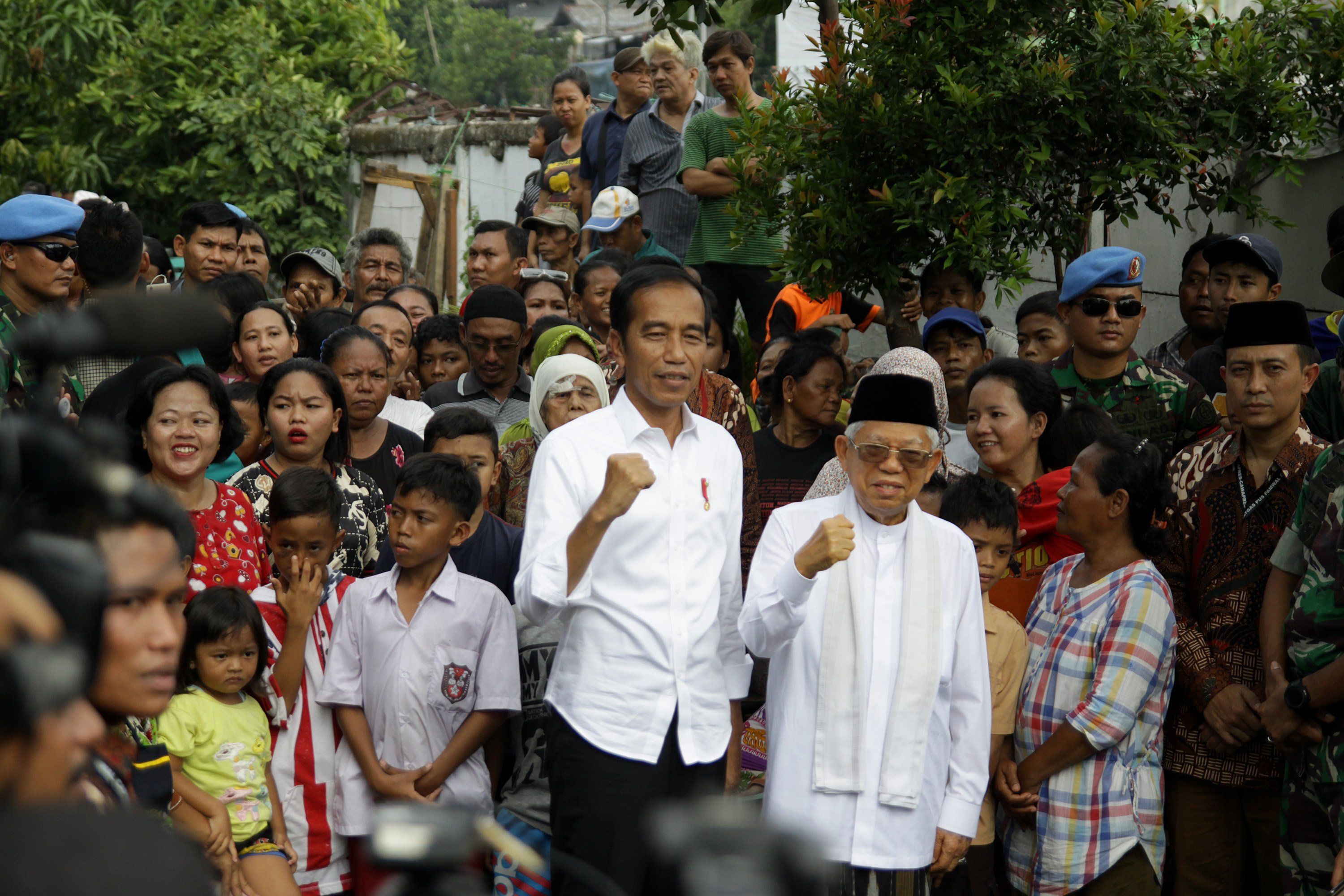
 Willy Kurniawan / Reuters / Forum
On 14 February, Indonesia held presidential, parliamentary (about 10,000 candidates from 18 parties fought for 580 seats), as well as provincial and local government elections simultaneously. The country’s elections are considered the largest single-day vote in the world, with almost 205 million people eligible to vote this year. Indonesia is the fourth most-populous country in the world (more than 275 million people), the third-largest democracy (behind India and the U.S.), and the largest Muslim country.
To become president after just the first round, a candidate had to receive more than 50% of the votes and at least 20% in more than half of the country’s 38 provinces. The term of the president, who is also the head of government, is five years and the head of state can be re-elected only once. The new leader of Indonesia will take office on 20 October this year.
Decisive Win for Prabowo
Three pairs of candidates—for president and vice president—ran in the elections for the head of state. The winners were Prabowo Subianto and Gibran Rakabuming Raka, who received 58.6% of the votes (96.2 million) and won in 36 out of 38 provinces. The key to their victory was the unofficial support of the very popular outgoing president, Joko Widodo, also known as Jokowi (his support in society is around 70-80%). Gibran is his eldest son, which may indicate an attempt to build a political dynasty. Coming in second with 24.9% of the votes (40.9 million) was Anies Baswedan, the former governor of Jakarta, and Muhaimin Iskandar. In third place (16.5%, 27 million votes) was Ganjar Pranowo, the former governor of Central Java, and Mahfud MD, candidates of the Indonesian Democratic Party of Struggle (PDI-P), from which Jokowi comes. In the parliamentary elections, PDI-P won the most support (16.7%), and the parties supporting Prabowo did not receive a majority of votes, which will probably force them to reach an agreement with other parties and may make the president’s work harder. The turnout in the elections was over 81%.
During Jokowi’s term, democracy in Indonesia weakened, as seen in, for example, the Freedom House index. The election campaign included, among others, restrictions of the right to expression and assembly, mainly of Jokowi’s critics, according to Amnesty International. The decision of the Constitutional Court (headed by Widodo’s brother-in-law) in October 2023 to admit 36-year-old Gibran to the elections despite the age threshold of 40, was also controversial. The court decided that this condition did not apply to people already elected to public office (Gibran is the mayor of Surakarta). Prabowo’s opponents filed election protests in turn.
Political Profile of the President-Elect
Prabowo has been the defence minister in Widodo’s government since 2019. He heads the party Gerindra, which took third place in the parliamentary elections. He is a former general of the special forces who, after the beginning of democratic reforms in 1998, was dismissed from the army due to accusations of kidnapping and torturing activists opposing the country’s autocratic leader, Suharto (Prabowo’s father-in-law). He is also accused of murders and human rights violations in East Timor and West Papua during Indonesian army operations in the 1980s and 1990s. For these reasons, he was banned from entering the United States until 2020. Prabowo denies the accusations and has never appeared in court to face these charges. He has criticised “Western-style” democracy and accuses the West of having “double standards”.
This was Prabowo’s third try in presidential elections, after losing in 2014 and 2019 to Jokowi. While before he presented himself as a strong leader with a nationalist attitude, in this year’s elections, he softened his image through social media. This probably helped him to gain support of some young voters, especially people under 40, which make up more than half of the electorate. Prabowo’s supporters point to his patriotism, projection of himself as a strong politician, and experience. Compared to Jokowi, he is considered more temperamental and less predictable.
Domestic and Foreign Policy
Prabowo announced the continuation of Jokowi’s internal policy, for example in the field of social assistance, infrastructure development, and moving the capital from Jakarta, which is struggling with, among others, environmental issues, to the city of Nusantara, under construction on the island of Borneo. He offered further support for the extraction and processing of raw materials, including nickel, the deposits of which in Indonesia are among the largest in the world (since 2020, nickel ore exports have been blocked, which the EU has challenged in the WTO). This is intended to help the country become a regional centre for the production of batteries for electric vehicles.
Prabowo’s foreign policy will be more active than Jokowi’s, who was focused on internal affairs (e.g., the latter never took part in a UN General Assembly), but many elements should be maintained. Like his predecessors, Prabowo will consider relations with ASEAN members to be crucial, as Indonesia, as the largest economy in the region, may become a real leader of the organisation. The new president expresses attachment to the traditional principle of an independent and active foreign policy (bebas-aktif) and maintaining good relations with the largest powers. This means, among others, not siding with either the U.S. or China in their rivalry, rather benefiting from relations with both countries and participating in solving global problems. Issues of sovereignty, security, and the development of military potential will probably play an important role.
Prabowo will want to maintain close economic relations with China, but is sceptical about its excessive influence as Indonesia’s largest trading partner and an important investor, for example in the first high-speed railway in Southeast Asia from Jakarta to Bandung. He has criticised China’s aggressive actions in the South China Sea, including near the Indonesian Natuna Islands (Indonesia is not officially a party to sea-based territorial disputes).
At the same time, when he was defence minister, Indonesia tightened military cooperation with other partners, such as the U.S., and in 2023 hosted the first-ever naval manoeuvres of ASEAN countries. As a counterweight to the U.S. and China, Prabowo may try to develop economic and military relations with ASEAN countries, Japan, South Korea, India, and Australia. It will also cooperate more closely with countries of the Global South, which includes Indonesia. Soon after the election results were announced, Prabowo paid visits to China, Japan, and Malaysia.
Prabowo criticises the EU for both existing and planned trade restrictions, mainly towards palm oil and other important Indonesian export products, the cultivation of which can enhance deforestation (rainforests in Indonesia are among the largest in the world). In one of his statements, he even said that Indonesia does not “really need Europe anymore” because Asia plays a key role in the world. However, the size of the EU market and its importance as an investor likely will keep it as an important economic partner for Indonesia.
Indonesia, under Prabowo’s rule, will probably maintain distance from Russia’s war with Ukraine. Although in March 2022 it condemned Russian aggression in the UNGA vote, in April of the same year it abstained from voting on the suspension of Russia’s membership of the Human Rights Council. In 2022, Widodo, during Indonesia’s G20 presidency, travelled to Ukraine and Russia in an attempt to highlight his efforts for peace. In 2023, Prabowo proposed a peace plan favourable to Russia involving the creation of a demilitarised zone and holding another referendum in the territories occupied by the Russian military (he probably did not consult these proposals with the rest of the government).
Conclusions and Perspectives
Prabowo will largely continue Jokowi’s policies. However, the new president may put greater emphasis on security issues and an active foreign policy to increase Indonesia’s international importance. Prabowo’s different style may make the government’s policy less predictable. There is also concern about the further erosion of democracy and growth of authoritarian tendencies during his term.
Despite Prabowo’s criticism, the EU may limit Indonesia’s relations with Russia and China by developing bilateral cooperation. It would be worthwhile for the EU to support the modernisation of the Indonesian army and invest in the sustainable processing of raw materials important for the development of critical technologies, which would contribute to increasing the economic security of the EU. It is important for the Union to reduce Russia’s influence, including by emphasising the colonial nature of its aggression against Ukraine, as well as to cooperate with Indonesia on climate change and the energy transition. The challenges for EU-Indonesia relations include the state of Indonesian democracy, trade issues, and attitudes towards the Ukraine-Russia and Israel-Hamas wars, including Indonesia’s strong criticism of Israeli policy towards the Palestinians. A significant strengthening of bilateral relations would be the signing of a trade agreement negotiated since 2016. This would support Polish companies in entering this difficult, but large and promising market, for example in the agri-food, mining, and green technologies sectors. Shaping relations with Indonesia will also be of great importance for the development of the EU’s strategic partnership with ASEAN and its rapprochement with the Global South.