Indonesia’s Policy Course after the Presidential Election
Indonesia, with around 265 million citizens, is the third-largest democracy in the world (after India and the U.S.), the largest country with the Muslim majority, and the seventh-largest world economy in terms of GDP in purchasing power parity (PPP). It is considered a successful example of reconciling moderate Islam with democracy. It is a presidential-parliamentary republic in which the president, elected directly for a 5year term, has broad powers, including the function of the head of government. An important role is also played by the vice-president, elected along with the president, who participates in shaping and implementing the government’s policy.
Victorious Jokowi
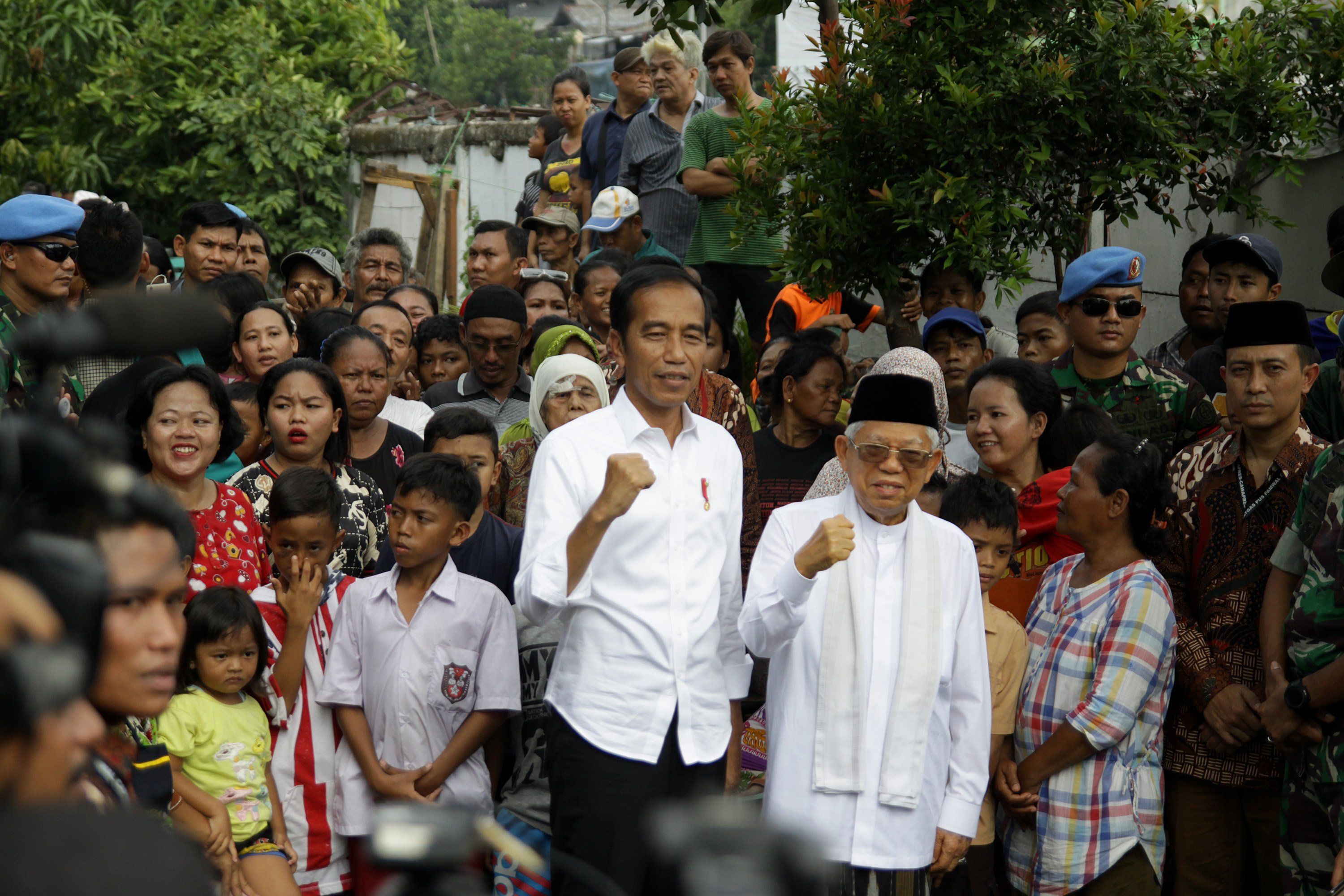
The elections of 17 April—presidential, parliamentary and regional—were one of the largest single-day elections in history (more than 192 million citizens were entitled to vote). In the key presidential election, Jokowi won with 55.5% of the votes, defeating the former general Prabowo Subianto for the second time since 2014. Turnout was high (82%), which gives Jokowi a strong mandate. International observers considered the election fair, but Widodo’s opponent said the results were falsified and made an official protest (which he also did after losing in 2014). After the announcement of the results, several protests by Prabowo supporters took place in which eight people were killed and more than 700 were injured. In the parliamentary elections, most seats were won by parties that jointly support Widodo, which should make it easier for him to govern.
Domestic Policy
In his first term, Jokowi’s government focused on the expansion of infrastructure—new roads, ports, airports, railways, and power plants were built. In addition, it reduced subsidies for fuel, which improved the state of public finances and facilitated business operations (in the “Doing business 2019” report, Indonesia ranked 73rd compared to 114th at the beginning of his first term). In 2014-2018, the average annual GDP growth rate was around 5%, and GDP per capita in PPP increased by around 20%, from $10,100 up to $12,200. Unemployment fell to 5.3% in 2018 and social programmes were developed, including health insurance. However, many challenges still lie ahead for Indonesia, including reducing poverty, closing developmental gaps between provinces, fighting corruption and terrorism, and improving infrastructure.
In his second term, Jokowi will continue infrastructure development, investments in human capital (mainly education), and reforms facilitating business operations aimed to create an industrial capacity based in part on foreign investment. Another challenge for the president, who is considered a moderate Muslim, will be the increasing influence of conservative Islamic organisations and accusations that he only weakly defends religious freedom and minority rights. For example, in 2016, in a wave of demonstrations, the governor of Jakarta—Ahok (a Christian with Chinese roots)—was sued on charges of insulting the Quran (in 2017, he was sentenced to two years in prison). Widodo refrained from defending Ahok, his former deputy when he was the governor of the capital in 2012-14. In addition, in this year’s election, his candidate for the post of vice-president was Ma'ruf Amin, a conservative Muslim cleric who was one of Ahok’s main critics. These actions were intended to attract conservative voters and weaken accusations against Jokowi that he is not religious enough.
Foreign Policy
The international activity of Jokowi’s government in his first term was limited. It focused on economic diplomacy and attracting investment. For internal purposes, Widodo took a hard stance on defending the sovereignty of the state. For example, the army captured and sank ships engaged in illegal fishing in Indonesia’s waters. Combining development with foreign policy came in the form of the idea to make Indonesia a “Global Maritime Fulcrum”. The goal was not only to improve connections between about 17,000 Indonesian islands but also build a strong position for the country in the strategic area between the Pacific and Indian oceans.
In his second term, Widodo’s administration will continue to be active in economic diplomacy. Indonesia’s potential in maritime transport and naval forces will increase, for example, to protect the waters around the Natuna Islands in the South China Sea, also claimed by China. With the increasing competition between China and the U.S., Indonesia will strive to balance the relationship with both partners and prevent conflicts in the region based on its traditional policy of “free and active” (bebas aktif). Considering China’s economic importance (e.g., Indonesia’s largest trading partner), bilateral relations will be dominated by pragmatism and reducing disputes. Indonesia remains cautious in its approach to the Chinese Belt and Road Initiative (BRI), under which $6 billion worth of high-speed railway from Jakarta to Bandung is being built, along with other projects. Concerns about the BRI are related in part to the possible increase in foreign debt owed to China. The Indonesian government also sets conditions on Chinese investors, such as employing local workers. However, Indonesia will avoid restricting relations with China under pressure from the U.S. to be seen as not subject to the Americans’ influence. The president will seek to ease the tensions with the U.S. in various areas, such as Indonesia’s surplus in bilateral trade ($12.6 billion in 2018). It is possible Indonesia will consider purchasing e.g. armaments from the U.S., including combat aircraft, to appease the Trump administration. To limit Chinese influence, Indonesia may also strengthen relations with other Indo-Pacific countries, including India, with whom it organises joint sea patrols, or with Japan, one of the main investors in Indonesia. Relations with partners from outside the region who are cautious about China’s activities may also be developed. They include the EU, for example, in the area of infrastructure and the security of sea routes. Despite discrepancies within ASEAN, in such areas as relations with China, integration within the group’s framework will remain an important area of Indonesian foreign policy as it underpins the development of infrastructure in the region and mitigation of tensions, for example, ASEAN is negotiating with China a code of conduct in the South China Sea.
The conservatives’ increased power in the country strengthens support for defending the rights of Muslims around the world, as well as the Palestinians. However, activity in this area may be limited by fears about the state of economic relations, for example, with China (regarding repression of Uyghurs) or political, such as with Myanmar (repression of Rohingya), a member of ASEAN. Indonesia will still want to be seen as a bridge between Muslim countries and the rest of the world.
Conclusions and Perspectives
In Jokowi’s second term, there will be further focus on domestic issues, including the expansion of infrastructure. On the international scene, Indonesia will be more active in selected areas, such as economic diplomacy or balancing China’s influence in the region. In addition, Indonesia will seek to protect the rights of Muslims, including as a non-permanent member of the UN Security Council in 2019-2020 (elected in 2018).
The gradual facilitation of business in Indonesia after the elections may encourage Polish companies to increase exports (which amounted to €130 million in 2018, less than, e.g., Malaysia) and investments in the local market. Polish enterprises are already present in the energy and agricultural equipment sectors, among others. It is also worth assessing the profitability of LNG imports from Indonesia, an important exporter. Support for the development of Polish-Indonesian relations could come with the first visit of a Polish president to Indonesia in 15 years (in 2018, Minister of Foreign Affairs Jacek Czaputowicz visited the country) and the conclusion of negotiations of the EU-Indonesia trade agreement that have been ongoing since 2016. However, discussions on the agreement may hinder the EU’s decision to limit the use in biofuels of palm oil, of which Indonesia is one of the main producers.