
ICJ Issues Landmark Opinion on States' Climate Change Obligations
The advisory opinion of the International Court of Justice (ICJ) delivered on 23 July resolves numerous doubts about states’ obligations regarding climate protection. The court’s siding with developing states opens the way for them to demand more ambitious climate action and even climate-related reparations from developed states. It is to be expected that developing states will be more assertive in climate negotiations and will attempt to seek compensation before international courts.
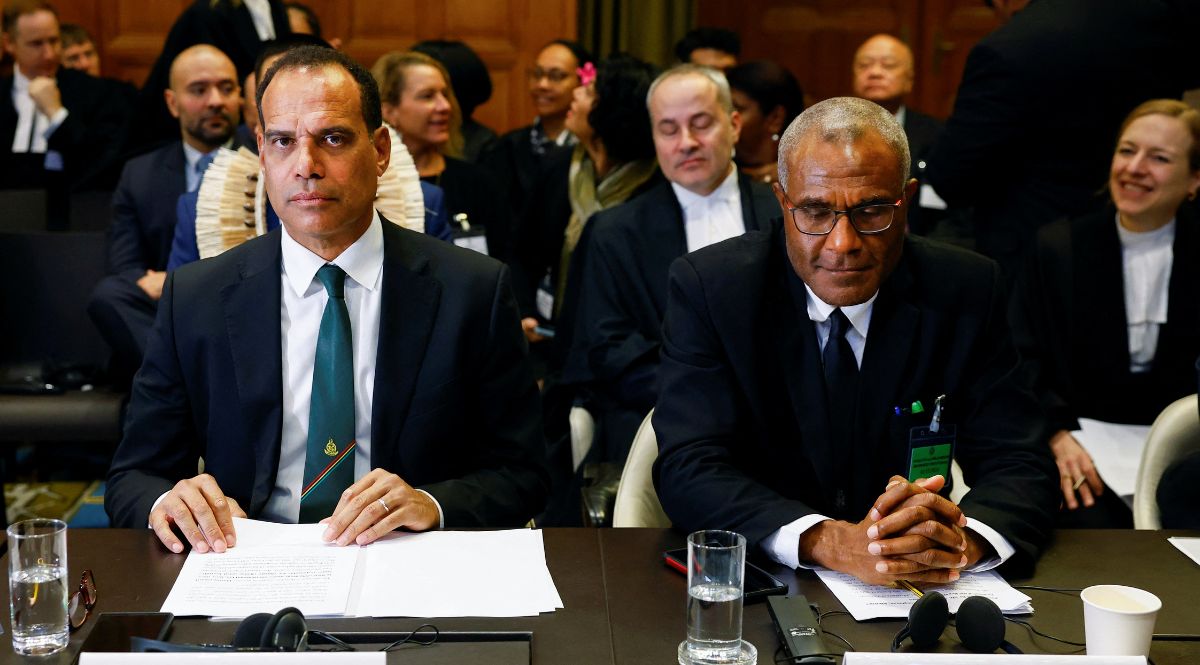 Piroschka Van De Wouw / Reuters / Forum
The ICJ opinion is the result of an initiative by the Pacific island state of Vanuatu in 2022. As a result of it, the UN General Assembly asked the ICJ in March 2023 to clarify the climate protection obligations of states and the legal consequences of their serious violations. The proceedings, which lasted about 2 and a half years, were the largest in the court’s history, as nearly 100 states and 12 international organisations, including the EU, the African Union (AU) and the Organisation of Petroleum Exporting Countries (OPEC), submitted positions. The record interest in it was due to the potentially very serious implications of the opinion issued by the ICJ. Although not formally binding, it represents an interpretation of the law by a key international court. It therefore shows how it would have decided a similar case had it come before it (especially when the opinion is unanimous, as in this case) and provides a reference point for national authorities and other international courts.
Main Findings
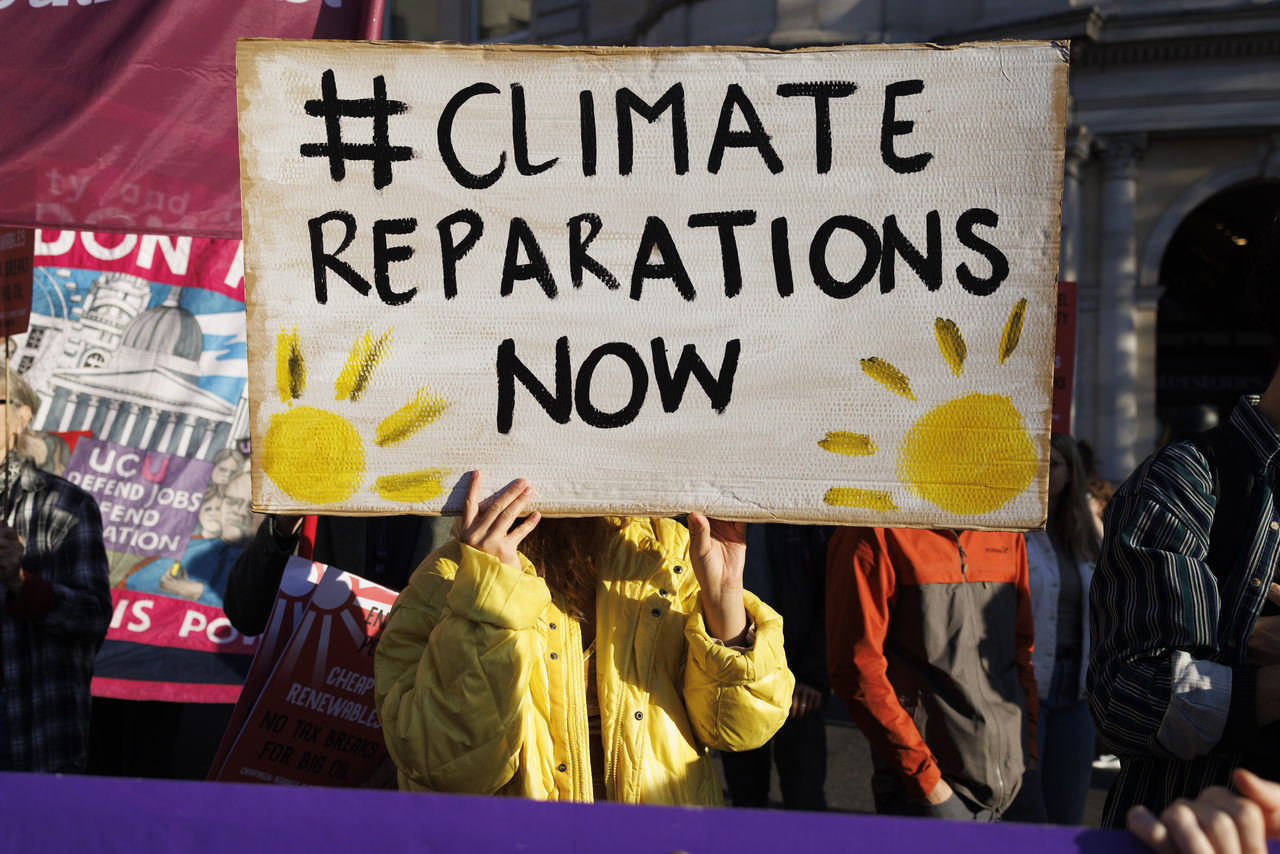
The ICJ ruled that all states, regardless of whether they are bound by treaties in this respect, have an obligation to protect the climate, as this follows from the norms of customary international environmental law, among other things. This means that also countries that are not parties to the Paris Agreement, such as Iran and Libya, but also the U.S. when it leaves in 2026, should reduce their greenhouse gas emissions. If they do not do so, they breach international law and may be legally responsible. The affected states are then entitled to demand, among other things, that they cease their infringing activities or provide climate reparations (including monetary compensation). According to the ICJ, violations of the duty to protect the climate can also include the production, consumption, and licensing of fossil fuels and the subsidisation of their use, as well as insufficient control of private sector emissions. According to the judges, it is possible to scientifically determine the approximate amount of each country’s emissions and their negative impact on the climate and to award damages against them without suing all countries at the same time. However, they noted that calculating the amount owed may be difficult in practice, and due to the nature of the advisory opinion, they shied away from naming specific countries and assessing the damage they have caused.
Also noteworthy are the ICJ’s conclusions that even the complete disappearance of a state’s territory as a result of inundation caused by rising ocean levels does not necessarily entail a loss of statehood, and that coastal retreat as a result of climate change does not require a change in boundaries and maritime zones. Of importance also is the court’s conclusion that the status of a developing country is not static. This means that the attribution of a country to the developing category, as done in the climate protection agreements of the 1990s, is not necessarily permanent and may change with economic development. This is significant insofar as, according to these agreements, developed countries have greater obligations, including financial and technological support to developing countries. This issue is important with respect to China and others, as China still defines itself—in line with these agreements—as a developing country, while being the largest emitter of greenhouse gases and one of the most developed economies in the world, as well as for the wealthy Arab gas and oil exporting countries.
Reactions of States and International Organisations
The opinion received an enthusiastic response from the author of the whole initiative, Vanuatu, as well as from a number of developing countries that participated in the proceedings, such as Antigua and Barbuda, Barbados, Grenada, Fiji, and Tuvalu from the Caribbean and Pacific, Kenya, Senegal and Sierra Leone from Africa, or the Philippines and Pakistan from Asia. It was also supported by, among others, the Commission of Small Island States (COSIS), representing some of the Caribbean and Pacific countries, the Pacific Islands Forum (PIF), which brings together Pacific states, and the Organisation of American States (despite criticism from the U.S.). This appraisal is understandable as the court overwhelmingly shared the views presented by COSIS and the AU in the case. NGOs such as Greenpeace and ClientEarth also reacted positively.
A spokesperson for the Chinese government said that the opinion reaffirmed China’s long-standing position that developed countries should take the lead in combating climate change, but did not address the issue of China’s developing country status. Caution was expressed by, among others, France and the European Commission, which declared that they respect the ICJ conclusions and need to look at their implications. In turn, one of the assistant press secretaries at the White House stated that President Donald Trump’s administration would be guided by the “America First” policy and prioritising the interests of Americans, suggesting that it had no plans to respect the ICJ’s view. A few days later, the U.S. Environmental Protection Agency (EPA) began to repeal regulations limiting greenhouse gas emissions from cars and industry.
Conclusions and Recommendations
The ICJ’s opinion allows developing countries to increase pressure on developed countries and better enforce their climate commitments. It strengthens the legal position of developing states in negotiations on increased financial support for mitigation and adaptation, which will take place, for example, at the November COP30 in Belém, Brazil (on the future of the Loss and Damage Fund), as well as in other formats. It can also be the basis for requests for reparations through diplomatic channels and before international courts, among others. It cannot be ruled out that some states will start to push for new climate treaties in order to distribute more precisely the responsibilities highlighted by the ICJ.
At the same time, the court’s position on the dynamic status of developing countries may in the longer term partially undermine the coherence of the bloc of these countries in the climate negotiations, as it provides grounds for challenging this classification against, for example, China and some of the Gulf states. Poland may support efforts for a binding extension of the list of developed countries, which would be fair, given their degree of contribution to climate change, and potential to reduce the burden of compensations on EU states. The thesis on continuity of statehood, on the other hand, gives small island states hope that they will not cease to exist even if their territory is flooded. On a positive note, the ICJ’s statement on borders and maritime areas removes a potential source of disputes between coastal states around the world.
An increase in the number of cases before national courts alleging insufficient climate action by state administrations can be expected. The conclusions of the advisory opinion may also make it more difficult for private actors to implement fossil fuel projects in individual countries. The opinion will also be used in court cases against such companies and large corporations that emit greenhouse gases as a confirmation that their activities violate climate protection standards. Nevertheless, it should be noted that the ICJ’s condemnation of the use of fossil fuels without pointing to the circumstances (such as the fact that many developing countries subsidise them or that some countries cannot change their energy mix overnight), as well as, for example, the possibility of so-called carbon capture, seems to go too far.
Poland’s adoption and commencement of implementation of the National Energy and Climate Plan (KPEiK) according to the ambitious assumptions presented in July should, at least for a while, halt third countries’ efforts to obtain possible compensation from it. However, this may still happen further in the future, and possible payments would reduce the resources allocated to the national energy transition. It would therefore be advisable for Poland to review its international obligations in order to protect it from potential litigation (e.g., by clarifying the declaration allowing lawsuits against Poland before the ICJ by explicitly excluding climate protection disputes), and to leave open the diplomatic route. It would also be desirable to analyse bilateral investment treaties (BITs) in terms of Poland’s ability to block foreign investment in fossil fuels, and to possibly renegotiate or terminate these agreements if they do not guarantee this option.



(1).png)