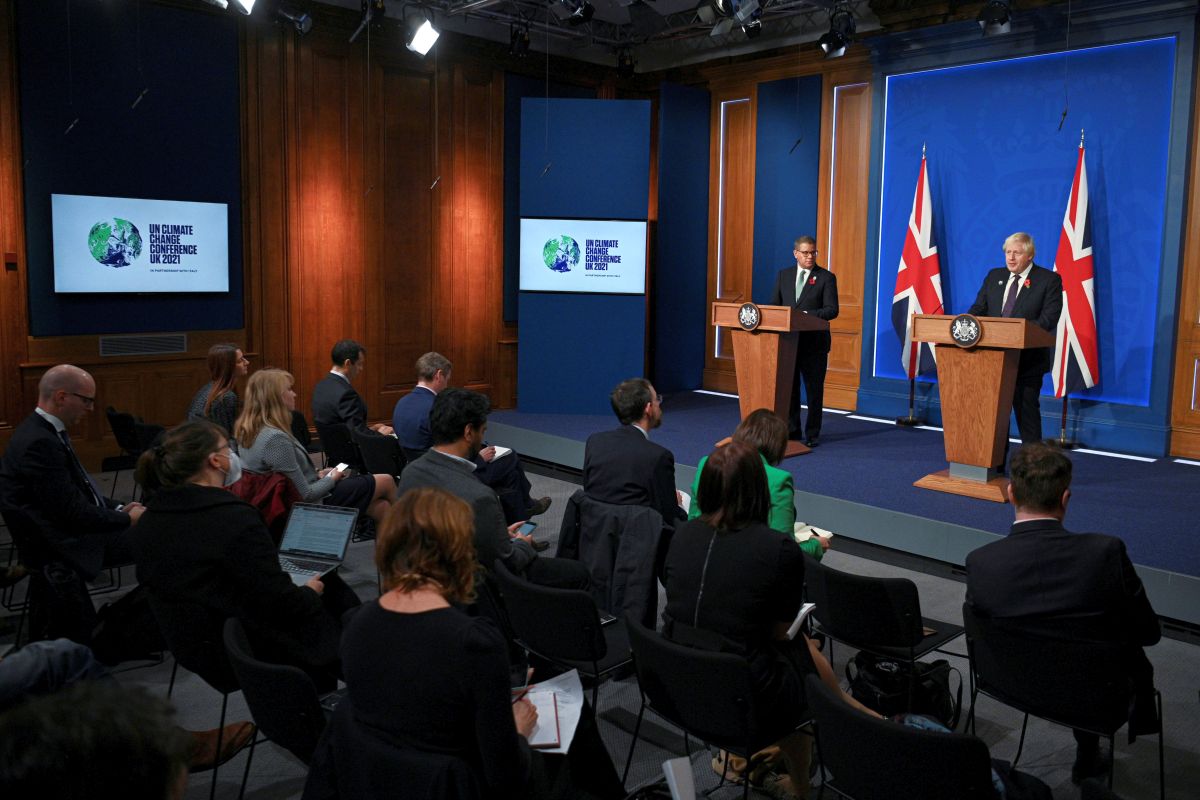
Climate Protection Litigation on the Rise
In the last several years, national courts and international institutions have increasingly begun to treat conservative or climate-adverse actions by states as violations of their obligations under international law and human rights. This has been followed by some countries more affected by climate change and engaged in international bodies to put more pressure on Global North states to protect the climate. The sympathetic attitude of international courts towards such complaints may, in the long term, force the need for increased climate ambition or even compensation payments by, among others, Poland.
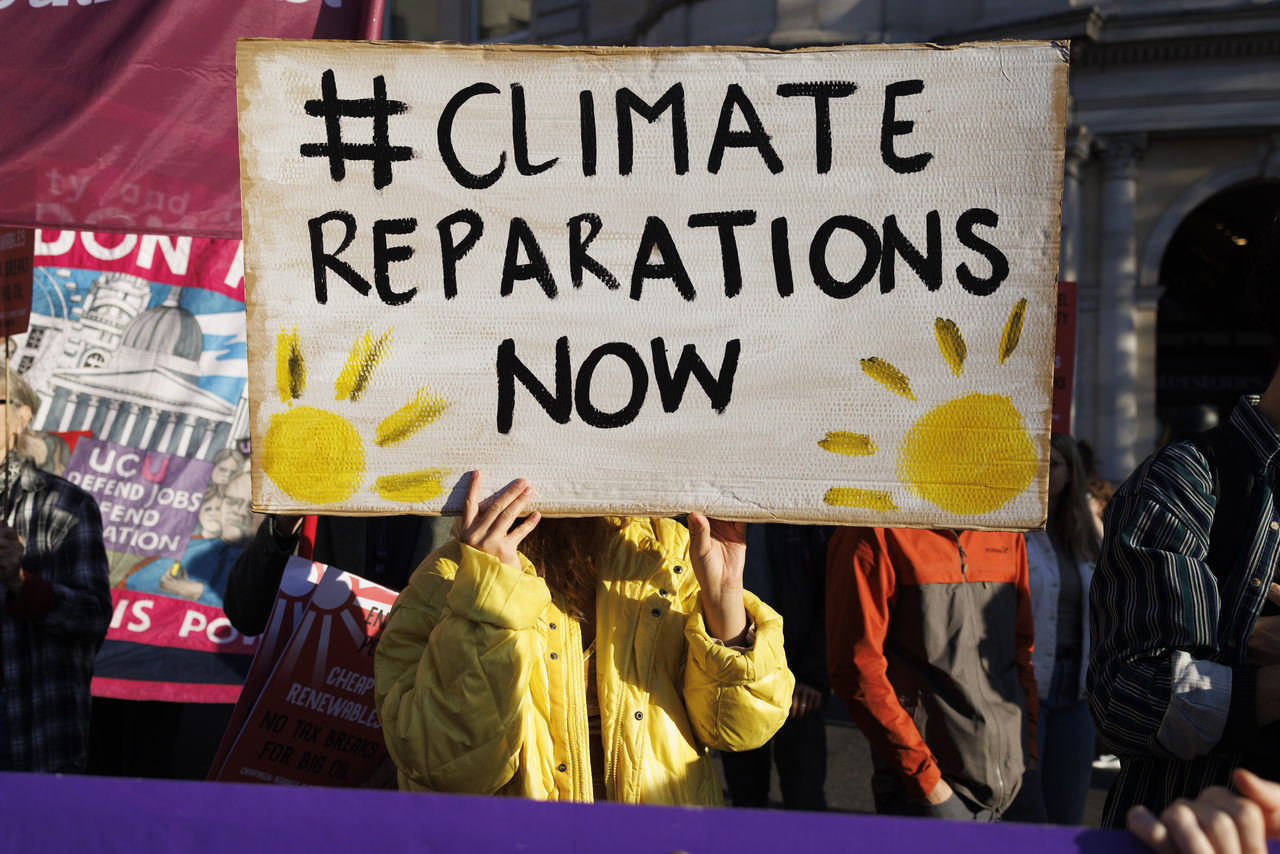 Crispin Hughes/Panos Pictures / Panos Pictures / Forum
Climate Protection and Legal Action
The number of proceedings before national and international courts and similar international institutions in which individuals, foundations, and associations lodge complaints about states’ climate protection-related actions has been growing significantly for several years. Publicly available databases of these proceedings allow us to estimate—although it is difficult to assess their completeness—that about two-thirds of such post-1990 cases have been brought since the conclusion of the Paris Agreement (PA) in 2015 to 2022. The trend is not regionally limited and has so far involved some 45 countries: European states (mainly from the EU, including Poland), developed countries outside Europe (mainly Australia, Japan, Canada, South Korea, the U.S.), Latin American (e.g., Argentina, Brazil, Colombia), or those from Asia and Africa (e.g., India, Nepal, Pakistan, South Africa, Thailand, Uganda). Some of the complaints concern policy directions, such as those in the Urgenda case of 2019 in which the Dutch Supreme Court ordered the government to increase the emissions reduction target from 20% to 25% compared to 1990 by the end of 2020 or compensate the applicants, the Urgenda Foundation and 900 Dutch citizens. Moreover, in the April 2021 Neubauer case, the German Constitutional Court upheld the complaint of nine German citizens who demanded that the government adopt emissions reduction targets for after 2030 within 18 months. Other complaints refer to specific decisions by the authorities, as seen in the 2018 Dejusticia judgment in which the Colombian Supreme Court demanded Colombia urgently implement measures to halt the deforestation of that nation’s part of the Amazon (similar cases are pending in Brazil and Peru). Also, in the 2020 Earthlife Africa and 2022 Sustaining The Wild Coast judgments, South Africa’s High Court annulled permits to build coal-fired power plants and oil and gas exploration. The governments’ approaches to implementing the judgments vary.
International Dimension
The position of international institutions has also been evolving. In a 2017 advisory opinion, the Inter-American Court of Human Rights (IACHR) wrote that states have an obligation to prevent transboundary environmental damage (including to climate). Failure to do so violates their human rights obligations to, among others, life or health, also of non-citizens in the country, the court noted. A similar position was taken by the UN Human Rights Council (UNHRC) and by the UN Committee on the Rights of the Child (UNCRC) in 2021 in the case of Sacchi v Argentina, Brazil, France, Germany and Turkey (although the UNCRC refused to hear the complaint on formal grounds). The first international settlement in favour of the complainants was the September 2022 opinion of the UN Human Rights Committee in the case of Torres Strait Islanders. The panel considered Australia’s failure to implement appropriate climate change-adaptation measures to be a violation of its citizens’ rights under the International Covenant on Civil and Political Rights (to which Poland is also a party). It called on the government to implement appropriate measures (without specifying them) and to pay compensation. Since 2020, there have been two other important cases pending before the European Court of Human Rights (ECtHR), Verein Klimaseniorinnen, against Switzerland, and Agostinho, against 33 European countries, including Poland. The complainants claim that these states’ ineffective fight against climate change threatens their right to life and the right to privacy encompassing their physical and mental wellbeing.
The trend in such complaints and judgments encourages countries more strongly affected by climate change to use judicial means to pressure developed countries to increase their climate ambition. In September 2022, Vanuatu started an initiative in the UN General Assembly (UNGA) to request an advisory opinion from the International Court of Justice (ICJ) to determine the extent of the obligations of countries that historically account for the largest percentage of emissions to countries most affected by climate change. So far, the initiative has been supported by 18 countries from different regions (including Angola, Bangladesh, Morocco, Germany, and New Zealand) that are promoting the draft and are aiming to bring it to the UNGA for a vote. Moreover, in December 2022, Antigua and Barbuda and Tuvalu requested an advisory opinion from the International Tribunal for the Law of the Sea (ITLOS) clarifying the climate protection obligations of states under the UN Convention on the Law of the Sea’s provisions on the protection of the marine environment. Three other small island states, Palau, Vanuatu and Saint Lucia, joined the proceedings.
The Challenges from a State Perspective
From the point of view of states like Poland, it will be crucial how international tribunals resolve several issues in these cases. First and foremost is the extent of the states’ responsibility for climate protection. The maximum level seems to be their obligations under the Paris Agreement and the national targets (NDCs) notified to the parties. The question arises, however, as to how an international court would interpret vague phrases in the agreement such as “different national circumstances” or “principle of equity”, as well as the sometimes quite vague NDCs.
Another issue is whether states should be held accountable at all in climate-related proceedings involving individuals and, if so, whether they pertain only to their own citizens or also third country nationals (extra-territorial). The IACHR, UNHRC, and UNCRC have stated that they should and that when the effects of a policy or a decision are global (and climate impact can be considered as such), a state is also accountable to non-citizens. However, the spread of this concept creates the risk of the courts being overwhelmed with thousands of complaints by individuals and the possible need for pay-outs for damages that would drastically deplete states’ resources for a green transition. It should also be noted that a complaint by several families seeking an increase in EU emissions reduction targets to 50-60% by 2030 (without a claim for compensation) was rejected by the Court of Justice of the EU (CJEU) in 2021 in the Carvalho case, based on a lack of direct interest for the claimants.
The distribution of responsibility between states is also an important issue. Some experts point to the lack of clear rules in international law in the case of damage caused simultaneously by multiple states, arguing for compensation to be claimed in full from any one state. Others argue that the amount should be estimated on the basis of a state’s share of either historical or current greenhouse gas emissions. The interests of states are strongly divergent on this issue. For example, from the Polish perspective, reliance on historical emissions would require taking into account that although the industrial revolution on Polish soil began during the Partitions, Poland as a state was not a beneficiary of it.
What also remains to be decided is what measures states should take if violations are found (compensation, legislative changes, some specific decisions) and how to ensure consistency between the possible conflicting orders or rulings of domestic and international courts. Such conflicts could even give rise to the need for a comprehensive regulation of this problem in a multilateral international agreement.
Conclusions and Outlook
The increasing number of climate-related rulings upholding the arguments of complainants can have increasingly far-reaching legal consequences, including steps initiated by states. The decisions of international courts in pending and already announced cases will determine the scope of these obligations and the scale of states’ responsibility for climate protection for years to come. A great deal depends especially on the positions of the ECtHR and the ITLOS, as well as the ICJ if a request for an advisory opinion is made. Therefore, it is advisable for Poland to analyse the possibilities of presenting its position in these proceedings and of pointing to the judicial route as an inappropriate way of resolving the issue of burden-sharing in the field of climate protection.
In the event that the courts confirm the validity of this route, it will be necessary to prepare for compensation claims and rulings ordering more active climate-protection measures. A possible attempt to prevent such litigation before national courts will not be effective and could be subject to complaints to the Constitutional Court alleging a violation of the right to a fair trial, and potentially also to the CJEU and ECtHR for lack of an effective remedy.