Important Precedent Set in European Climate Protection Jurisprudence
The judgment of the European Court of Human Rights (ECtHR) in the case of Verein KlimaSeniorinnen opens up the possibility for individuals and associations to make a complaint to the ECtHR against states for not doing enough to protect the climate. According to the court, inaction in this regard violates human rights due to the serious effects on health, life, and wellbeing caused by climate change. This ruling means that European states will be subject to additional pressure to intensify pro-climate action, while less active states may have to pay compensation in the future.
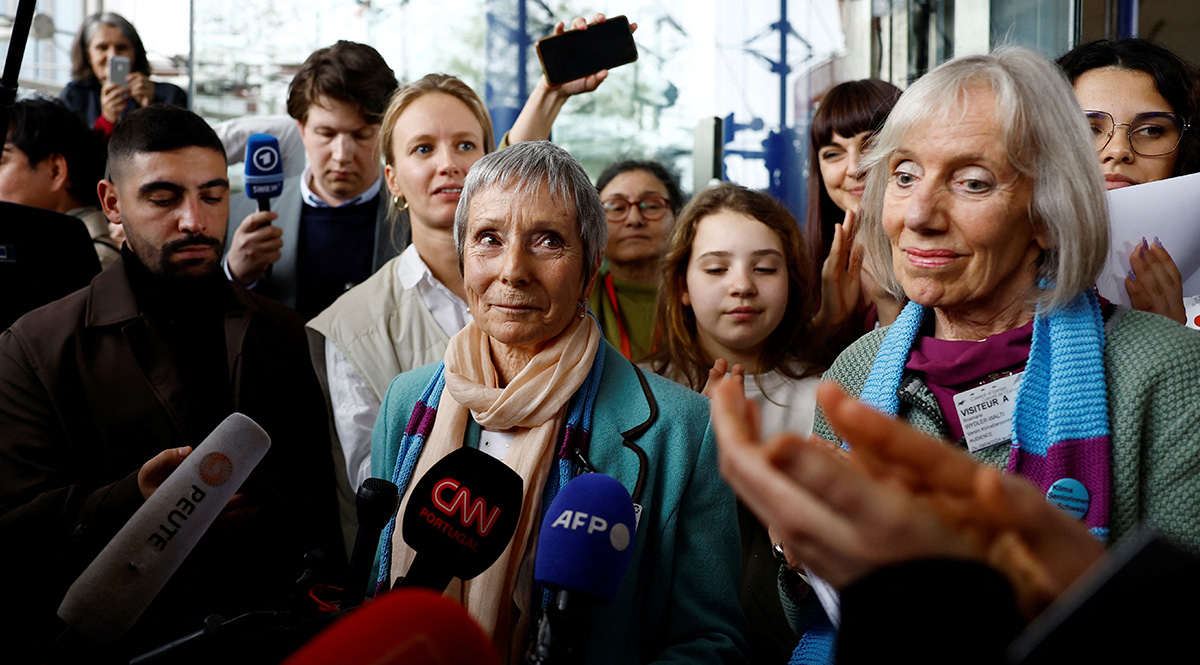 Christian Hartmann / Reuters / Forum
On 9 April, the ECtHR ruled on three cases in which the plaintiffs demanded that states take more active measures to protect the climate. The first, Verein KlimaSeniorinnen, was brought against Switzerland by four elderly women and the climate protection association to which they belong. The second, Carême, was lodged against France by a former mayor of the French town of Grande-Synthe, now resident in Belgium, and the third, Agostinho, by six young Portuguese citizens against their country and 32 others (mostly EU members, including France, Germany and Poland, but also Türkiye and the UK, among others). In the end, the court upheld the complaint in Verein KlimaSeniorinnen, albeit only the one by the applicant association. Its judgment is final and sets a precedent that opens up the possibility to file complaints against states for not doing enough to protect the climate. In contrast, the ECtHR rejected the complaints of Carême and Agostinho. Several more cases of this kind are pending before the ECtHR, including ones against Austria, Germany, Sweden, and at least two against Poland—Uricchio and De Conto—brought by Italian women.
“Climate Complaints” before the ECtHR
Cases before the court can only relate to violations of the European Convention on Human Rights (ECHR) and not, for example, the Paris Agreement. Therefore, complainants must prove that the state’s negligence in climate protection affects their Convention rights. In the cases analysed, all applicants claimed violations of the right to life (Article 2) and respect for private and family life, due to the impact of climate change on their health and quality of life (Article 8). In the Verein KlimaSeniorinnen judgment, the Court accepted the Article 8 argumentation, although it did not exclude the possibility that Article 2 may also be violated in some cases.
It is clear from the ECtHR’s rulings that at least two groups may apply to the court with this kind of case. The first is individuals. As the ECtHR stated in Verein KlimaSeniorinnen, they must be personally and directly affected by state failures while also seriously exposed to the adverse effects of climate change, and there must be a pressing need to ensure the protection of their rights. However, proving serious impact is difficult in practice. Although the Swiss applicants argued that they belonged to a group of people vulnerable to the effects of climate change due to their old age and have suffered in particular from the summer heat waves caused by it in recent years, the court did not uphold their complaints. It considered that the impact of climate change on their health and quality of life was not serious, because, for example, they did not suffer from medical conditions whose deterioration during heat waves could not be mitigated by reasonable adaptation measures (such as staying indoors). Moreover, it follows from the ECtHR’s decision to declare the complaints in Carême and Agostinho inadmissible that the complainants must be permanently resident in the state whose actions they are challenging. Nor can they complain about the actions of other states parties to the ECHR (let alone states not party to the ECHR), even if their effects have a global dimension. The rejection of the complaint in the Agostinho case brought by persons from Portugal against Poland, among others, follows from this.
The second group of complainants may be associations that operate legally in the country, have as their statutory purpose to protect human rights (not necessarily those of their members), and are genuinely qualified and representative to act on behalf of people exposed to the adverse effects of climate change. By contrast, they do not have to demonstrate that the people on whose behalf they are acting are seriously affected by climate change. This is why the ECtHR allowed the association’s complaint in the Verein KlimaSeniorinnen case, which made it possible to deliver a judgment finding that Switzerland had breached its Convention obligations.
Principles of State Responsibility
It follows from the Verein KlimaSeniorinnen judgment that states have an obligation to put in place timely and effective legislative, administrative, and judicial measures to mitigate the current and future impacts of climate change. Considerations include the adoption of a national timetable for achieving carbon neutrality and greenhouse gas emission reduction targets and pathways, the extent of their practical implementation, updating them, and the efficiency of the implementation of the measures. In analysing Switzerland’s actions, the ECtHR found, among others, that its legislation was tailored to achieve reductions of up to 2-2.4oC globally above pre-industrial levels, rather than the more ambitious 1.5oC implied by its international commitments—and that even this lower target had not been met. It ruled that the authorities had not acted with due diligence and in a timely manner. It did, however, leave Switzerland wide scope to decide what measures to take to meet its climate protection obligations under the ECHR, although it is to agree these with the Committee of Ministers of the Council of Europe, which oversees the implementation of ECHR judgments. At the same time, the court found that the applicant association had suffered a violation of Article 6 of the ECHR (right to a fair trial). The ECtHR cited a lack of serious treatment and rejection of the association’s complaints by the Swiss national courts it had previously addressed, including the Federal Supreme Court. This means that Switzerland will also have to create a real judicial pathway for its residents and associations to enforce climate action against its authorities.
The issue of individual damages for violations in connection with the non-fulfilment of climate commitments remains unclear. This is related to the decision of all of the applicants, including those in the winning case Verein KlimaSeniorinnen, not to apply for them. The losing Switzerland was therefore only obliged to pay €80,000 of the applicant association’s legal costs. However, the ECtHR may also award damages to the applicants in the future, especially to individuals who can prove that they have been strongly affected by climate change in practice.
Conclusions and Outlook
The ECtHR judgment in the Verein KlimaSeniorinnen case is groundbreaking, but its effects are limited for the time being, as the court has not indicated what standard of climate protection would be compatible with the ECHR. However, it seems to consider the international obligations of the state as important in this context, so in the case of Switzerland, these included the Paris Agreement. Although the ruling formally binds only Switzerland, the findings of it and the other two cases apply to all parties to the ECHR, including Poland, as the court will treat the ruling as precedent in future cases. It therefore increases the pressure on European states to take real climate protection measures and to create a real possibility for citizens and their groups to judicially review the actions of government administrations in this sphere (this also applies to most overseas territories of ECHR states parties, such as French Polynesia). Otherwise, they may find themselves in breach of the ECHR and obliged to take mitigation steps and, in addition, be forced to pay the litigation costs of subsequent cases and perhaps even pay compensation.
In light of the decision in the Agostinho case, it is a foregone conclusion that the ECtHR will consider the applications against Poland in the Uricchio and De Conto cases inadmissible because they were brought by persons residing in Italy. Nevertheless, it would be advisable for state authorities to prepare now for proceedings initiated by individuals and associations from Poland before the national courts and, in the event of a negative outcome, complaints to the ECtHR, which may end in judgments unfavourable to Poland. Due to the rather strict restrictions on individuals, the problem is more relevant for associations for the time being. It seems crucial to increase the credibility and intensity of Polish climate protection measures, especially to amend the National Energy and Climate Plan 2021-2030 and the Energy Policy of Poland until 2040. They were hardly up-to-date back when they were adopted, and they are now out of step with reality. Further progress in the energy transition is also advisable, including the development of RES and nuclear power.
The judgment may also have an impact on the outcome of important proceedings before other international tribunals, including a case pending before the International Court of Justice since 2023 for an advisory opinion on the issue of states’ obligations under international law to ensure climate protection from the effects of anthropogenic greenhouse gas emissions.