
G20 Summit in Rio de Janeiro Pledges to Battle Inequality in the Shadow of Wars
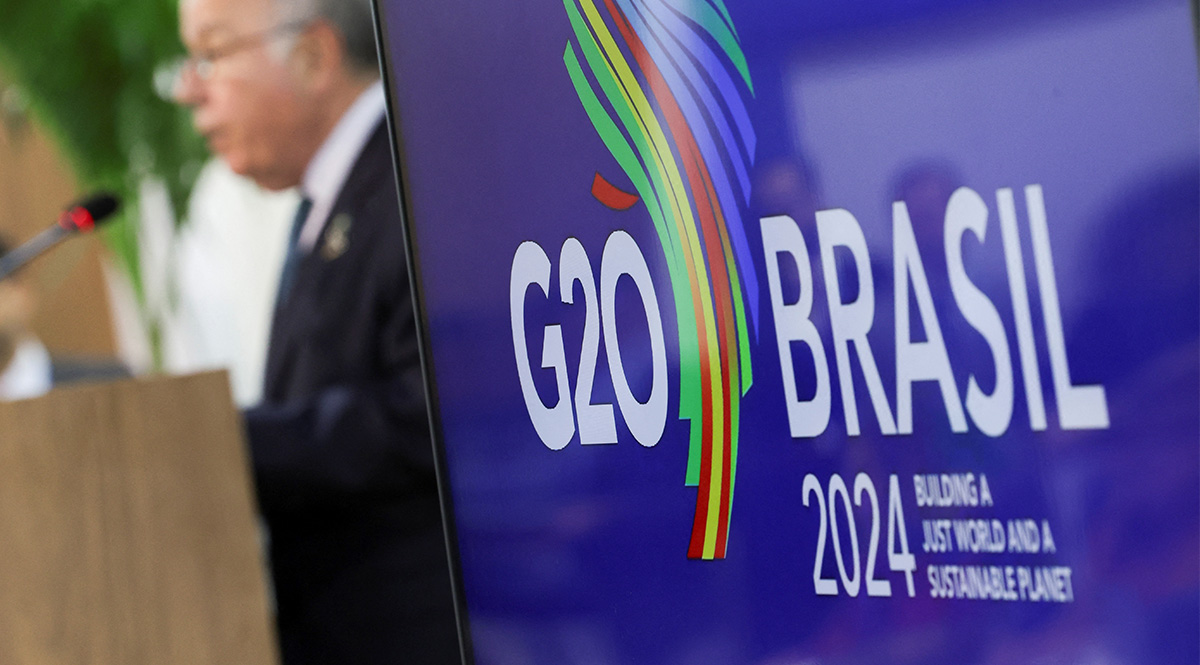
Social inclusion, including the fight against hunger and poverty, reforms of international institutions, and a fair energy transition were the main themes of the latest G20 summit. Brazil’s now concluding presidency of the group has shown the increasingly vocal expectations that developing countries have from the West, such as more funds for their development and a larger role in global decision-making processes. The evident divisions in the G20, including divergent positions on the Russian invasion of Ukraine and the war in Gaza, limited the outcomes of the meeting. Efforts on social issues arguably were the major achievements.
(1).png) Ricardo Moraes / Reuters / Forum
Ricardo Moraes / Reuters / Forum
Context
After Indonesia and India, Brazil was the next major developing country and international contender to represent the interests of that group holding the presidency of the G20 in recent years. The government of President Luiz Inácio Lula da Silva sought to ensure that the discussions about the Russian invasion of Ukraine and Israel’s war against Hamas and Hezbollah would not overshadow the main themes of the presidency—the fight against hunger and inequality. This was difficult especially after Russia—one of the G20 members—launched a massive missile attack against Ukraine’s energy infrastructure the day before the summit on 18-19 November. Vladimir Putin was not in Rio, although the Lula government had invited him, causing speculation that Brazil might not comply with the International Criminal Court’s arrest warrant for the Russian leader.
President Joe Biden’s visits to Brazil (and Peru, to participate in the APEC summit on 15-16 November) was his first travel to Latin America as the U.S. president and coincided with the news that his administration had withdrawn the ban on Ukraine’s use of U.S. long-range weapons against targets deep inside Russia. Concerns about Donald Trump’s incoming administration—in particular the potential for him to withdraw support for initiatives developed during Brazil’s presidency related to sustainable development and anti-poverty financing, among other issues—strongly influenced the G20 debates.
Chinese leader Xi Jinping’s presence in Rio, with state visits to Peru (for the APEC Summit) and Brazil (20 November), confirmed the growing mutual importance of China and Latin America. Parallel to the Rio summit, debates at the COP29 climate conference in Baku were underway, with its participants hoping for a strong signal from the G20 on financial support for the energy transition in the poorest countries. The summit in Brazil was also the first with the African Union as a full member of the group after being admitted last year.
Main Outcomes
For Brazil, the launch of the Global Alliance against Hunger and Poverty, a response to the UN estimates of more than 730 million people suffering from hunger, was the most important achievement and legacy of its G20 presidency. The alliance aim is to pool funds donated by countries and international organisations and facilitate the exchange of knowledge on, for example, best practices to reduce poverty, among other key goals. On the day of its inauguration, the initiative comprised more than 140 members, including 82 countries, various international organisations (for example, the EU), financial institutions (the Inter-American Development Bank, the European Investment Bank, and others), and large influential charities such as the Bill and Melinda Gates Foundation. The Alliance is also to help achieve UN 2030 Sustainable Development Goals.
A proposal for a tax on the ultra-rich as a means of financing the fight against inequality and a mention about the challenges of artificial intelligence, are other successes of the Rio Summit acknowledged by the Brazilian G20 presidency. It also highlighted the importance of G20 Social, a new format of representatives of NGOs that had its inaugural meeting just before the leader’s summit. Working groups on empowering women and on bioeconomics (the responsible use of natural resources for economic development) were among the other noteworthy outcomes.
In general terms, the G20 leaders supported a stronger position of developing countries in international financial institutions, including the IMF, and the boosting of efforts to implement climate commitments, including those agreed in the Paris Agreement and during last year’s COP28 conference in Dubai. They also appraised the Brazilian initiative to create a Task Force on a Global Mobilisation against Climate Change (TF-CLIMA).
Divergences within the Group
Differing positions on the Russian invasion of Ukraine and Israel’s war against Hamas and Hezbollah caused major disagreement between G20 members, and especially during the negotiation of the leaders’ final declaration. While Saudi Arabia demanded the group condemn Israel, Argentina and the G7 countries requested the same for Russia (although according to Brazilian media, France and Germany reportedly had the most flexible position in the latter group.) The Brazilian government resisted these demands, fearing the final declaration would not be approved. It persisted even when all the Western countries asked for a renegotiation of the text after the 17 November attack on Ukraine to name Russia as the aggressor. Brazil, instead, pushed through a passage with references to the catastrophic humanitarian situation of Gaza and the escalation in Lebanon, as well as the suffering of the people of Ukraine and the global negative impacts of the war in that country, including on food security. India used a similar solution when hosting the G20 summit in New Delhi last year.
The generalised demands on climate issues, including financial support for the transition in the poorest countries, are indicative of the wide divergence of views among the G20 members in these areas and they met with a negative reaction from COP29 participants. The same is true of proposals for new instruments to combat inequality. For example, the declaration did not include a reference to transferring part of arms expenditures to the fight against poverty, as proposed by Mexico, or Lula’s idea to forgive the debts of poor countries if they invest the funds in education. There were controversies also with initiatives in the fiscal sphere, especially the proposal for a tax on billionaires promoted by Brazil—G20 leaders agreed only to general references to cooperation in this area. While they acknowledged the need for further reform of international institutions, including the UN Security Council (UNSC), differing visions are also evident in this area. This was seen in a mere statement on the need to increase the representation of African, Asia-Pacific, and Latin American and Caribbean countries in the UNSC.
International Significance of the Summit and Brazil’s G20 Presidency
The Rio summit confirmed the growing expectations of developing countries that the developed West support them in addressing their most serious social problems, including a fair energy and climate transition, and that they are adequately represented in global forums and organisations. They reinforce the message that it is the richest countries that have a historical debt and bear the greatest responsibility for tackling poverty and climate change. Without addressing these demands, it will be difficult for the West, including for the European Union, to build their credibility as partners for the most influential developing countries, such as Brazil, India, or South Africa, which will take over the G20 presidency on 1 December this year.
Overcoming problems with similar projects in the past in which enthusiastic declarations were not followed by an adequate financial commitment will be important to the success of initiatives like the Global Alliance Against Hunger and Poverty. The unfulfilled pledges by rich countries at COP15 in Copenhagen in 2009 for $100 billion a year for developing countries for climate goals by 2020 is one such example. In addition, actions on climate change, taxation, or, more broadly, in cooperation in multilateral forums, including the G20, may be complicated by a change in U.S. policies under the incoming Donald Trump administration. The harbinger of difficulties was the objections presented in Rio by Javier Milei, Argentina’s ultra-liberal president, who identifies with the views of and models himself on Trump. Eventually, however, Milei accepted the leaders’ declaration.
The Rio summit and G20 presidency will help the Lula government consolidate Brazil’s status as an influential participant in debates on major global issues. It will also reinforce the authorities’ conviction that Brazil can be an attractive and credible broker between developing countries and the Western world. These aspirations will be pursued further in 2025 when it holds the presidency of the enlarged BRICS group and again when it hosts the COP30 climate conference in Belém. It would be worthwhile for Poland, under its EU presidency in 2025, to support efforts to reinvigorate the Union’s dialogue with Brazil at the top level, and in particular to re-establish the leaders’ summits (the last one was held in 2014).


(1).jpg)
.jpg)