Fifth Round of American-Belarusian Talks
On 11–12 December, Alexander Lukashenka held talks in Minsk with Donald Trump’s envoys, John Coale and Christopher Smith. As a result, 123 political prisoners were released, and the US lifted sanctions on Belarusian potash fertilisers. In the coming weeks, additional meetings can be expected, aimed at further normalising US-Belarusian relations, which may help the Belarusian authorities avoid being held responsible for Russia's aggression against Ukraine.
 Gonzalo Fuentes / Reuters / Forum
What was the background to the meeting?
The talks in Minsk preceded another round of negotiations on ending the Russian invasion of Ukraine. As Coale emphasised, Lukashenka played an important role in the talks as a mediator in relations with Russia and a “good advisor on possible peaceful solutions.” At the same time, despite the planned negotiations with the Americans, the Belarusian authorities have not ceased their hostile hybrid activities towards neighbouring NATO countries, and even intensified actions targeting Lithuania. This led to the declaration of a state of emergency in that country on 9 December. Belarus is also preparing for the meeting of the All-Belarusian People’s Assembly (ABPA) scheduled for 18-19 December. Established in 2022 as a constitutional body, the ABPA–alongside the president–is formally the body that shapes state policy, and in 2024, it approved, among other things, a new war doctrine and national security concept. Lukashenka’s announcement suggests that this year’s work of the Assembly will focus, among other things, on further changes in Belarus’ security policy, which suggests a further tightening of its stance towards neighbouring NATO countries.
Why did Lukashenko release some prisoners?
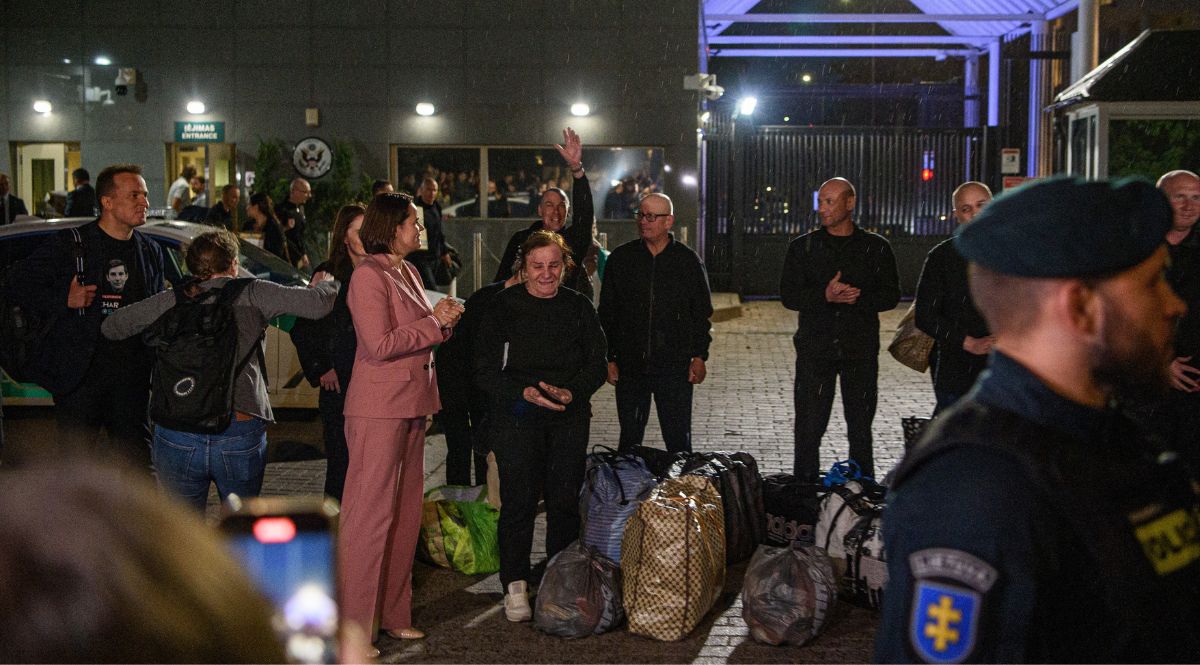
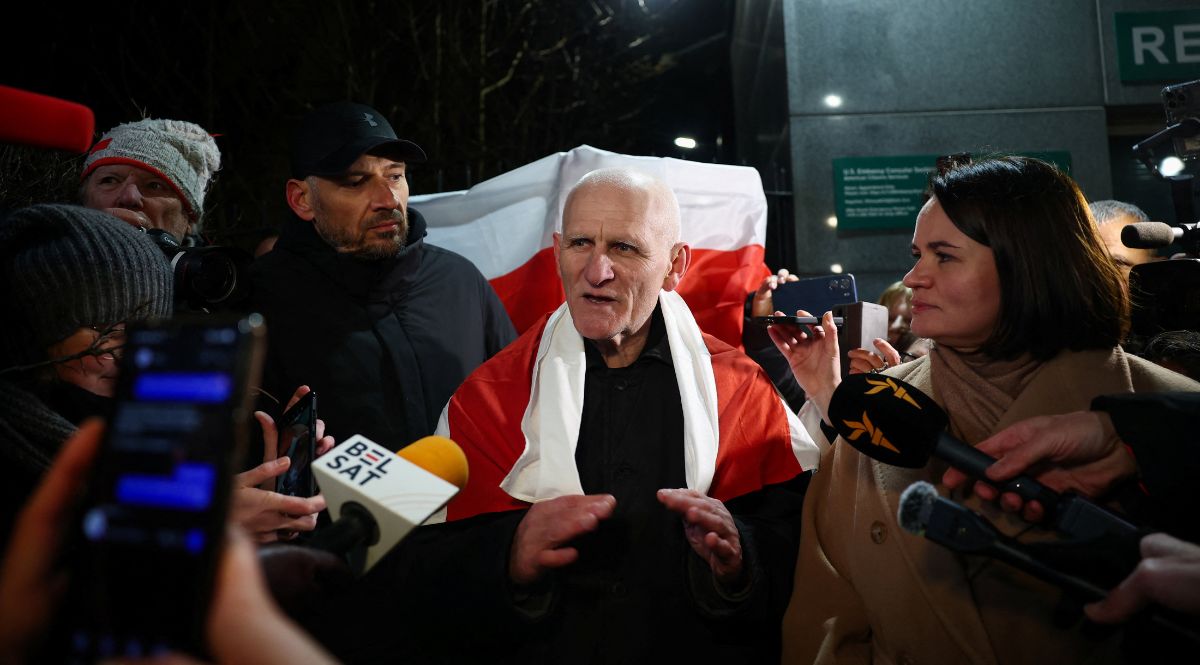
The talks resulted in the Belarusian regime releasing 123 political prisoners, including Nobel Peace Prize laureate and human rights defender Ales Bialiatski, failed presidential candidate in the 2020 elections Viktar Babaryka, and member of Sviatlana Tsikhanouskaya’s election team Maria Kalesnikava. Among those released were one Polish citizen and citizens of several other countries, including the US. However, more than 1,000 people considered prisoners of conscience are still being held in Belarusian prisons, including Polish-Belarusian journalist Andrzej Poczobut. Those released were transported to Lithuania and Ukraine, and some of them have already announced that they will continue to fight for the release of all political prisoners. Lukashenka’s gesture was a response to the US decision to lift sanctions on potash fertilisers. This is beneficial for both sides, as it will provide Belarus with an additional source of foreign exchange earnings and allow the United States to reduce its dependence on imports from Canada, which currently provides about 80% of its imported fertilisers, which could help American business. However, the US has maintained other restrictions, such as the embargo on trade in oil and oil products, which the Belarusian authorities are keen to see lifted.
What might relations between Belarus and the US look like going forward?
John Coale announced that talks would continue and emphasised that he would seek the release of all political prisoners. These talks will likely require further consultations with other countries such as Poland, Lithuania and Ukraine, whose interests the Americans are trying to represent. This is evidenced, among other things, by the US expectation that Belarus will return the Lithuanian lorries it is holding. However, Lukashenka is particularly keen on normalising relations, as he will want to use this to put pressure mainly on Poland and Lithuania, expecting them to take steps to lift EU sanctions and restore transport and trade with Belarus. He will also use cooperation with the Americans to strengthen his international position as a key politician in Eastern Europe, alongside Vladimir Putin. Lukashenka will also likely support any actions by Donald Trump’s administration that put pressure on European countries, including on the issue of ending the war in Ukraine. The Belarusian authorities may also seek to attract American investment, especially in their petrochemical industry.
Will improved relations with the US have any significance for Belarus’ position vis-à-vis Russia?
Lukashenka will try to use improved relations with the US to strengthen his position in relations with Russia and position himself as an important mediator in the Ukrainian peace process. In this way, he will also seek to avoid both the responsibility that rests with the Belarusian authorities for assisting Russia in its aggression against Ukraine, and the need to pay possible compensation in the future. The Belarusian authorities will also try to present Trump’s support, and especially any potential meeting between him and Lukashenka, e.g. after the signing of an agreement ending military hostilities in Ukraine, as proof of their independence in foreign policy. At the same time, Belarus will want to use the further lifting of US sanctions to support Russia in circumventing international restrictions. Thus, as long as Russia can benefit from the development of Belarusian-American relations and they are in line with its interests, it will support Belarus’ actions in this area.


.png)
.png)