
What are the Possibilities of Holding the Belarusian Regime to Account?
To hold members of the Belarusian regime accountable, international organisations are focusing on documenting their human rights violations and international crimes, including support for the aggression against Ukraine. More decisive steps to try the perpetrators are being taken by some countries, but the problem remains the apprehension of these individuals and limited jurisdiction, both for the domestic judicial system and that of the International Criminal Court (ICC).
.png) Anatol Chomicz / Forum
Anatol Chomicz / Forum
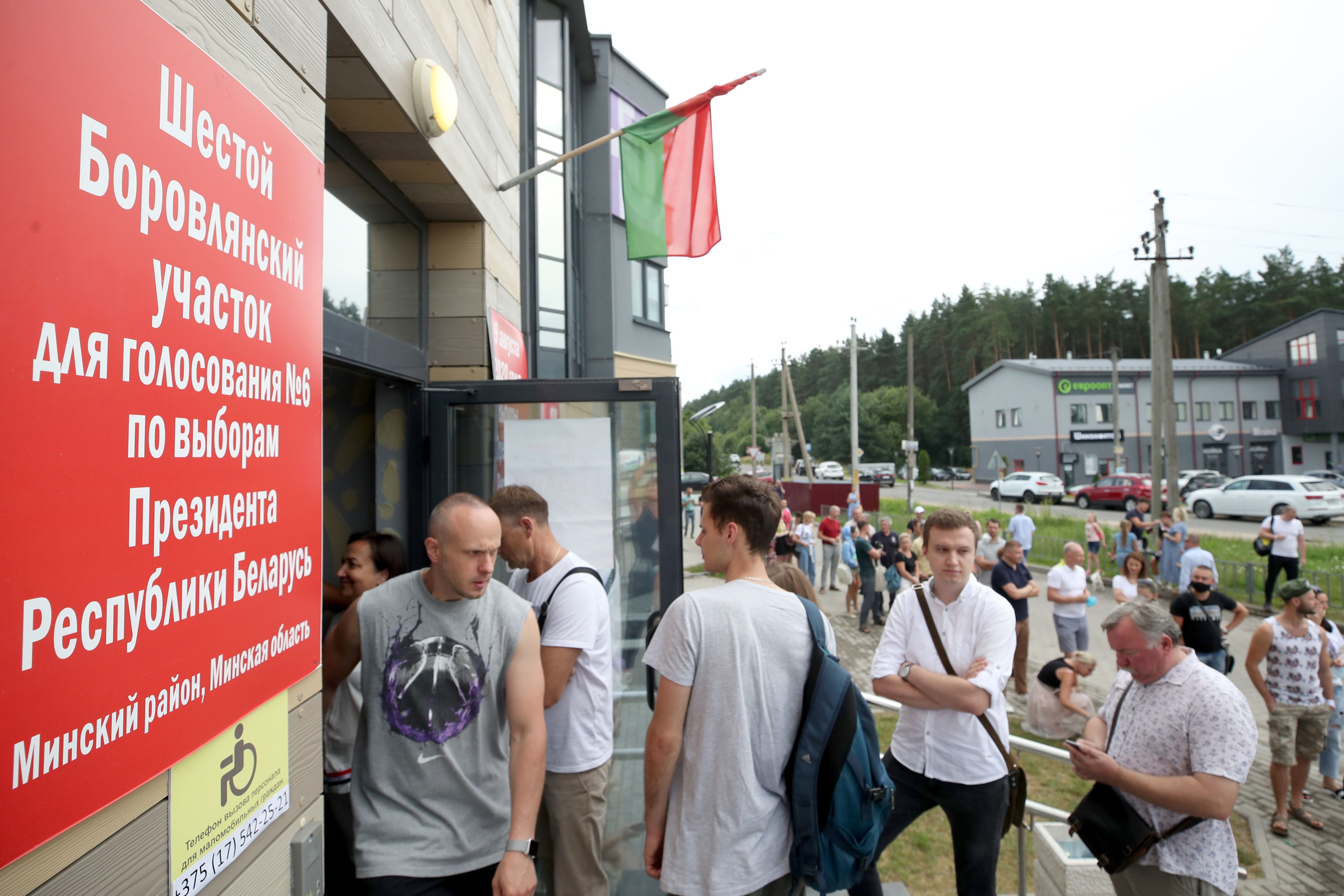
Alexander Lukashenka and members of his regime, including functionaries of the power structures, are committing international crimes by supporting Russian aggression against Ukraine and brutally suppressing any opposition in the country. Exercising power in an authoritarian manner enables them to use systemic repression. According to UN Special Rapporteur Nils Muižnieks, the presidential election in January became a catalyst for human rights violations. The regime’s actions can be qualified as crimes against humanity, including political persecution, torture, and severe beatings, among others. According to data from the human rights organisation Viasna, considered extremist by the Belarusian authorities, there were almost 3,700 political prisoners in Belarus between 2020 and 2024 (1,265 last December), and politically motivated criminal proceedings against more than 7,700 people.
Documenting Violations
The regime’s actions are condemned by international organisations, which focus on investigating and documenting violations. The OSCE uses so-called human dimension mechanisms, the Vienna and Moscow mechanisms. Their implementation does not require unanimity, so they are being activated more and more often because they cannot be blocked by Belarus or Russia, or states favouring them. The first allows the OSCE to summon a state to clarify human rights and democracy issues, and was triggered against Belarus in 2021 and 2024, first on abuse of force against peaceful protesters, arbitrary arrests, and torture, among others, and then on political prisoners and other alleged violations. The problem, however, is the inability to compel a state to respond, which it should do within 10 days. States therefore use the Moscow mechanism—the appointment of a group of independent experts to prepare a report. It has been activated 15 times since its establishment in 1991, including three against Belarus, to investigate the situation after the 2010 presidential elections and potential human rights violations in the fall of 2020 and spring of 2023. In addition, Belarus was described as supporting Russian aggression in requests to activate the mechanism regarding the attack on Ukraine (March and June 2022) and mentioned in reports on deportations of Ukrainian children Russia and imprisonment of Ukrainian civilians (2023 and 2024).
The UN is working in an analogous way. In 2023, the Office of the UN High Commissioner for Human Rights published a report on repression in Belarus before and after the rigged 2020 elections. In addition to the Office’s Special Rapporteur on Human Rights in Belarus, which has been operating since 2012, last year the Human Rights Commission established a group of independent experts to investigate human rights violations committed there since 1 May 2020. Its task is to gather evidence and, if possible, identify the perpetrators for future proceedings, including criminal ones. A report to be prepared by the group in the spring is expected to include recommendations for holding perpetrators accountable.
Legal Proceedings
The organisations’ focus on documenting violations comes with few legal options for holding perpetrators accountable. Belarusian democratic opposition leader Svietlana Tiskhanouskaya in 2021 called for the creation of a special tribunal to hold the regime accountable for violations committed in Belarus, but the proposal has not been concretised so far. The establishment of such a body under an agreement with the UN, the EU, or the Council of Europe would only be possible after a change of authorities in Belarus, as it requires their consent. It would not be required for the UN Security Council (UNSC) to create such a tribunal, but this option is ruled out by Russia’s expected veto. It strongly supports Belarus politically and is also involved in massive and systemic human rights violations on its own territory, and Belarus supports it in its aggression against Ukraine.
The threat of Russia’s veto also prevents the UNSC from taking the case to the International Criminal Court (ICC). Lithuania, whose actions have already led to the issuance of an arrest warrant for Vladimir Putin, therefore took the initiative last September. It demanded that the ICC Prosecutor preliminarily investigate the possibility that the Belarusian regime has committed crimes against humanity since at least 1 May 2020, including deportations, persecution, inhumane acts potentially involving other crimes. Since Belarus is not a party to the Rome Statute, the basis of the application is to be the occurrence of the elements of the alleged crimes was committed on the territory of Lithuania, which has ratified the Statute. Emigration from Belarus has directly affected its security (due to its infiltration by special forces), and it is a refuge victims of crimes; from 2020 to 2024, the number of Belarusians in Lithuania increased from 17,800 to 61,000. The ICC has already accepted for review a similar case of the exodus of the Rohingya population to Bangladesh from Myanmar. Although Lithuania’s application is currently being examined by the ICC Prosecutor, who will assess whether there are grounds for an investigation, her action has already been praised by Tsikhanouskaya, who announced that the ICC Rome Statute will be the first agreement Belarus will ratify after the fall of the regime.
Another option is to initiate domestic proceedings on the basis of universal jurisdiction, which allows a foreigner to be tried for the most serious crimes committed abroad. In 2021, non-governmental organisations requested the German prosecutor’s office to investigate violations committed by six officers of the Belarusian security services (following the example of the Koblenz court, which, among other things, issued arrest warrants for suspected torturers in Syria). The Polish prosecutor’s office, in turn, is pursuing cases involving crimes against humanity, the use of violence and threats against groups and individuals based on their national and political affiliation, human trafficking, and the hijacking of a Polish plane on 21 June 2021. The challenge for domestic prosecutions, however, is capturing perpetrators who are abroad. In the latest case last year, a court in Warsaw issued arrest warrants for the former director of the Belarusian air navigation agency Leonid C., the head of the Minsk air control shift, Yevgeny C., and KGB chief Andrei A. M., accused of forcing the landing in Belarus of a plane with oppositionist Roman Protasevich on board. They are also wanted via Interpol, and the prosecutor’s office has asked the court to issue European arrest warrants against them. A full trial of the crimes committed is also limited by the immunities enjoyed by top-ranking officials, such as Lukashenka, and the need to link the case to the investigating state, such as demonstrating a violation of its interests.
Conclusions and Outlook
Prompt prosecution of top officials of the Belarusian regime is currently unlikely due to the limited jurisdiction of domestic and international courts. However, this does not mean that attempts should be abandoned. The documentation of committed violations by international organisations and the initiation of proceedings by states, even on a smaller scale, is a gesture of solidarity with Belarusian society and an element of preparation for the trial of the perpetrators after the change of authorities.
Given the extensive documentation of the regime’s crimes, the similarity of the situation to the Myanmar case, and Lithuania’s previous successful action before the ICC, acceptance of the case for consideration by the Court is highly likely. This could encourage other countries, including Poland, to file analogous requests (and thus motivate the ICC to be more active) or provide additional information and evidence. With such a basis in place, however, the scope of prosecuted violations will be limited to crimes having effect outside Belarus. The possibility of extending the ICC’s jurisdiction over Belarus to more crimes and would only exist if it democratises, accedes to the Rome Statute, and requests that the Court investigate acts committed before the change of power. This would reduce the need to set up a special tribunal for Belarus to try higher-ranking perpetrators—a more time-consuming solution, because of the need to work out how it would proceed. Lower-rank officers for relatively lesser offenses could then be taken to Belarusian courts.

.png)
(1).png)