
China After the Third Plenum: Xi Still Prioritising Security
Xi Jinping’s consolidation of power, reluctance to make systemic changes, and the primacy of security comprise the most important elements in China’s policy formulation after the Third Plenum of the CCP Central Committee in July. The decisions taken during the meeting and their implementation show that, in the authorities’ view, it is necessary to, among other things, accelerate the development of the armed forces. Subsidy-supported exports will continue to play a key role in China’s economic policy, challenging industry in the EU and others. This increases the need to expand and effectively apply instruments to protect the single market and EU companies.
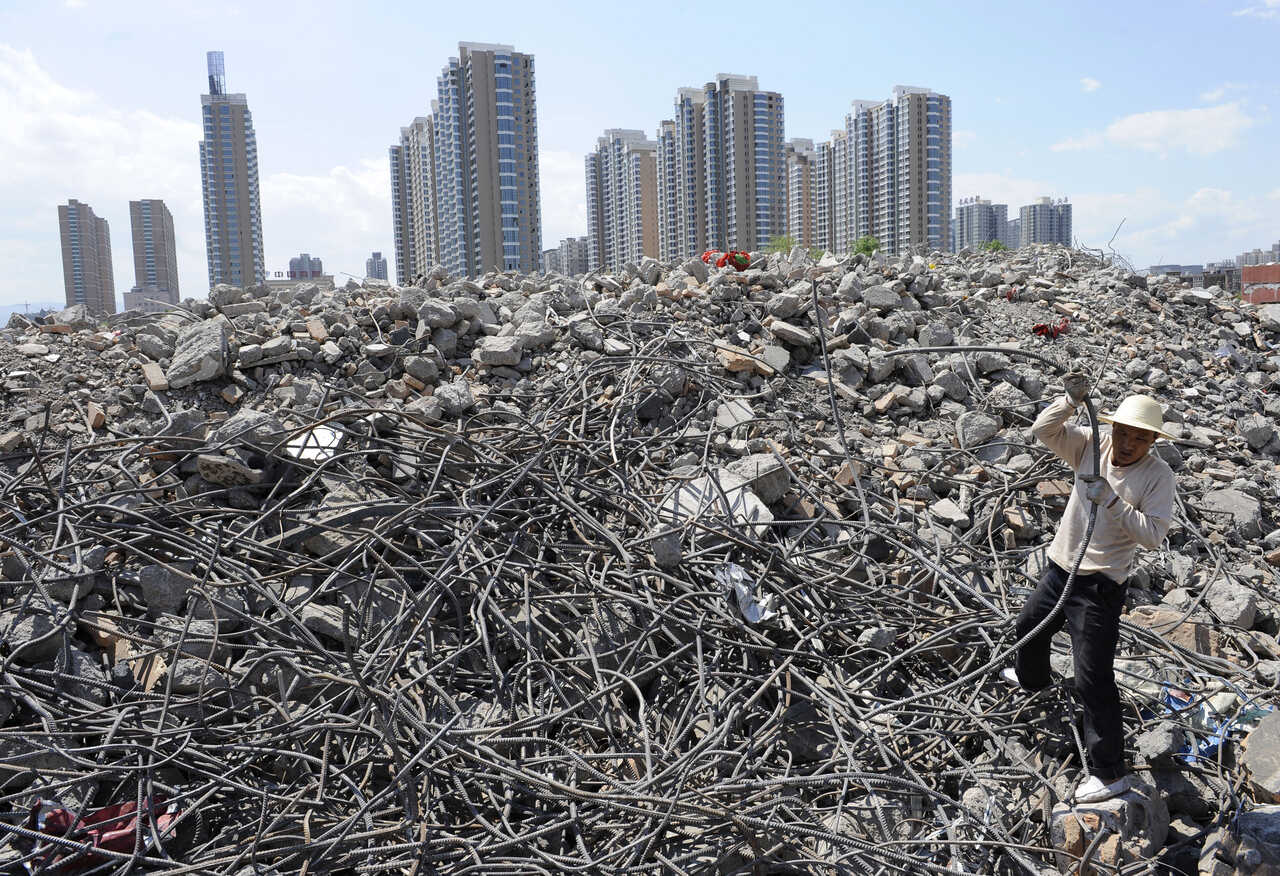
(1).png) Tingshu Wang / Reuters / Forum
Tingshu Wang / Reuters / Forum
The Third Plenum of the Central Committee (CC), held on 15-18 July, is the third of seven meetings of the CCP Central Committee held between successive party congresses. It is usually held in the autumn (except in 1998 and this year) and is devoted to the state’s socio-economic programme, with its decisions providing an interpretation for China’s institutions for the following years. The delay in this year’s plenum may have been due to, among other things, the dilemma of maintaining the narrative of planned economic growth in 2024 of “around 5%” because of existing challenges, including unemployment, low consumption, and a property crisis. According to the authorities, this dilemma was successfully resolved. The Third Plenum resulted in three documents: a final communiqué, Xi’s speech, and guidelines indicating directions for change. Details of the solutions are now being presented by individual ministries and party institutions. According to the guidelines, all plans are to be implemented by 2029.
Economic and Social Policy
None of the documents adopted at the plenum provide for changes in economic policy, continuing the emphasis on the crucial importance of security (including economic security) and the Chinese Communist Party’s leading role. Among other things, the CCP is to decide on the direction of economic development, including funding for work on artificial intelligence or robotics. The plenum documents do not accentuate the “dual circulation” concept promoted by the authorities from 2020 onwards, presumably due to domestic and foreign trade difficulties. Exports are to continue to be the engine of growth, and proposals to stimulate consumption or reduce unemployment are limited.
In economic policy, the role of other countries is mainly to buy Chinese overcapacity and invest in China in high value-added sectors. The party will support the development of specific industries, such as environmental protection, in order for them to gain an advantage in foreign markets. To gain resources, support for part of the services in the private sector will be reduced. The pursuit of technological, food, or energy self-sufficiency is also part of the concept.
An extension of the plenum’s plans was the adoption in September of a law increasing the retirement age (for the first time in 70 years). Within 15 years, it is to rise to 63 for men (from the current 60) and 55-58 for women (now 50-55). In September and October, the authorities announced a stimulus package to boost business activity and consumption in China. It concerns both the banking sector (e.g., reducing the capital reserve, and setting up a fund to support investment in the stock market), the provincial government (issuing bonds) and support for citizens (e.g., consumption vouchers and subsidies for parents). These decisions, especially with a debt level (public and private) of around 300% of GDP, indicate that the Chinese authorities understand the seriousness of the situation. This is confirmed by the communiqué of the CCP Politburo meeting in September, which notes that “new problems have emerged”. These probably relate to the feeling of insecurity in society due to unemployment (especially among the youth), as well as the property crisis. In the last six years, the number of post-graduate students (not taking up work after graduation) has increased by more than 60%. Official unemployment of 16-24 year olds (not in education) rose from 13.2% in June this year to 18.8%. September. Between September 2023 and September 2024, Freedom House registered just under 3,000 protests (more than 50% labour-led), compared to more than 2,600 the year before.
Security and the Party
Plenum documents indicate that national security is being prioritised at the expense of China’s economic growth. Reform of the armed forces is to be accelerated, including increasing Xi’s powers as chairman of the Central Military Commission (CMC). In an article published in the People’s Daily, the party’s press organ, in August this year, CMC Deputy Chairman Zhang Youxia pointed to the need for faster implementation of modern technologies in the army, raising the level of training, and solving problems with the appointment of conscripts. In his view, there is a need to improve the CMC’s mechanisms for managing the armed forces, including the supervision of cadres.
At the plenum, the CCP also pointed to the need for changes in the judiciary, including in internal security cases. The detailed approach was outlined in another People’s Daily article in August by Wang Xiaohong, the minister of Public Security. It is security, rather than economic development, that is to be the key focus, and institutions are to be better organised to respond more quickly to threats. Also important is the aim for the active participation of the public in reporting problems (including those involving foreigners), such as denunciation through special hotlines.
The CCP Central Committee Plenum also carried out personnel changes (corresponding to the decisions of the March NPC session). Without giving specific reasons, the CC dismissed, among others, former Foreign Minister Qin Gang from his party posts (he remained a member of the CCP, however). At the same time, the plenum approved decisions to expel the former minister of National Defence and two senior military commanders from the party. All three are accused of corruption.
Conclusions and Outlook
The 3rd Plenum of the CCP Central Committee did not result in announcements of deep socio-economic reforms China. The authorities are aware of the difficult economic situation, and their determination is seen in their announcement of plans to be implemented by 2029. However, they will not take decisions that could deprive the party of effective tools of power, such as changes to the distribution of national income (redirecting support from industry to the middle class). This would further reduce the influence of the leadership on the implementation of CCP policies by local authorities and other institutions, including the armed forces. The Chinese authorities are testing limited attempts to improve the situation and will, among other things, intervene in the property market or issue bonds to support the budgets of local authorities. The stimulus package does not solve the structural problems of the Chinese economy, and some of the solutions have already been implemented before without result. The authorities’ plans are intended to calm the market, convince investors of the good prospects of the Chinese economy, and, above all, have a positive impact on public sentiment (it was announced on 30 September, on the eve of the PRC’s founding holiday).
Xi’s disciplining of both the party apparatus and the armed forces is ongoing. In addition to changes in personnel, this means that he is focusing on the issue of loyalty and making more decisions single-handedly, resulting in a less effective system. Although the consent of the party leadership is no longer required on economic matters or on possible offensive actions (including those involving the armed forces or paramilitary organisations) in the Asia-Pacific, Xi may fear that his decisions will not be implemented by disloyal, middle- and low-level cadres fearful of the consequences if things go wrong. This makes Xi, wanting to narrowly implement policy plans and manage the state, more likely to stay in China. This is borne out by his limited overseas activity after the 20th CCP Congress in November 2022. He visited 11 countries between 2022 and 2024, and as many as 23 between 2017 and 2019.
For the EU, the importance of surplus exports to China’s economic growth means the continuation of a policy of unfair Chinese competition and sometimes economic pressure on its members and EU companies. The presence on the EU market of subsidised and thus cheaper products from China (often more technologically advanced) will reinforce the message of the Chinese authorities that they are ready to cooperate with EU countries, for example, by locating investments there. This action will make it more difficult to convince EU consumers and Member State governments of the acceleration of de-risking or the expansion of instruments protecting the single market. An active trade and industrial policy (along the lines of the decision to raise tariffs on Chinese electric vehicles) and information policy of the EU, but above all, of the Member States, will be important. Its objective needs to be to spread knowledge among consumers about threats to the EU market, including the Polish market, resulting from economic dependence on China and the impact of unfair Chinese trade practices on the competitiveness of EU companies. The PRC achieving its objectives would mean, among other things, greater opportunities for it to support Russia’s war economy, negatively impacting European security.


.png)