Belarus completes test of its armed forces
The Western Operational Command exercises ended a combat readiness test of the Belarusian army lasting over two months. It was the longest and most extensive such test in recent years, and, for the first time, some activities were directly commissioned and supervised by Alexander Lukashenka. This was a clear military signal to the countries on NATO’s eastern flank and Ukraine. The Alliance should closely monitor developments within the Belarusian army, as, in the event of an attack on Europe, it could play a broader role than merely providing support to the Russian armed forces.
 Viktor Drachev / Zuma Press / Forum
The course of the manoeuvres
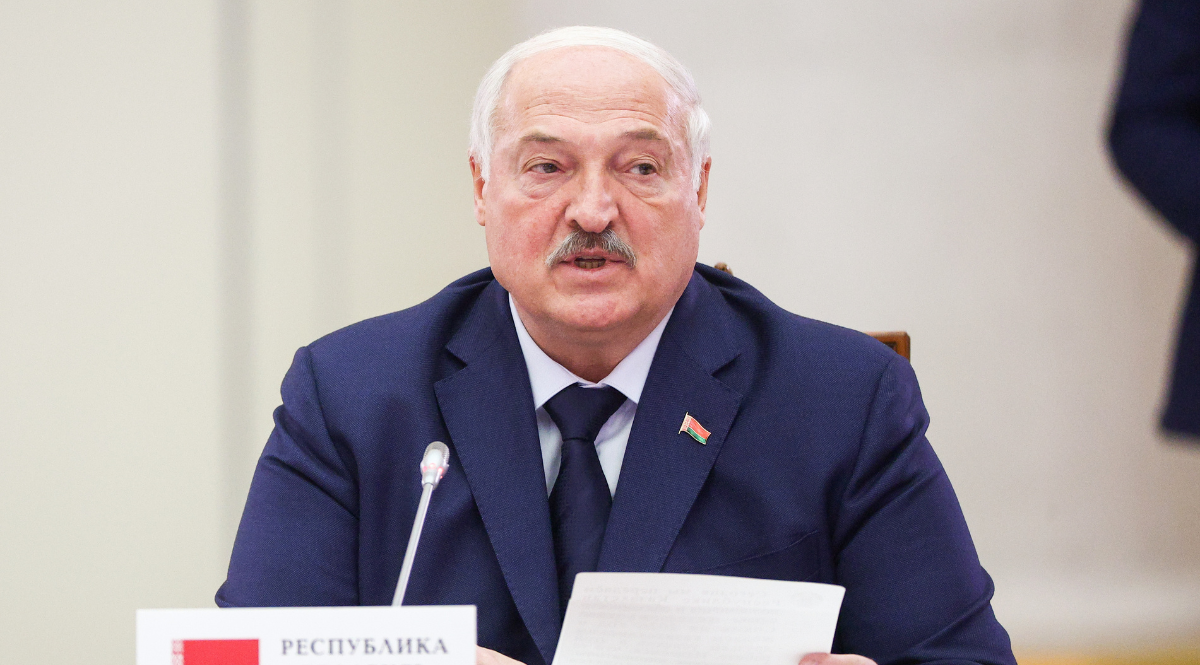
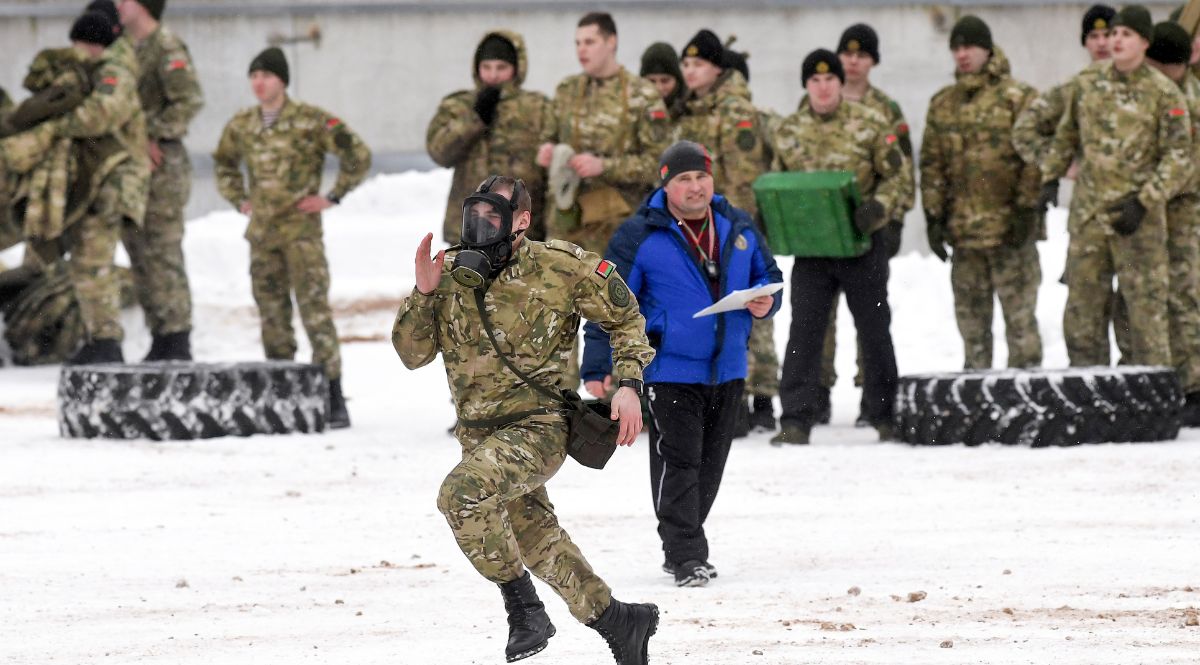
The unannounced test of the Belarusian armed forces’ combat readiness was divided into two formally independent but, in reality, interlinked elements. The first began on 16 January this year on the orders of Lukashenka, who, bypassing the Ministry of Defence, instructed the Secretary of the Belarusian Security Council to conduct exercises and then directly supervised the activities. The second part was launched on 26 January in accordance with the plans of the Ministry of Defence and the General Staff, coinciding with the traditional start of the winter training season in Belarus. Consequently, this year’s exercise was of a far more comprehensive nature and lasted much longer than similar activities organised in previous years. Both parts were divided into stages, and each unit trained according to its own scenario, which it received at the start of operations. The part supervised by Lukashenka focused mainly on testing (including in confrontation with an adversary) mechanised, engineering, and nuclear, chemical and biological defence units, as well as anti-aircraft missile forces. The exercises also involved cooperation with the Ministry of Internal Affairs, and the Internal Troops, which report to that ministry, were used as a potential adversary. Meanwhile, the exercises overseen by the Ministry of Defence were much broader in scope and involved mechanised, artillery, signals, air defence, electronic warfare (EW), unmanned systems, special operations forces, anti-aircraft missile forces, and the air force. Thus, almost all Belarusian military units were involved in the tests. During the second stage of these manoeuvres, which began on 16 ebruary, the ability to form territorial defence and self-defence forces was also tested. During this stage, reservists were called up on a large scale without prior notice.
Both parts of the exercise were concluded with the Western Operational Command drills held from 19 to 25 March, based around the scenario of repelling an attack by superior enemy forces. The exercise mainly involved mechanised units (with a significant tank component), artillery, engineering, electronic warfare, unmanned systems and special operations forces. The exercise programme also included testing for the organisational methods of territorial defence.
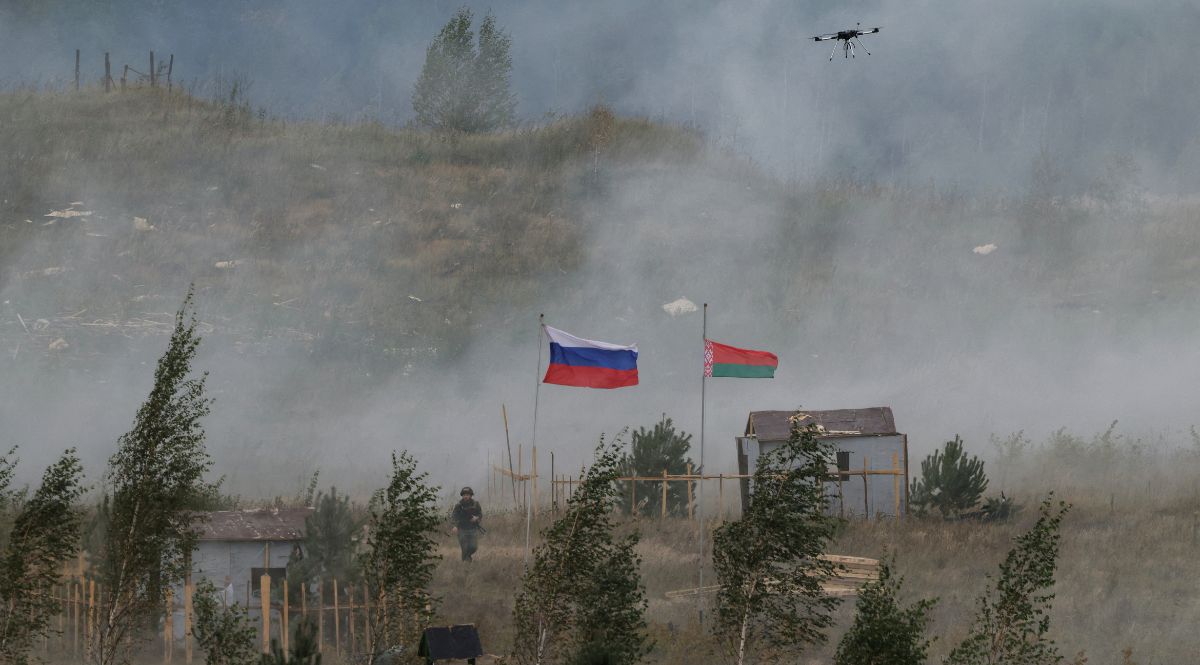
One of the most important official objectives of the exercises was to implement the lessons learned by Belarus from the war in Ukraine. Consequently, particular emphasis was placed on the use of unmanned aerial vehicles, air defence systems and reconnaissance. Although officially these were merely exercises involving Belarusian units, it is highly likely that instructors from Russia were also involved in them.
The combat readiness exercise was widely covered in Belarusian state media. It was also accompanied by numerous meetings at Lukashenka’s office, as well as briefings and information sessions, including for the military diplomatic corps. The communications profile of the exercises was thus significantly different from previous years, particularly those following Russia’s full-scale invasion of Ukraine. This was a clear political and military signal directed at NATO countries and Ukraine, indicating a shift in policy by the Belarusian authorities, who now wish to showcase their army’s growing offensive capabilities.
The context of the drills
The unannounced test of the Belarusian armed forces’ combat readiness was accompanied by a series of hybrid operations, conducted mainly along the border with Poland and Lithuania, including numerous incursions by smuggling balloons that further heightened regional tensions.
Since the beginning of the year, the Belarusian authorities have held talks with the US regarding preparations for the release of 250 political prisoners, in exchange for which the US agreed to lift sanctions against parts of the financial sector and companies producing and exporting potash fertilisers. However, these moves have raised concerns that the Belarusian authorities will seek to use the negotiations and US mediation to increase pressure on Lithuania to lift some of its sanctions, including restoring access to the port of Klaipėda, which, prior to 2020, was crucial for the export of products from the Belarusian petrochemical sector.
A series of bilateral Russian-Belarusian meetings also took place during the manoeuvres, the most significant of which was the session of the Union State Council of Belarus and Russia on 26 February. It focused primarily on integration programmes, but the results presented during the session indicate that 40% of the projects (125 out of 310) in the plan for 2024–2026 will most likely not be realised. Nevertheless, Lukashenka and Vladimir Putin discussed possible measures for 2027–2029, which are to focus on building the Union State’s technological sovereignty. In the context of the planned tasks, projects focusing on transport infrastructure, particularly railways, are noteworthy, including the Moscow–Minsk line, which could be used for military purposes. The Belarusian-Russian talks did not formally refer to deepening integration in the security sphere, but this is a consequence of the already near-complete military integration of the two states.
Such a comprehensive test of the Belarusian army’s combat readiness could also be seen as a response to deteriorating relations with Ukraine. On 18 February, the Ukrainian authorities imposed personal sanctions on Lukashenka in response to the deployment of drone control stations in Belarus, which allowed Russia to intensify its attacks on northern Ukraine. The Ukrainian authorities also point to the significant involvement of Belarusian companies in cooperation with the Russian arms industry, which is one of the most important elements of the support Belarus provides to Russia in its war against Ukraine. The shift in Ukraine’s approach to the Belarusian authorities is also evident at the political level. On 26 January, during the celebrations marking the 163rd anniversary of the outbreak of the January Uprising, Volodymyr Zelenskyy met with Belarusian opposition leader Sviatlana Tsikhanouskaya in Vilnius and invited her to visit Kyiv. In this way, Ukraine will seek to prevent any potential improvement in relations between some European states and the Belarusian regime. Ukrainian authorities have also emphasised that lifting sanctions against Belarus would benefit Russia and support its war effort.
Implications for Poland and NATO
The capabilities tested during the exercises, including the use of unmanned systems, electronic warfare, and air defence as an important complement to mechanised, armoured and artillery capabilities, show that Belarus is closely studying the course of the war in Ukraine and is implementing its lessons learnt within the armed forces. The previously unused dual system of exercise oversight, with the Presidential Office and the General Staff on one side and the Ministry of Defence on the other, demonstrates in turn that the Belarusian authorities sought to obtain the fullest possible picture of the army’s actual state of readiness and the capabilities at its disposal. This points to a possible change in how Belarusian armed forces would be deployed in the event of a conflict with NATO, with their role being expanded to include other components beyond providing logistical and engineering support. The growing importance of the Belarusian army is also evidenced by the country’s rising defence spending since 2022, with Belarus allocating the equivalent of $1.6 billion in 2025, which corresponded to 2% of GDP.
It is important for NATO, particularly the countries on its eastern flank, to pay attention nie to the direction in which the Belarusian armed forces are developing, as well as to their coordination with other government departments and their ability to rapidly mobilise reservists. As part of their response, the Alliance and its members could, for example, increase the number of national and allied exercises on the eastern flank, the scenarios for which should take into account changes in the Belarusian army’s modus operandi and lessons learned from the war in Ukraine, amongst other things. It will also be important to not only continue supporting Ukraine, but also to draw on its experience and capabilities, particularly in neutralising the unmanned systems which Russia and Belarus are using in increasing numbers.
| The units identified as having been deployed as part of the exercise ordered by Lukashenka | Units identified as having been used in the exercise conducted by the Ministry of Defence |
|---|---|
|
|