
Zapad 2025: Russia, Belarus Signalling Military Capacity Despite the War in Ukraine
This year’s largest Belarusian-Russian military exercises, Zapad, demonstrated that Russia, despite its involvement in the war in Ukraine, still has the capacity to threaten the risk of escalation with NATO. The course of the manoeuvres and accompanying actions, including the drone incursion into Poland and following disinformation operation, also have shown that Russia will continue to exert pressure on Alliance members to try to intimidate them. To prevent the Russian authorities from achieving their goals, NATO countries should accelerate efforts to build social resilience and military capabilities that will strengthen their defence capabilities.
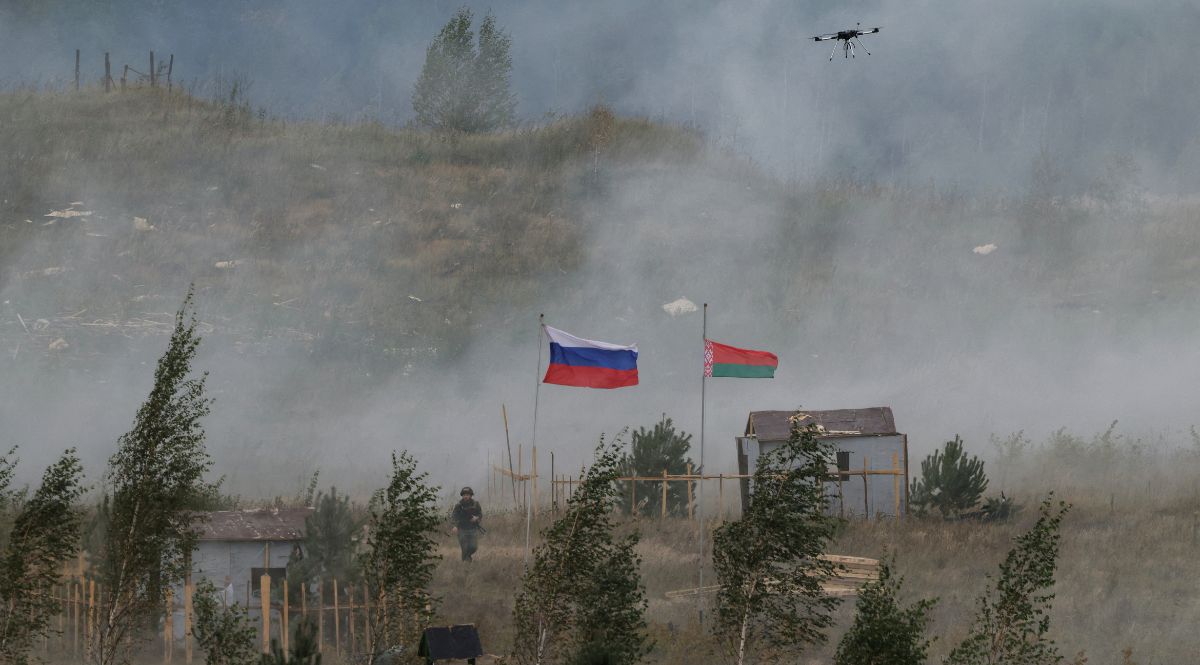 Ramil Sitdikov / Reuters / Forum
The Zapad drills have been held every four years since 2009 and each time they are the largest test of the combat readiness of the Belarusian and Russian Regional Group of Forces. However, this year’s edition took place not only during the ongoing war between Russia and Ukraine but also after the reorganisation of the Russian command system. For the first time, these manoeuvres were also directly correlated with the exercises of the Collective Security Treaty Organisation (CSTO), which took place in Belarus in September. The course of this’s year’s Zapad exercise indicates that it was part of the implementation of provisions contained in new strategic documents adopted by Russia and Belarus last year. Furthermore, Russia used these manoeuvres as a signal of its readiness for further confrontation with the Alliance, knowing that they would arouse considerable interest and concern, particularly among NATO countries.
Course of the Manoeuvres
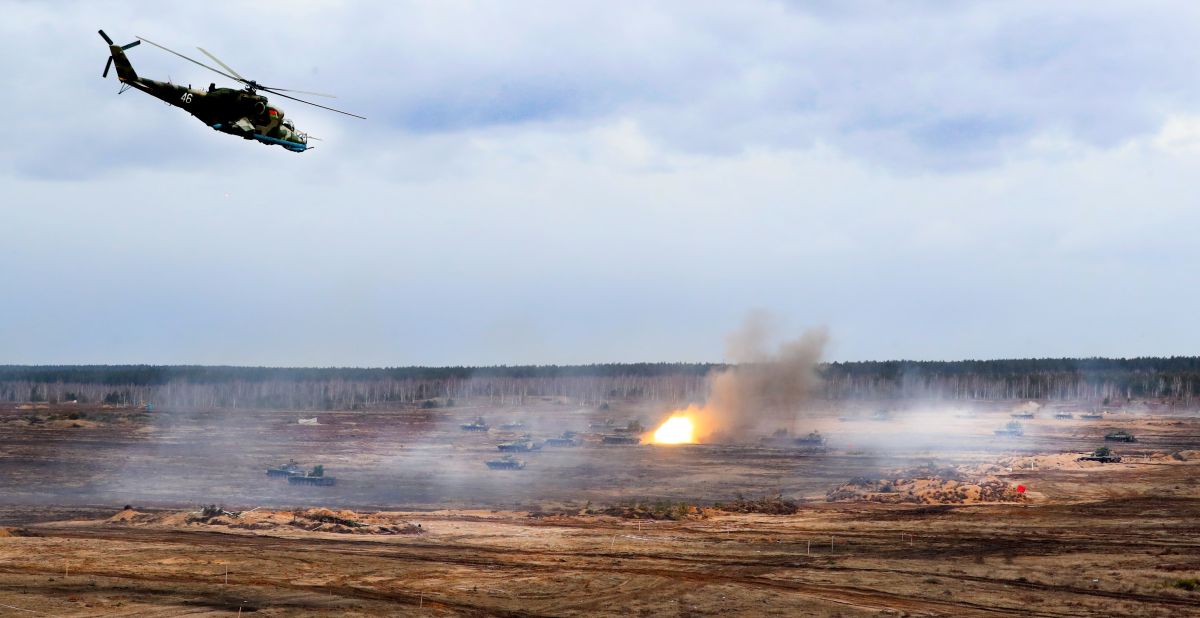
The Zapad drills took place at 41 training grounds, mainly in central Belarus and in Russia, as well as in the Baltic and Barents seas. This geographical spread was intended to demonstrate Russia’s ability to conduct operations across the entire western strategic direction, despite the significant involvement of its armed forces in the war in Ukraine.
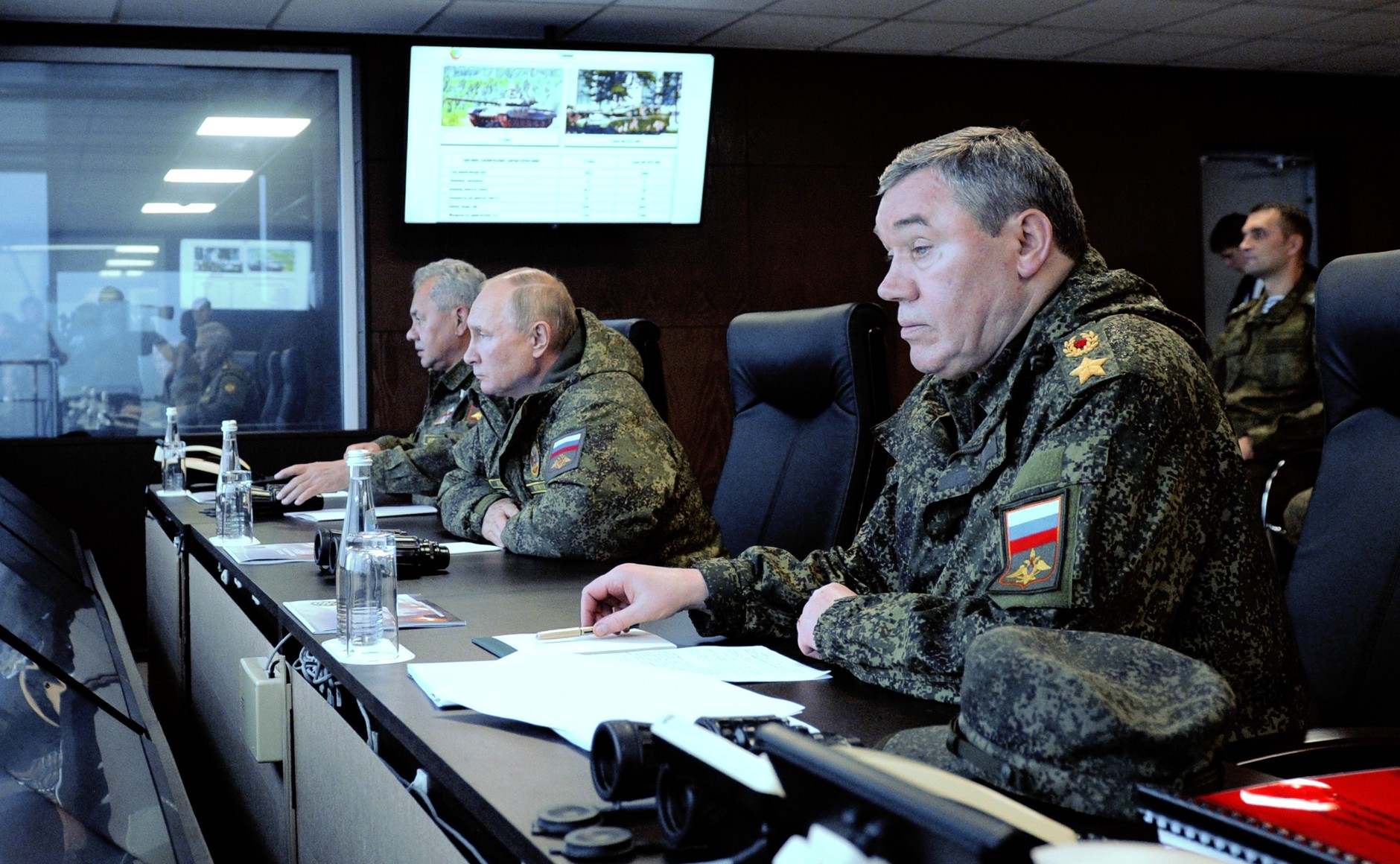
While observing one of the episodes at the Russian Mulino training ground, Vladimir Putin announced that 10,000 pieces of equipment and 100,000 troops were involved in the manoeuvres (this would be a number comparable to 2017, which may indicate deliberate manipulation of data). Given that Belarus declared that only about 8,000 troops would be training on its territory, this statement proved that both countries deliberately underestimated the number of soldiers that would be participating in the active phase of the manoeuvres.
During Zapad, the armed forces of the two countries practiced a series of activities aimed at defeating an aggressor. Operations were conducted on land, at sea, in the air, and partly in cyberspace. The extensive use of unmanned systems and radio-electronic warfare measures showed that the Belarusian and Russian armies are implementing the lessons learned from the war in Ukraine in terms of how to conduct military operations. Both countries also emphasised the need to develop artificial intelligence to support their command systems.
A simulation of the use of nuclear weapons shows that Russia is implementing its latest nuclear doctrine, adopted last year, which assumes the possibility of using them in response to an attack on Belarus. It also proved that these were not defensive exercises, as the actions taken were disproportionate to the threat assumed in the scenario of the need to defend against illegal armed groups.
The use of the Baltic and Northern fleets indicates that operations conducted in the western strategic direction will be carried out primarily by units stationed in the Leningrad Military District (MD), established in 2024 after the disbandment of the Western MD, which had been in operation since 2009. The Zapad exercises also showed changes in the use of individual types of armed forces as a result of the reform of the command system.
As in previous editions, services subordinate to other ministries, such as the Ministry of Emergency Situations and the Ministry of Internal Affairs, were involved in the manoeuvres in both countries. Russia and Belarus thus signalled that these were preparations for all state structures to operate in conditions of armed conflict. Moreover, troops from other countries, including India, Iran, Bangladesh, Burkina Faso, Congo, and Mali, also took part in the exercises, which was intended to demonstrate their political and military support for Russia.
Accompanying Activities
The active phase of the exercises was preceded by an incursion into Poland by 21 drones on the night of 9-10 September, the aim of which appears to have been to test the defence responses and capabilities of the Polish Army, supported by its allies, the level of unity within NATO, and the political and social response in the Alliance countries. This event, as well as the Zapad manoeuvres themselves, was accompanied by a large-scale disinformation campaign. Its main goal seems to be to raise fears among NATO member societies that further support for Ukraine could lead to new incidents and possibly to full-scale conflict between Russia and the Alliance. It also showed that “cognitive operations” have become an integral part of Russian military operations.
Regardless of the manoeuvres with Belarus, Russia is continuing its offensive, despite heavy losses, across almost the entire front line in Ukraine, focusing on the Donetsk and Kharkiv regions. Shortly after the end of the active phase of the Zapad drills, Putin announced that 700,000 Russian soldiers were fighting in Ukraine. Combined with information about the number of soldiers involved in the exercises, this was intended to signal Russia’s ability to operate in two theatres of war simultaneously.
Russia also used the CSTO exercises to send an anti-West signal of unity of the organisation’s members in their perception of the threats posed by NATO countries. The scenario of these exercises was modelled on the hostilities in Ukraine but, like Zapad, also involved testing plans for the use of nuclear weapons. Thus, it also pointed to preparations for a possible conflict with the Alliance.
Conclusions for Poland and NATO
With its Zapad exercises, Russia partially achieved its goals, including demonstrating that it retains the ability to confront NATO despite the war with Ukraine. In this context, it is worth noting that Russia signalled its ability to conduct maritime and air operations using strategic aviation, as well as its willingness to use nuclear weapons even in the event of a relatively minor conflict. However, the latter also indicates shrinking land forces potential and Russia’s possible weakness in this operational domain. This is also evidenced by the fact that no modern weaponry was presented during the manoeuvres, and mainly equipment that is several decades old was used. It cannot be ruled out that Russia is masking its shortcomings in conventional capabilities through intensified information and psychological operations designed to paralyse Western countries’ willingness to act.
The Alliance’s response should therefore be to accelerate efforts to build social resilience to Russian psychological operations, including through changes in education systems and extensive information activities. It is also necessary to further expand cooperation within NATO in defence against hostile Russian hybrid activities and operations conducted in cyberspace.
At the same time, the Alliance should ensure that it sends the right political and military signals to Russia. One of the most important elements of this will be the continued rearmament of member states, especially those on the Eastern Flank. It will also be important to organise regular national and allied exercises, such as the ongoing Iron Defender drills in Poland and continuing and expanding operations such as Baltic Sentry, aimed at limiting Russia’s ability to conduct sabotage operations in the Baltic Sea, and Eastern Sentry, aimed at strengthening air defence on the Alliance’s Eastern Flank.
The course of the Zapad drills shows that while NATO should analyse and implement lessons learned from the way in which the exercises were conducted, it can also assess the situation in Ukraine during this period. Belarus and Russia sought to demonstrate their growing capabilities in the mass use of unmanned systems, which they will most likely also use for reconnaissance or sabotage operations against Alliance members. It is also worth noting the investments made by both countries in the use of artificial intelligence on the battlefield.
At the same time, through its continued support for Ukraine, NATO can exacerbate Russian weaknesses, especially in conducting operations on land. It will be particularly important to strengthen its ability to strike targets deep behind the front lines, such as arms factories, key transport hubs, and energy infrastructure, which will also weaken the Russian economy.


.png)