The prospects for Armenia's foreign policy following the parliamentary elections
- The victory of Prime Minister Nikol Pashinyan’s Social Contract party in the June parliamentary elections signals a continuation of the diversification of Armenia’s foreign policy—strengthening relations with the US and the EU whilst limiting Russia’s influence and attempting to maintain appropriate relations with it.
- Relations with Russia will remain a challenge, given the increasingly hostile stance of the Russian authorities.
- One way of limiting Russia’s influence is to strengthen economic, energy and other forms of cooperation with other partners and to secure new ones; however, the key constraint and challenge in this regard is the uncertain prospect of finalising the peace process with Azerbaijan and normalising relations with Türkiye
 Pavel Bednyakov / Reuters / Forum
The post-election situation in Armenia
On 7 June, Pashinyan’s party won the parliamentary elections for the third time in a row, securing 49.8 per cent of the vote, which gave it a majority in parliament and the ability to form a government. However, it did not secure its stated aim of a constitutional majority, which could have accelerated the peace process with Azerbaijan (see below). In addition to Pashinyan’s party, the pro-Russian Strong Armenia (23.2 per cent), led by the Russian-Armenian oligarch Samvel Karapetyan[1], and the Armenia Alliance (9.9 per cent), led by former President Robert Kocharyan[2], entered parliament, whilst the Prosperous Armenia party (3.9 per cent), led by the oligarch Gagik Tsarukyan, fell just short of the threshold[3].
During the campaign, Pashinyan convinced voters of the programme for the “real Armenia” (abandoning efforts to regain Karabakh and focusing on the country’s development within its internationally recognised borders) and its emergence from isolation by reopening transport routes. In addition to his commitment to ensuring the country’s security and economic development, his victory was also secured to some extent by the use of administrative resources (including incentives and pressure on public sector employees to vote for him). Furthermore, Pashinyan and the security services under his control raised the issue during the campaign of the opposition’s ties with Russia and the northern neighbour’s attempts to influence it. The Armenian authorities warned that the opposition’s rise to power would mean squandering the foreign policy achievements made so far, a return to complete dependence on Russia, and a return to the mafia-oligarchic networks that held the reins of power before 2018.
Immediately after the elections, Pashinyan set about holding the opposition to account for corruption, as he had promised during the campaign. In mid-June, at the request of the public prosecutor’s office, the government-controlled Central Electoral Commission lifted Kocharian’s immunity in connection with an investigation into abuse of power and money laundering (he was arrested in August). In early July, Tsarukyan was arrested on charges of money laundering; he had previously been stripped of immunity, barred from leaving the country, and had his casino’s licence revoked by the state. Proceedings are also ongoing against Karapetyan, who has been in custody for over a year and is accused of attempting a coup d’état and financial embezzlement. The independent Russian investigative news portal Insider has highlighted his links to the Russian secret services, whilst some members of the Armenian expert community have outright claimed that Strong Armenia is a Kremlin project, pointing to parallels with the emergence of Bidzina Ivanishvili’s Georgian Dream in 2012. Karapetyan’s nephew Narek, who was acting as party leader in his stead, was barred from leaving the country and had his parliamentary immunity revoked in connection with an investigation into money laundering and vote-buying. The public prosecutor’s office had already initiated dozens of similar proceedings during the campaign. The opposition regards all the charges as politically motivated, and the truth of these claims is difficult to determine unequivocally at this stage. Even if there are genuine grounds for bringing charges against opposition leaders, there is a risk that the entire process could turn into a political vendetta bearing the hallmarks of selective justice. The method the ruling camp has chosen to combat its political opponents may, in the long term, call the democratic nature of Pashinyan’s government into question and reinforce the anti-democratic tendencies already observed during the campaign.
Following the elections, however, the Prime Minister has partially adjusted his stance towards the Armenian Apostolic Church (AAC), which enjoys considerable public trust, and which he has for years accused of having links with Russia—including its secret services—and of supporting the pro-Russian opposition. He has toned down his criticism, presumably to mitigate the damage to his image caused by it during the campaign. This does not, however, mean that the authorities have abandoned their efforts to bring about changes within the church hierarchy and to reform the church. The trial of Catholicos Karekin II and six other church dignitaries is currently underway at a court in Yerevan. It concerns the refusal to reinstate Geworg Saroyan (dismissed by the patriarch in January this year) to the post of bishop, after he sided with Pashinyan in the state-church conflict.
Furthermore, in the first weeks following the election, the ruling camp proposed restricting the voting rights of the Armenian diaspora. Under the amendment to the election code, voting is limited to only those who have resided in the country for a total of one year within the two years preceding the election—including 24 of the final 48 days before the vote. The authorities justify the change as a measure to counter electoral interference by third countries—implicitly from Russia— through the mass funding of voting trips by members of the diaspora to their homeland. The authorities had issued warnings during the election campaign regarding coordinated travel of around 100,000 voters—a significant number given Armenia’s population of just under 3 million—although these threats did not fully materialise. This is yet another controversial decision—one that is currently difficult to assess unequivocally—and carries the risk of further polarising society. On the one hand, financial support from the diaspora is essential to the functioning of many households (remittances from abroad accounted for around 4.9 per cent of Armenia’s GDP in 2025), but it is also associated with pro-Russian circles or those seeking to reclaim Karabakh, which runs counter to the priorities of the national authorities and the large element of Armenian society which is weary of living in a state of constant conflict.
The aforementioned actions by the Armenian authorities carry the risk of further exacerbating social disputes and the abuse of power. The electoral victory and Pashinyan’s actions to date suggest a continuation and possible intensification of measures against broadly defined opposition circles—politicians, the AAC, and the diaspora—under the pretext of curbing Russian influence; however, this will primarily serve to strengthen his own position.
Armenia’s foreign policy objectives
When presenting the priorities for Armenia’s foreign policy for 2026–2031 in the second half of August, the government emphasised the continuation of a “balanced and balancing” foreign policy[4]. This entails closer ties with the US and the EU, a transformation of relations with Russia, the normalisation of relations with Türkiye and the formalisation of peace with Azerbaijan, as well as the development and strengthening of partnerships with other international actors, including Iran, China, Georgia, the Shanghai Cooperation Organisation (SCO) and the BRICS+ platform. Pursuing such a multi-vector policy is beneficial for Armenia given its location between rival states and its high level of dependence on imports (of goods, energy, etc.), which necessitates cooperation with states that are often hostile to one another. The policy also enjoys public support, shown by an IRI poll conducted this spring, where the largest proportion of respondents favoured Armenia pursuing a pro-Western policy whilst maintaining relations with Russia (32 per cent). Conversely, 24 per cent supported adopting a pro-Russian course whilst maintaining relations with the EU and the West, whilst 9 per cent believed that Armenia’s foreign policy should be exclusively pro-Russian (compared with 17 per cent in favour of an exclusively pro-Western policy). However, the implementation of the above-mentioned priorities and the “real Armenia” programme depends primarily on the outcome of the peace process with Azerbaijan and the normalisation of relations with Türkiye, over which the Armenian authorities have limited influence without securing a constitutional majority.
Relations with Türkiye and Azerbaijan
Armenia’s emergence from its regional isolation—driven by Pashinyan’s ongoing efforts to finalise the normalisation process with Türkiye and the peace process with Azerbaijan—is intended to enhance its security and support economic development. Concerning Türkiye, the aim is to establish diplomatic relations, open the borders and commence trade exchanges. Armenia has similar aspirations towards Azerbaijan, but to move forward it will also be necessary to sign a peace treaty—and to demarcate and delimit the borders. Since Azerbaijan and Türkiye are also focusing on trade and transport in their relations with Armenia, their interests were more aligned with Pashinyan’s “real Armenia” programme than with the demands of his pro-Russian opponents, who have maintained an antagonistic stance towards these countries and criticised him for seeking an “unjust” peace.
Armenia is keen to open its border with Türkiye and unblock transport routes in the South Caucasus, to end the economic blockade that has lasted for over three decades and gain new export routes (currently, the country’s trade only takes place via Georgia and Iran). This is expected to boost its economic growth and integrate it into the regional transport network which connects Azerbaijan, Türkiye and the EU, as well as enabling access to the countries of Central Asia and China. After opening dialogue with Türkiye on this matter in 2022, Pashinyan has achieved moderate success. The declaration on the opening of the Armenian-Turkish border—initially for third-country nationals—and the agreement on the restoration of the historic Ani border bridge (constructed at the turn of the 10th and 11th centuries) on the River Akhuryan, signed in May this year, are awaiting implementation. Armenia’s frustration at the failure to open the border is attributed to Azerbaijani efforts to link any normalisation of Turkish-Armenian relations to the finalisation of the peace process between itself and Armenia.
Reaching a peace agreement with Azerbaijan is therefore crucial for Armenia’s economy and its security; however, it is of far greater significance for Armenia—as the structurally weaker party, which lost the conflict and is less prosperous— than for Azerbaijan, which holds the upper hand and can impose its preferred terms on Armenia. In the process of institutionalising peace with Azerbaijan, the greatest challenge is found in Azerbaijan’s demands for changes to the preamble to the Armenian constitution[5]. Azerbaijan claims that the preamble’s current form contains territorial claims against it. Although this claim is open to debate—given the peace agreement contains a mutual waiver of territorial claims and stipulates that it explicitly overrides domestic law—the Armenian authorities are inclined to amend the constitution. However, they failed to secure the necessary two-thirds parliamentary majority in the June elections, and the change would require a referendum, with the serious risk that the proposed changes would be rejected. Political opponents accuse Pashinyan of negotiating a peace deal that is unfair and does not sufficiently safeguard Armenia’s interests.
Failure to conclude a peace treaty will negatively impact Pashinyan’s domestic and international standing, marking him as politically ineffective and reducing public support for his camp. Given the slim chances of amending the Armenian constitution, two scenarios are most likely in relations with Azerbaijan and Türkiye. The first involves persuading Azerbaijan to make peace without any amendment of the Armenian constitution. This would require convincing Azerbaijan that the window of opportunity is closing (whilst Russia is focused on waging war in Ukraine), backed up with pressure from the US, financial incentives, and expanding areas of bilateral cooperation (including energy and security). The second, and more likely, scenario is that the status quo—the de facto peace initiated by the Washington Declaration—will be maintained, with the current informal dialogue continuing alongside the process of delimiting and demarcating the Armenian-Azerbaijani border. This would not preclude the development of trade relations (currently channelled through Georgian territory) and the construction of the Trump Route for International Peace and Prosperity (TRIPP), nor the opening of borders—depending on progress in bilateral talks. Compared with the first scenario, however, the chances of implementing Pashinyan’s proposed “Crossroads of Peace” initiative—involving the construction of numerous road, rail and energy links with Azerbaijan and Türkiye, which would strengthen Armenia economically—would be lower. Azerbaijan only has limited interest in this initiative, with its primary goal being to establish the so-called Zangezur Corridor—a direct transport link via Armenia, to connect Azerbaijan to the exclave of Nakhchivan and Türkiye.
Relations with Russia
In its foreign policy programme for 2026–2031, Armenia has downgraded the status of its relations with Russia, no longer describing them as a ‘strategic alliance’, as in previous years, but instead as a ‘transforming and deepening partnership’. This stems from the Armenian authorities’ desire to achieve the greatest possible political, economic, energy and military independence from their northern neighbour, which for nearly three decades has exploited Armenia’s vulnerable position due to its conflict with Azerbaijan. During this period, Russia assumed control over successive sectors (including security—the main supplier of arms, a military base, and control over the borders). Since Azerbaijan recaptured Karabakh, the Armenian authorities and public have become disillusioned with Russia’s stance—as, in their view, it failed to support Armenia in the face of Azerbaijani aggression. Thus, Pashinyan’s government has begun to transform its relations with Russia.
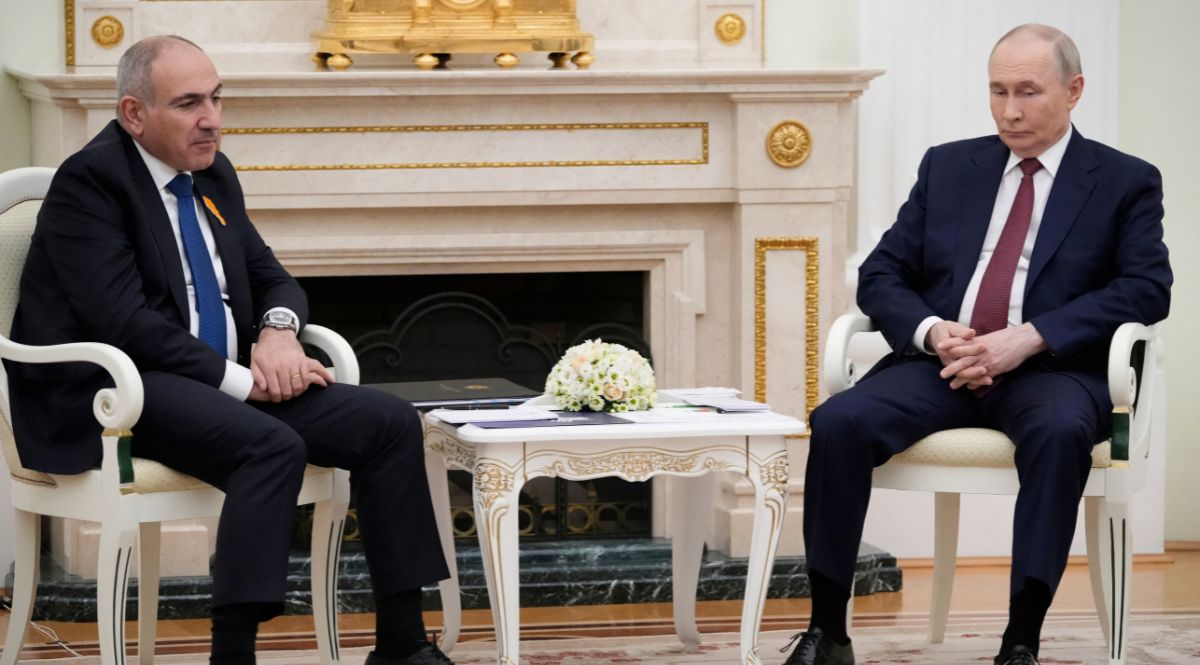
Despite a Russian narrative alleging that the election results had been rigged by Social Contract, and Vladimir Putin’s open dislike of Pashinyan, following the election, the Armenian Prime Minister made his first foreign trip to Russia and met with Russian Prime Minister Mikhail Mishustin (the first Putin–Pashinyan meeting only took place in early September, on the occasion of the SCO summit in Bishkek, with Putin reportedly inviting Pashinyan to Moscow). This is a reflection of Pashinyan’s pragmatism; since coming to power following the Velvet Revolution in 2018, despite the Russian leadership’s hostile stance towards him, he has consistently—though not without difficulty—maintained proper relations with them. Armenia has indeed suspended its membership of the Russian-dominated Collective Security Treaty Organisation (CSTO), but it has avoided leaving the Eurasian Economic Union (EAEU) due to substantial trade benefits. Russia is exploiting this structural weakness, using the pretext of phytosanitary issues to impose an embargo on a range of Armenian products ahead of the elections, including alcoholic drinks, mineral water, flowers, vegetables and fruit. Russia has long used trade restrictions to apply pressure on “undisciplined" former Soviet republics such as Georgia, Moldova, and Ukraine; however, in the case of Armenia, this contradicts both countries’ shared membership of the EAEU. At the same time, Russia is pressuring Armenia to hold a referendum on its choice of economic integration path—to choose the EAEU or the EU—whilst threatening to expel it from the EAEU. It has also signalled that if Armenia maintains its pro-Western stance, this could cost the country its preferential Russian gas tariffs, leading to a drastic price increase.
Pashinyan is aware that his aspirations require a long-term process fraught with the enormous risk of straining relations with Russia, requiring caution and the involvement of partners (e.g. the EU, the US) to counterbalance Armenia’s existing cooperation with Russia. However, it will not be easy for Armenia to become completely independent of Russia. The Kremlin has rejected its request that the South Caucasus Railways company (a wholly-owned subsidiary of Russian Railways) sell its licence to operate the Armenian railways—valid until 2038—to a third country. Furthermore, Russia exercises control over a number of key sectors of the Armenian economy, including the energy sector (it supplies uranium to the largest nuclear power station, Metsamor, which meets around one-third of the country’s energy needs and will remain operational until 2036), the gas sector and telecommunications. It is also Armenia’s main trading partner, of particular importance to both countries in the context of the sanctions imposed on Russia (offering a route to circumvent these sanctions accounted for around 35 per cent of Armenia’s total trade last year, and 28 per cent in the first half of this year)[6]. Furthermore, Armenia has no plans to close the Russian military base in Gyumri—the country’s second-largest city—for fear of a negative reaction from Russia and the lack of any clear and immediate security benefits[7]. However, Russia would likely accept such a decision, which Putin has not ruled out in recent statements. Meanwhile, the phased withdrawal of Russian FSB officers from Armenia’s border posts is underway, although this is dependent on replacing them with suitably qualified Armenian personnel.
Pashinyan’s policy towards Russia has clear political, economic, and security limitations. It is therefore to be expected that, in the short term, there will be increased turbulence in bilateral relations, which will significantly hinder Armenia’s process of becoming independent from Russia; however, provided there is adequate support from the US and the EU, and Armenia normalises its relations with Türkiye and Azerbaijan, eventual independence will remain feasible. Examples of potential turbulence include further Russian economic embargoes on Armenian products and an increase in the price of Armenia’s gas imports from Russia. It cannot be ruled out that Russia will step up its support—including financial support—for the pro-Russian opposition, hoping to overthrow Pashinyan through a street revolution, a coup d’état or snap parliamentary elections. Even before the elections, Putin had already mentioned attempts to destabilise the country, warning Pashinyan against a repeat of the “Ukrainian scenario” in Armenia, accompanied by the implicit threat of military intervention.
It is difficult to imagine that Pashinyan will decide to pull Armenia out of the EAEU in the coming years, due to the extent of Armenia’s dependence on Russia and the costs that such a move would entail. He will, however, seek to redirect exports of Armenian goods to new markets, a process facilitated by EU support. It may also be assumed that he will seek to reduce Armenia’s economic dependence on Russia by diversifying its sources of energy resources (Azerbaijan, Iran, Turkmenistan) and renationalising those sectors of the economy which are currently controlled either by Russians or Armenians with ties to Russia (e.g. the Tsarukyan cement works). In the short term, the decision on selecting an investor to build a new power station to replace the existing Metsamor plant will be crucial, as in addition to Russia, China, France, South Korea, and the US have also expressed interest.
Relations with the EU
Pashinyan has declared that deepening the strategic partnership with the EU is among his government’s priorities for 2026–2031. This is to be achieved through the full implementation of the Comprehensive and Enhanced Partnership Agreement (CEPA), sectoral cooperation and aligning Armenian standards with the EU in areas including democracy, the rule of law, the economy, finance, and the environment[8]. This is a significant move because the EU is the largest investor in Armenia, offering considerable potential to replace Russia as Armenia’s main trading partner and—together with individual Member States—in other areas where Armenia has hitherto relied on Russia. Furthermore, a dialogue on visa liberalisation has been ongoing since 2024, aimed at facilitating the entry of Armenians into the EU. Armenia is currently implementing the reforms identified by the EU, and as the abolition of visas also requires that these reforms are demonstrated to be functioning in practice, the deadline for completing the process has not been set; however, it should not take longer than 2–3 years.
In recent years, Pashinyan has sought to win the EU’s favour by pursuing a policy of building regional peace and stability, and by reorienting the country towards cooperation with Western organisations. This is reflected in the adoption last year of a law launching the EU accession process, though this is of greater symbolic than legal significance. These measures have paid off, leading to the political and financial investments (see table below) made by the EU in Armenia. This success was highlighted by the adoption of the new Strategic Agenda in December last year, the organisation of the first EU–Armenia summit, and the meeting of the European Political Community in Yerevan one month before the parliamentary elections. Alongside its delegation, two civilian missions are operating in Armenia—EUMA (since February 2023), which focuses on patrolling the borders with Azerbaijan and contributes to enhancing security in the border area, and EUPM (since 13 July this year), which concentrates on strengthening the country’s resilience to hybrid threats. Armenia is negotiating a new agreement with the EU, the so-called Partnership Agenda, which is intended to develop bilateral relations within the framework of the previously agreed CEPA.
The EU’s financial support for Armenia is aimed at reducing Russia’s influence in the South Caucasus. In early July, the President of the European Commission (EC), Ursula von der Leyen, announced the disbursement of the final €18 million instalment of the €52 million support package for the country. The EU has also proposed Autonomous Trade Measures, which will enable the removal of customs duties on approximately 80 per cent of exports from Armenia to the EU (the CEPA provides only for the most-favoured-nation principle). The Commission President explicitly pointed out that this could serve to redirect products previously destined for Russia—mainly food, drinks and alcohol—to the EU market. In addition to financial support, the EU also plans to send experts to work with local producers in redirecting their products to new markets. During her visit to Baku and Yerevan in July this year, the EC President announced that, together with partners, she would mobilise up to €2 billion for strategic projects in the fields of transport, energy and digitalisation in the South Caucasus, which Armenia could use for border and road infrastructure.
Table 1. Overview of the EU’s financial support for Armenia
On 24 August, Pashinyan announced that Armenia would submit an application for EU membership “in the near future.” He views this as a means of assessing the country’s accession prospects and charting a course for reforms. As this is not the first declaration of its kind, it should be viewed with caution, and an official application should not be expected in the near future. It serves mainly to build public support for the authorities, showing they are listening to the views of voters whilst realistically assessing the prospects for accession. According to a public opinion poll conducted by the EU in Armenia this spring (Annual Survey 2026—Armenia), 54 per cent of respondents support Armenia’s accession to the EU (23 per cent did not express an opinion, and a further 23 per cent are against it), whilst 63 per cent believe that it will bring more benefits than drawbacks[9]. Among the most important advantages of accession, they cite the opening of borders and the possibility of visa-free travel to the EU (35 per cent), more employment opportunities, peace and security in the country and the region (31 per cent each), and better educational opportunities (29 per cent). EU accession raises the greatest concerns regarding the risk of deteriorating relations with Russia (39 per cent), a brain drain (38 per cent), and the loss of cultural identity and traditional values (30 per cent). However, only 18 per cent of respondents expressed the belief that the country would join the EU within the next 5 years; 22 per cent indicated a timeframe of 5–15 years; 11 per cent believe it will happen in the longer term; whilst 19 per cent believe it will never happen. Among the main obstacles to accession, they cite active opposition from third countries, such as Russia (30 per cent), a lack of public or political will within the country (13 per cent) and an insufficient level of the rule of law, including excessive corruption (12 per cent).
Despite support from the EU and Armenia’s stated willingness to join, a number of challenges stand in the way of closer cooperation. First and foremost, Armenia is an active member of the EAEU, which precludes the signing of an association agreement with the EU in the form previously adopted by Georgia and Moldova. Although Armenia and the EU have concluded a CEPA in its place, it is not fully implemented. Furthermore, Armenia’s membership of the EAEU enables Russia to circumvent Western sanctions. Another test for bilateral relations may be Pashinyan’s treatment of political opponents, which calls into question the effectiveness of EU-funded projects aimed at strengthening the rule of law and reforming the judiciary in Armenia.
Relations with the US and Iran
Deepening the strategic partnership with the US is one of the Armenian authorities’ priorities for 2026–2031. This includes implementing the Strategic Partnership Charter, signed in January last year, and sectoral cooperation based on additional agreements, including those relating to the improvement of Armenia’s border infrastructure and security, semiconductor supply chains, and artificial intelligence (for example, in August, American company Firebird opened the Commonwealth of Independent States’ largest artificial intelligence data centre in Armenia). However, the key project is the construction of TRIPP, which is intended to integrate Armenia with the region’s most important infrastructure projects. The US is also viewed by Armenia as a partner that can contribute to building the country’s energy security. Alongside TRIPP, this is to be facilitated by a cooperation agreement in this field concluded in August last year, and, in the longer term, by the replacement of the Metsamor power station with small modular reactors based on American technology.
Although the Armenian diaspora lobby in the US has been contributing to positive US-Armenian relations for decades, Pashinyan’s efforts are also helping to build good relations with Donald Trump’s administration. The initialling in Washington of the agreement initiating peace with Azerbaijan gave Armenia the political backing of a stronger partner, and provided Trump with a talking point in his bid for the Nobel Peace Prize. Armenia has also joined the Peace Council, which is dominated by the US.
A challenge for bilateral relations with the US is Armenia’s desire to maintain good relations with Iran, which are tolerated by the US only as long as they do not lead to the circumvention of the sanctions it has imposed on Iran. Iran is an important partner for Armenia, as around 20 per cent of its foreign trade passes through the country (in December 2023, it signed a free trade agreement with the EAEU) and the two countries cooperate in the energy sector; Armenia imports gas from Iran and exports electricity to Iran. Deepening strategic relations with Iran is also an Armenian foreign policy priority for 2026–2031 and, in addition to expanding cooperation in the aforementioned areas, includes active political dialogue, and developing border infrastructure and North–South and Persian Gulf–Black Sea transport routes. Setting aside the current security situation (Armenia has remained neutral in the US-Iran conflict, which has not affected its good relations with its southern neighbour), TRIPP is not in Iran’s interests, as it not only increases the US presence in the region but may also limit the benefits Iran derives from ensuring a land link between Azerbaijan and its exclave of Nakhchivan—a point the Iranian authorities have openly communicated to their Armenian counterparts.
Relations with other partners
As part of its balanced foreign policy, the Pashinyan government has announced plans to both deepen its existing strategic partnerships (current partners, in addition to those mentioned elsewhere, include Bulgaria, Croatia, the Netherlands, France, Kazakhstan, Lithuania, Luxembourg, Germany and the United Kingdom) and to forge new ones. It also envisages developing and establishing relations with countries in the Middle East and Africa. Meanwhile, Turkmenistan is a potential partner in the field of energy cooperation.
Armenia intends to strengthen the strategic partnership it established with Georgia in 2024, covering the areas of political, trade, economic, energy and transport cooperation, as well as to develop joint infrastructure projects. Occasionally, ideas also emerge regarding greater institutionalisation of relations between Armenia and Georgia within the context of a trilateral regional format involving Azerbaijan, which would be beneficial to all three Caucasian republics but is contingent upon progress in the peace process between Armenia and Azerbaijan. The Armenian authorities also view the crisis in Georgia’s relations with the EU with concern, seeing it as a threat to their own European integration.
Armenia is also keen to deepen its strategic partnership with China, formalised in August last year, and including cooperation in the fields of trade, investment and new technologies (such as the use of Chinese technologies in Armenian agriculture). Like Armenia’s other partners, China is interested in cooperating with Armenia on transport routes, although from its perspective the primary objective would be to integrate Armenia’s infrastructure into the Belt and Road Initiative. China is another important trading partner for Armenia, with the value of trade last year reaching $2.2 billion (a 24.5 per cent year-on-year increase). China is supporting Armenia in the construction of solar power stations, the north-south motorway and a new building for the state television broadcaster; Armenia’s accession to the Asian Infrastructure Investment Bank is set to further develop this cooperation. Armenia is also involved in Chinese scientific and cultural activities.
Another foreign policy priority for Armenia is deepening its partnership with India, which encompasses cooperation in the fields of the economy, defence, transport, education, culture, healthcare, and technology. Armenia is the largest purchaser of Indian-made weapons (with Armenian experts presenting this as a means of restoring the balance of power in the region), positions itself as an alternative transport route between India and Europe, and shares India’s concerns regarding the strengthening alliance between Azerbaijan, Türkiye and Pakistan.
Since 2024, Armenia has held the status of a BRICS partner state, and last spring, citing the country’s participation in events organised by the BRICS framework, the Armenian Foreign Minister declared the country’s intention to apply for observer status. Since July last year, it has been pushing for full membership of the Shanghai Cooperation Organisation, having been a “dialogue partner” since 2015. In recent years, it has come to view the organisation as a forum which will enable the development of a balanced multi-vector policy, strengthening cooperation with China and India, and enhancing communication, including with Azerbaijan and Russia. However, its accession to the SCO is hindered by the requirement for unanimous consent of all members, with Pakistan opposed to its membership.
Conclusions and recommendations
Armenia’s location at the crossroads of various trade routes makes it an attractive partner for many countries, and provided the situation in the region remains stable, it can capitalise on this to become a major transport and logistics hub. Therefore, a key challenge for Armenia’s foreign policy is the conclusion of peace with Azerbaijan and the normalisation of relations with Türkiye. This prospect is reinforced by Pashinyan’s continued hold on power; thanks to his efforts towards peace and normalisation, foreign partners view him as a guarantor of stability. The lack of a constitutional majority weakens the chances of formally ratifying a peace treaty; consequently, Armenia is seeking to build stability based on shared interests, underpinned by the opening up of transport routes through the South Caucasus. This is facilitated by the interest in connectivity shown by various partners, including China, India, the EU and the US. However, this is not in the interests of Russia, as these routes are intended to bypass the country, while it seeks to maintain as much influence as possible in Armenia. The deepening of existing partnerships between Armenia and third countries, and establishing new ones—particularly in the fields of trade, energy and security—is intended to facilitate a gradual move towards independence from Russia. However, Armenia and its partners are aware that even substantial financial and technical investment on their part will not result in Armenia being able to completely cut itself off from Russia—for security reasons, Russia is a factor that every Armenian government, even the most pro-European, must accommodate by maintaining good relations with Moscow. This strategic reality makes it easier for Armenia’s partners—who are often also its rivals—to accept its multi-vector policy and prevents them from issuing ultimatums pushing it to choose sides (e.g. between Iran and the US). At present, Armenia is primarily a recipient of aid, making it the main beneficiary of these partnerships in the short to medium term. For its external partners, their return on this investment—through access to lucrative trade routes across Armenian territory and containment of Russian influence—will not materialise until at least the medium term.
Partly under the banner of countering Russian influence in the country, the Armenian authorities are taking action against political opponents, thereby risking alienation from their Western partners due to the undemocratic nature of these measures. Their trajectory to date suggests that these trends may intensify. It is therefore important that the EU does not repeat in Armenia the mistakes it made with Georgia (providing financial support without the implementation of recommended reforms, granting candidate status without fulfilling the European Commission’s recommendations), and that its assistance to Armenia should be conditional upon upholding democratic standards and strengthening the rule of law.
The EU may continue to increase its technical and financial support in addition to the measures taken so far, as part of efforts to reduce Armenia’s trade dependence on Russia; however, funding should be subject to appropriate safeguards against embezzlement. This could be achieved by providing such support on a conditional basis, requiring Armenia to strengthen democratic institutions, the rule of law and, above all, to effectively combat corruption (which the EU could support through technical assistance and by sharing the experiences of member states—including Poland—during the transition process). The EU should also ensure that Armenia complies with the sanctions regime imposed on Russia by Western states and organisations.
On the issue of energy security, the EU and its Member States can share their expertise with Armenia on the use of renewable energy sources. Investments in Armenia’s energy sector are also advisable—including support for the construction of electricity transmission lines between Armenia and Azerbaijan and Türkiye, renewable energy sources, and road, rail and border infrastructure. Should Russia carry out its threats to raise gas prices, the EU could prepare a financial support package to mitigate the negative impact on the Armenian economy.
In terms of security and border protection, in the short term EU Member States could step up training for Armenian border guards (Lithuania has already offered to do so, and Poland is well positioned to share its expertise), enabling Armenia to finally end the FSB presence on its borders. In addition, investment in Armenia’s border infrastructure could also help to finalise the visa-free regime with the EU.
In the context of consolidating Armenia’s foreign policy orientation, the country must also build societal resilience against Russian disinformation. The EUPM mission—in which Poland could play an active part—will help advance this goal, as will increasing academic and scholarship opportunities for young people, students and those seeking to enhance their professional qualifications.
It is also important for the EU to coordinate its actions—to the extent that this is politically feasible—with Armenia’s other partners, primarily the US. The US is a key ally in the areas of trade, energy and transport policy; therefore, EU and US actions in this regard should be aligned to sufficiently complement and reinforce one another, rather than compete.
Because decreasing Armenia’s dependence on Russia will be slow, costly, and fraught with uncertainty, Poland will gain far more by participating in EU initiatives than by acting independently. However, it can actively contribute to shaping the EU’s policy towards the country, using its positive image and in-depth knowledge of the region to assess Armenia’s needs for external assistance, and make its resources (experts, officials) available for specific projects. In this regard, the Baltic states, the Nordic countries, France and Germany could be important partners for Poland. Polish support for Armenia could translate into participation in infrastructure investments in that country, the utilisation of increased transport capacity in the South Caucasus for trade, the development of military cooperation (including the sale of Polish weapons to Armenia), as well as indirectly enhancing Polish security by weakening Russia’s influence in the region.
[1] Samvel Karapetyan is an Armenian-Russian oligarch with business interests in various sectors of the Armenian economy. His assets are held under the Tashir Group umbrella. He became involved in Armenian politics in 2025 in opposition to Prime Minister Nikol Pashinyan’s government. He founded the “Our Way” movement, which in early 2026 was transformed into the “Strong Armenia” party, of which he is the real leader. He has been accused of attempting a coup d’état and has been in custody for over a year.
[2] Robert Kocharian is an Armenian politician from the Karabakh clan (between 1994 and 1996, he served as President of Nagorno-Karabakh, a de facto state which has been a disputed territory between Armenia and Azerbaijan for over three decades). For many years he was a leading figure in Armenian political life, serving as Prime Minister (1996–1997) and President (1998–2008). He is regarded as one of the faces of the Russian-aligned mafia-oligarchic networks which were ousted from power in the 2018 Velvet Revolution.
[3] Gagik Tsarukyan is an eccentric Armenian oligarch and politician, as well as a former sportsman with a criminal past. He has served as a member of the Armenian parliament on numerous occasions, though he has never held any executive office. He remains the leader of the “Prosperous Armenia” party, which he founded. He also owns, amongst other things, a cement factory, a chain of casinos and sports centres. More recently, he has drawn public attention by financing the construction of a colossal statue of Jesus Christ.
[4] “Programme of the Government of the Republic of Armenia for 2026-2031,” The Government of the Republic of Armenia, 26 August 2026, https://gov.am/en.
[5] The preamble contains a reference to the Declaration of Independence of Armenia of 23 August 1990, which refers to the unification of the Armenian Soviet Socialist Republic and the Nagorno-Karabakh Region: ‘The Supreme Council of the Armenian Soviet Socialist Republic, expressing the common will of the Armenian people … on the basis of the joint resolution of the Supreme Council of the Armenian SSR and the National Council of Artsakh dated 1 December 1989 on the “reunification of the Armenian SSR and the Nagorno-Karabakh Region” … declares…;” “Declaration of Independence,” The Government of the Republic of Armenia, 23 August 1990, https://gov.am/en.
[6] “External trade database,” Statistical Committee Republic of Armenia ARMSTAT, https://armstat.am/en.
[7] Around 4,000 Russian soldiers are stationed at the base, alongside combat vehicles (including 74 T-72 tanks), artillery systems, S-300 long-range anti-aircraft batteries and S-200 systems. An integral part of the base is the airbase located at Erebuni Airport near Yerevan. Amongst the aircraft stationed there are MiG-29 fighter jets, Mi-24 attack helicopters and
Mi-8 transport helicopters. S. Vakulina, “Rosja zwiększa obecność wojskową w Armenii, twierdzi ukraiński wywiad wojskowy,” Euronews, 8 July 2025, https://pl.euronews.com.
[8] The Comprehensive and Enhanced Partnership Agreement between Armenia and the EU was signed on 24 November 2017 and entered into force on 1 March 2021. It aims to strengthen democracy and the rule of law, and to promote economic and trade cooperation, as well as cooperation in the fields of energy and nuclear safety, environmental protection and climate action, and sectoral and mobility cooperation. In 2025, trade between Armenia and the EU was worth $2.9 billion and accounted for 11.3 per cent of the South Caucasus republic’s total trade.
[9] “Annual Survey 2026 – Armenia, Perceptions Towards the European Union,” EU Neighbours East, 8 April 2026, https://euneighbourseast.eu.