Russia Shifts Counter Terrorism into War Propaganda
Terrorist attacks in Russia earlier this year highlight the difficulties the country faces in detecting and combating terrorist networks. This is due to the Russian authorities’ focus on Ukraine and the “collective West”. Attempts to attribute the terrorist attacks to the Ukrainian side are aimed at increasing public support for both the war and Vladimir Putin’s regime. Russia will not be able to improve its counter-terrorism capabilities in the coming years by shifting some of the responsibility for internal security to the regional authorities.
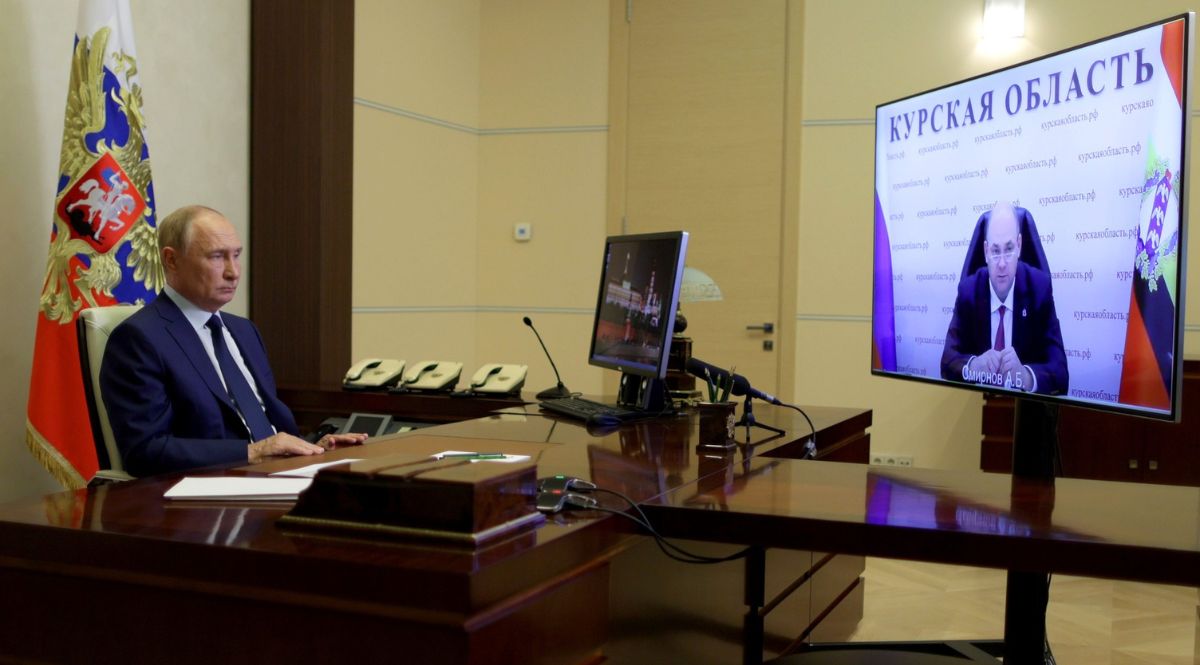
(1).png) Vyacheslav Prokofyev/Kremlin Poo / Zuma Press / Forum
Vyacheslav Prokofyev/Kremlin Poo / Zuma Press / Forum
Recent Terrorist Attacks in Russia
In March, an attack on the Crocus Concert Hall in Krasnogorsk, near Moscow, killed at least 144 people and injured 551. It was one of the largest terrorist attacks in Russian history, only smaller in terms of casualties than the Beslan school attack in 2004. The Islamic State of Khorasan Province (ISIS-K) claimed responsibility. More than 20 people have been arrested in connection with the attack, including four attackers from Tajikistan. Earlier that month, the Russian authorities were warned by U.S. and Iranian intelligence, among others, and Russian services reported that a terrorist attack on a synagogue in Moscow had been foiled.
In June this year, however, a coordinated attack took place in Machachkala and Derbent in the Russian Republic of Dagestan. Religious sites were targeted—a synagogue and an Orthodox church, respectively, were attacked in the two towns—and nearby police stations were also fired upon. The attack left at least 22 people dead (mostly police officers responding to the shootings and an Orthodox priest, who was targeted) and more than 40 injured. It was one of the largest and most well-organised terrorist attacks in the Dagestan Republic in the last decade. It was carried out by a group of five Dagestanis who had been influenced by radical Islam, including the son of an active regional politician and member of the ruling United Russia party. All the attackers were killed during the battles.
Russia’s Experience in Combating Terrorism
Russia has a security apparatus that is prepared to detect and counter terrorist threats. During the period of instability under Boris Yeltsin, Russia faced, among other things, a large number and wide scale of attacks by Chechen rebels and Islamic terrorists. Stabilising the situation was one of Putin’s priorities after he came to power in 2000. Following the attack on the school in Beslan and the botched hostage rescue action by the Russian services that left hundreds of people, including children, dead or injured, Putin decided not only to set up an antiterrorism committee but also to tighten his control over the political situation in the country, for example, by gaining the power to elect the heads of the regions. The appointment of Kremlin-linked local governors, such as Ramzan Kadyrov in Chechnya, has helped to reduce the terrorist threat, although this has been accompanied by repression of the local population. Terrorism has also been mitigated in Russia by the emigration of radical Islamists from the North Caucasus to Syria and Iraq where they have taken up arms with ISIS.
The marked improvement of the security situation in Russia contributed to an increase in public support for Putin. At the same time, the counter-terrorism argument has increasingly been used in domestic and international politics to legitimise violent action against government critics, who are accused of terrorism and extremism. Nevertheless, the terrorist threat in Russia remains real. Domestically, as in France, it is linked to the radicalisation of part of the Muslim population, both native and immigrant, for example, those from Central Asia. Internationally, however, it stems from Russia’s involvement in the Middle East, including fighting on the side of the Bashar al-Assad regime in Syria (including against ISIS) and in strengthening ties with the Taliban in Afghanistan.
The Propaganda Value of the War on Terror for Russia
Putin’s response to this year’s attack near Moscow was swift and decisive, with the fight against terrorism returning to the list of political priorities and backed by the public, which the regime managed to convince that the terrorist acts were part of an external threat to Russia. Although the Russian authorities acknowledged that the attack was carried out by Islamic radicals linked to ISIS-K, they also suggested from the outset that Ukraine was behind the terrorist act. The government stated that the attackers escaped towards that country and were captured about 100 km from the border. The U.S. was also said to be involved in erasing the “Ukrainian trail” in the case. To reinforce the message to the public, Putin, in a speech shortly after the attack, compared the terrorists’ actions to Nazis carrying out show executions to intimidate the population. In this way, the Ukrainian authorities were once again portrayed as a “neo-Nazi regime” against which Russia had to defend itself.
A similar message emerged after the attack in Dagestan, but it was more cautiously worded. Putin did not personally comment on the case, suggesting that the attack, not only on a smaller scale but also on the periphery of the state, was not significant enough for the regime to respond. Responsibility was shifted mainly to the regional authorities. In fact, the only official response from the central authorities was for the Duma to commemorate the victims with a minute’s silence, although this would probably not have happened had several people not been killed and more than a hundred wounded in the Ukrainian missile attack on Sevastopol (carried out on the same day). Comments on the event came mainly from lower-level politicians, although in the absence of an official statement from Putin, they were not unanimous. Dmitry Medvedev linked the Ukrainian missile attack on Sevastopol and the attack in Dagestan, seeing them as actions against Russia, while the United Russia deputy from Dagestan, Abdulkhakim Gadzhiyev, attributed the attack to Ukraine and NATO, suggesting that it was retaliation for Russia’s successes in the war.
The importance of the fight against terrorism for Russia’s current war propaganda is also demonstrated by Putin’s first visit to the ruins of the Beslan school, which have been turned into a memorial. The event is still so well remembered in Russian society that it has served to reinforce the message of Russia’s need to defend itself against an external threat. Putin travelled to Beslan two weeks after Ukraine launched an operation on Russian territory in a visit that was intended to draw an analogy between the fight against terrorists in the North Caucasus and the current fight against “Ukrainian neo-Nazis” in the Kursk region and Donbas, among other places. However, the visit took place just over a week before the official anniversary commemorations in order to avoid a possible encounter with the local population, as the investigation into the attack was never completed. Although Putin attended a meeting with a delegation of three “Mothers of Beslan”, the propaganda material released did not include any statements from the women.
Conclusions
The concentration of the Russian state’s efforts on armed aggression against Ukraine has diminished the involvement of the security services in the fight against Islamist terrorism in Russia. The fact that ISIS-K was able to carry out an attack near Moscow and not, for example, during the Paris Olympics suggests that various terrorist networks may find Russia an easier target for attacks due to the weakening of the Russian services as a result of the protracted war. In light of this, the authorities have adopted tactics to intimidate potential future terrorists. Among other things, videos have been released to media showing the torture of the perpetrators of the Moscow attack and the killings of the ones in Dagestan. This shows that, apart from a psychological impact, Russia is not currently in a position to strengthen its counter-terrorism policy.
The attempt to blame Ukraine and its Western partners in order to divert public attention from the Russian authorities’ ineptitude or disregard for the terrorist threat has been successful. A poll by the respected Russian Levada Centre showed that 50% of Russians believe that Ukraine was behind the terrorist attack, 37% blamed Western special services, and only 11% Islamic radicals. At the same time, the Ministry of Defence reported that the number of people signing up for military service had increased in the short time since the attack near Moscow. Thus, the assassinations strengthened the regime internally, but did not directly translate into Russia’s ability to maintain its involvement in Ukraine or to intensify its hybrid operations against Western states. At the same time, the risk of a recurrence of terrorist attacks in Russia appears to be relatively greater than before the full-scale invasion of Ukraine.


.jpg)