
Resignation of the Zhelyazkov government in Bulgaria
On 11 December, Rosen Zhelyazkov's government resigned under pressure from the largest public protests in three decades, and the following day the National Assembly unanimously accepted its resignation. This paves the way for the next parliamentary elections, the eighth since spring 2021, as it is doubtful that a new ruling majority can be formed in the current National Assembly. However, the outcome of these elections is unlikely to bring about a lasting end to political instability in Bulgaria.
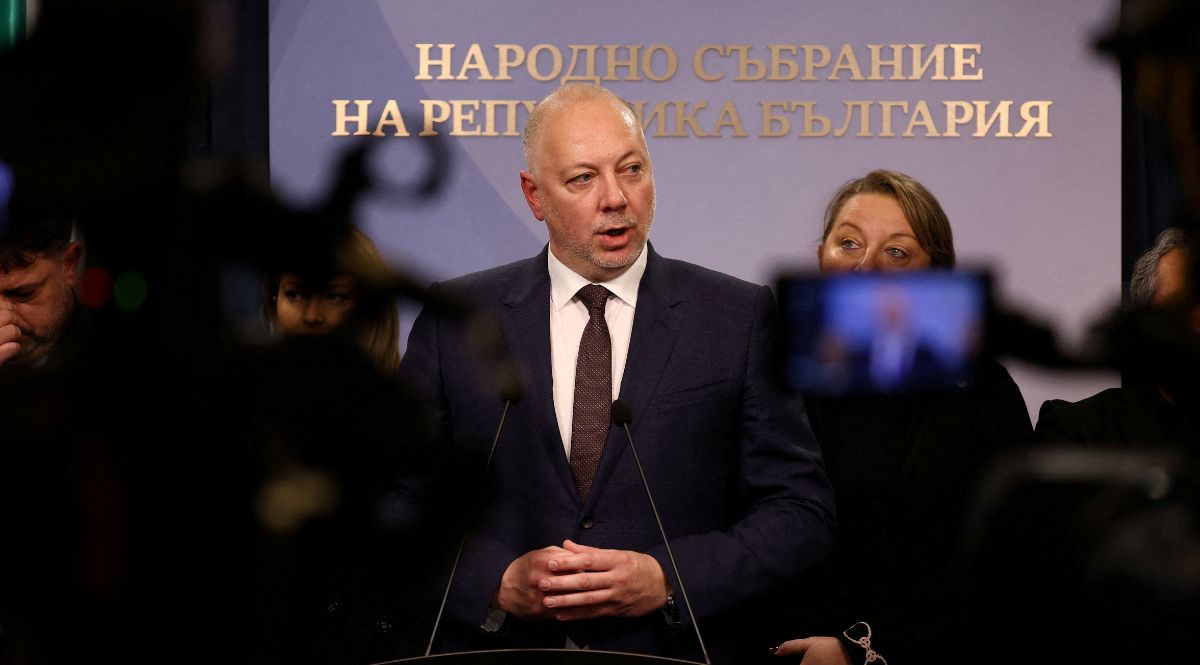 Stoyan Nenov / Reuters / Forum
Who formed the current ruling coalition?
The Zhelyazkov government was formed in January 2025 as an attempt to overcome the permanent political crisis in Bulgaria. After the early elections in October 2024, a fragmented National Assembly was formed by an eclectic coalition of the centre-right Citizens for European Development of Bulgaria (GERB) party, the post-communist Bulgarian Socialist Party, and the populist There Is Such a People party. Its majority was secured by the Movement for Rights and Freedoms-A New Beginning (DPS-NN), which formally remained outside the government and was formed after a split in the DPS, which officially represented the interests of the Turkish minority but was in fact oligarchic. The cabinet of Zhelyazkov, nominated by GERB, took power from the caretaker government of Dimitar Glavchev, which had been in place since April 2024. It had governed the country since the unsuccessful rotation of the prime minister and the collapse of the pro-Western grand coalition of GERB and the reformist We Continue the Change-Democratic Bulgaria (PP-DB).
What did the Bulgarian public protest against?
The direct cause of the protests that started on 26 November, supported by PP-DB and the nationalist and pro-Russian Revival party, was the government's draft budget for 2026. It provided for an increase in the dividend tax from 5% to 10%, and pensionable pay by 2 percentage points. This was intended to finance an increase of salaries in the public sector, but private sector employees saw it as an unfair distribution of the burden. The government withdrew their draft after two days, but the demonstrations turned into protests against systemic corruption–according to the Corruption Perception Index 2024 (Transparency International), its scale within the EU was larger only in Hungary. The demonstrators personally identified structural corruption with the de facto diarchy of GERB and DPS-NN leaders that had ruled for over a decade–long-time Prime Minister Boyko Borisov and oligarch Delyan Peevski, who, as the ‘gray eminence’ of Bulgarian politics, had built up overwhelming influence in the judiciary and law enforcement agencies.
What are the prospects for forming a new coalition?
In accordance with the constitution, President Rumen Radev will give the mandate to form a new government in turn to the two strongest parties–GERB and PP-DB. However, they have announced that they will not accept it, which effectively rules out the formation of a coalition in this term of the National Assembly. As the third step, the president will entrust the mission to whomever he sees fit, and if this fails, he will call early elections. However, according to the 2023 constitutional amendment, this will not result in the dissolution of the current National Assembly, which will continue to sit until the new parliament is convened. Furthermore, this reform has deprived the president of the freedom to appoint a caretaker prime minister of his choice, limiting the circle of nominees to the speaker of parliament, the ombudsman, the governors of the Bulgarian National Bank and the Bulgarian National Audit Office, and their deputies.
How will the current crisis affect Bulgaria's international position?
The fall of the Zhelyazkov government will not stop Bulgaria's already predetermined accession to the eurozone in 2026–the president and the nationalist opposition had demanded a referendum on this issue. However, the lack of regular government may reduce the state's ability to counteract unjustified price increases on this occasion, which may deepen citizens' aversion to the EU and the single currency–according to Eurobarometer, 49% of respondents in November were against its adoption. Similarly, the authorities may not be able to efficiently carry out the forced sell-off of the Burgas refinery, which was placed under receivership. It still belongs to Russia's Lukoil, which was subject to US sanctions in November, and is key to ensuring the country's fuel security. Potential early elections are unlikely to bring political stability to Bulgaria. The formation of a pro-Western regular government will depend on an agreement between the hostile GERB and PP-DB parties, whose previous coalition proved unstable and short-lived. According to a MarketLinks poll conducted in December this year, the National Assembly will remain fragmented, while pro-Russian nationalist parties will gain strength.


.png)