Kenyan Mission to Haiti Demonstrates Revival of African-Caribbean Cooperation
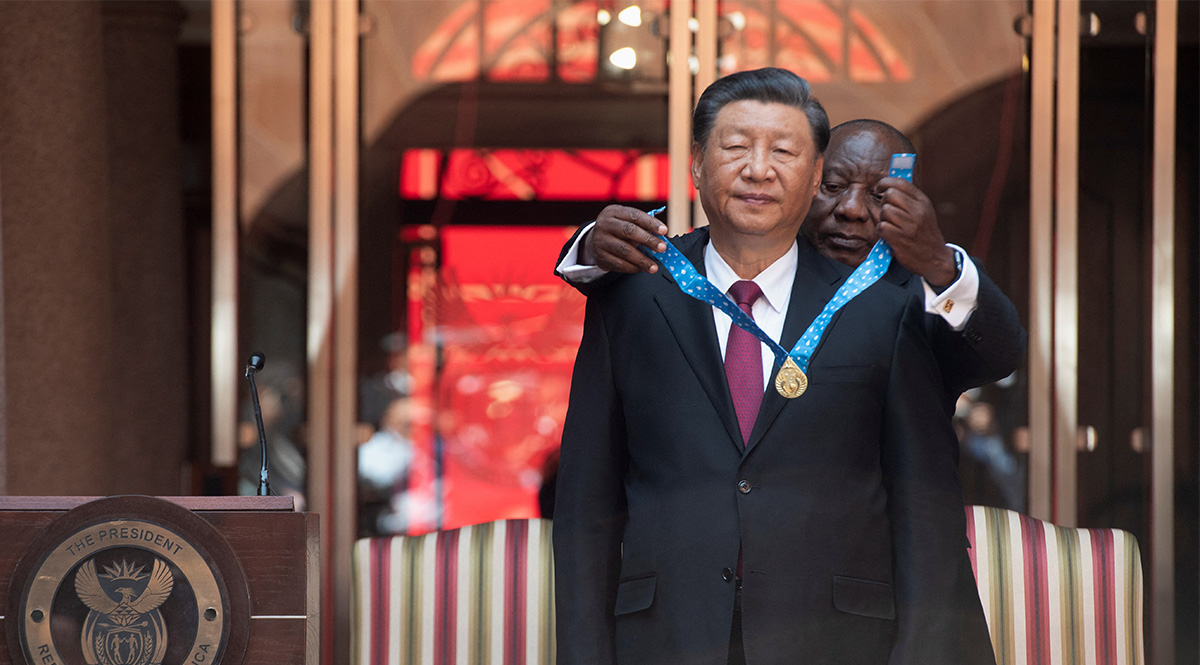
On 2 October, the mandate of the Kenya-led stabilisation mission in Haiti will expire. Its undertaking was the clearest example of growing African-Caribbean cooperation. The two regions also intend to intensify economic cooperation, as well as work more closely together to obtain reparations for the colonial period, as indicated by participants at the second African Union (AU)-Caribbean Community (CARICOM) summit in Addis Ababa.
 ROBERTO SCHMIDT / Reuters / Forum
The Kenyan Mission to Haiti
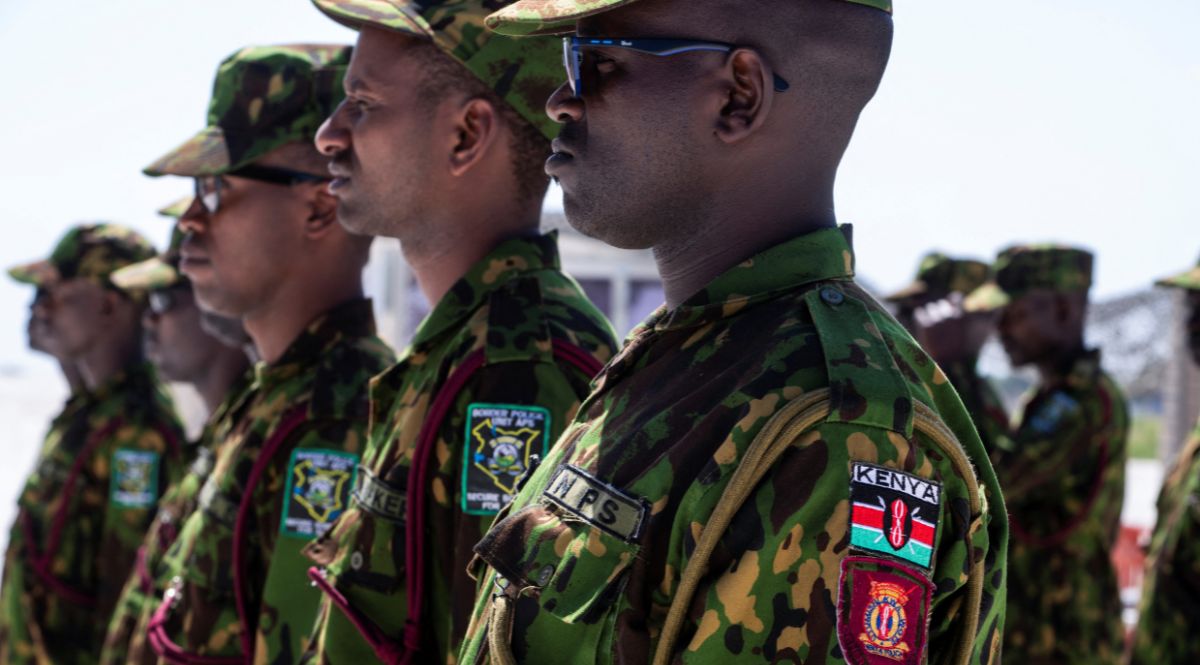
Kenya, responding to a 2022 appeal by Haitian Prime Minister Ariel Henry to help the country contain gang violence and regain control, took on the task of leading a police stabilisation mission to Haiti. The UN authorised it with Resolution 2699 (2023) establishing the Mission for International Security Support (MSS) with a mandate to support the Haitian police in the fight against gangs (with the right to detain criminals), restore security, and set the conditions for elections. On the basis of this, last June Kenya began the deployment of its police force on the island, intending to send 1,000 officers in total (currently, they number around 750). Later, other countries joined the mission by offering police, military police, or soldiers: Guatemala (150), El Salvador (70), Jamaica (24), the Bahamas and Belize (token contingents of a few people), and private military companies. So far, Benin, Bangladesh, Chad, Guinea, and Antigua and Barbuda have not fulfilled their pledges to send troops to the MSS, leaving it short of its target of 2,500 personnel. The mission, although enjoying financial and logistical support from the U.S., was criticised from the start as weak and late. There was therefore pressure from the U.S. side to replace it with a new, larger one led by Latin American states. Finally, on 30 September, the UN Security Council approved a plan to transform the MSS into a 5,500-strong Gang Suppression Force (GSF) within a year.
In many respects, however, the MSS is doing better than anticipated. First and foremost, the experience of the Brazilian-led MINUSTAH mission (2004-2017), which fell into conflict with the local population, was avoided. This was partially due to that fact that the mission is led by black, African officers. Also, cooperation between the MSS and the Haitian police, with whom it conducts joint patrols and operations, as well as training, is improving, resulting in the integration of more groups of Haitian police officers into the service. Although the gangs have not been defeated or significantly weakened, the MSS is not recording serious losses, instead it is gradually expanding its presence in Haiti and has had local success in confronting the gangs. Among other things, this has led to the opening of roads in, for example, the inner city of the capital, Port-au-Prince, as well as Furcy, Delmas, and Thomassin, and it has established bases in areas previously beyond the reach of government forces. The force also regained control of the offices of the civil aviation authority and telecommunications antennae in Kenscoff, which had been seized by the gangs, and drove them out of the Dofunor area, allowing residents to regain access to rice storage.
The Development of Contemporary African-Caribbean Relations
Because of the special ties with the island, inhabited by descendants of African slaves, and especially Haiti, the first black state to win independence in 1804, the AU recognised in 2003 the Caribbean and more broadly the diaspora of people of African descent as its sixth “region”. The impetus for the formalisation of African-Caribbean cooperation came with the 2010 earthquake in Haiti when 24 African countries provided aid in a coordinated manner (Morocco, Ghana, Equatorial Guinea, and the Democratic Republic of Congo being the largest), which was unprecedented for a crisis outside the continent. It reinforced Africa’s image among Caribbean countries as a valuable partner. Therefore, Haiti applied for associate state status with the AU, a request which was rejected on formal grounds in 2015. Guyana sought the support of the AU in international forums to counter Venezuela’s territorial claims. At the 33rd AU Summit in 2020, the organisation called for increased ties with the Caribbean region, which resulted, for example, in joint research and advocacy initiatives, such as the establishment of the P.J. Patterson Institute for Africa-Caribbean Advocacy at the University of the West Indies in Kingston, Jamaica. During the COVID-19 pandemic, the AU’s subordinate African Medical Supply Platform (AMSP) organised vaccine procurement for African and Caribbean countries.
In a 2024 Memorandum of Understanding (MoU), the AU and CARICOM (the latter bringing together most of the island states of the Caribbean region, Guyana, Suriname, and Belize) set out areas in which they will expand cooperation, with an emphasis on trade, investment, or, as influenced by the experience of the pandemic, solidarity in the event of crises, among others. They are also working together to obtain reparations from former colonial metropolises for colonialism and slavery. To operationalise the process, in 2023 they established the Global Reparations Fund. Its future operation has not been detailed yet.
AU-CARICOM Summit
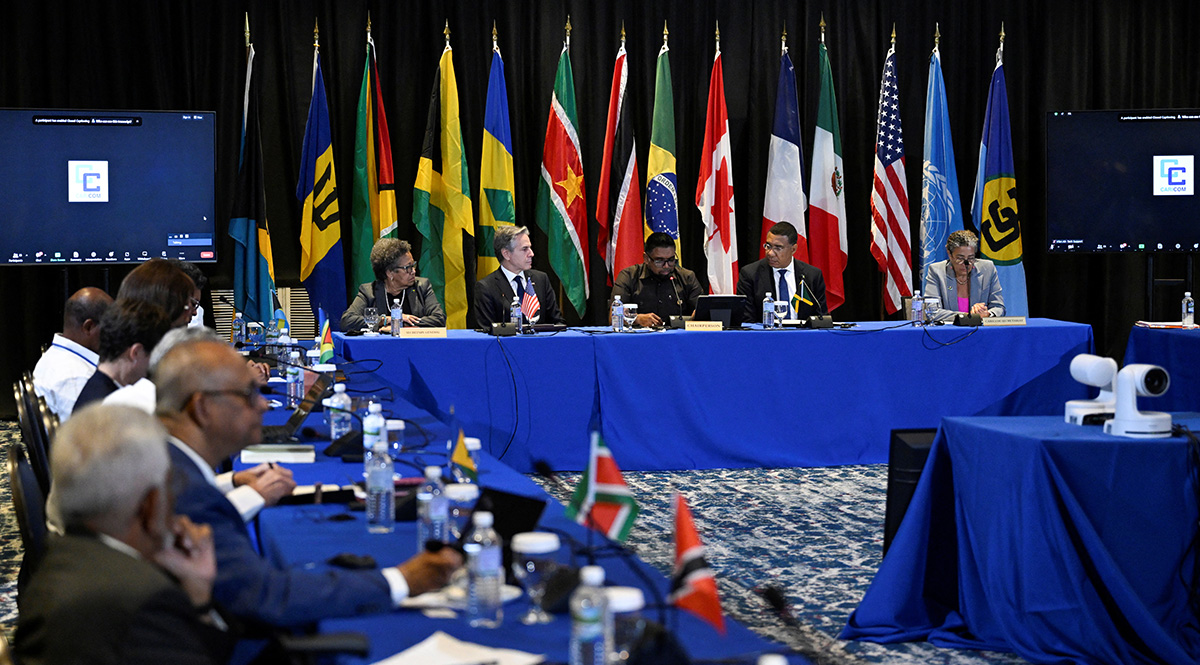
On 6-7 September, the second AU-CARICOM Summit was held in Addis Ababa, Ethiopia. It aimed to broaden and deepen the cooperation formally launched at the previous, virtual summit in 2021, and structured with the 2024 MoU. Joint health institutions were established at that time and the African Import and Export Bank (Afreximbank) opened a Caribbean branch in Barbados and held four editions of the Afro-Caribbean Trade and Investment Forum (ACTIF) in countries of the region (this year in Grenada). There have been inter-regional investments, such as Nigeria’s Air Peace acquiring a 70% stake in the bankrupt Antiguan company LIAT200 with plans for the company to resume passenger and cargo traffic between the Caribbean islands and regular services between Nigeria and Antigua and Barbuda.
This year’s summit, co-chaired by the leaders of Angola (rotating head of the AU this year) and St. Kitts and Nevis (holding the chairmanship of the CARICOM’s Conference of Heads of State), served, among other things, to create the conditions for increased trade and investment. It also aimed to coordinate the positions of the two organisations on the international stage. This includes, for example, issues of reform of global financial institutions and approaches to financing climate resilience (the second African Climate Summit will be held in Addis Ababa in October). In the final declaration, the parties committed to the development of maritime and air transport, the conclusion of double taxation agreements, the loosening of visa regimes (shortly after the summit, for example, Nigeria and St Kitts and Nevis dropped visa requirements for one another), and media and creative sector cooperation. They also announced the establishment of permanent joint sectoral working groups and the organisation of regular consultations and review meetings to monitor implementation. Summits are to be held alternately in Africa and the Caribbean (the next one, in 2028 in Barbados). The parties also called for the lifting of sanctions against Eritrea, South Sudan, Zimbabwe, and Cuba, arguing that they mainly affect citizens of these countries. In addition, a declaration on a Transcontinental Partnership in Pursuit of Restorative Justice for Africans and People of African Descent was adopted to streamline reparations efforts.
Ethiopian authorities used the summit to promote their own image. Prime Minister Abiy Ahmed proposed basing the African-Caribbean partnership on four pillars—harnessing digital innovation in agriculture; supporting the development of start-ups and institutional partnerships; knowledge development in healthcare; cultural diplomacy—which he derived from his medemer (synergy) concept and the tenets of his own policies in Ethiopia. He also invited Barbados’ Prime Minister Mia Mottley to the inauguration of the Grand Ethiopian Renaissance Dam (GERD), where she highlighted the importance of the project to Africa and the Caribbean’s recovery of agency.
Assessment and Outlook
The balance of Kenya’s stabilisation mission in Haiti will be important for maintaining the momentum and visibility of the AU-CARICOM axis on the international stage. The relative success of the MSS and the subsequent gradual transition into a new format will allow Kenya to demonstrate that its contribution to the stabilisation of Haiti has restored the international community’s willingness to take concerted action.
Poland should contribute financially to support the new mission both because of its historical links with Haiti but also as an expression of support for the principles of multilateralism and solidarity in solving crises in the world.
The reinvigorated AU-CARICOM cooperation of recent years serves to strengthen the capacities of both regions to defend their interests in the international arena at a time of crisis of multilateralism. There is a clear political will to build an institutional environment that facilitates the deepening of relations bilaterally and globally. For the EU, it is beneficial, as it fits in with its development goals for the African, Caribbean and Pacific area as expressed, for example, in the 2023 post-Cotonou Samoa agreement. However, the challenge for some of its members will be the intensification of reparations efforts. This will have an impact, for example, on putting the issue on the agenda of the planned AU-EU summit in Angola or the EU-Community of Latin American and Caribbean States summit in Colombia this November. For Poland, this example is worth noting as a point of reference, for example, in efforts to recover looted works of art.