
Goals of further US escalation against Iran
Since 8 July, the US air and missile campaign against selected targets in south-eastern Iran has intensified. This clearly shows the lack of progress in bilateral negotiations and the growing impatience of the US administration. Extending this phase of the conflict is risky and costly for both sides, so they might be forced to agree to another ceasefire and return to talks on nuclear issues and transit via the Strait of Hormuz.
 Middle East Images/ABACA / Abaca Press / Forum
What are the motives and goals of the US operations?
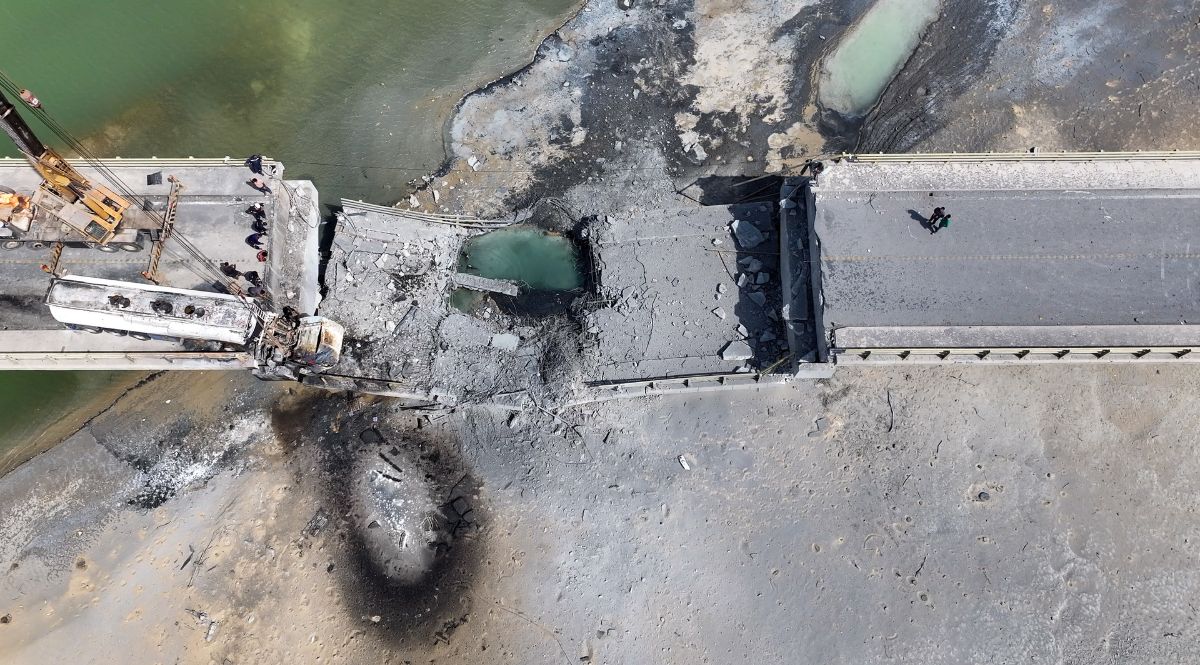
The implementation of the Islamabad Memorandum of Understanding (MoU) between the US and Iran is unsatisfactory for President Donald Trump, despite his initial optimism about the expected results of the nuclear talks and terms of transit through the Strait of Hormuz. Iran’s actions have violated the MoU, and there is no sign it can meet the initial deadline for the final and comprehensive agreement between the two countries, set for 18 August. On 6 July, Iran resumed attacks on tankers in the Strait, with at first only limited retaliation by US forces. However, on 8 July, the US began carrying out systematic airstrikes on selected targets in Iran, mostly concentrated in the southeastern provinces, including logistics hubs, remnants of Iranian naval forces, as well as coastal defence units and some ground troops. The US military priority is to ensure the security of the Strait by neutralising Iran’s still-significant arsenal of drones, missiles, and naval mines. Also supporting these efforts is the reinstatement of the blockade of Iran’s seaports and civilian fleet. These operations are intended by the White House to force political concessions from Iran. According to the media, in the span of two weeks, US aeroplanes, drones, and missile strikes destroyed or damaged over 400 tactical targets—by comparison, during the intense operations in March this year, it delivered 13,000 strikes. So far, and unlike the previous phase of conflict, the US administration has ruled out Israel’s involvement in new operations and carrying out further killings of Iranian decision-makers and negotiators.
What are the options for further US Military operations?
Consultations between Trump and the Pentagon are likely to focus on expanding operations to other targets that may force concessions from Iran. However, most of these will not guarantee the quick results the White House is hoping for, and carry the risk of increasing US military personnel losses and a hardening of Iran’s stance (see details in the Table). In the case of US amphibious assaults on Kharg Island or the islands and coastline around the Strait of Hormuz, Iran would have the advantage in defending them, and then in isolating, harassing, and destroying the US ground forces. An attempt to take back the islands belonging to the UAE that are occupied by Iran would probably result in regional war and draw in other Arab countries. Any heavy bombardment of the Natanz Nuclear Facility’s tunnels (Kolang Gaz-La / “Pickaxe Mountain”, regarded as the primary location for Iran's covert uranium stocks and advanced centrifuge assembly) would make it harder to carry out commando raids to seize the highly enriched uranium stockpiles at this site, as well as in Fordow and Isfahan.
What other limits exist on the US Side?
The US may continue intense strikes on Iran but – regardless of risks for ground troops – a variety of factors limit their capabilities and opportunities. President Trump is now coping with unforeseen and ignored consequences of the war, which was initiated under the strong influence of Israel. The key points of the MoU and Iran’s approach do not offer opportunities for a quick diplomatic solution, and the situation is worsened by the lack of a US professional negotiating team. The war with Iran caused another spike in oil and gasoline prices, inflation, and an unprecedented fall in Trump and the Republican Party’s standings among Americans. Broadening of the US military operations and likely counter-escalation by Iran may demand authorisation of such a war by the US Congress within the statutory 90-day period, and support for this is unclear and doubtful. There are also many structural and technical constraints in the American defence industry. Refilling the expended stockpiles of missiles like JASSM and PrSM will take months, and for the Tomahawk missiles, SM-3, Patriot, and THAAD interceptors, several years of increased production are required. Moreover, deepening Transatlantic frictions have alienated European allies, compounding a broader reality: neither NATO in its entirety nor the majority of its member states possess the willingness and readiness for a sustained war. As a result, European governments remain largely opposed to backing further US-led military operations.
Are comprehensive US-Iran talks still possible?
Despite the US intensified strikes against Iran, the scenario of renewed negotiations in autumn is still possible. The possibility also exists that if there is no progress in bilateral talks, Trump will hand off negotiations on the Strait of Hormuz’s transit conditions to the Arab, European, and Asian countries. Iran, in turn, sees its capabilities to disrupt ship transit in the Strait and the Red Sea (using Yemeni Houthis) as a strong bargaining chip against the US, and treats these on this same level of importance as its nuclear potential, with ship transit fees offering a potential source of additional profits. While interested in continued diplomacy and lifting of the US sanctions, Iran is not willing to give up these strategic advantages quickly and cheaply. Having already survived two wars with the US, the Iranian regime is convinced that it is possible to play for time until it can receive the main concessions outlined in the text of the MoU. At the same time, the acute pre-existing economic problems (and the violent Iranian protests caused by these) are working against the regime in Tehran. These factors all favour resumption of talks with the US, even if full settlement of all disputed issues is now doubtful.
| US military operation goals | Necessary US means and forces | Predicted Iranian military response | Comments by PISM |
|---|---|---|---|
| Neutralisation of Iran’s Coastal Defence Assets | Feasible using forces already in region and USAF strategic bombers | Missile and drone strikes on US bases and allies in region | In progress. Demands several weeks of US strikes without likelihood of full neutralisation of Iranian assets, and with high risk for further escalation |
| Blockade of Iranian Naval Ports | Feasible using US air, naval, and special operations forces within region | Intense strikes on tankers, US bases and allies in region | In progress. Relatively easy to conduct but with high risk for further escalation between US and Iran |
| Escort of Civilian Vessels via Hormuz Straits | US naval forces in region (around 20 vessels) are insufficient to complete these missions | Intense drone strikes and commando raids on tankers plus additional naval mines in Straits | For higher effectiveness, these missions would demand additional US vessels and support units from a “coalition of the willing” |
| Assault and Control of Kharg Island | Marines and/or airborne assault – their units are in the region | Strikes on civilian infrastructure and tankers, defence on the ground plus drone and missile strikes on captured Island | Relatively easy to conduct; however, US control of the island for more than a few weeks would mean increased troop losses and escalation of the war with Iran |
| Control of Coast and Islands Around Hormuz Straits | Marine assault and SEAL raids – their units are in the region | Drone strikes on tankers, lines of communication of US assault forces, ground counter-attacks on their positions | Potential for high troop losses would demand additional US ground forces. UAE assaults on Abu Musa, Greater and Lesser Tunb, are also likely, with a high risk of a long regional war |
| Bombardment of Kolang Gaz-La Tunnel (“Pickaxe Mountain”) Near Natanz Nuclear Facility | Strikes with cruise missiles and strategic bombing with GBU-57 MOP | Missile and drone retaliation on the US forces in the region | Tunnel allegedly protecting stockpiles of uranium and gaseous centrifuges. Relatively easy in implementation but with very limited effects on the nuclear program of Iran. Bombardment would complicate any further U.S and/or Israeli commando raids at targeted locations |
| Seizure of Highly Enriched Uranium Stockpile in Isfahan (Potentially also in Fordow and Natanz) | Elite Special Missions Units (JSOC) with support from Rangers and paratroopers – their units are in the region. | Augmented protection and defence of nuclear sites and ground counter-attacks on US assault forces | Extremely complicated and risky mission, with limited effects on the nuclear program, infrastructure and uranium stockpiles of Iran |
| Prepared by PISM. | |||


.png)