
Breakthrough in the Fight Against Malaria in Africa
At the beginning of this year, the first African countries started malaria vaccination programmes for children. This was made possible by WHO approval of the first two formulas after years of research. Although vaccine manufacturing capacities and delivery logistics remain challenging, the start of vaccination offers hope for a qualitative leap forward in the fight against malaria, Africa’s deadliest disease.
.png) DESIRE DANGA ESSIGUE / Reuters / Forum
DESIRE DANGA ESSIGUE / Reuters / Forum
Malaria, a disease caused by mosquito-borne protozoa, is the biggest health problem in Africa. In 2022 alone, there were 233 million cases (94% of the global total) and 580,000 deaths, 75% of which affected children under five years old. So far, countering the disease has been based on prevention, such as using repellents and mosquito nets at bedtime to protect against malaria-carrying mosquitoes, and avoiding being near standing water, which is their habitat. This has resulted in a decrease in child mortality over the past two decades. Now, a qualitative change, like in the case of polio, could come from the wide use of vaccination, implemented jointly by governments and the WHO. The organisation’s assumption is that if vaccination programmes are successful, by 2030 morbidity and mortality could decrease by 90%, which would also relieve the burden on hospitals and the families of patients.
Vaccine Development
The first vaccine authorised by the WHO as safe, effective, and of adequate quality (prequalified) in July 2022 was “RTS,S”, developed by the UK’s GSK and the U.S.-based Walter Reed Army Institute of Research. It had been in development for about 30 years. Laboratory studies indicated that it could reduce morbidity, especially severe morbidity, by 40%. It is primarily intended for children up to five years of age. After five years of extensive clinical trials in Burkina Faso, Gabon, Ghana, Kenya, Malawi, Mozambique, and Tanzania, a pilot RTS,S vaccination programme started in 2019 in Malawi, Ghana, and Kenya, where there is a particularly high incidence of the disease. More than 2 million children over four years have been vaccinated with the support of the WHO, UNICEF, and Gavi, an international network of organisations working on vaccinations in developing countries. In this group, severe malaria cases dropped by 30% and deaths by 13%. Combined with other measures to protect against mosquitoes, cases fell by up to two-thirds. During this phase of the trial, the safety of the vaccine was confirmed, as well as the positive reception by local communities. Prequalification by the WHO allows it to be ordered by, for example, UNICEF for vaccination programmes supported by UN agencies. In the case of RTS,S, the need to add a chemical immune booster limits its production capacity to about 18 million doses per year, which will not cover the around 60 million orders from the countries most affected by malaria.
In December 2023, the WHO prequalified a second vaccine, R21, developed by the University of Oxford’s Jenner Institute. Its efficacy is estimated to be over 75%. It is simpler and cheaper to produce. The cost of producing one dose is around $2-4 (compared to around $10 for RTS,S). It is also simpler to administer, with three doses given over four weeks (in the case of RTS,S it is over 12 weeks) and a fourth dose recommended after one year (for RTS,S it is necessary). Thanks to an agreement between the R21 developers and the Serum Institute of India, which has the world’s largest vaccine production capacity, it will be possible to deliver 100 million doses per year. This could offset the shortfalls in RTS,S supply. Although initially available data indicated that R21 was more effective than RTS,S, the WHO now states that the use of either of the vaccines has similar effects.
Implementation of Vaccination
At the end of 2023, Benin, Burkina Faso, Burundi, Cameroon, the Democratic Republic of Congo, Ghana, Kenya, Liberia, Malawi, Niger, Sierra Leone, and Uganda received the first tranches of 18 million doses of RTS,S for use by 2025. Cameroon was the first to launch a universal childhood vaccination programme using them. It was accompanied by a state information campaign, tailored to the specificities of the region, and logistical support. The experience was later used in WHO training for health services in Ghana, among others.
The R21 vaccine, based on early estimates of its efficacy and potential for mass production, was approved by Nigeria, Ghana, Burkina Faso, and others, even before full WHO approval. Côte d'Ivoire and South Sudan were the first to start vaccination, in July this year, followed by the Central African Republic (CAR). The latter was the first to introduce it into its routine childhood vaccination programme that includes other vaccines.
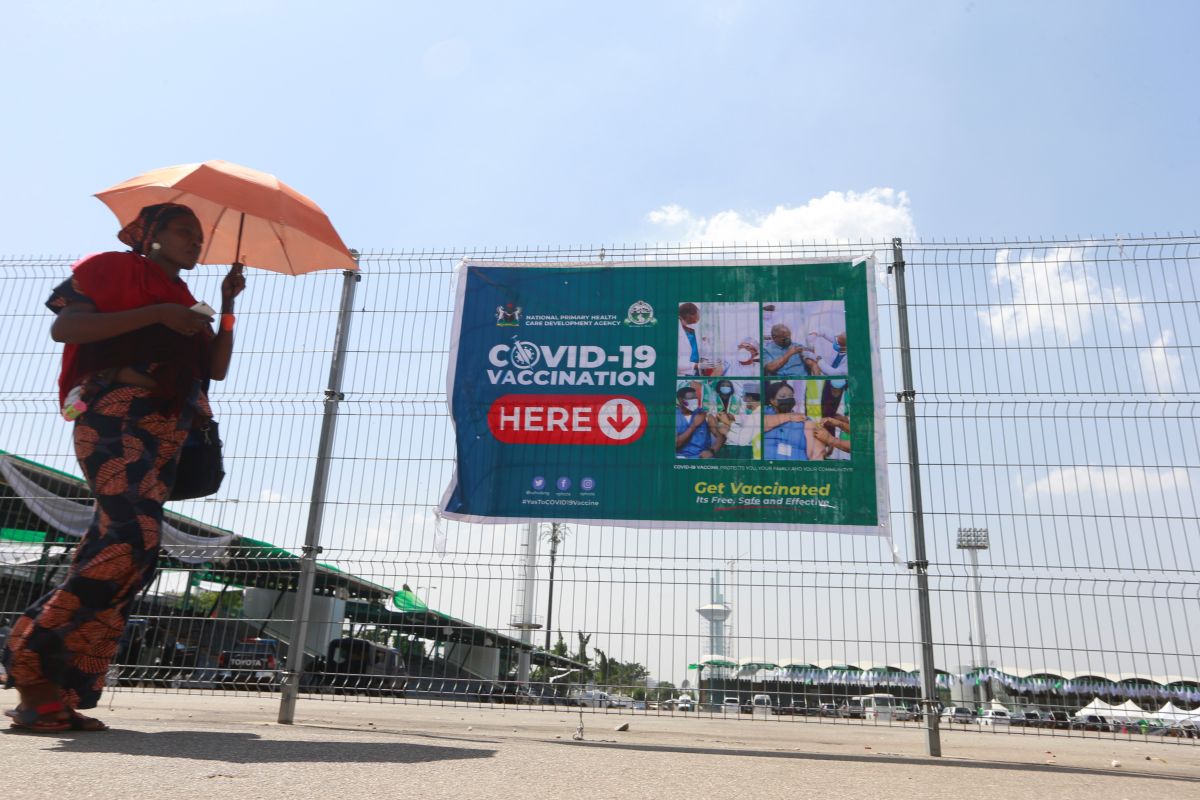
Overall, by the end of 2024, the number of African countries conducting or initiating universal malaria vaccination will approach 20. Countries differ in how they will implement vaccination. While in Cameroon, for example, the programme immediately covered the entire country, in Nigeria it was launched in two provinces, with the prospect of extending it to more. The preparation and launch of vaccination is accompanied by extensive information campaigns involving local journalists, influencers, and community leaders. Gavi’s financial support reduces the cost to state governments to about $0.20 per dose of any vaccine.
Difficulties
The need to administer several doses per person creates the risk, especially in hard-to-reach rural areas, of not completing the full vaccination. Another challenge is storage, as the formulas require storage at a temperature of 2-8o C. Refrigerators powered by solar panels are to be provided by UN agencies, and temperature-monitoring equipment and special containers for vaccine transport will be made available by the African Union’s agency, the African Centre for Disease Control and Prevention (Africa CDC).
Public distrust can also be a challenge, compounded especially by the spread of disinformation through instant messaging and social media. Egountchi Behanzin, a leading pro-Russian and military junta-supporting French-Togolese influencer, often presents vaccination as a dubious medical “experiment”. On the occasion of the Russia-Africa ministerial summit in November this year, State Duma vice-president Irina Yarovaya insinuated that the United States was producing biological weapons on the continent. However, despite these voices, even in countries with an anti-Western orientation, governments strongly support vaccination programmes, such as the president of the CAR, Faustin-Archange Touadéra, who described anti-vaccination campaigns as an “infodemic”.
Besides information, there is also the risk of the possible abandonment of the protective measures (mosquito nets, repellent, etc.) by people convinced that the vaccine provides full protection. However, the intensive information campaigns seem to have helped here.
Assessment and Outlook
The prevalence of malaria in Africa, the very high mortality rate among young children, and the inconvenience of the need for daily protection from the disease make the start of vaccination a long-awaited breakthrough. For this reason, even disinformation is not expected to significantly affect the reception of vaccination by local communities. The limited vaccine production capacity of RTS,S remains a significant challenge. However, the situation is improved by the entry into use of R21 from the middle of this year and the cooperation to increase production with the Indian manufacturer. This offers the real prospect of rapidly achieving vaccination universality in young children, dramatically reducing mortality in children under five and improving the capacity of health systems.
Managing the logistics of vaccination programmes requires crossing political divides. This is the case, for example, in Cameroon, where there are strong separatist currents in the English-speaking part (while the rest of the country is dominated by French speakers), which in 2017 led to the outbreak of an armed conflict that has not been extinguished to this day. Similarly, parts of the territory of the CAR are controlled locally by armed groups. Working cooperation between state authorities, international organisations, and anti-government groups in the provinces can result in lowering tensions in conflict zones.
For the programme to succeed, it is necessary to maintain stable funding for multilateral institutions from major donors, notably the U.S., which contributed $1.4 billion to UNICEF in 2023, covering 15.7% of its annual budget. There are signs that the Trump administration may be reluctant to continue such support. Although the vaccines are primarily for children in malarial areas, demand for them will also grow among travellers. Western countries, including Poland, should avoid hoarding doses for their citizens (even if minimal) as to not slow down the fight against malaria in African countries and to avoid the negative political consequences of such practices, as happened during the COVID-19 pandemic. Poland could also consider, for example, tax incentives for domestic businesses to get involved in vaccine production, which could boost the country’s image in the Global South.

.png)