Another early election in Bulgaria - a fresh start for Rumen Radev
Bulgarian President Iliana Iotova has called a parliamentary election for 19 April, the eighth since 2021 for the country. This follows the resignation of Rosen Zhelyazkov's government in December and the National Assembly’s failure to form a new coalition. Until a regular cabinet is formed, the country is being led by Andrey Gyurov's caretaker cabinet. The elections may result in a victory for the new Progressive Bulgaria party, led by former President Rumen Radev, who stepped down from office in January. If it forms a new government, Bulgaria could abandon its unequivocally pro-Western foreign policy and reduce its aid to Ukraine.
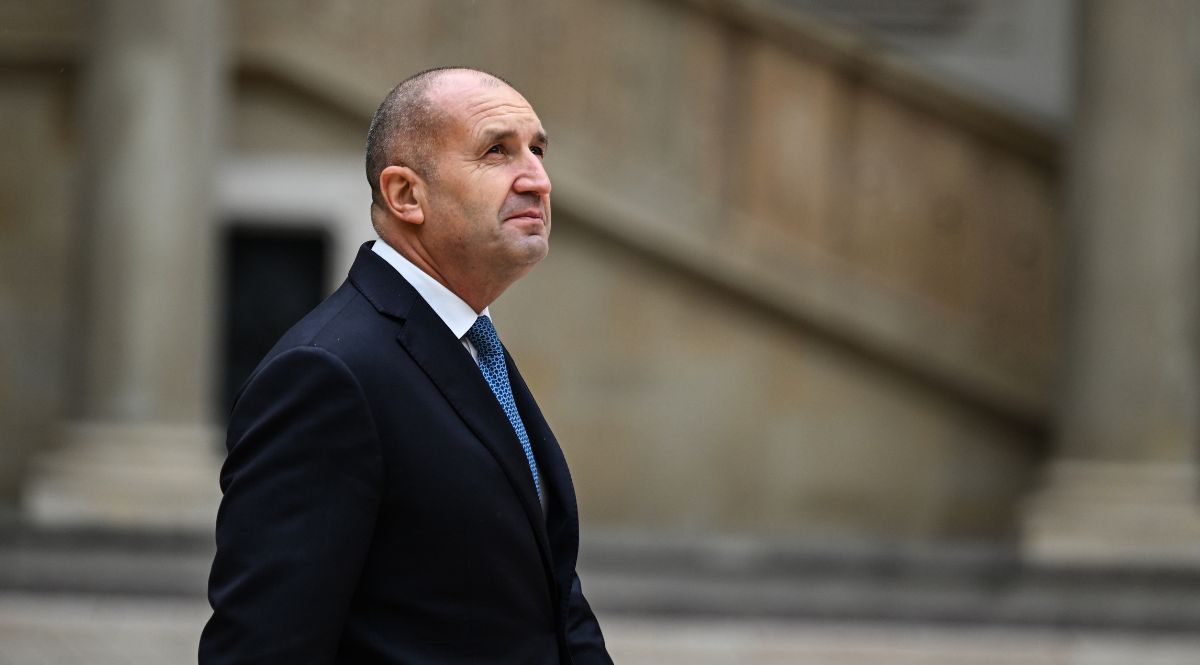 Alekx Kuhn / ArtService / Forum
A permanent crisis
For five years, Bulgaria has been mired in a political crisis which has resulted in seven snap elections. The extraordinary mobilisation of society—following the anti-corruption protests of 2020—led to new anti-establishment parties entering parliament in the spring of 2021. However, they were unable to build a stable ruling majority. The only thing uniting them was the desire to remove the parties associated with systemic corruption from power: Boyko Borisov’s – the prime minister between 2009 and 2021with brief breaks –Citizens for European Development of Bulgaria (GERB) and the Movement for Rights and Freedoms (DPS), officially representing the Turkish minority but in reality advancing the interests of oligarchs Delyan Peevski and Ahmed Dogan. Additionally, the grand coalition of 2023–2024—formed to maintain Bulgaria’s Euro-Atlantic orientation—between GERB and the reformist alliance We Continue the Change–Democratic Bulgaria (PP-DB) led by former Prime Minister Kiril Petkov, collapsed due to a failed rotation of the head of government.
The 240-seat National Assembly of the outgoing term remains fragmented. Since January 2025, the minority governing coalition has been formed by GERB, the post-communist Bulgarian Socialist Party (BSP), and the populist There Is Such a People, with 66, 19, and 16 MPs, respectively. Its parliamentary majority was secured by DPS-A New Beginning with 29 seats, which centred around Peevski following a split in DPS, and previously by a second faction – founded by Dogan, the Alliance for Rights and Freedoms, which now has only 15 MPs. The main opposition group is the PP-DB with 36 MPs, and the remaining seats are held by three nationalist and pro-Russian parties – Revival, Sword (Morality, Unity, Honour) and Greatness – with 33, 11 and 10 MPs respectively.
The fall of the government
The Zhelazkov government resigned under pressure from the largest public protests in Bulgaria in three decades, which were a response to the draft 2026 budget. It provided increases in the tax on dividends and pension contributions, intended to finance pay rises in the public sector. The government withdrew the draft after two days, but the demonstrations turned into protests against the systemic corruption of the Borisov-Peevski diarchy.
The Prime Minister’s resignation paralysed a key international initiative of the coalition, namely Bulgaria’s accession to Donald Trump’s Board of Peace, which would have made it the only EU state other than Hungary to join. Zhelezkov announced the intention to join in January, after the cabinet’s resignation, to counter President Radev, who had earlier rejected the invitation, and the opposition, both pro-European and pro-Russian, which criticised the idea. However, Bulgaria’s entry into the Board is not effective – the caretaker government that followed Zhelazkov's cabinet refused to table a draft bill on ratification. This was called for by GERB, DPS-New Start and ITN, acting in the interests of Peevski, the de facto architect of the accession, who was counting on the US lifting the sanctions imposed on him in 2021 for corruption under the so-called Magnitsky Act.
The President’s resignation
President Radev – an independent, but elected with the support of BSP – unexpectedly announced his resignation on 19 January. It formally took effect a few days later, a year before the scheduled end of his second term. He justified this by his opposition to the oligarchic system’s takeover of the state and the curtailment of his prerogatives – the 2023 constitutional reform restricted the president’s freedom to appoint a technical prime minister by selecting him from among several senior state officials. In fact, Radev’s decision stemmed from a desire to transition to parliamentary politics in the face of the approaching end of his second term and the parliamentary elections, as well as a desire to capitalise on his high public approval ratings. According to Alfa Research, in February, 37% of respondents viewed Radev favourably, twice as many as Borisov, who came second in the poll.
The office of the president was assumed by Vice-President Iliana Iotova (nominated by the BSP) until the end of the current term, with whom Radev had maintained very good relations. By stepping down at this juncture, he delegated to her the appointment of a caretaker government, which allowed him to evade responsibility and criticise the technical prime minister Gyurov, who was previously Deputy Governor of the Bulgarian National Bank. The former president accused him of alleged passivity in the face of threats to Bulgaria’s security and economy linked to the US and Israeli war with Iran, among other issues. At the same time, Iotova’s delay in announcing the date of the parliamentary elections gave Radev additional time to build his political formation.
Radev’s calculations
Radev is positioning himself as Bulgaria’s ‘saviour,’ capable of overcoming the structural political crisis by heading the new Progressive Bulgaria (PB) coalition – comprising three marginal extra-parliamentary left-wing parties. He has publicly pledged to take up an MP mandate after the elections, but—to maintain an image free from party disputes—he has left the formal leadership of the coalition to his loyal lieutenants Galab Donev, a two-time technical prime minister appointed by Radev, and Dimitar Stoyanov, former head of the presidential administration and then defence minister in the Donev governments.
According to various polls from February and March, PB could win the election with around 30% of the vote, which would give it 80–97 MPs. Also entering the new parliament would be GERB (54–70 MPs), PP-DB (32–45), DPS-A New Beginning (21–32), Revival (16–22), and BSP is hovering around the 4% electoral threshold (up to 13 MPs). PB is gaining majority support from a group of around 20% of the electorate who wish to vote but are disillusioned with the existing parties.
As president, Radev adopted a stance that was hostile towards Ukraine and sympathetic towards Russia, and demanded a referendum on adopting the euro, thanks to which PB is attracting up to two-thirds of voters with nationalist, pro-Russian and populist views. Seeking to win them over, but also to appeal to pro-Western centrist and left-wing voters disillusioned by the lack of structural reforms, Radev has avoided speaking out on international issues, merely referring enigmatically to the need for ‘critical thinking within NATO and the EU.’ In doing so, he is mainly criticising PP-DB, which, despite its conciliatory declarations, he accuses of alleged betrayal of ideals and an alliance with the oligarchy. He can then shift the blame for the actions of the Gyurov government onto this party, pointing out that Gyurov was once its MP.
Wishing to retain flexibility in building a post-election coalition, Radev has refrained from attacking Peevski—presumably also fearing a confrontation with the media under his control—and Borisov. PB sees its overriding goal as building the bloc of over 160 MPs necessary to fill key vacant posts, including in the Supreme Judicial Council, which, from 2023, has been unable to elect a general prosecutor. This is in line with Borisov’s statements regarding GERB’s readiness to overcome past differences in the name of the national interest.
Conclusions and prospects
The likely electoral victory by PB, with Radev enjoying high public trust as its leader, could be a turning point on the Bulgarian political scene. This would oblige President Iotova to task this coalition to form a new government. The most desirable partner for PB would be BSP, which is close to Radev, but is hovering on the electoral threshold. However, current polls do not suggest such a coalition would secure a majority. Therefore, in order to head the government, Radev may be willing to cooperate with any group, though likely excluding DPS-A New Beginning, as it is seen as having too negative a public image due to Peevski, who is identified with the corrupt oligarchic system. The success of negotiations and the stability of potential coalitions between PB and GERB or PP-DB may also be affected by the long-standing mistrust between Radev and the leaders of these parties, whilst competition for the same electorate may affect relations with BSP and Revival.
The entry of PB as the leading force into the governing coalition would weaken Bulgaria’s hitherto unequivocally pro-Western orientation. As prime minister, Radev will likely push—with the support of President Iotova—for a nuanced foreign and security policy. He will advocate for a reduction of support for Ukraine and an easing of the restrictions imposed on Russia, but will not undermine Bulgaria’s fundamental commitments within NATO and the EU. The extent of this shift will depend on PB’s potential coalition partners—BSP and Revival would intensify it, while PP-DB and GERB moderate it. This could be disadvantageous for Poland, as it would result in a weakening of the Alliance’s and the Union’s eastern flank and an expansion of the group of states willing to make an agreement with Russia at Ukraine’s expense.


.png)