
Western countries' sanctions offensive against Russia
The renewed sanctions imposed by the US, the UK and the EU will reduce Russia's ability to finance its military operations by hitting the oil and gas sectors, which still generate around 25% of its budget revenue. The sanctions underscore the US's determination to force Russia to end its invasion of Ukraine. As a consequence, Russia's economic problems will worsen, and its economic and political influence abroad, including in certain EU countries, will diminish. However, the effectiveness of the restrictions will depend on how they are implemented by the US, how they are further tightened — especially against the Russian shadow fleet — and whether secondary sanctions are applied.
 Ramil Sitdikov / Reuters / Forum
In response to Russia's refusal to compromise during negotiations to end the war, the US Department of the Treasury imposed new economic sanctions on Russia on 22 October — the first such action taken during Donald Trump's second term as president. The United Kingdom and the EU also took action, adopting their own packages of restrictions on 15 and 23 October, respectively. The introduction of these sanctions was facilitated by the current international and market situation, including the entry into force of the truce between Israel and Hamas, and relatively low oil and gas prices (with the OPEC cartel ready to increase production).
US and UK sanctions
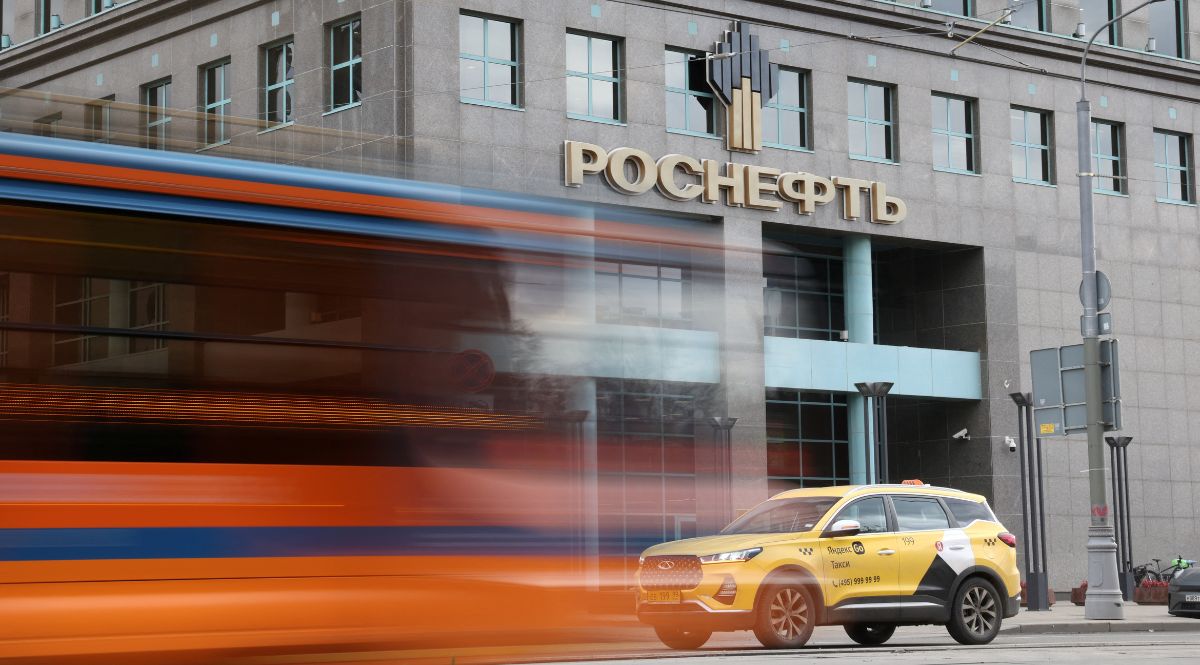
The US has frozen the assets of Russia's two largest energy companies, the state-owned Rosneft and the private Lukoil, as well as those of their 34 subsidiaries. These sanctions will effectively cut these entities off from the financial and insurance markets. The sanctions will also cover their foreign assets, including Lukoil's refineries in the EU (e.g. in Bulgaria, the Netherlands, and Romania) and its investments in the Middle East, the Caucasus, Asia, and Africa. However, they do not apply to the CPC pipeline, which transports oil from Kazakhstan and is co-owned by Lukoil and Chevron. At the request of the German authorities, a six-month transition period was granted for Rosneft's assets in Germany (including three refineries), which have remained under trusteeship since September 2022. US Secretary of State Marco Rubio pushed for the adoption of the restrictions after an unsuccessful telephone conversation with the Russian Minister of Foreign Affairs, Sergey Lavrov, on 20 October. However, signals regarding further US sanctions policy are ambiguous. While the Department of the Treasury has announced its readiness to tighten restrictions, including the use of secondary sanctions, President Trump has indicated that he may ease them in the event of concessions from Russia.
The United Kingdom has also imposed sanctions on Lukoil and Rosneft. Additionally, it has banned 51 more ships from the Russian shadow fleet (including seven gas carriers serving the Arctic LNG 2 project) from providing services and entering its ports. Financial sanctions have also been imposed on foreign entities profiting from circumventing these restrictions, including intermediaries from the UAE and refineries in China and Russia.
The EU's most significant actions
On 20 October, the Council of the EU adopted a regulation obliging all Member States to end imports of hydrocarbons from Russia by the end of 2027. The vetoes of Slovakia and Hungary were overcome through the application of trade policy rules and qualified majority voting. As part of the 19th package of sanctions, adopted on 23 October, the EU accelerated the introduction of a ban on imports of LNG from Russia: all contracts are to expire by the beginning of 2027. Between 2023 and 2024, EU purchases totalling €15.5 billion accounted for around 50% of Russian exports of this raw material. To combat the circumvention of the price cap mechanism, which forces Russia to sell oil and fuels at a discount, the EU has banned the provision of services and entering EU ports for a further 117 tankers from the Russian shadow fleet (557 in total). Financial sanctions have also been imposed on foreign entities supporting this fleet, including two Chinese refineries (Liaoyang Petrochemical and Shandong Yulong Petrochemical), three companies providing ships with false flags, and several companies trading in oil or managing the fleet from China, Hong Kong and the UAE. The EU has also banned EU entities from engaging in financial transactions with ports and maritime services in third countries that serve the shadow fleet, and from providing reinsurance for Russian ships.
The most significant sanctions limiting Russia's arms production are those targeting dual-use products and the military sector. The EU has imposed financial restrictions on several more Russian companies producing, among other things, drones, ammunition and weapons (several hundred in total) and several foreign companies cooperating with Russia in this area, e.g. from the UAE and China. It has extended the ban on exports to Russia to include further dual-use products, including electronic components, rangefinders and chemicals. The export restrictions cover 45 companies due to their links with the Russian defence industry, including companies from China, Hong Kong, India and Thailand.
To counteract sanctions evasion, the EU has imposed restrictions on an additional five Russian banks and a dozen foreign banks, including those from Belarus, Kazakhstan and other Central Asian countries. The EU has banned its entities from conducting transactions via the Russian payment card (MIR) and the fast payment system (SBP). Restrictions have also been imposed on several companies facilitating trading in the rouble-pegged cryptocurrency A7A5.
Russia's reaction to the sanctions and their consequences
The US's imposition of restrictions marks a new stage in the Trump-Putin negotiations. The American administration has begun to act from a position of strength, which has taken Russia by surprise. In response, the Russian authorities have played down the significance of the sanctions, emphasising their futility but also highlighting their hostile nature. Russia's chief negotiator, Kirill Dmitriev, tried to arrange talks with the US administration, but was unsuccessful.
The energy sanctions will worsen Russia's already dire economic situation. According to US administration estimates, Russia's revenues could fall by as much as 30%. Rosneft and Lukoil will have to dispose of their foreign assets quickly, resulting in financial losses. On 30 October, Lukoil announced the sale of assets worth approximately $19 billion to Gunvor, a company owned by Swedish billionaire Torbjörn Törnqvist, who acquired it in 2014 from Putin's trusted oligarch, Gennady Timchenko. Lukoil owns refineries and extraction infrastructure in Iraq, Egypt, Mexico, and EU member states Bulgaria, Romania and the Netherlands. Lukoil's share price on the Russian stock exchange fell by 16% in the first week of sanctions, and the total loss in capitalisation of both companies exceeded $11 billion. Key buyers of Russian oil will reduce their purchases as they await further steps by the US administration. Some importers from China have already suspended deliveries, and companies from India are considering doing the same. To maintain exports, Russia will have to offer higher price discounts, and longer delivery routes will increase logistics costs. Russia will certainly attempt to circumvent the new sanctions. It may use intermediaries, accept payments in currencies other than the US dollar or further develop its shadow fleet. In the LNG sector, Russia may find buyers in Asia, such as China, but it will earn less due to higher transport costs and the need to expand infrastructure and offer discounts. The ban on importing Russian pipeline gas to the EU will, in turn, limit the transit of this raw material in Europe, including to Serbia. Furthermore, EU sanctions on the financial sector and on products key to Russia's arms industry will increase the cost of further militarisation. Obtaining these products while circumventing sanctions will be more time-consuming and costly.
Conclusions
The Trump administration is operating under the assumption that increased sanctions on Russia may lead to concessions in talks aimed at ending the invasion of Ukraine. However, this is not guaranteed, as the sanctions will not immediately cause an economic crisis in Russia. Therefore, it is crucial for the US to adopt additional secondary sanctions in the oil sector, coordinating with the EU and the UK on a price cap for Russian oil and ensuring compliance with sanctions, such as those against the shadow fleet. Restrictions imposed by the EU and UK on this fleet would enable Member States to detain suspicious tankers in the Baltic Sea more effectively. As the EU's sanctions policy increasingly focuses on imposing restrictions on foreign entities participating in the circumvention of sanctions against Russia, strengthening the mechanisms for their implementation is important. For instance, EU member states could authorise EU institutions to conclude agreements with 'flag of convenience' countries, enabling the inspection of shadow fleet vessels in their maritime zones.
The sale of Lukoil and Rosneft assets could limit Russia's economic and political influence in Central Europe. Poland could consider supporting domestic companies in acquiring some of these assets. The ban on Russian hydrocarbon imports from 2028 will strengthen the EU's energy security and could enhance Poland's role as a regional gas hub.

.png)

.png)