Ukraine-Russia Meet for Third Round of Talks
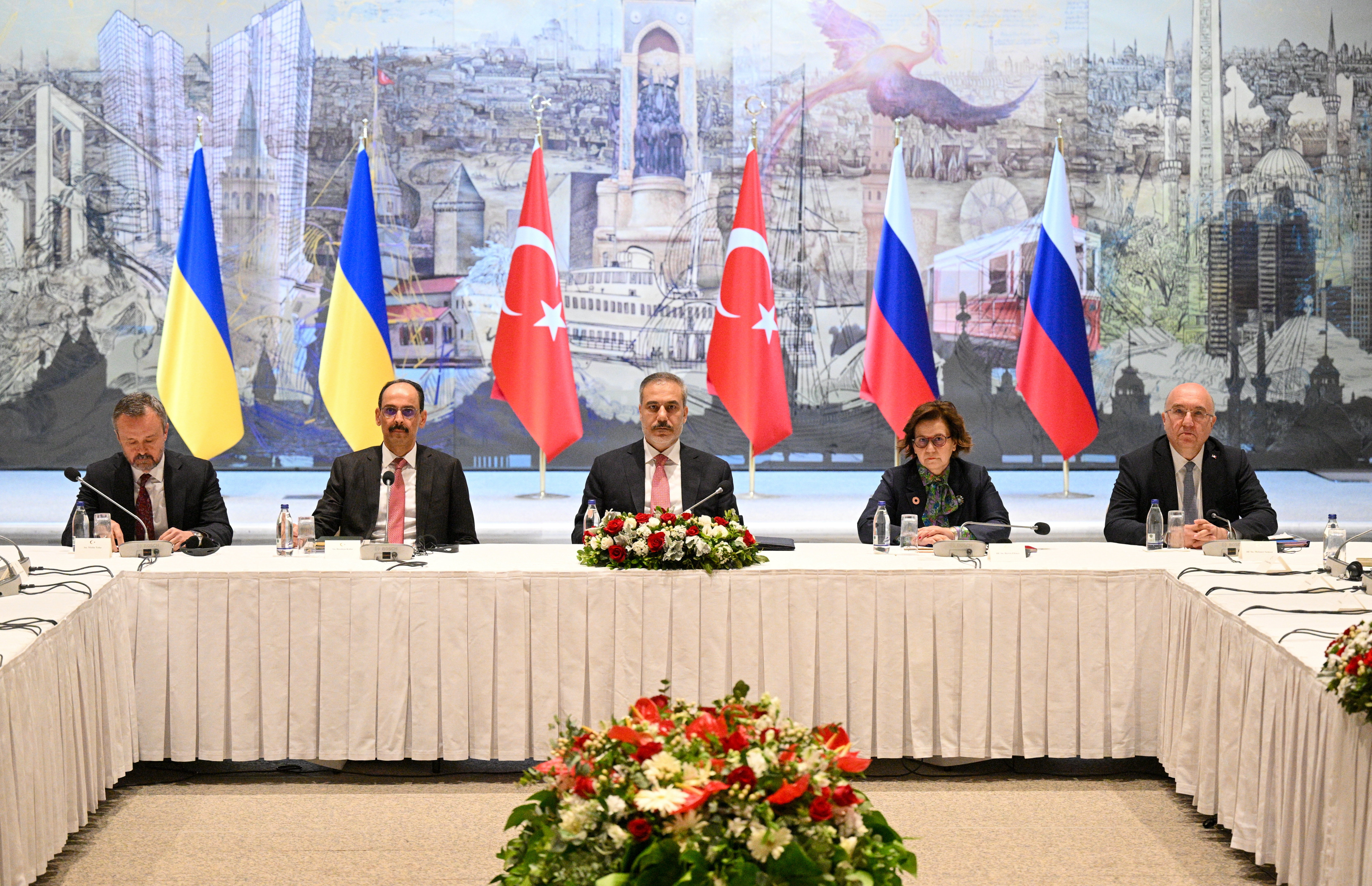
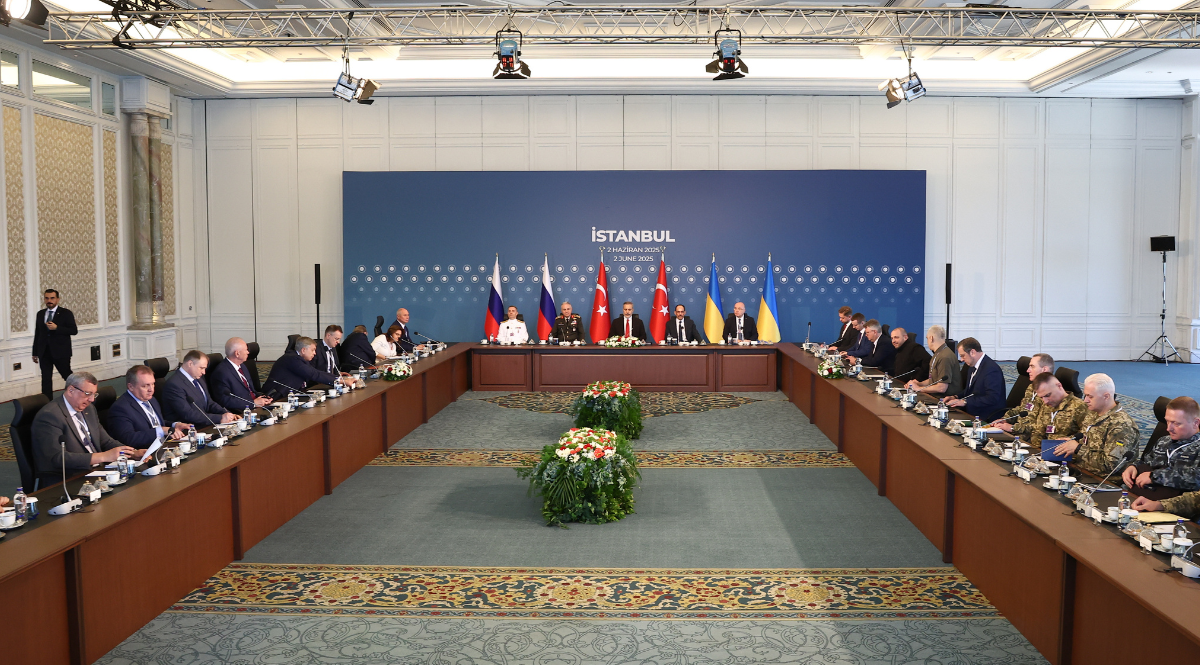
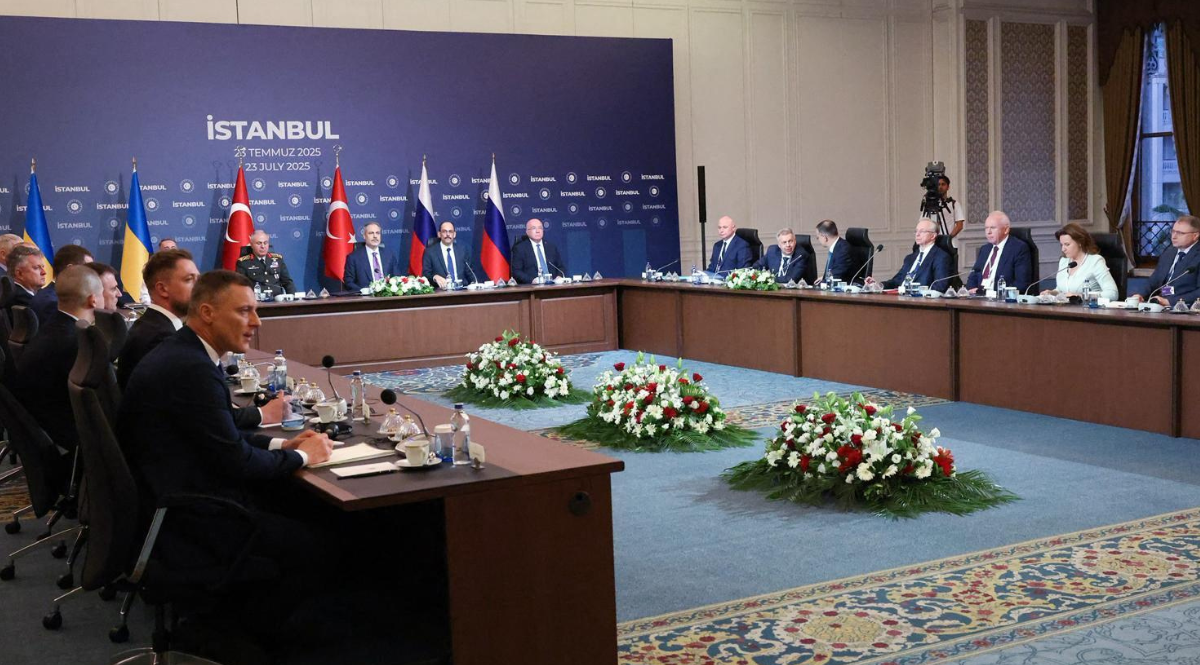
The third meeting between the Ukrainian and Russian delegations in Istanbul that took place on 23 July made no progress towards ending the war. The peace process is still deadlocked, with both sides talking mainly about exchanging prisoners of war. Russia’s position and actions show that the country is not ready to make any real concessions to Ukraine and does not intend to seek a quick end to the war.
 credit: AA/ABACA / Abaca Press / Forum
What was discussed and agreed upon?
The Ukrainian and Russian delegations discussed draft agreements presented at their previous meeting in Istanbul. Yet again, no progress was made towards a ceasefire because of the differences between the two sides’ positions. There is also still no agreement from the Russian side for a meeting between Vladimir Putin and Volodymyr Zelensky, instead Russia proposed to create three working groups (political, military, humanitarian) that would work online. But the two delegations agreed on a further exchange of prisoners of war (more than 1,200 from each side) and a periodic interruption of fighting to exchange severely wounded and sick people on the front line. They also discussed the transfer of bodies of fallen soldiers and the return of abducted children and civilians displaced by hostilities.
What position did Ukraine take?
The Ukrainian authorities believe that real progress in negotiations with Russia is only possible as a result of talks at the highest level, whereas the meetings in Istanbul are mainly of a working nature. For this reason, the Ukrainian delegation set limited objectives, in particular to organise another exchange of prisoners of war and the return of Ukrainian children abducted by Russia. Concurrently, Ukraine once again called on the Russian side to organise a meeting between Putin and Zelensky. Ukraine stressed that the first step towards peace should be a complete ceasefire on land, sea, and air, and, above all, a cessation of attacks on civilian infrastructure, which Russia has significantly intensified in recent months. And only then the next step could be talks on a political settlement of the conflict.
What was Russia’s approach?
The Russian delegation travelled to Istanbul without expecting a breakthrough in negotiations with Ukraine given the two sides’ respective demands. Russian representatives emphasise that their conditions for peace, such as guaranteeing that Ukraine not be allowed to join NATO, are non-negotiable. Nevertheless, for the first time, the Russians showed a constructive approach to the talks (e.g., without threatening or raising historical issues), particularly on humanitarian issues, including the return of Ukrainian children abducted and removed to Russia. Through another round of negotiations, the Russian authorities wanted to show other countries, especially the U.S., that they are still open to talks. They are also trying to avoid a crisis in relations with U.S. President Donald Trump, who has threatened that if no progress is made in the talks by the beginning of September, the U.S. will impose sanctions not only on Russia but also on its trading partners.
What might further peace talks look like?
Russia shows no willingness to compromise with Ukraine and insists on concluding a peace agreement on the terms presented in the June memorandum, which effectively contains the conditions for Ukraine’s surrender. Russia will for now pretend to negotiate, hoping for further territorial gains, a reduction in Western military and financial aid to Ukraine, and fatigue among the Ukrainian population to the extent it begins to demand an end to the war. Therefore, regardless of pressure from the U.S., Russia will continue its offensive, air and drone strikes, and the general war of attrition against Ukraine, which in the long term should significantly improve its negotiating position. It will not be willing to organise a meeting between Putin and Zelensky, emphasising that the purpose of such a meeting should only be to approve a previously agreed deal, a stance which is contrary to Ukraine’s position. The Ukrainian authorities, on the other hand, will insist on further rounds of talks in order to continue the dialogue on humanitarian issues (exchange of prisoners, return of kidnapped children) and to maintain the favour of the Trump administration, hoping that it will increase the pressure on Russia.