The risk of escalation in the West Bank
The situation in the West Bank is steadily deteriorating as a result of Israel’s policies. Benjamin Netanyahu’s government is expanding settlement construction and destabilising the political and economic functioning of the Palestinian Authority, thereby exacerbating instability. Grassroots violence by Jewish settlers against Palestinians is also on the rise, with Israeli authorities taking only limited action to counter it—and often even supporting it.
 Ammar Awad / Reuters / Forum
Israeli government policy
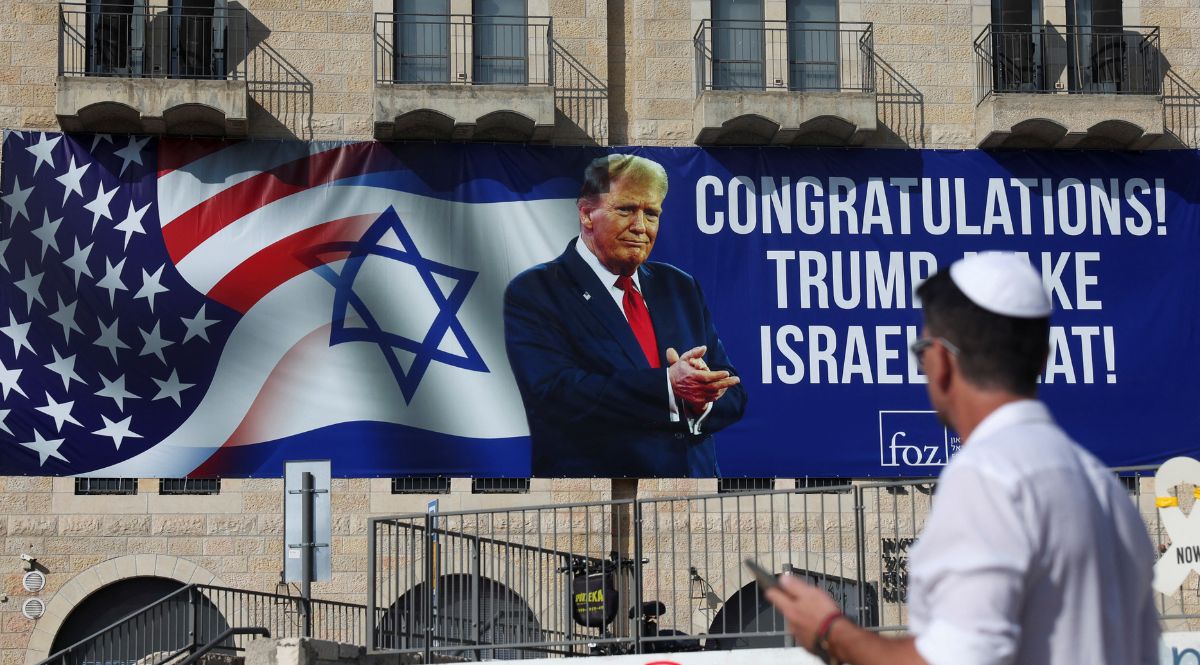
Since Benjamin Netanyahu returned to power in late 2022, the Jewish settlement movement in the Palestinian territories has enjoyed its most favourable political climate in years. The Religious Zionism and Jewish Power parties, which represent this movement, have become the guarantors of the coalition majority. Politicians from these parties have assumed positions that give them direct influence over the actions of the state and its institutions in the West Bank (which is not formally part of Israel); for example, the leader of Religious Zionism, Bezalel Smotrich, serves as the minister responsible for the West Bank's administration. At the same time, a record amount of budgetary funds (approximately $5 billion) has been allocated to the area, and decisions to expand Jewish settlements have been expedited. Since 2023, the government has issued permits or opened tenders for the construction of over 40,000 new housing units. It also introduced legal changes earlier this year that have facilitated the state’s seizure of land and the expropriation of Palestinians, and have led to the legalisation of approximately 100 “outposts”—small settlements that are not only illegal under international but also Israeli law. This radical policy is fuelled by the narrative that settlement activity is crucial to national security, the open undermining of the rights of the Palestinian population, and the deployment of additional military forces after October 7, 2023, to the West Bank, which had already been unstable since 2022. Thanks to an initiative by National Security Minister Itamar Ben-Gvir of the Jewish Power party, Jewish Israelis gained even easier access to weapons, resulting in the expansion and strengthening of paramilitary forces protecting the settlements.
Consequences
While the number of attacks by Palestinians has decreased in recent years, the scale of violence by Jewish extremists has risen sharply. UN data indicate extremist settlers have carried out approximately 3,200 attacks since the beginning of 2025, resulting in the temporary or permanent displacement of approximately 4,000 Palestinians. According to official data from Israeli authorities, there were approximately 800 acts of violence in 2026, representing an increase of more than 50% compared to the previous year. These attacks are ongoing and include acts of vandalism, assaults, arson, destruction of agricultural property (including the cutting down of olive groves and the theft of livestock), as well as murders (approximately 30 since 2023, according to UN data). As in 2024–2025, this year has seen organised raids on Palestinian communities and terrorist-style actions. In March, following the death of a Jewish teenager, simultaneous pogroms broke out in several dozen Palestinian communities. An increasingly common tactic is to block access and cut off Palestinian homes from water and electricity, actions designed to drive out residents and seize their property. This situation is currently unfolding in the town of Qusra, where, since mid-August, the homes of Palestinian families have been besieged by Jewish extremists. Approximately two-thirds of this year’s attacks have taken place in Area A and Area B—both primarily under the jurisdiction of the Palestinian Authority (PA). Settlers are also attempting to establish outposts there, intended to further weaken the PA since Palestinian security forces cannot intervene against Israeli citizens. Members of the government and parliament are also openly calling for the forced displacement of Palestinians from the West Bank or for the termination of the Oslo Accords, which form the basis for the PA’s existence. The settler movement is also attempting to exploit Israeli occupation in other territories. Some activists and politicians have demanded the reconstruction of settlements in the Gaza Strip, while groups of settlers are attempting to establish outposts in southern Lebanon and Syria.
The government has offered moderate criticism of the current wave of violence. In recent years, it has curtailed efforts to combat Jewish extremism, with political pressure affecting the effectiveness of police and Shin Bet operations. In 2024, Defence Minister Israel Katz suspended the practice of extrajudicial arrests of Israeli citizens suspected of extremism, although such arrests are commonly used against Palestinians. In turn, the military’s passivity is influenced by the fact that some of the conscripts serving in the occupied territories are settlers, which—alongside jurisdictional disputes—further impairs the army’s ability and motivation to counter attacks. The authorities’ stance in recent months has created tensions with military command, which views violence by settlers—including acts directed against the Israeli army—as creating a risk of uncontrolled escalation of the conflict. The electoral context is also clear, as right-wing parties, including those in the opposition, are competing to win the settlers’ votes. Consequently, criticism of the situation in the West Bank by opposition politicians is limited. The result is a prevailing climate of impunity, and perpetrators of violence against Palestinians either remain at liberty or receive only limited punishments. In 2026, the Knesset expanded the scope of the death penalty in Israel; however, in its current form, it can de facto be imposed almost exclusively on Palestinians.
Political and international aspects
The destabilisation of the West Bank is part of one of the Netanyahu government’s main strategic goals: blocking Palestinian aspirations for independence and creating conditions that prevent the establishment of a Palestinian state. One of the most important plans in this regard concerns the “E1 corridor”. The expansion of settlements in this area could disrupt the territorial contiguity of Palestine—already limited by the presence of settlements—including by cutting off the West Bank from East Jerusalem. In addition, Israeli authorities are seeking to expand Jewish settlements in Hebron, which would unilaterally alter the city’s status as codified in the Oslo Accords. Furthermore, the transfer of budgetary funds earmarked for the Palestinian Authority (approximately $5 billion) is being withheld, while Smotrich, as finance minister, is also systematically blocking cooperation between the Israeli and Palestinian banking sectors, which could lead to the collapse of the Palestinian economy. The ongoing ban on Palestinians working in Israel is also negatively impacting the PA’s economic situation.
The situation in the West Bank and the authorities’ inaction in the face of escalation have sparked growing opposition from the international community. US Ambassador Mick Huckabee has voiced strong criticism, including describing the settlers’ actions as terrorist acts, and also suggested the possibility of reinstating the sanctions against the settlers that were lifted at the beginning of Donald Trump’s current term. The August announcement of tenders to construct settlements within the E1 corridor sparked sharp protests from European countries. The European Union considers interference in this area a justification for imposing stricter sanctions on Israel, and the United Kingdom has announced similar measures. Measures under consideration now extend beyond the settlement movement to include Israeli companies that support settlement activity, as well as comprehensive restrictions on trade in goods produced in the settlements. Some member states (including Belgium, the Netherlands, and Ireland) have independently decided to impose an embargo on trade in goods from territories occupied by Israel.
Outlook
Hoping to provoke further escalation, the radical Israeli right wing and its political representatives will intensify their actions against the West Bank and the Palestinians. Stronger Palestinian protests and attacks will be exploited to justify further pacifying the area and implementing measures that permanently alter the status quo, such as larger-scale displacements or the legitimisation of settlement activity in Areas A or B. In the event of electoral victory, the far right’s next goal will be to dismantle the structures of the Palestinian Authority. Formal annexation remains unlikely due to opposition from the US and Arab states.
The EU, the Palestinian Authority’s most important partner, must take more decisive action to protect the Authority’s stability. The EU and other Western countries (such as Canada and the United Kingdom) must continue to expand sanctions against Israel’s far right, its politicians, and the organisations that support them. The EU may also consider suspending parts of the Association Agreement with Israel if major settlement projects proceed. However, the requirement for unanimity—alongside resistance from certain EU member states like Germany—threatens to delay sanctions or limit their scope. Opponents of sanctions fear they would hurt Israel’s internal political situation—mobilising the far-right electorate and, as a result, strengthening the radical right in the October Knesset elections.