The potential US withdrawal from NATO under American law
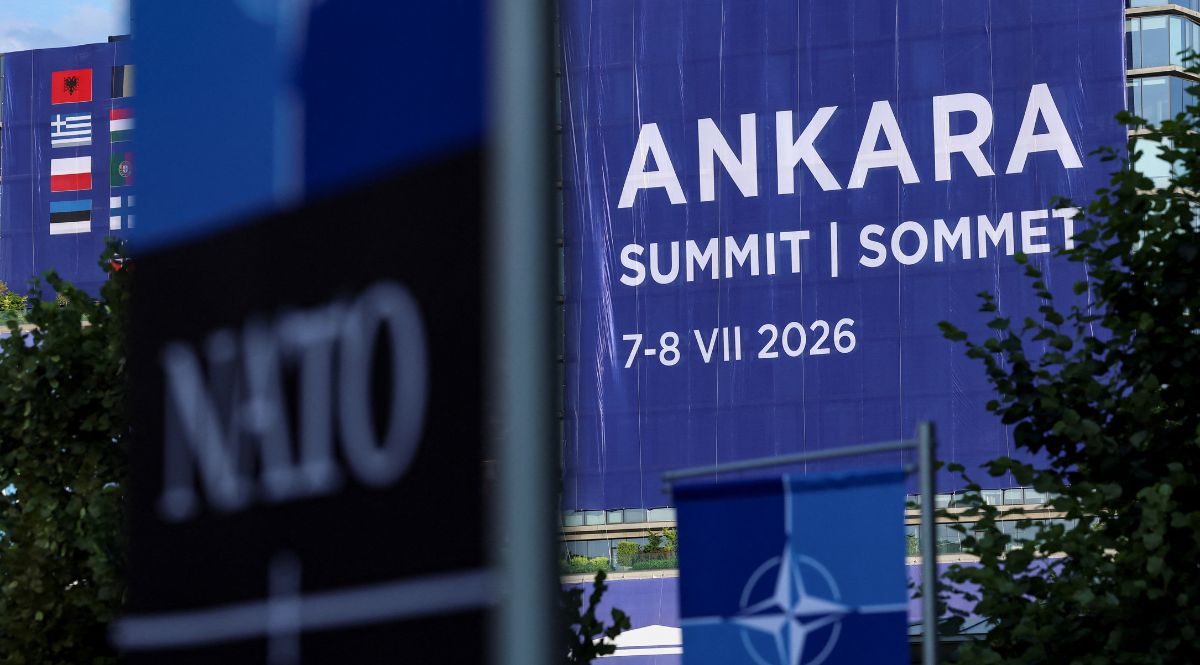
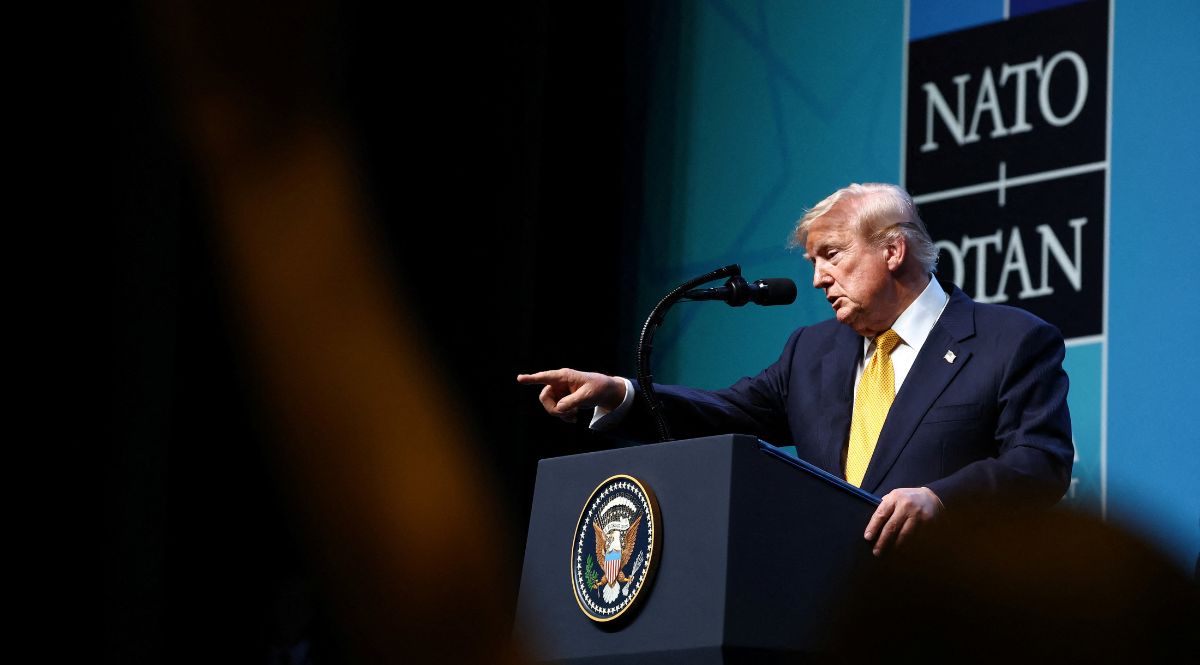
Donald Trump’s repeated questioning of the value of US membership in NATO, combined with proposals for far-reaching reforms of the Alliance, has drawn renewed attention to the potential for the United States to leave NATO. The lengthy withdrawal procedure and the unresolved constitutional dispute over treaty termination make such a scenario unlikely, and the outcome of the NATO Summit in Ankara suggests that there is little risk of withdrawal in the short term. Nevertheless, it cannot be ruled out entirely, particularly given the unpredictability of the American president.
 Stoyan Nenov / Reuters / Forum
Article 13 of the North Atlantic Treaty governs the withdrawal procedure. Under the statutory provisions, a denunciation of the Treaty becomes effective one year after the required notification is submitted. This would create a paradoxical situation for the United States, which would have to address its notification to the US government itself in its capacity as the depositary of the Treaty.
The evolution of treaty termination practice and the escalation of the constitutional dispute
Article II of the US Constitution regulates the conclusion of international treaties by the president. It provides that treaties require the advice and consent of two-thirds of the Senators present. However, the Constitution offers no guidance on treaty termination. Given the shared role of the executive and legislative branches in shaping US foreign policy, this omission has given rise to a longstanding unresolved constitutional dispute over the allocation of powers.
During the early years of the United States and throughout most of the nineteenth century, the prevailing practice was one of cooperation between Congress and the President in terminating treaties. Over time, however, the White House has increasingly asserted the authority to terminate treaties unilaterally, without congressional approval, while Congress has generally refrained from taking a formal position. For example, President William McKinley unilaterally terminated certain provisions of the commercial Treaty with Switzerland in 1899, and President Calvin Coolidge withdrew from an agreement with Mexico on the prevention of smuggling in 1927. Proponents of broad presidential authority rely primarily on the Vesting Clause of Article II, arguing that it encompasses all executive functions relating to international agreements. Opponents, in turn, point to the Supremacy Clause of Article VI, which designates both Acts of Congress and treaties as the “supreme Law of the Land.” They argue that because treaties and statutes hold the same constitutional status, the procedure for terminating a treaty should mirror its conclusion, requiring the joint action of the President and the Senate.
The constitutional dispute intensified in 2019, when Congress enacted legislation requiring the president to notify Congress at least 120 days before withdrawing from the 1992 Open Skies Treaty (OST). The Trump administration ignored this requirement, and in a 2020 opinion, the Department of Justice’s Office of Legal Counsel (OLC) justified this position by asserting that the president possesses exclusive constitutional authority to terminate treaties. The opinion further argued that the congressional notification requirement was unconstitutional, although ultimately only the Supreme Court can resolve that constitutional question. It should be emphasised that before 2020, the executive branch had consistently maintained that the president possessed independent, rather than exclusive, authority to terminate treaties, provided Congress had not expressed opposition. Although OLC opinions are not legally binding and serve only as internal legal guidance for the executive branch, the assertion of exclusive presidential authority demonstrates a clear effort to expand the constitutional powers of the executive.
In 2023, seeking to prevent a unilateral presidential decision to withdraw from NATO, Senator Tim Kaine (Democrat) and Senator Marco Rubio (Republican), now the US Secretary of State, introduced legislation providing that the North Atlantic Treaty could be terminated only with the approval of two-thirds of the Senate or pursuant to an Act of Congress. The proposal was ultimately incorporated into the National Defense Authorization Act for Fiscal Year 2024 as Section 1250A. The protection afforded by this provision is, however, incomplete, as Congress removed a provision during the legislative process that would have expressly granted it standing to challenge a unilateral presidential decision to withdraw from NATO in federal court.
Conditions for judicial review
Judicial review of such a dispute remains possible, although it would depend on satisfying the requirements established by two doctrines: the political question doctrine and the doctrine of standing.
The political question doctrine provides that courts should refrain from adjudicating disputes that are inherently political in nature. US courts have frequently declined to hear cases involving treaty termination on the ground that such disputes should be resolved through negotiations between Congress and the President rather than through litigation. The principal authority is Baker v. Carr (1962), in which the Supreme Court identified the circumstances under which an issue constitutes a non-justiciable political question. Thus, in Goldwater v. Carter (1979), the Supreme Court dismissed a challenge brought by fifteen Members of Congress, led by Senator Barry Goldwater, against President Jimmy Carter’s unilateral termination of the 1954 Mutual Defense Treaty with Taiwan as part of the normalisation of relations with China. However, the argument that such a dispute automatically presents a political question was partially undermined by Zivotofsky v. Clinton (2012), in which the Supreme Court held that disputes concerning the scope of constitutional powers—including those relating to foreign affairs—may be subject to judicial review where they require the interpretation of law. In light of the Court’s more recent jurisprudence and the enactment of Section 1250A, a substantial possibility exists that a challenge to unilateral NATO withdrawal would be heard on the merits, rather than being dismissed as a political question.
The doctrine of standing requires a plaintiff to demonstrate a concrete injury that is fairly traceable to the defendant’s conduct and likely to be redressed by a favourable judicial decision. Consequently, Members of Congress could assert an institutional injury resulting from the impairment of the legal effect of Section 1250A, which they enacted. Private parties might likewise seek to establish standing by arguing that a US withdrawal from NATO would infringe rights arising under other federal statutes, such as those governing defence procurement contracts.
The outcome of any litigation between Congress and the White House would also build heavily upon the Supreme Court’s decision in Youngstown Sheet & Tube Co. v. Sawyer (1952). Under the analytical framework established in that case, the scope of the president’s implied constitutional authority depends fundamentally on Congress’s position. The court identified three categories of presidential action: acting with congressional authorisation (where authority is at its maximum), where the president acts in the absence of either congressional approval or opposition (the “zone of twilight”), and where the president acts contrary to the expressed or implied will of Congress (where power is at its lowest ebb). Because Section 1250A expressly restricts unilateral withdrawal from NATO, such a case would fall into the third category.
Conclusions
The absence of clear constitutional rules and controlling judicial precedents means that any unilateral decision by President Trump to withdraw the United States from NATO would almost certainly be challenged within the American political and legal establishment and would therefore be difficult to implement quickly. Congress would most likely seek judicial review before the US District Court for the District of Columbia, relying on Section 1250A, and the court could issue a preliminary injunction suspending implementation of the president’s decision pending resolution of the case. Such an injunction would only be effective if issued before the United States deposited the notification required under Article 13 of the North Atlantic Treaty; otherwise, it would not affect the one-year withdrawal period. However, because Section 1250A requires the president to notify Congress of the intention to withdraw from NATO at least 180 days before submitting the formal notification, this scenario is plausible.
This would create yet another paradox, as the defendant in such proceedings would likely be the official responsible for formally communicating US treaty withdrawals: Secretary of State Marco Rubio, who was himself one of the principal sponsors of Section 1250A.
Should the courts ultimately decline to enforce Section 1250A, Congress could resort to the political instruments at its disposal, including the appropriations power (for example, by cutting off funding for the withdrawal process), blocking presidential nominations, enacting additional statutory restrictions, or, in the most extreme circumstances, initiating impeachment proceedings. As a result, once initiated, the process of withdrawing from NATO could take longer than the formally prescribed one-year period under Article 13 of the North Atlantic Treaty. Current projections for the congressional midterm elections in November also suggest that, at a minimum, the House of Representatives is likely to come under Democratic control, a situation which would significantly complicate any efforts by the president to bring about US withdrawal from NATO.