The Ankara Summit - a step towards the Europeanisation of NATO
At the Ankara Summit, NATO members reaffirmed their commitment to security cooperation, and transatlantic tensions eased, albeit without disappearing entirely. European countries are significantly increasing their contributions to the Alliance, and the US remains in NATO, although a reduction in American involvement is expected. As a close American ally, Poland has the opportunity to further strengthen its military ties with the US; nonetheless, cooperation with European partners is also becoming increasingly important.
 Yves Herman / Reuters / Forum
Main decisions of the summit
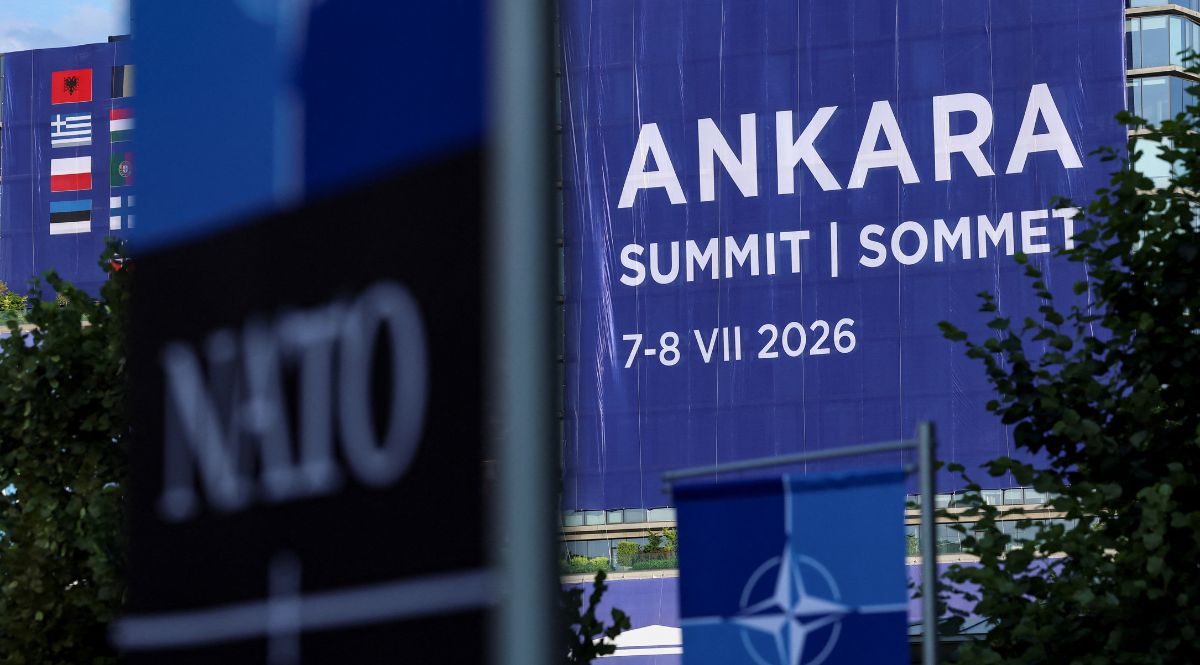
The meeting of NATO heads of state and government held on 7–8 July focused primarily on the progress made in implementing the decisions of last year’s summit in The Hague. In a joint declaration issued in Ankara, the allies reaffirmed their ‘ironclad’ commitment to mutual defence and the maintenance of transatlantic ties. They also confirmed their pledges to work together to counter the long-term threat posed by Russia, increase the responsibility of European NATO member states for their own security, and strengthen the defence industry. Evidence of progress in delivering on these goals was the signing and announcement during the summit of contracts worth over $50 billion. A number of the deals involve the co-production of US armaments in Europe by local firms, including ATACMS short-range ballistic missiles in Germany, Barracuda low-cost cruise missiles in Poland, and anti-aircraft missiles. A group of countries (including Poland) are also to establish a maintenance hub for Patriot interceptor missiles, whilst another group of allies will purchase Triton unmanned reconnaissance aircraft from the US for NATO needs. At the same time, many of the contracts concern equipment offered by European companies, including airborne early warning and control platforms (Saab GlobalEye) and heavy transport aircraft (Airbus A-400M) for joint NATO fleets (Poland has joined both projects). NATO has also announced that it will allocate approximately $40 billion to counter-drone capabilities, as well as €27 billion to the modernisation and expansion of the military fuel supply system, including the integration of the eastern part of the Alliance into the CEPS pipeline network. Several countries also made commitments to strengthen multilateral cooperation in space systems, air defence and the production of artillery ammunition.
NATO members have also pledged to provide Ukraine with military aid worth €70 billion in 2026 and to maintain at least this level of support in 2027. In practice, this will be the responsibility of European countries and Canada, but US President Donald Trump has also expressed greater support for Ukraine than before. He acknowledged that Ukrainian strikes deep into Russia could help persuade it to make peace, and also announced that Ukraine would be granted a licence to produce Patriot missiles. However, fulfilling this pledge requires further arrangements with US industry and is likely to take years—it will not provide a rapid solution to Ukraine’s current shortages of interceptors. Moreover, Trump declared his intent to lift the sanctions imposed on Turkey for its purchase of the Russian S-400 air defence system, which would pave the way for Turkey to acquire F-35 aircraft. However, lifting these sanctions is set to become a point of contention between the US president and Congress.
The United States and NATO’s transformation
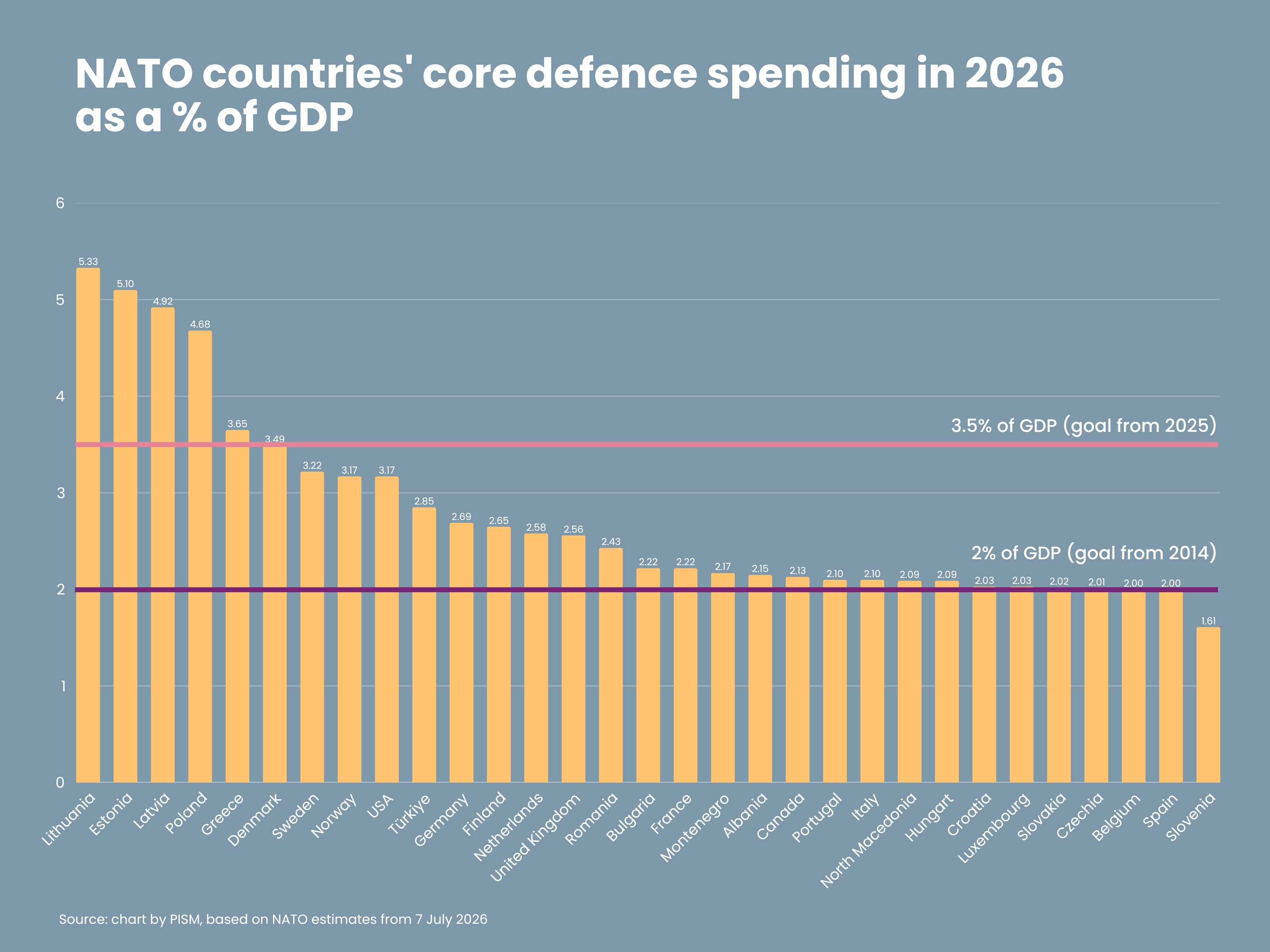
Although at the start of the summit Trump publicly questioned the Alliance’s value to the US, he ultimately regarded the meeting as a success and a sign of NATO’s unity. He criticised some allies for what he saw as their failure to provide sufficient support for US operations against Iran (particularly Spain, as well as Italy, France, the UK and Germany) and for opposing the US’s desire to take control of the Danish territory of Greenland. However, Trump later claimed the allies’ significant progress in fulfilling the spending commitments made at the Hague summit as his own achievement. Under these commitments, NATO members are to increase spending to at least 5% of GDP by 2035, with at least 3.5% of GDP allocated to the armed forces (“core defence expenditure”), with the remainder going towards security-related goals (including civil defence, and enhancing defence industry and transport infrastructure for military use). NATO estimates that this year European countries and Canada will spend an average of 3.93% and 2.55% of GDP respectively on these purposes, and will together account for over 40 per cent of the Alliance’s total core defence expenditure. In 2025 alone, European NATO members and Canada were estimated to increase their core defence spending by a fifth (almost $140 billion). While Trump also emphasised that much of Europe’s spending buys US-made armaments, at the same time, he called for an even faster increase in military expenditures, with his administration pointing out that some allies have not presented plans for reaching the 5 per cent of GDP funding target.
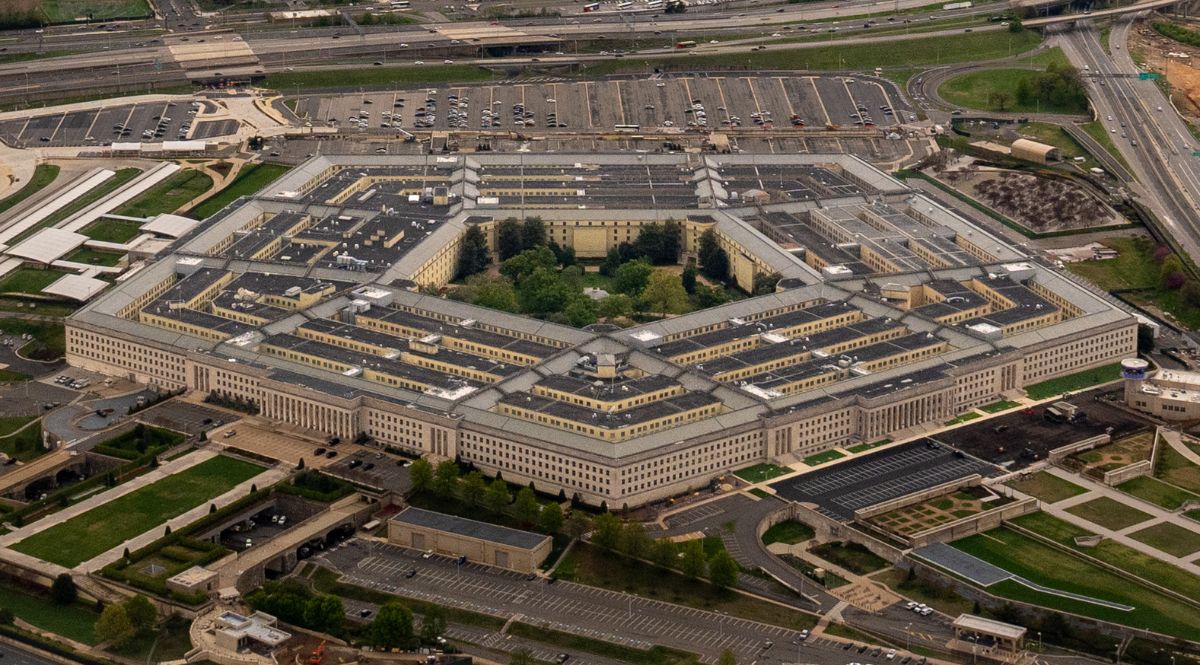
Although the US remains a key member of NATO, the future extent of its involvement is unclear. At the summit, Trump announced no withdrawals of US troops from Europe, but he also did not rule them out. Just last year, the US withdrew an airborne brigade from Romania, and in May this year it abruptly suspended the rotation of one of its two armoured brigades in Poland. Whilst this rotation is due to resume within the next few weeks, the final shape of the US military presence in Europe remains to be determined by a review launched by the US Department of War (the Pentagon) just before the summit. The Pentagon has already indicated that the number of US troops in Europe will be reduced, in line with the ‘NATO 3.0’ concept, under which the Pentagon envisages Europe assuming primary responsibility for its own conventional defence, whilst the US provides it with more limited support and nuclear deterrence. This is intended to allow the US to devote more forces to deterring China and protecting American interests in the Western Hemisphere. The exact outcome of the review may be significantly influenced by Trump’s attitudes towards NATO and its individual members, which could deteriorate if there is renewed escalation of transatlantic disputes. After the summit, the US President explicitly stated that the future of the US military presence in Europe would depend on the allies’ stance on Greenland and Iran. It is in the interests of European NATO members not only that reductions in US military involvement are as limited as possible, but also that they are coordinated with European rearmament efforts, preventing gaps in the Alliance’s military capabilities. Although US and NATO representatives report that the allies have quickly pledged to replace most of the naval and air forces that the US has recently withdrawn from the pool of forces available to the Alliance, for some elements it may take several years to make up for the shortfalls—in particular deep-strike missiles with ranges over 1,000 km. A further European initiative to develop and procure such missiles was declared at the summit, and Germany has agreed to purchase Tomahawk missiles from the US as an interim solution. While the production of American weapons in Europe will help to strengthen defence capabilities and ease transatlantic industrial rivalry, it will not put an end to the tensions arising from it.
Conclusions
The Ankara Summit concluded on a positive note for the Alliance, including Poland, but a number of challenges remain, relating to the Europeanisation of NATO and uncertainty regarding the future of US involvement. Most importantly, the meeting prevented a permanent transatlantic rift, reducing the likelihood that Russia will test NATO's solidarity, especially through extreme methods, such as missile attacks or the occupation of allied territory. Such probing cannot, however, be ruled out, particularly the employment of lower-risk tactics such as sabotage or drone incursions. This danger would intensify if transatlantic disputes flare up again, which remains possible, in part given the ongoing friction over Greenland. The praise heaped on Poland by President Trump and his administration at the summit, along with the ongoing bilateral negotiations, indicate the possibility of strengthening the permanent US military presence in Poland. For Russia, this would increase the risk that a direct attack on Poland would trigger a conflict with the United States. An enhanced US posture in Poland would therefore substantially strengthen deterrence, helping to offset the effects of likely reductions in other US forces. However, given the expected further cuts in the US’s overall contribution to NATO’s defence capabilities, it is becoming increasingly important to also strengthen cooperation with European states (including within the E-5 format, in which Poland met at the summit). The progress already made by European allies in fulfilling their Hague commitments is important for Poland’s security, although this process will require political will and significant investment for many years to come. A major success for Poland is the decision to integrate it and the other eastern flank countries into the CEPS system, which will substantially enhance the supply of fuel to Polish and allied forces in the event of a conflict.
.jpg)
.jpg)


(1).png)