The Impact of Purges in the Chinese Army on Its Effectiveness
Xi Jinping, as the Party’s secretary general, continues to strengthen his personal oversight of the Chinese armed forces, as evidenced by disciplinary actions against Zhang Youxia, vice chairman of the Central Military Commission. Combined with the purges that began in 2022, the growing atmosphere of uncertainty, and the increasing pressure to demonstrate loyalty to Xi, this raises the risk that the authorities will misjudge the condition of their armed forces. This may increase the likelihood of escalation, for example, towards Taiwan.
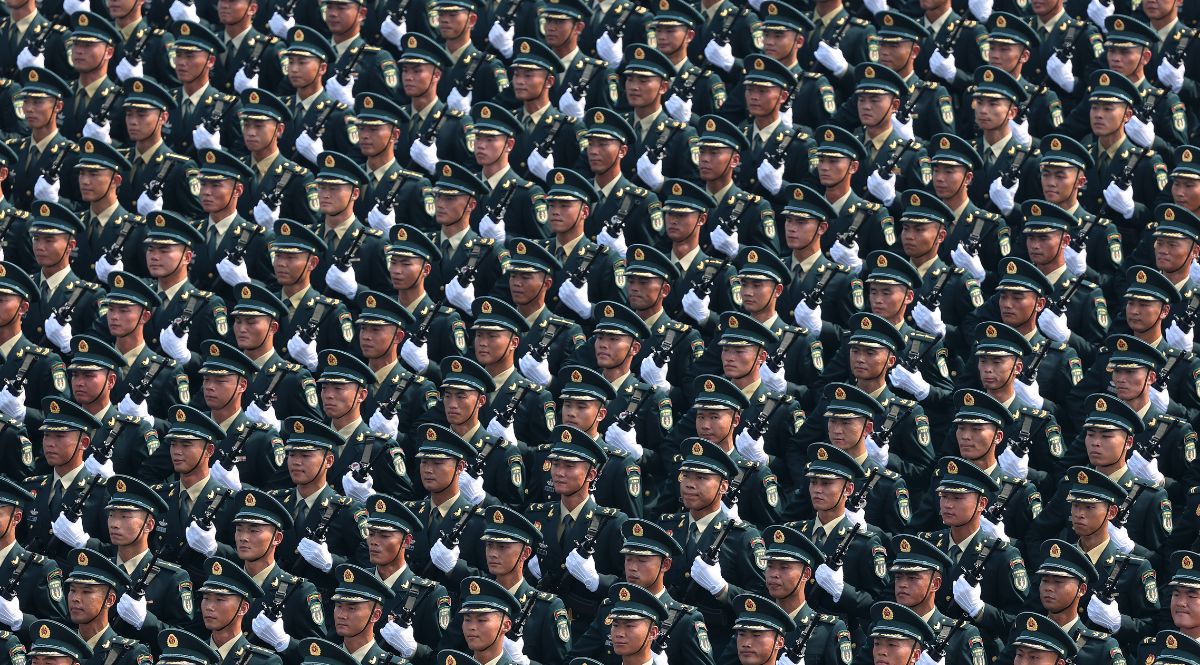 Guo Yu / Xinhua News Agency / Forum
In 2015, a reform of the armed forces was launched at the initiative of Chinese Chairman Xi Jinping. It aimed not only at modernisation and structural changes, but also at strengthening the CCP’s—and Xi’s own—control over the military. The introduced changes particularly affected the command structure, including the army’s most important governing body—the Central Military Commission (CMC). Xi, in his capacity as General Secretary of the CCP and chairman of the PRC, has headed the CMC since 2012. At that time, the CMC had 11 members, but by 2017, the 19th CPC Congress had reduced their number to 7. Xi Jinping alone (in consultation with other CMC members) makes decisions regarding the use of the armed forces or their organisation. Other CMC members and high-ranking commanders are responsible for implementing these decisions. The key factor for the system’s effectiveness, therefore, remains the scale of the loyalty to Xi of these commanders (and of their protégés in subordinate positions). An attempt to ensure this loyalty was made through the first disciplinary cases initiated between 2013 and 2018 against two then-former vice-chairmen of the CMC (General Guo Boxiong and General Xu Caihou), as well as against its members (General Fang Fenghui) and department directors (General Zhang Yang, who committed suicide during the investigation in 2017). By 2022, most of the officers who were protégés of commanders facing disciplinary proceedings had been replaced with individuals loyal to Xi, mostly via corruption charges. In 2022, the 20th CPC National Congress also elected a new seven-member CPC Central Committee, with Xi once again serving as chairman.
The dynamics of changes
Since 2022, the nature of dismissals has changed, and the purge has entered a new phase. Most of the officers removed after that date had been appointed during Xi’s tenure, after 2013. According to the CSIS database, of the 47 generals who either held that rank in 2022 or were promoted to it later, 41 had been dismissed by early 2026. This applied to both political officers (commissioners) and operational roles. The process included representatives of various branches of the military, primarily rocket and strategic forces (Vice Admiral Shang Hong in 2022; General Lu Yuchao in 2023), members of the Central Military Commission (Admiral Wei Fenghe in 2023, Admiral Miao Hua in 2024, General He Weidong in 2025), as well as theater commanders (General Li Zhizhong in 2024, General Hu Zhongqiang in 2025). As part of the purges in August 2023, Defense Minister General Li Shangfu, who had also been a member of the CPC Central Military Commission since 2022, lost his position. His successor, Admiral Dong Jun, became a member of the government in December 2023, but has not yet been nominated to the CPC Central Committee. The scale of the changes was confirmed by the list of absent generals during the CPC Central Committee plenum in October 2025, when more than 20 of the over 30 officers elected to the Central Committee in 2022 failed to appear. Additionally, on March 4 of this year, prior to the opening of the Chinese parliament’s session, its Standing Committee stripped a total of 9 high-ranking officers of their mandates, as well as removing 6 deputies representing companies in the defence, aviation, and nuclear industries.
In January of this year, the Ministry of National Defense of the People’s Republic of China confirmed the initiation of disciplinary proceedings against the first-ranking vice-chairman of the Central Military Commission, General Zhang Youxia. He is a distinguished officer who, despite having reached retirement age, was elected to the CMC in 2022; he is the last veteran from the Vietnam War still on active duty. At the same time, an investigation was announced against General Liu Zhenli, another member of the CMC. Corruption and abuse of power were cited as the reasons, and regarding Zhang, the party additionally attempted to suggest (mainly through leaks to foreign media) that he may have collaborated with US intelligence. Xi also spoke about the need to combat corruption in the military on March 7 of this year during a meeting with armed forces delegates at a session of the Chinese parliament.
Zhang’s case may have stemmed from his power struggle with Xi. The general reportedly did not accept the CCP’s increasing oversight of the military under the so-called “chairman responsibility system” promoted by Xi. The system emphasises the paramount role of the party’s general secretary as chairman of the Central Military Commission. Xi was also reportedly dissatisfied with the progress of reforms to the soldier training system and the state of the strategic forces (e.g., neglected silos and low-quality fuel for ballistic missiles). Thus, of the seven CMC members elected in 2022, the only ones who retain their positions are Xi and General Zhang Shengmin, head of the Central Military Commission’s Discipline Inspection Commission and (since October 2025) vice-chairman of the CMC.
Potential consequences for the Chinese military
The purge is having a negative impact on the Chinese armed forces. Vacancies in the Central Military Commission, the commands of the various branches of the armed forces, or individual theatres of operations may cause delays in training and hinder the achievement of the desired level of readiness, while also negatively affecting the morale of senior and mid-level commanders. According to CSIS data, as of 2022, vacancies have been filled in only 11 of the more than 52 high-level positions from which commanders were removed. Compounding this is a sense of surveillance and the need to constantly reaffirm loyalty to Xi, which—according to new regulations announced this year by the CPC Central Committee—is to be overseen not by military but by party (civilian) bodies responsible for political and disciplinary affairs (officially, this is due to a shortage of officers). The atmosphere of suspicion and the threat of dismissal, in addition to disruptions in the decision-making process at lower levels, may also lead to commanders distorting their descriptions of the situation. This may stem from fears of being held accountable for failing to meet reform-related commitments. The impact of changes in the Chinese military on its operations also extends to military diplomacy. Since January of this year, China’s Minister of Defense has met only once with a foreign counterpart (from Russia), whereas in 2025, he held meetings with foreign delegations several times a month. However, the purges did not hinder the smooth organisation of military exercises in the Taiwan Strait in 2024–2025, though the changes had affected the Eastern Theater Command responsible for that region.
In the context of the CPC Congress scheduled for fall 2027, the purges also mean that the military establishment is being stripped of its influence over decisions regarding the future composition of the state’s civilian authorities. During the congress, a new composition of the CPC Central Committee will be elected, which means that a mechanism for coordinating the filling of key positions is gradually developing within the party. Investigations and disciplinary proceedings against military officers may therefore also serve to ensure the loyalty of commanders in the event of a possible change in Xi’s current role, such as stepping down as Chairman of the PRC while remaining in his positions as head of the Central Military Commission and General Secretary of the CCP.
Conclusions and Outlook
Disciplinary cases and dismissals within the military have been a constant feature of the changes in the Chinese armed forces since Xi came to power. One of the stated goals is to achieve, by 2027, the capability to effectively project power against Taiwan and across the broader Indo-Pacific region.
To ensure that any decision by the civilian leadership to escalate militarily—a move that by its very nature would have enormous consequences for China in many respects—is carried out, it is essential above all to consolidate Xi’s oversight of the armed forces as General Secretary of the CCP. Particularly significant in this context is the new decision-making process within the CPC Central Military Commission and Xi’s growing—though, as the purges demonstrate, still incomplete—freedom in this regard. Full subordination of the military to the party’s decisions and a potential reform of the CPC Central Military Commission by curtailing the rights of other members are, in Xi’s view, crucial for modernising the armed forces and achieving the goals set for the coming years regarding readiness for offensive operations.
At the same time, the purge does not alter China’s objectives regarding Taiwan, its cooperation with Russia, or, more broadly, its rivalry with the US in the Indo-Pacific. However, the shortage of experienced officers in the command structure, as well as the creation of a one-man, centralised command model, may lead to errors in assessing the capabilities, level of modernisation, and readiness of the Chinese armed forces, as well as the capabilities of the adversary. The experience of Zhang Youxia and other dismissed commanders, along with their knowledge of the army’s actual condition and the resulting realistic capabilities for achieving China’s political objectives, may also—in the assessment of Xi and the Party—have hindered the development of overly optimistic offensive plans for China, likely primarily against Taiwan. The continuation of planning in this regard may be evidenced, among other things, by the intensification of China’s military cooperation with Russia, manifested, for example, through contacts between their armed forces at various levels, despite the purges in the Chinese military. For the European Union, NATO, and especially the countries on its “eastern flank,” including Poland, changes in the CMC that make it easier for China to make a potential political decision to escalate activities in the Indo-Pacific increase the likelihood of Russian provocations and hybrid operations in Europe. This confirms the direct link between China’s actions and the security situation in Europe.