The first six months of Friedrich Merz's government in Germany
Upon taking office as chancellor in May this year, Friedrich Merz announced profound internal reforms and a strengthening of Germany's international position. However, the need for compromise within the coalition of the Christian Democratic Union (CDU), the Bavarian Christian Social Union (CSU), and the Social Democratic Party of Germany (SPD) limits the chancellor's effectiveness. Meanwhile, economic stagnation and the slow pace of reforms have resulted in growing public dissatisfaction with the government, which is benefiting the far-right Alternative for Germany (AfD).
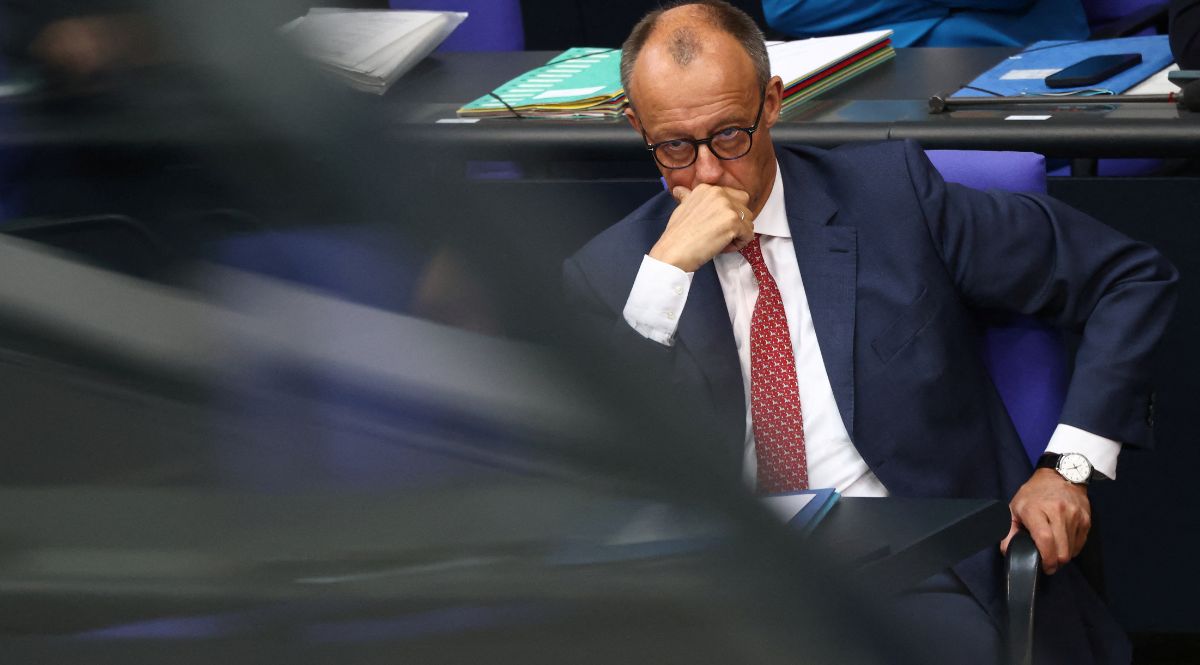 Liesa Johannssen / Reuters / Forum
Initial successes in economic and migration policy
The biggest change in the German economy is the financial package adopted in March this year, before Merz's government was formed. By easing debt rules, it provides additional funds for investment in infrastructure, climate protection, and defence. Its beneficial impact on the economy will be felt to a limited extent in 2026 at the earliest. According to government forecasts, GDP growth will be only 0.2% this year, and 1.3% and 1.4% in the next two years. However, Merz's government has not addressed the structural barriers to development, as it has not yet fulfilled its promises to reduce bureaucracy—draft legislation in this area is still in the preparatory stage. Meanwhile, according to a November 2024 report by the IfO Institute in Cologne, bureaucracy hinders investment and economic activity, causing annual losses of 146 billion euros.
In addition to combating economic stagnation, the chancellor's priority is to curb illegal migration to Germany. The government has tightened border controls, including at the border with Poland, which means that Schengen rules remain suspended. These measures were taken unilaterally, which, combined with the turning back of migrants by the German authorities, has caused tension in relations with Germany's neighbours. The government has also increased the scale of deportations of illegal migrants (up by 20% compared to 2024) and introduced restrictions on family reunification. These changes, as well as the tightening of migration policies by other EU countries, have contributed to a decline in the number of asylum seekers in Germany. According to the Federal Office for Migration and Refugees, between January and September, the number fell by 51% compared to 2024.
Difficult compromises and severe disagreements within the coalition
Although the grand coalition formula ensures political stability, it hinders prompt decision-making in crisis situations. Despite the chancellor's announcement that Germany is facing an “autumn of reforms,” differences of opinion between coalition partners are preventing the preparation and implementation of changes in areas such as healthcare and pensions.
Some of the reforms being introduced involve far-reaching compromises. Contrary to Merz's promises at the beginning of his term of office about the need to rebuild the current social benefits system, which is too costly for the budget and weakens the productivity of the economy, however, the government has only implemented limited changes to this system due to the reluctance of the Social Democrats. However, it has succeeded in introducing a rule that people who avoid taking up work may lose their entitlement to benefits. Nevertheless, parts of the SPD at the local level and trade union federations have announced protests against this change.
After lengthy negotiations, the coalition adopted the principles of a new model of voluntary military service. The Bundeswehr is to be expanded from 180,000 to around 260,000 soldiers. In the absence of agreement, the coalition partners have postponed the most difficult decision concerning the restoration of conscription or elements thereof. This may be necessary due to the high probability of a shortage of volunteers.
Continuity in foreign policy
In transatlantic relations, Merz's strategic goals are to maintain both American involvement in Europe and Germany's status as the US's most important partner in the EU. The German authorities have unambiguously (unlike, for example, Spain, which was initially reluctant to increase defence spending) supported the decisions of the NATO summit in The Hague, which strengthens the transatlantic bond. They are also accelerating the modernisation of the Bundeswehr and strengthening political and defence cooperation with France and the United Kingdom within the E3 group. These actions are in line with the Trump administration's expectations that European countries will take on greater responsibility for their own security as the US focuses on competition with China.
In light of the controversial US-Russian negotiations on the war in Ukraine, the German chancellor is attempting to coordinate the actions of European countries. In August, ahead of Trump's meeting with Putin in Alaska, he convened a meeting in Berlin attended by the Ukrainian president and, remotely, European leaders and the US president. However, German activity in the war in Ukraine is limited by internal factors — due to public concerns, the chancellor is avoiding making any statements about the Bundeswehr's participation in any possible peacekeeping mission.
The key issues for German policy in the EU are of an economic nature. In order to strengthen the competitiveness of the Union, Germany advocates for deregulation of EU regulations and supports the integration of capital markets. Given that the US is Germany's most important trading partner, Merz supported the EU-US trade agreement. To gain easier access to new markets, Germany also supported the EU agreement with Mercosur.
Merz's government continues to treat China as a partner, competitor, and systemic rival. Within this framework, Germany remains interested in close economic relations with the PRC, while pursuing a policy of de-risking, i.e., seeking alternative markets and sources of critical raw materials. The Merz government has, however, toughened its rhetoric towards China as a country supporting Russian aggression in Ukraine.
Due to the priority Germany attaches to relations within the E3, relations with Poland and cooperation within the Weimar Triangle play a secondary role. In bilateral relations, differences of opinion arise over the issue of border controls, the issue of compensation and lack of reparations for living victims of World War II, and Germany's reluctance to definitively cut itself off from Nord Stream 1 and 2, as indicated, among other things, by its efforts to extradite suspected gas pipeline saboteurs from Poland and Italy.
Weakening support for the government
Economic stagnation, the slow pace of reforms, and disputes within the coalition are causing public discontent. According to an October poll by Insa, 66% of respondents are critical of Merz's government (an increase of 10 percentage points since the government was formed), and only 25% view its achievements positively. Tensions within the coalition are also significantly undermining confidence in its stability: 49% of respondents expect it to collapse and early elections to the Bundestag to be held.
Public opinion critical of the government favours the AfD. It strengthens the party's anti-establishment narrative, accusing others of incompetence in solving Germany's problems. It can count on around 25-27% support, which means that it is becoming the most popular political force nationwide, and not just in eastern states such as Saxony and Saxony-Anhalt.
Conclusions and perspectives
Shortly after being sworn in, Chancellor Merz's government is already facing growing public disapproval. The economic improvement expected next year may contribute to an increase in the cabinet's popularity ratings, but they are likely to remain low. Unfavourable polls and the coalition partners' divergent approaches to key issues, such as the role of social benefits and the nature of military service, indicate that further tensions within the governing coalition can be expected. However, for fear of further increases in support for the AfD, neither side is likely to risk breaking up the coalition.
In this situation, Chancellor Merz will strive to achieve quick wins. Therefore, he may focus on issues that do not require difficult negotiations, such as the digitisation of public services. Key reforms will be the subject of complex discussions that will delay their coming into force, and perhaps result in a more limited scope.
The directions set out in the first few months of Germany's foreign and security policy within the EU, NATO, and the E3 will remain unchanged. Despite a challenging relationship with the Trump administration, Germany will seek to maintain transatlantic ties. The modernisation and expansion of the Bundeswehr will also continue. Given the importance of trade with China, Germany's second most important partner, no major changes are to be expected in Germany's approach to China, either in bilateral relations or within the EU.
Nevertheless, internal problems may gradually limit the chancellor's international activity and weaken his position. Merz will also be less inclined to make socially unpopular decisions, such as increasing support for Ukraine. His government's problems will also translate into further stagnation in relations with Poland, despite economic cooperation and social contacts remaining a solid foundation for these relations.


.jpg)